Anyox, British Columbia — Canada’s Largest Abandoned Ghost Town
Anyox, British Columbia is located approximately 60 kilometres, or 37 miles, southwest of Stewart, British Columbia and 20 kilometres, or 12 miles, from the tip of the Alaska Panhandle.
The town of Anyox was built in 1912 by a company called Granby Consolidated for mining and producing copper, silver and gold.
By 1914, Anyox had grown to a population of almost 3,000 residents, as the mine and smelter were put into full operation.
During its 25-year existence, Anyox’s mines and smelters produced 4 tonnes of gold, 230 tonnes of silver and 340,000 tonnes of copper.
Every day up to 5400 tonnes of ore were hauled across 3 kilometres of railway via 32-tonne steam and electric locomotives from the mine to the crusher and then to the concentrator near the waterfront in 75 ore cars, powered by the energy provided from the hydro dam and coal-fired generators
Huge chunks of ore would travel from the mines, to be dumped into a crusher and reduced to 8-inch pieces. It would then travel further along to the concentrator to be pulverized to a fine powder.
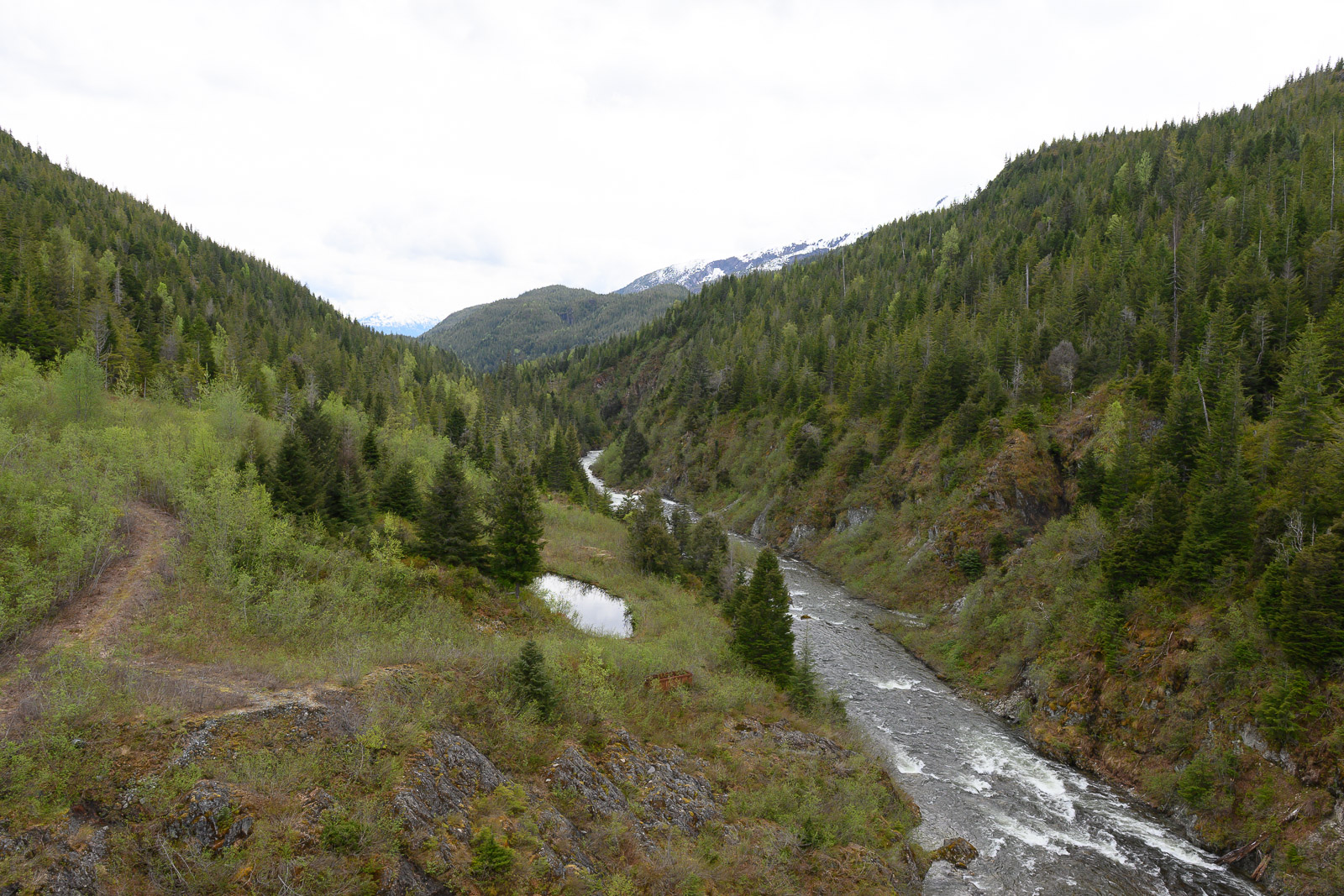
Hydroelectric facilities were first constructed on Anyox Creek in 1910 to support the mining and smelting operations in the adjacent Hidden Creek drainage basin
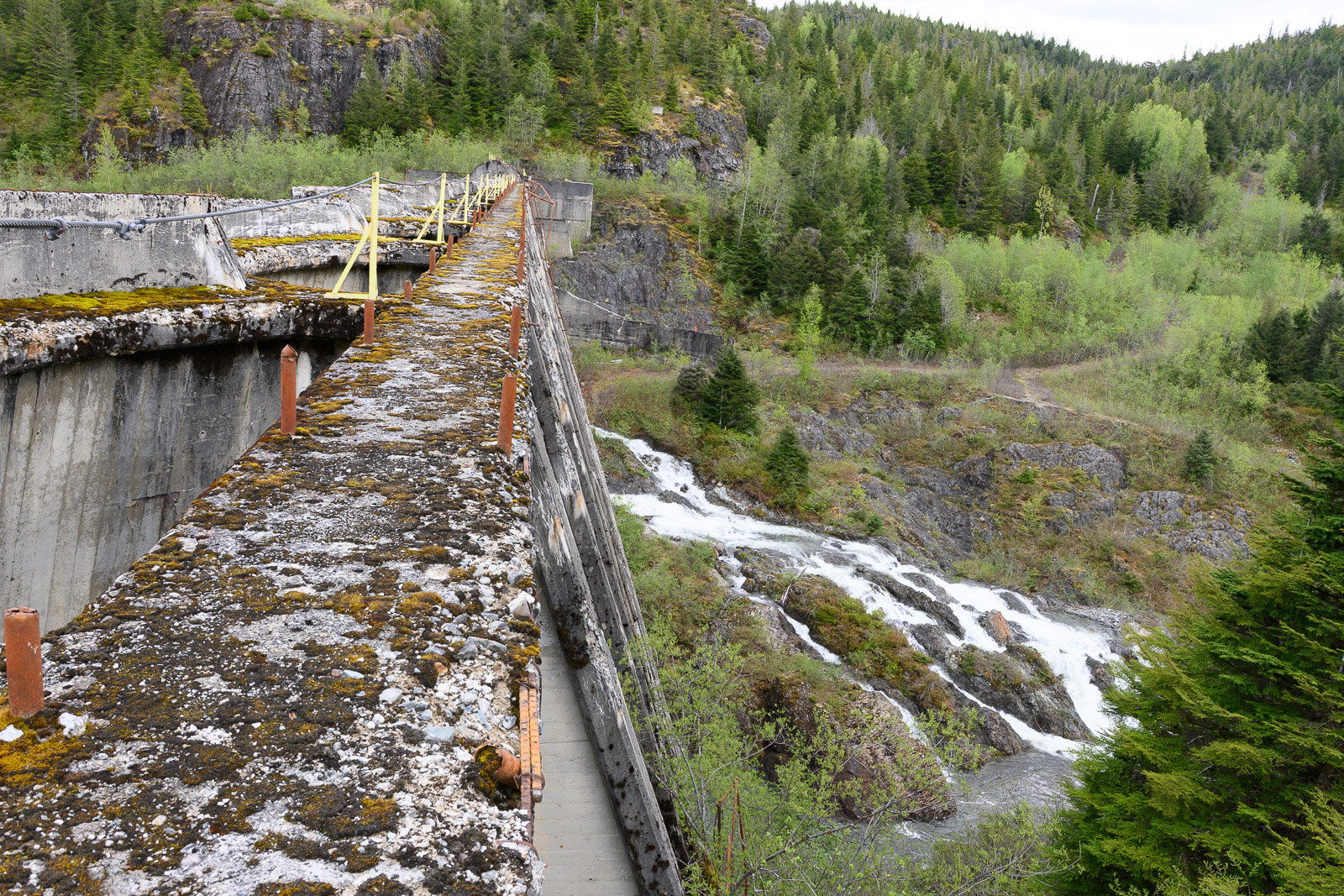
Anyox was the location of rich lodes of copper and other precious metals.. A large dam, pipelines and a powerhouse were constructed and operated to provide both electricity and compressed air to the village and smelter.
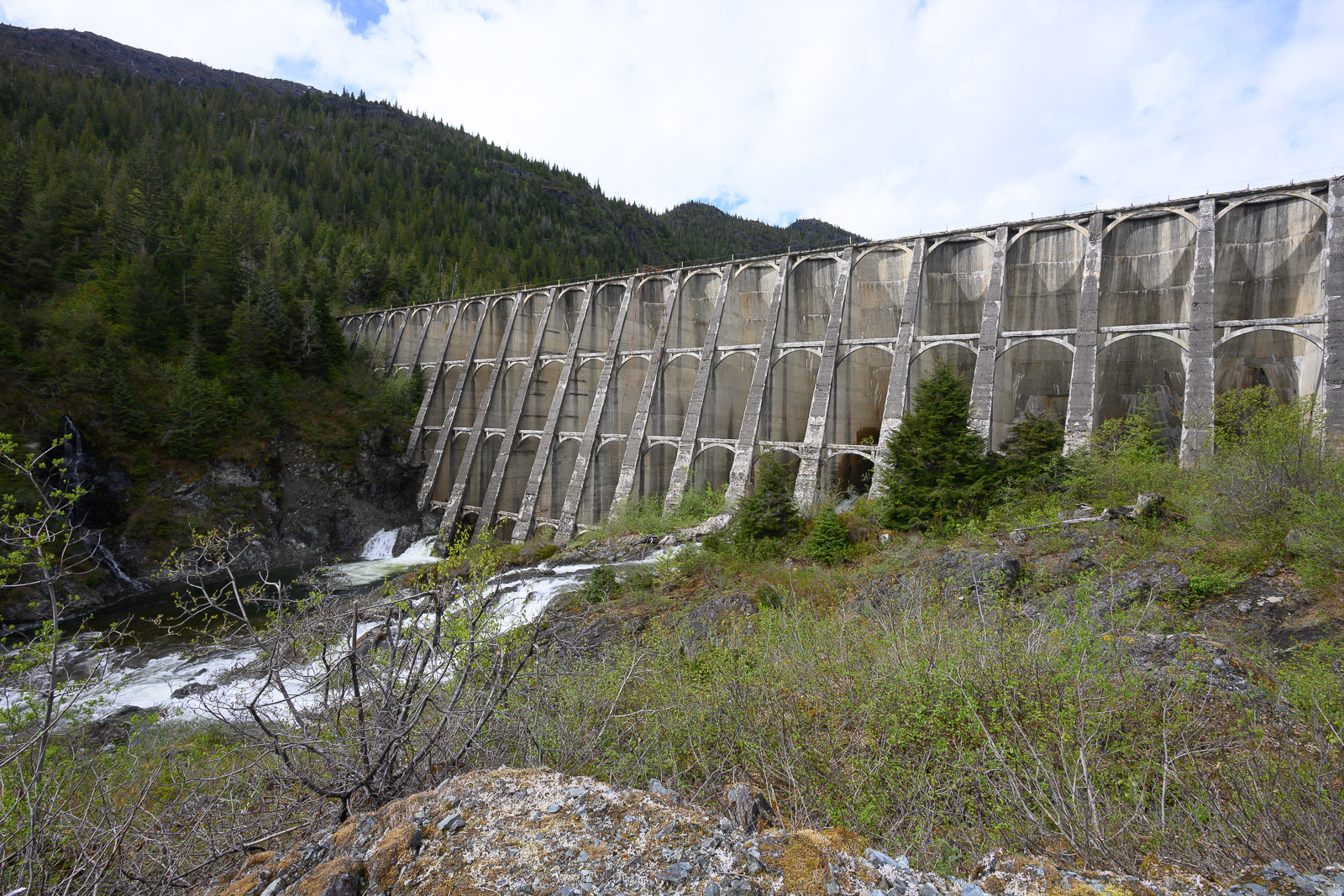
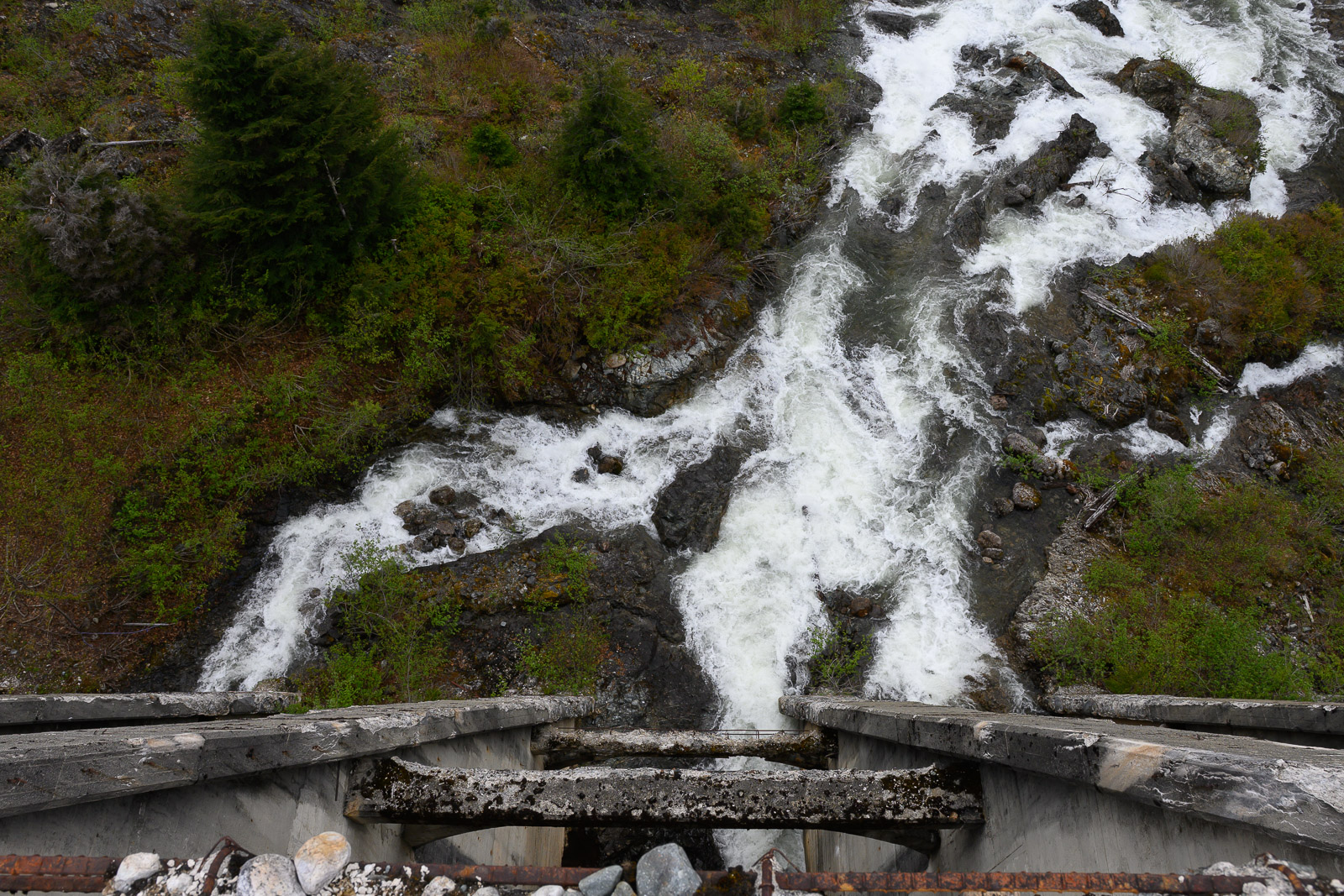
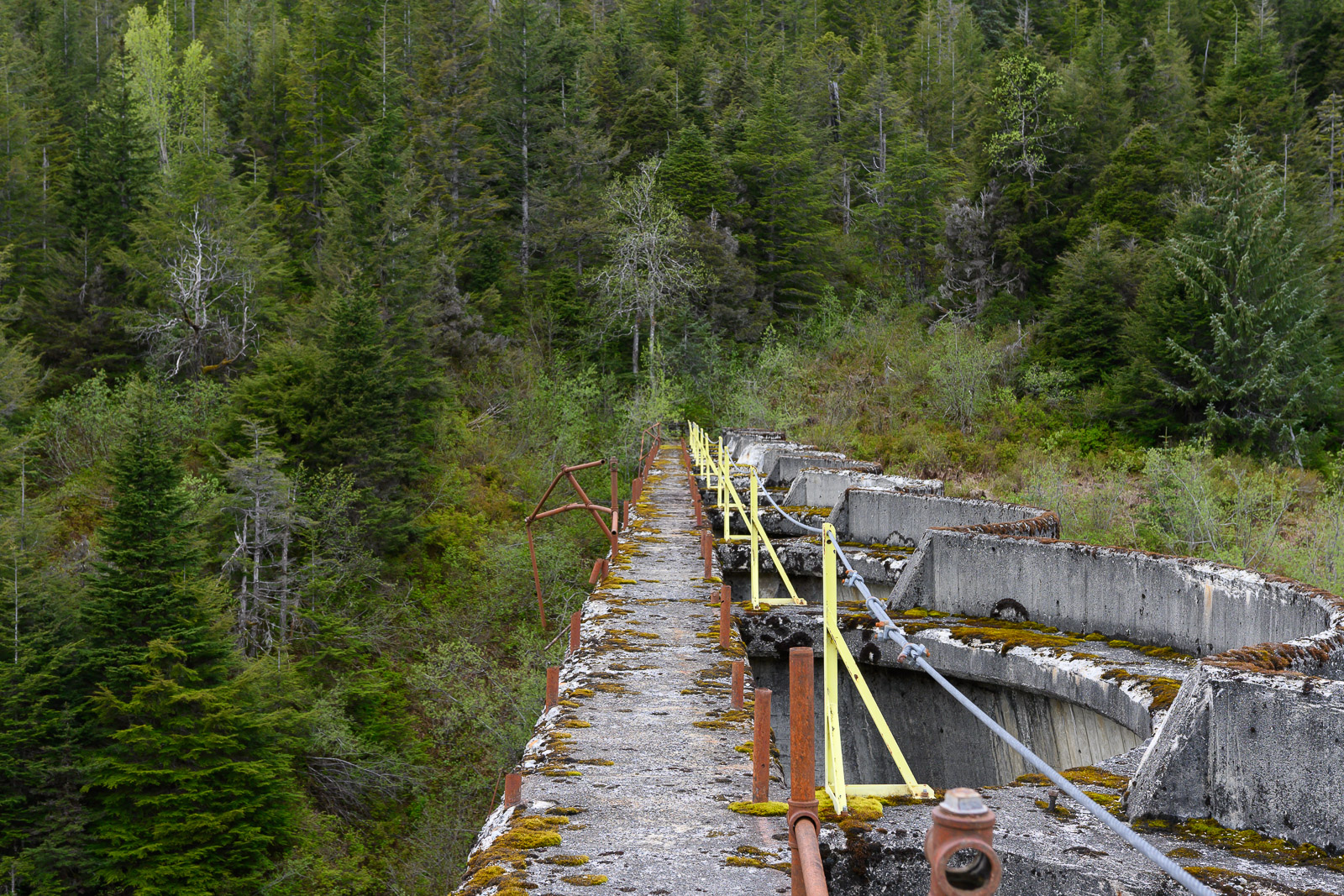
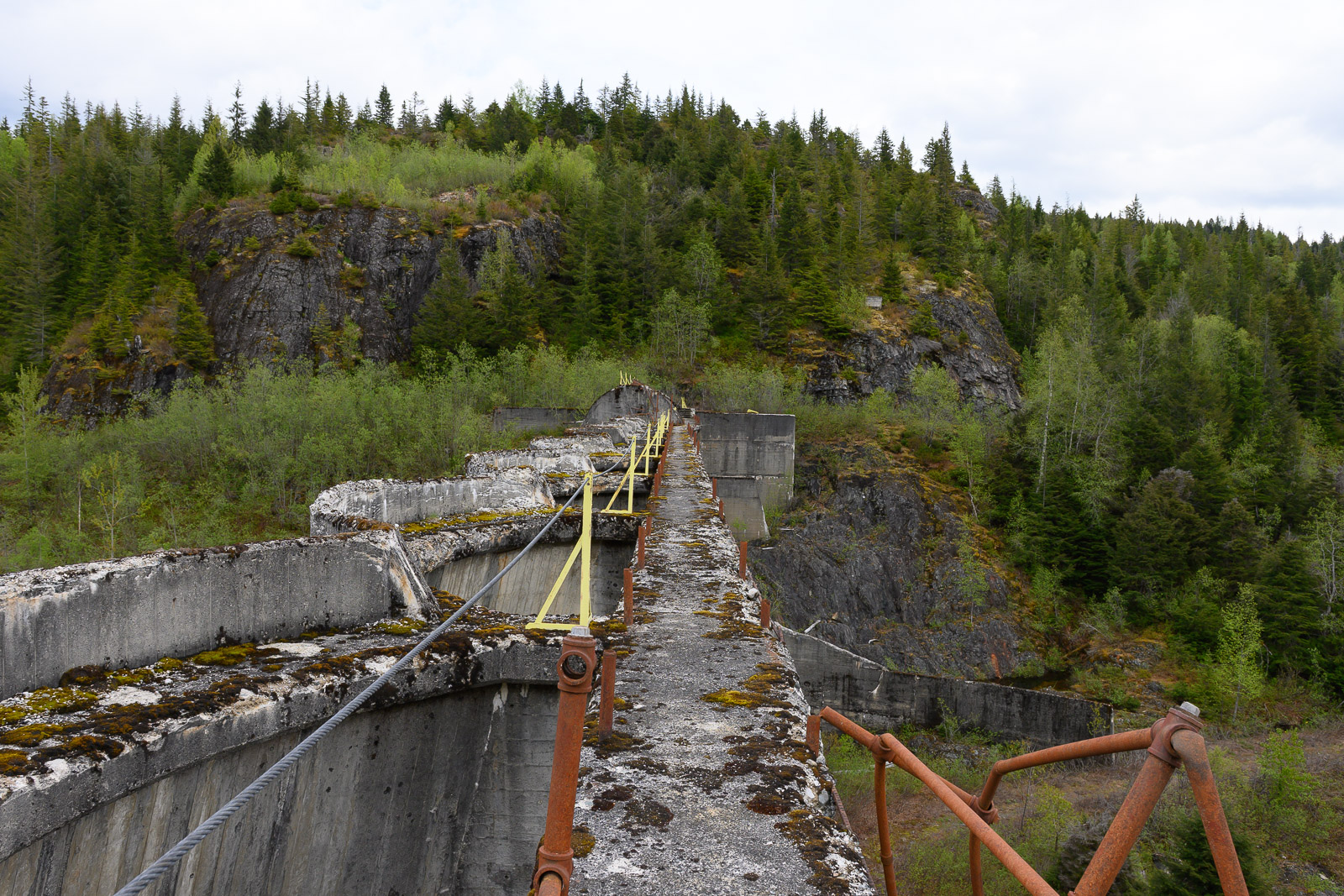
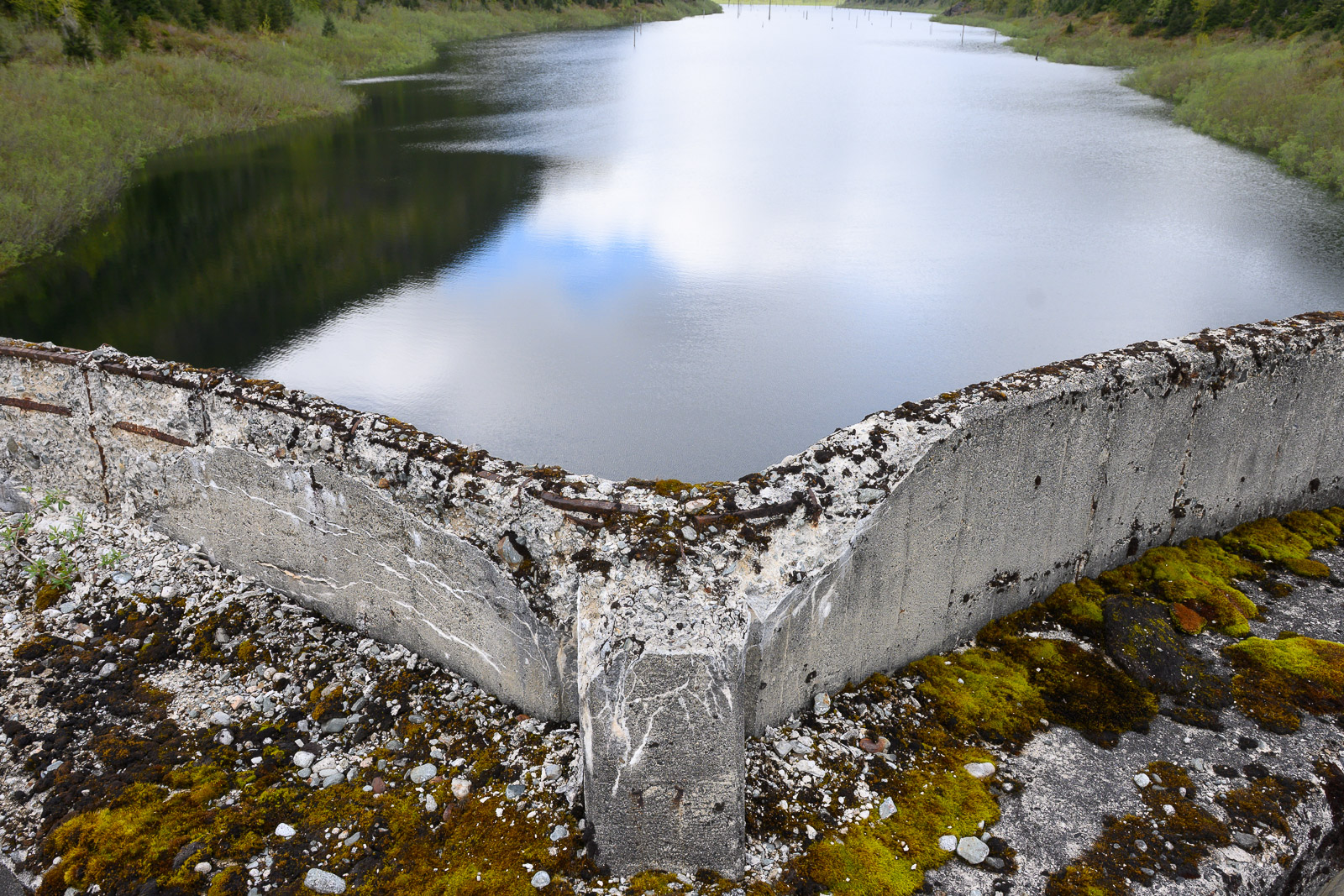
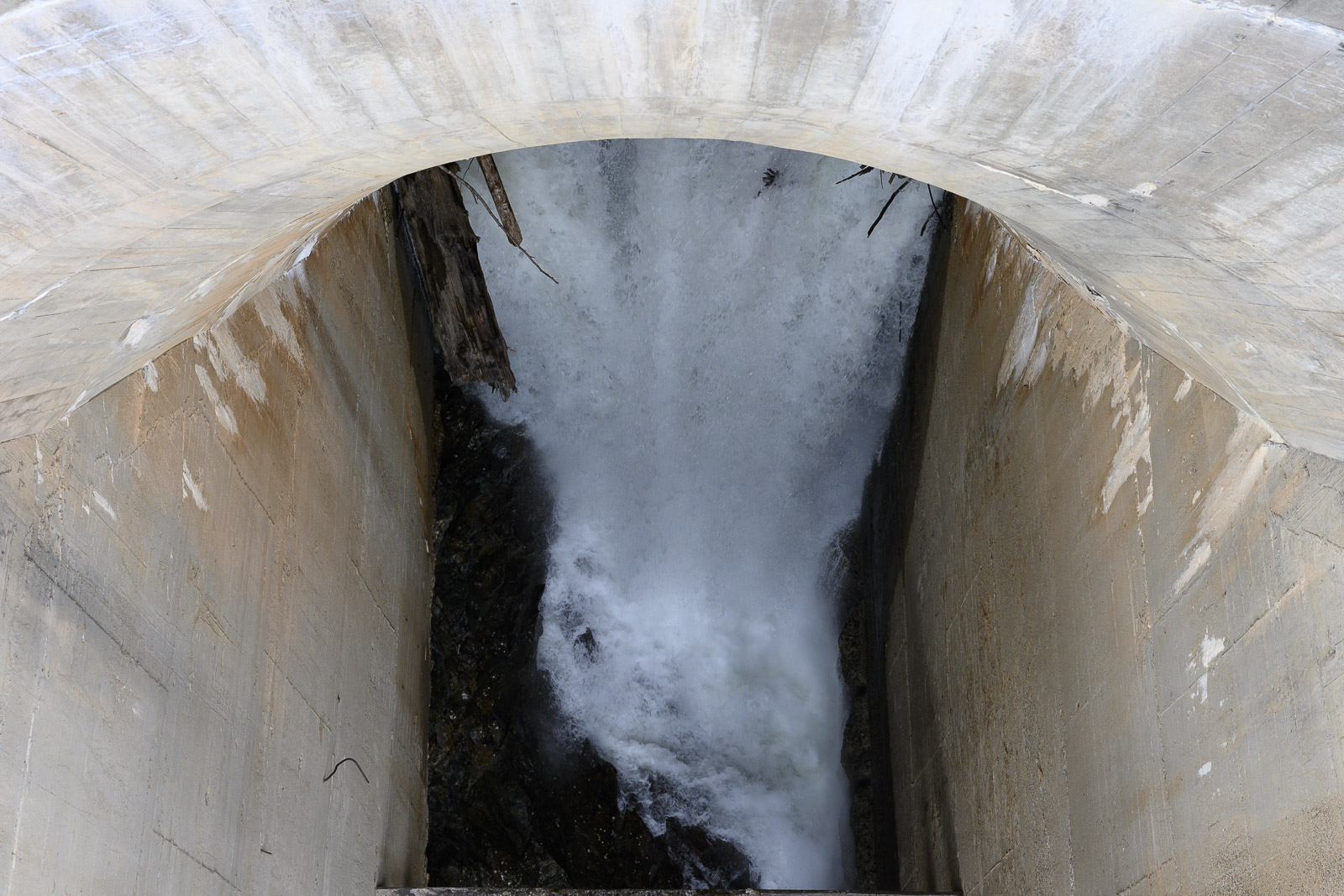
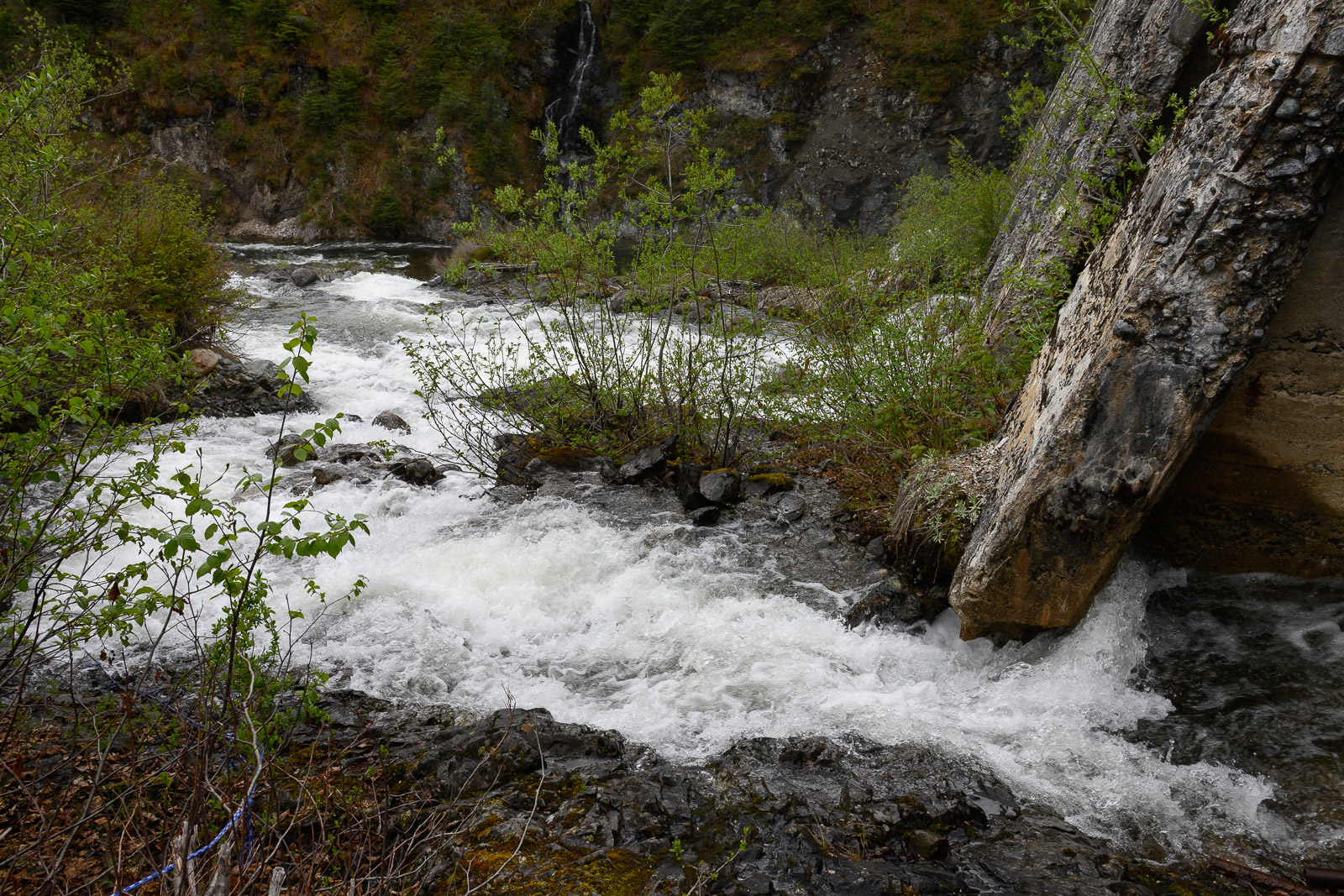
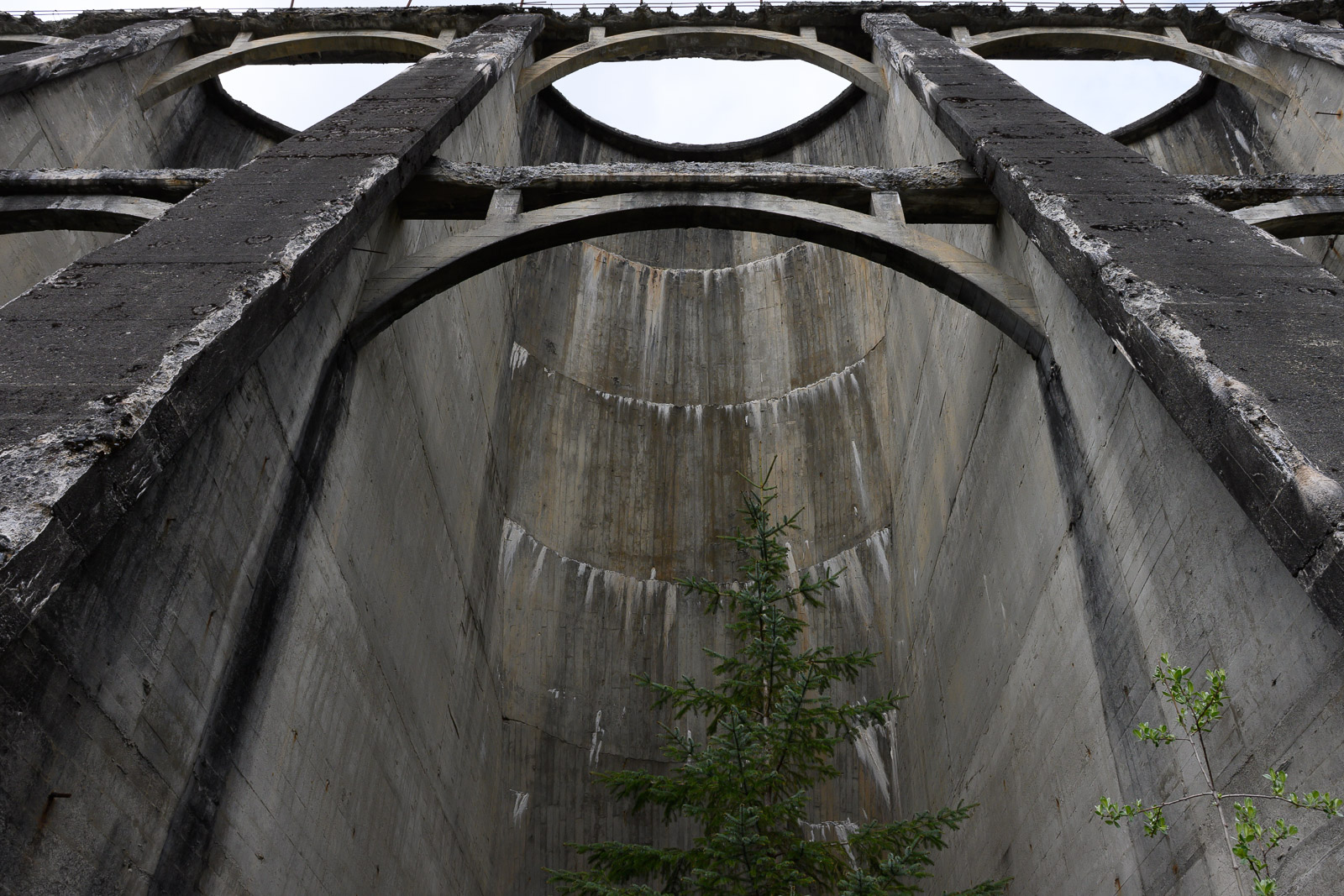
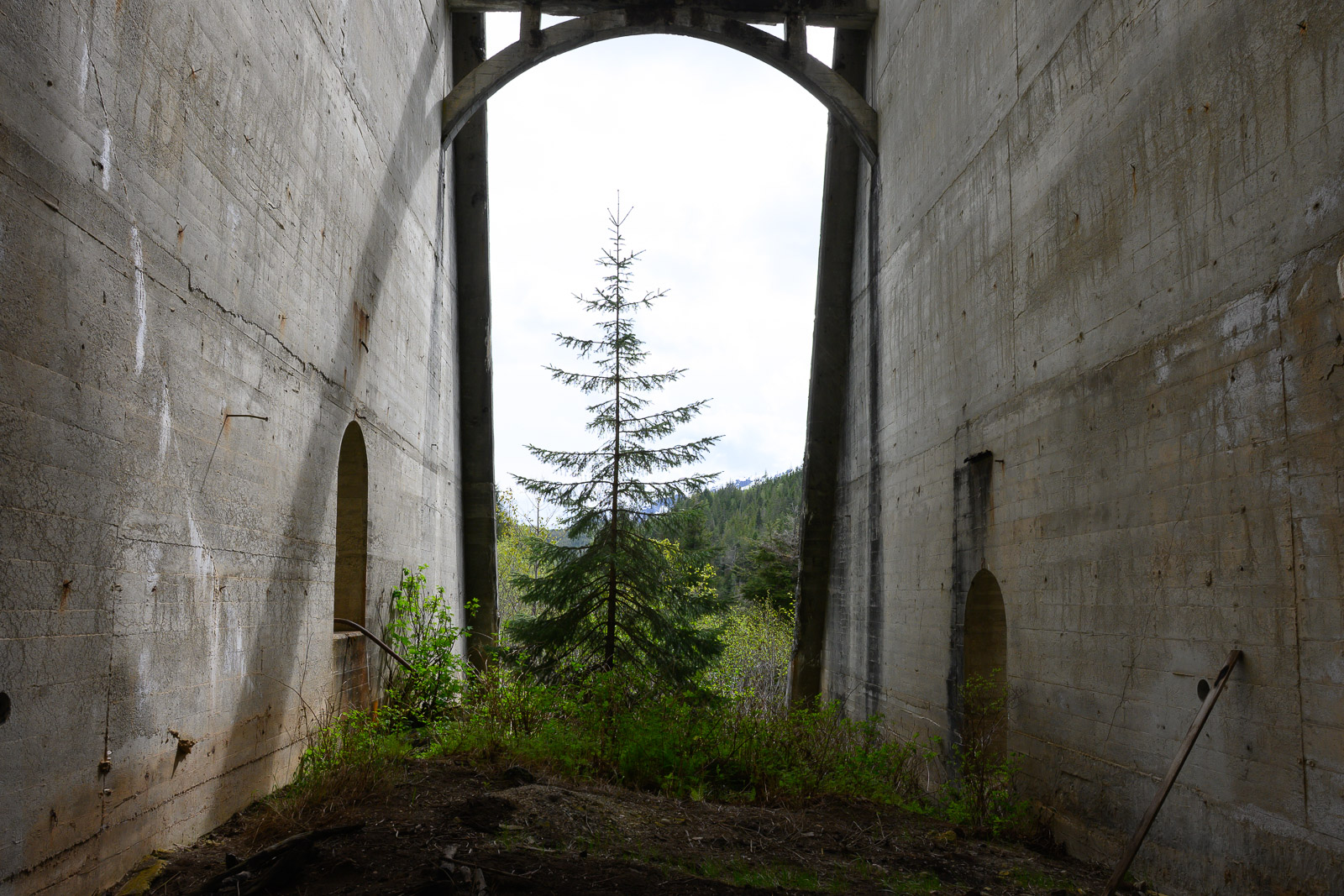
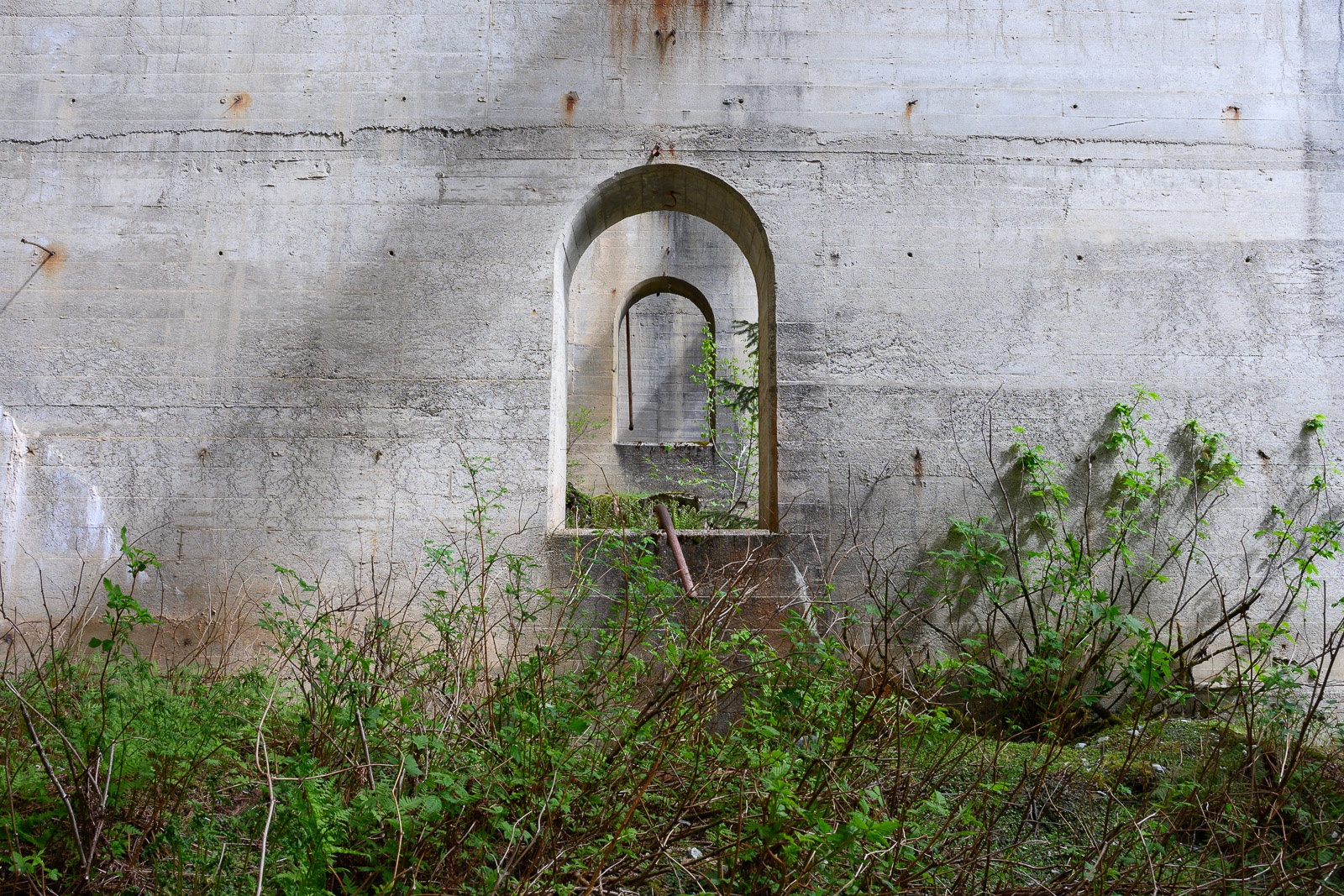
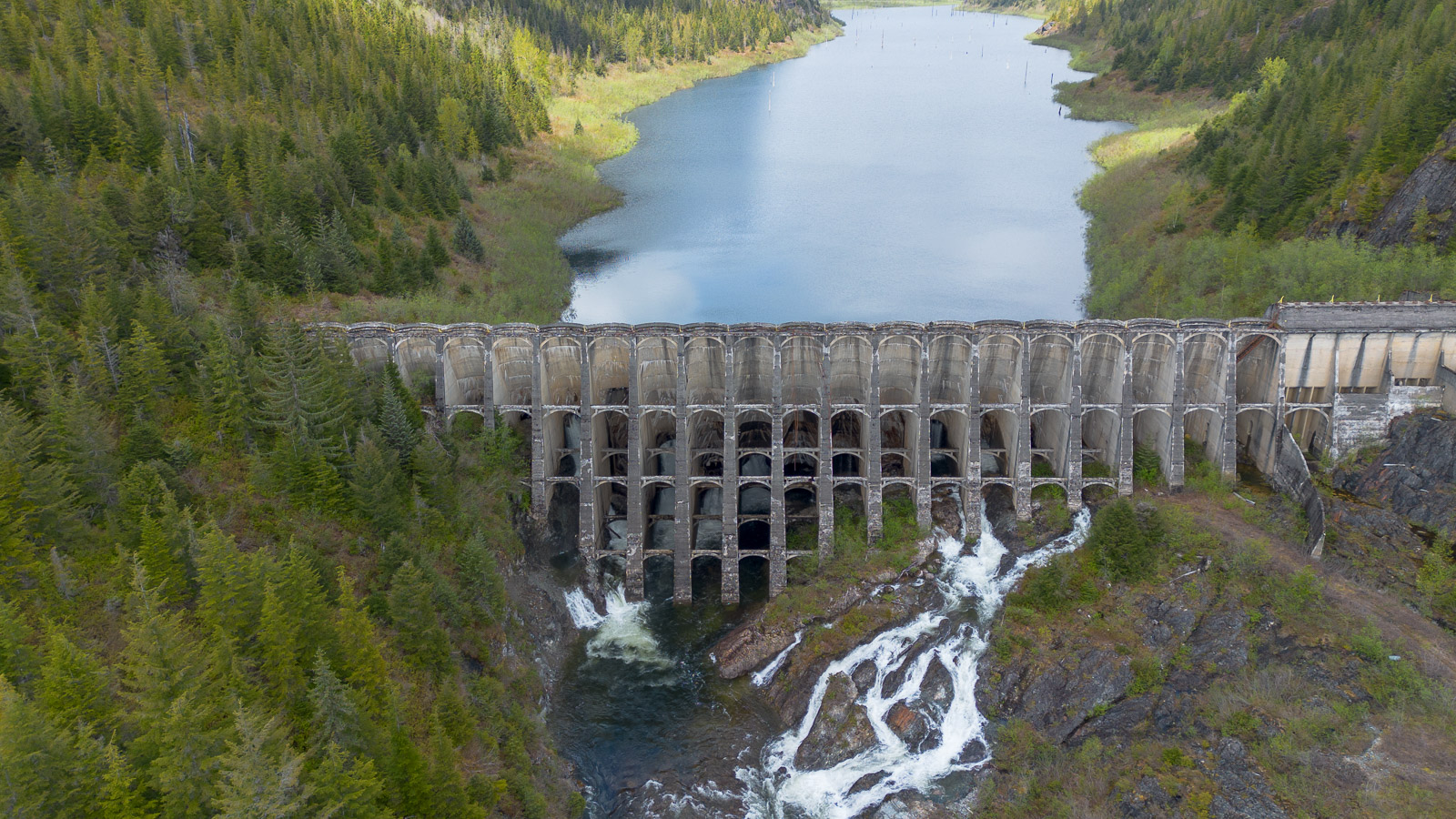
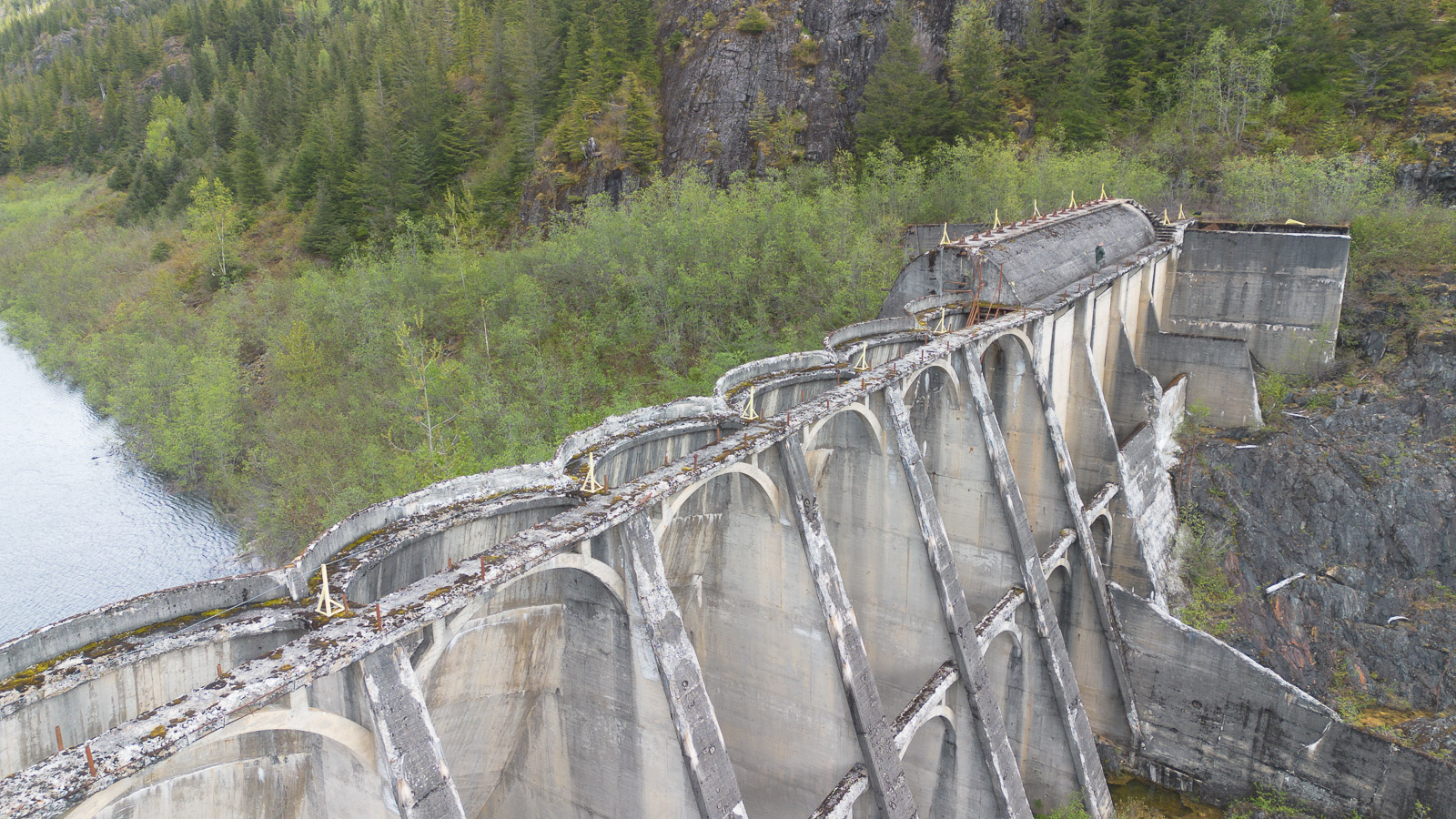
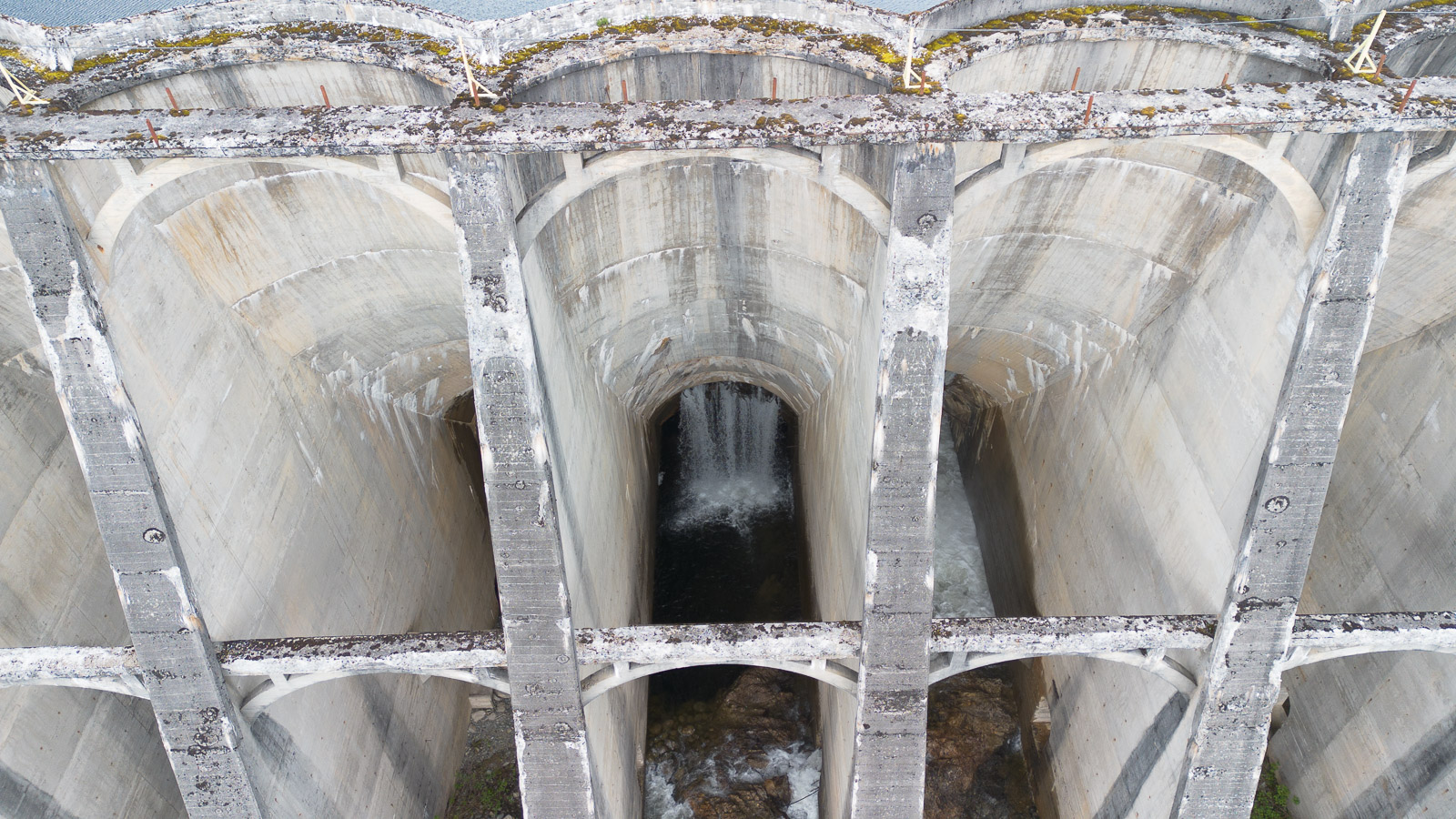
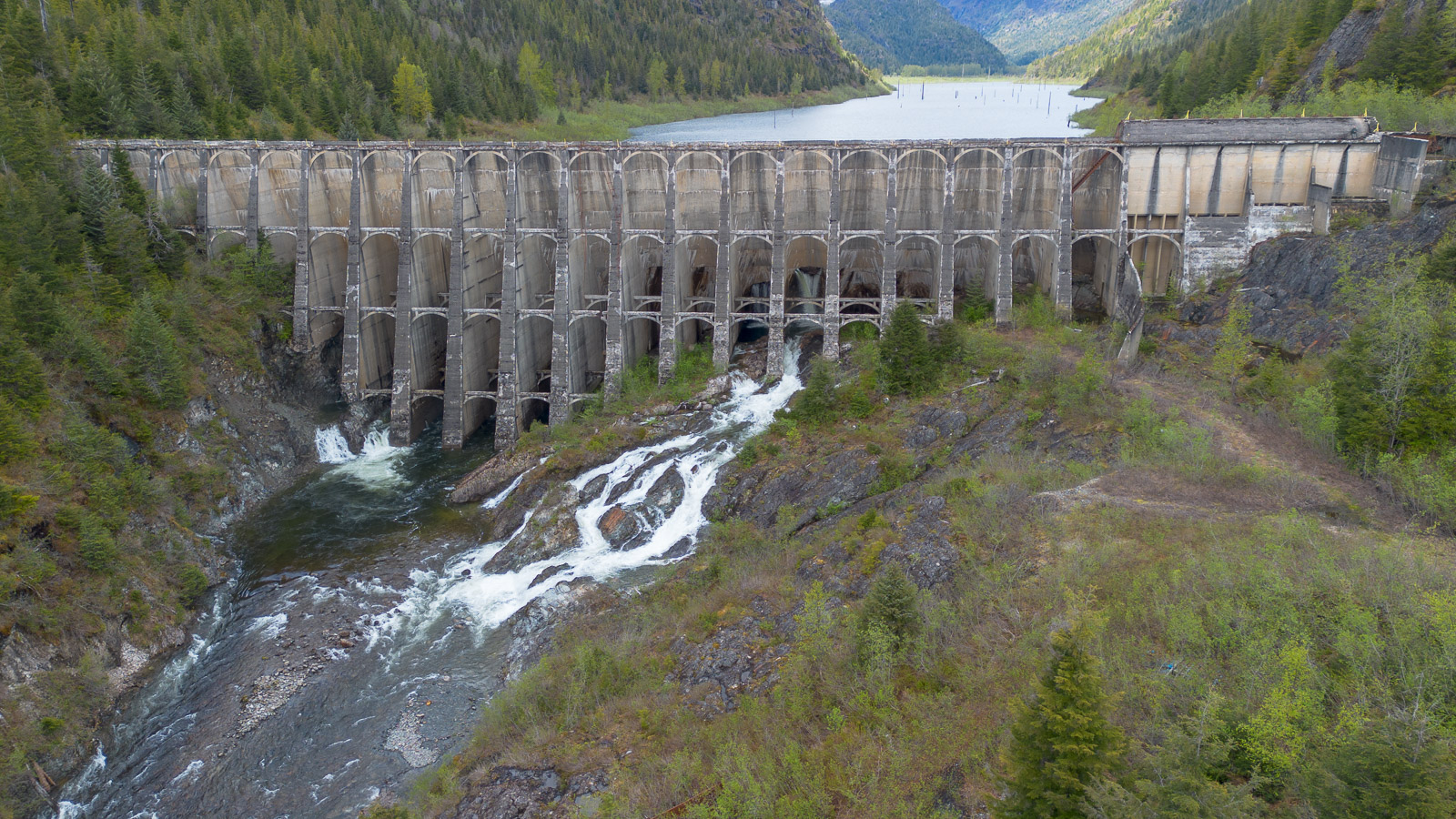
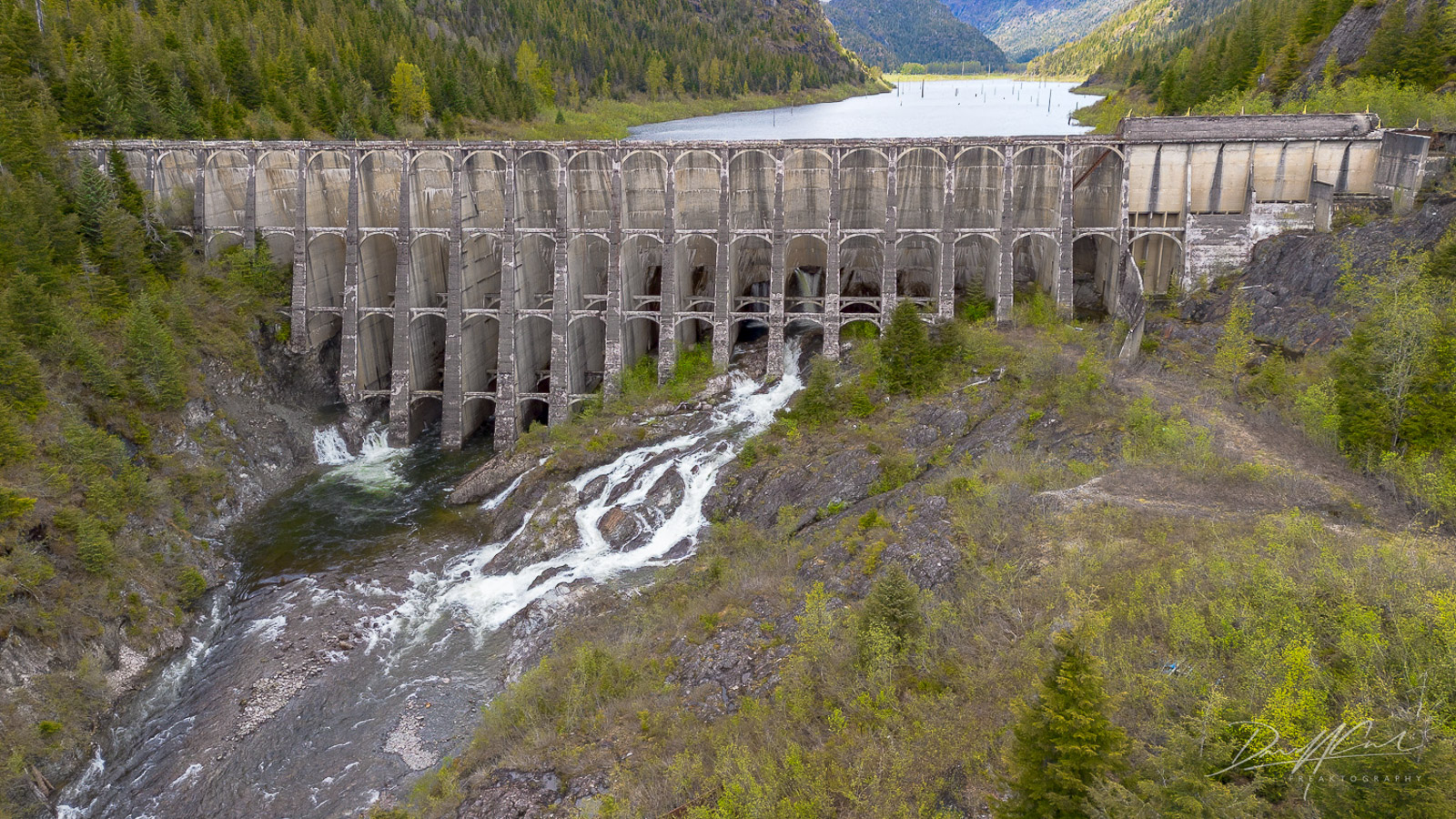
However, in 1935 the mine and the associated power project were shut down. For safety reasons, the concrete arch storage dam was breached with several small holes near its base in several locations to permit water flow and to prevent overtopping of the storage dam.
During the late 1930’s and early 1940’s large-scale salvage operations systematically removed all equipment and structural steel from Anyox to be used in the war efforts for World War Two, leaving behind the bones of the former town of 3,000 residents.
A massive forest fire caused by a lightning strike in 1946 swept clean the remains of Anyox leaving behind only the major concrete and steel structures which are still in evidence today.
The Anyox Dam, Canada’s Forgotten Hydroelectric Giant
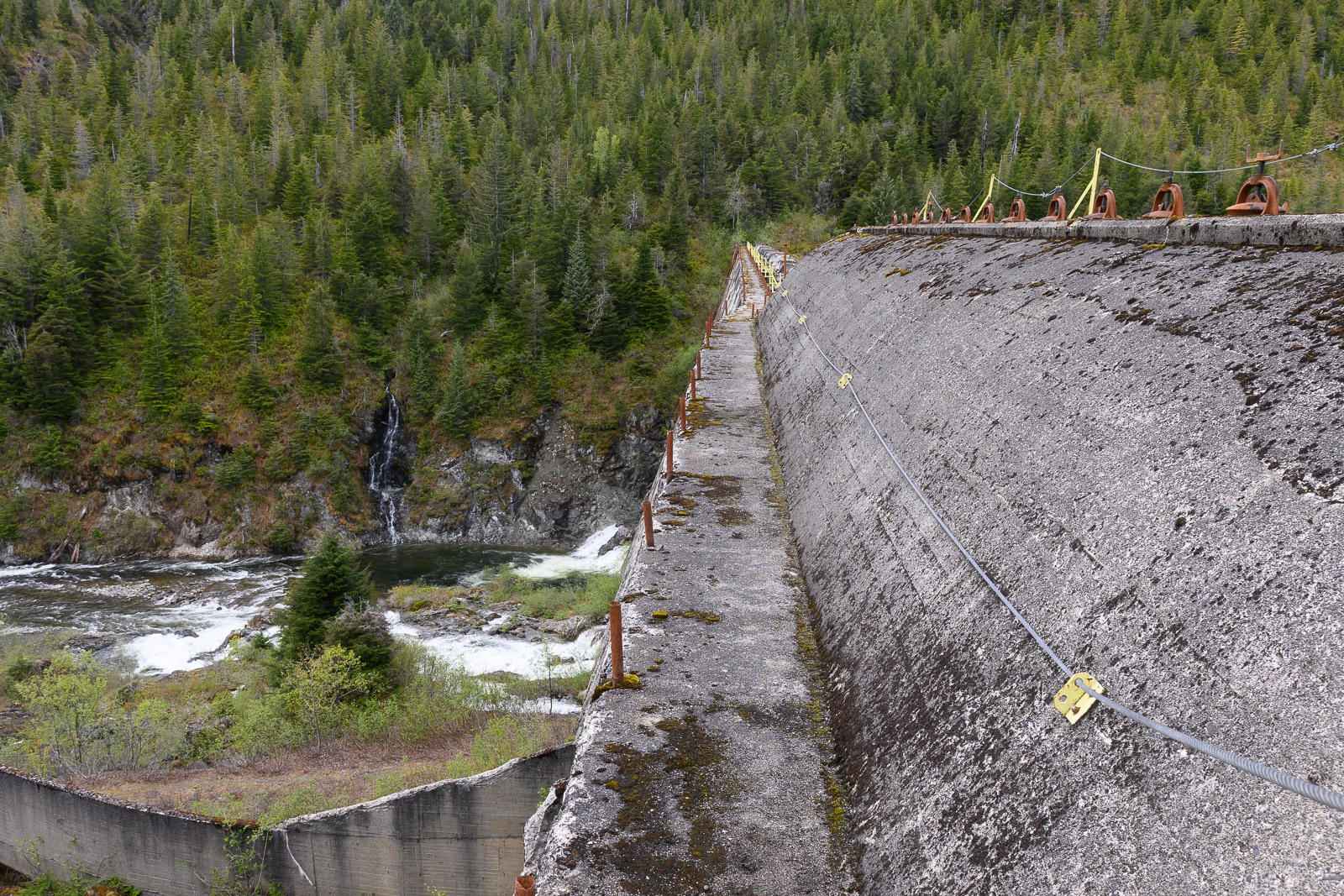
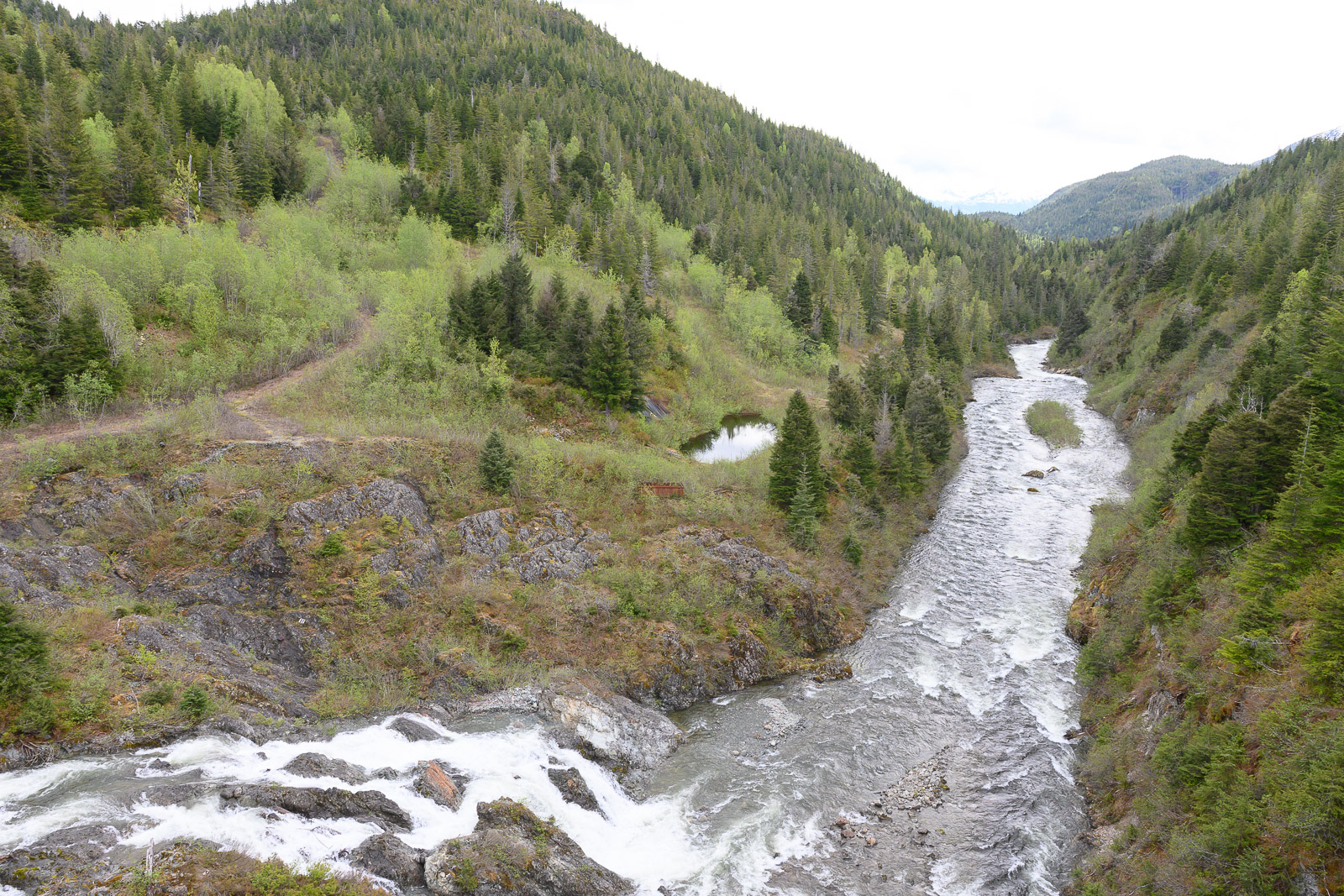
Hidden deep within the coastal wilderness of northern British Columbia, the abandoned Anyox Dam stands as one of the most remarkable industrial ruins in Canada. Built to power the massive copper mining and smelting operations of the ghost town of Anyox, the dam was once considered one of the greatest engineering achievements in the country. Today, nearly a century after the collapse of the mining town it supported, the concrete structure still clings to the steep mountains above Observatory Inlet, surrounded by dense rainforest, waterfalls, and the remains of a forgotten industrial empire.
The Rise of Anyox
The story of the Anyox Dam begins in the early 1900s, when rich copper deposits were discovered in the Hidden Creek Valley near Granby Bay. In 1910, the Granby Consolidated Mining, Smelting and Power Company began developing what would become one of the largest mining operations in British Columbia.
To support the enormous power demands of the mines, smelter, railway system, and company town, engineers constructed a hydroelectric system on Anyox Creek. The project included dams, pipelines, penstocks, and a powerhouse that generated electricity and compressed air for the entire operation. Construction on the hydroelectric facilities began in 1911, and the system quickly became one of the most advanced industrial power projects in western Canada.
At its peak, Anyox was home to approximately 3,000 residents and was considered one of the most modern company towns in the country. The hydroelectric plant powered homes, streetlights, workshops, rail systems, crushers, and one of the largest copper smelters in the British Empire.
Canada’s Largest Concrete Dam
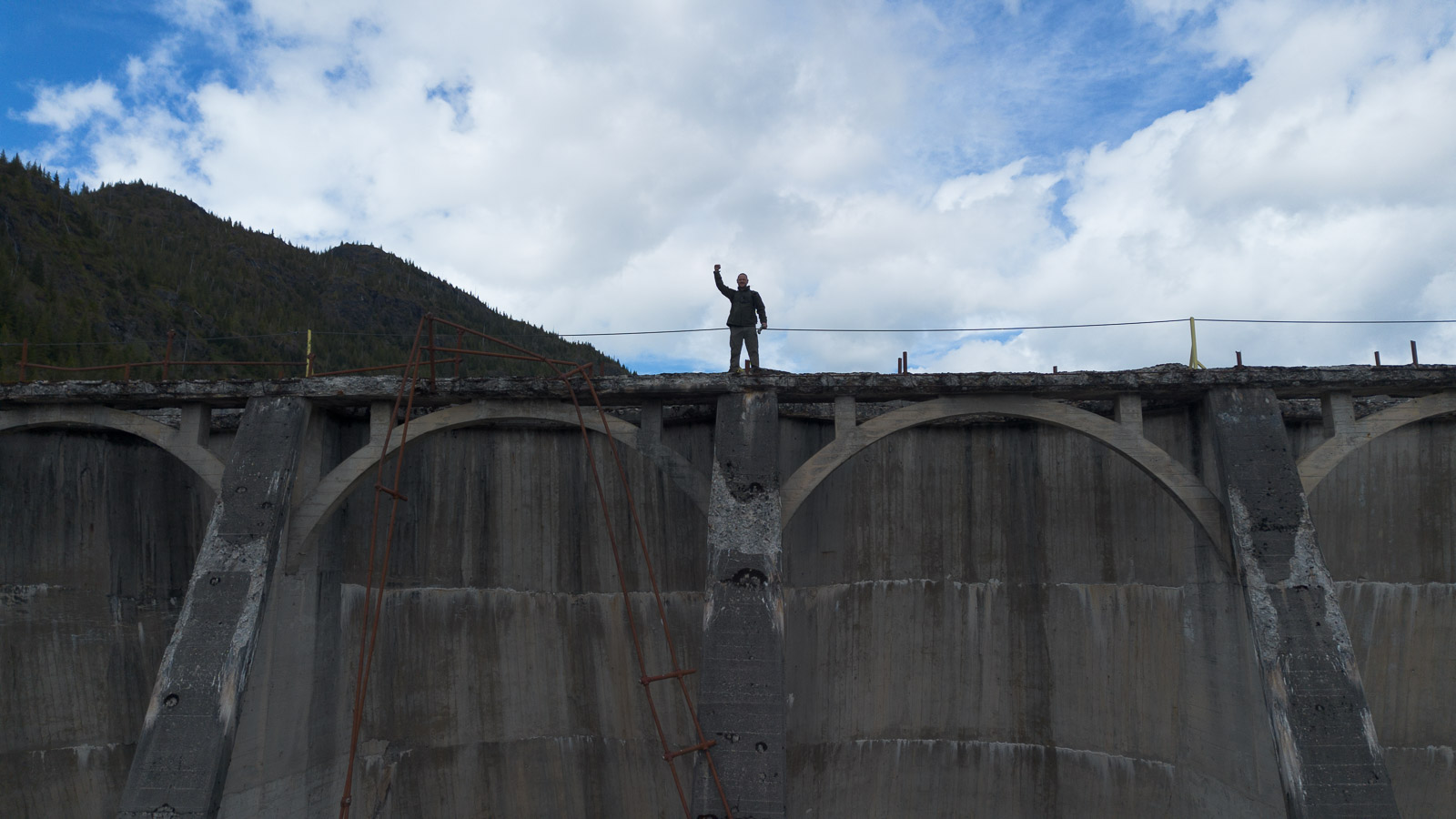
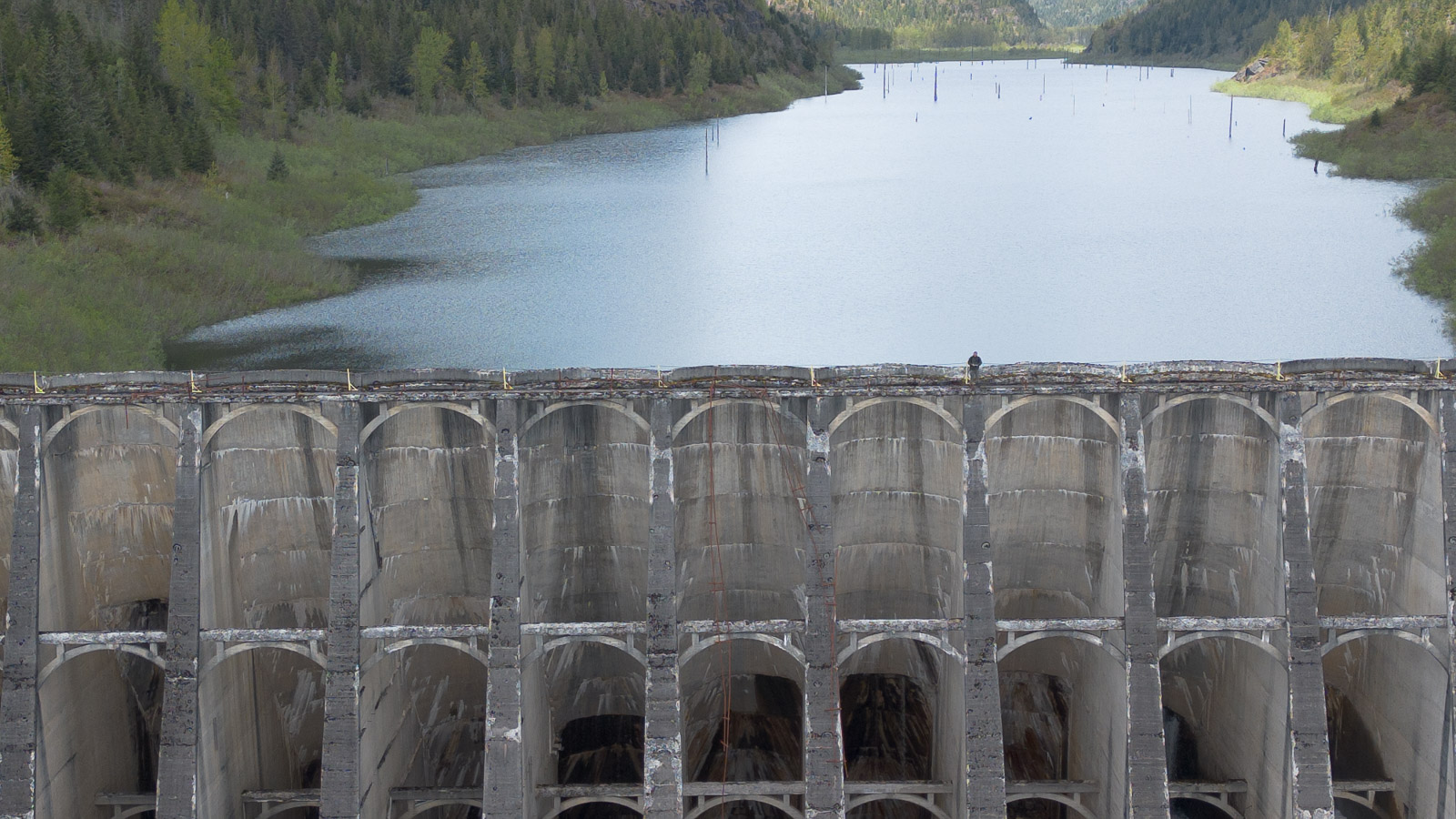
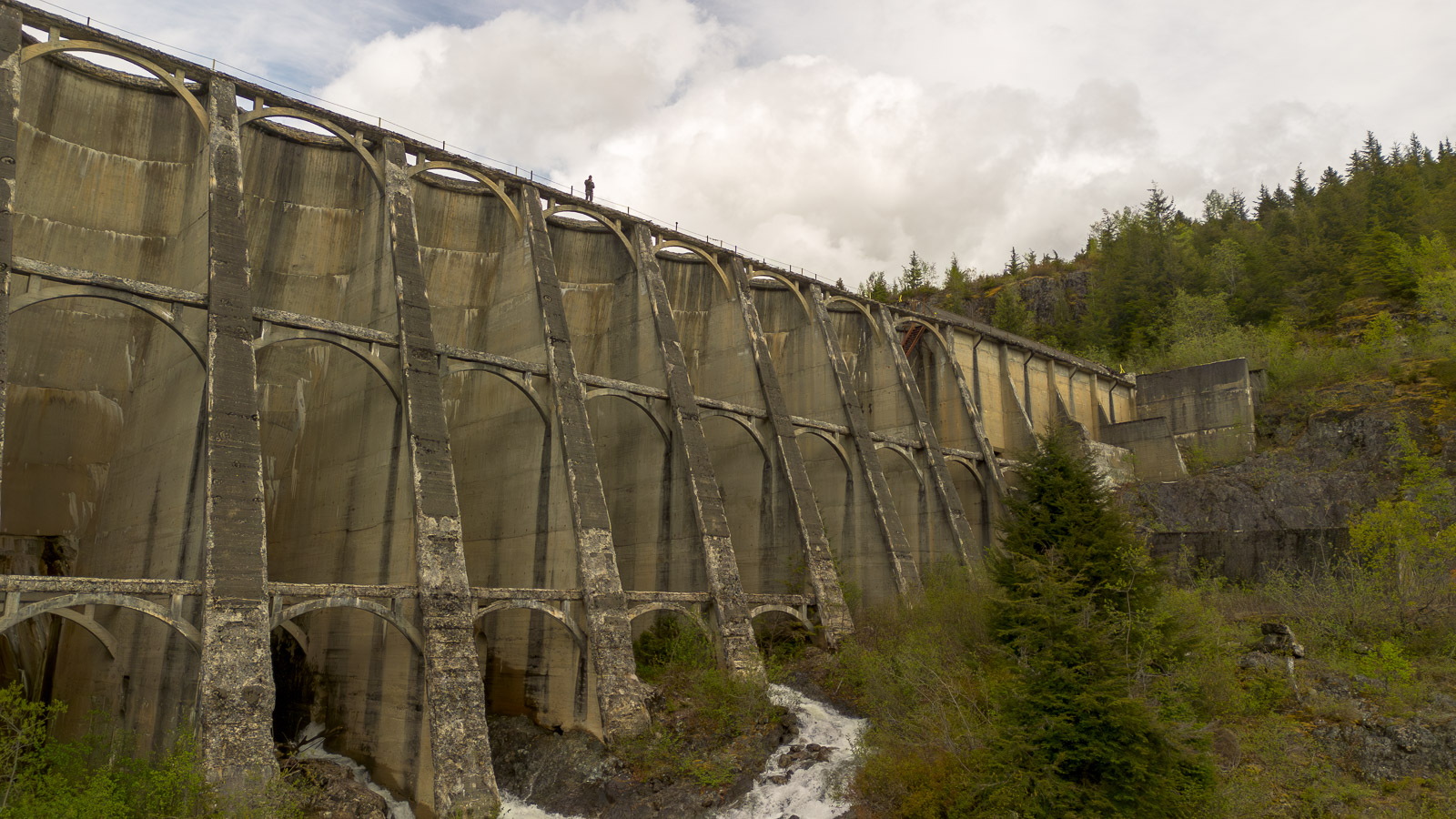
The most impressive part of the hydroelectric system was the massive concrete dam completed in the early 1920s. Designed during a pioneering era of dam engineering, the structure rose roughly 156 feet high, making it the tallest dam in Canada at the time. It was also considered Canada’s largest concrete dam structure until after World War II.
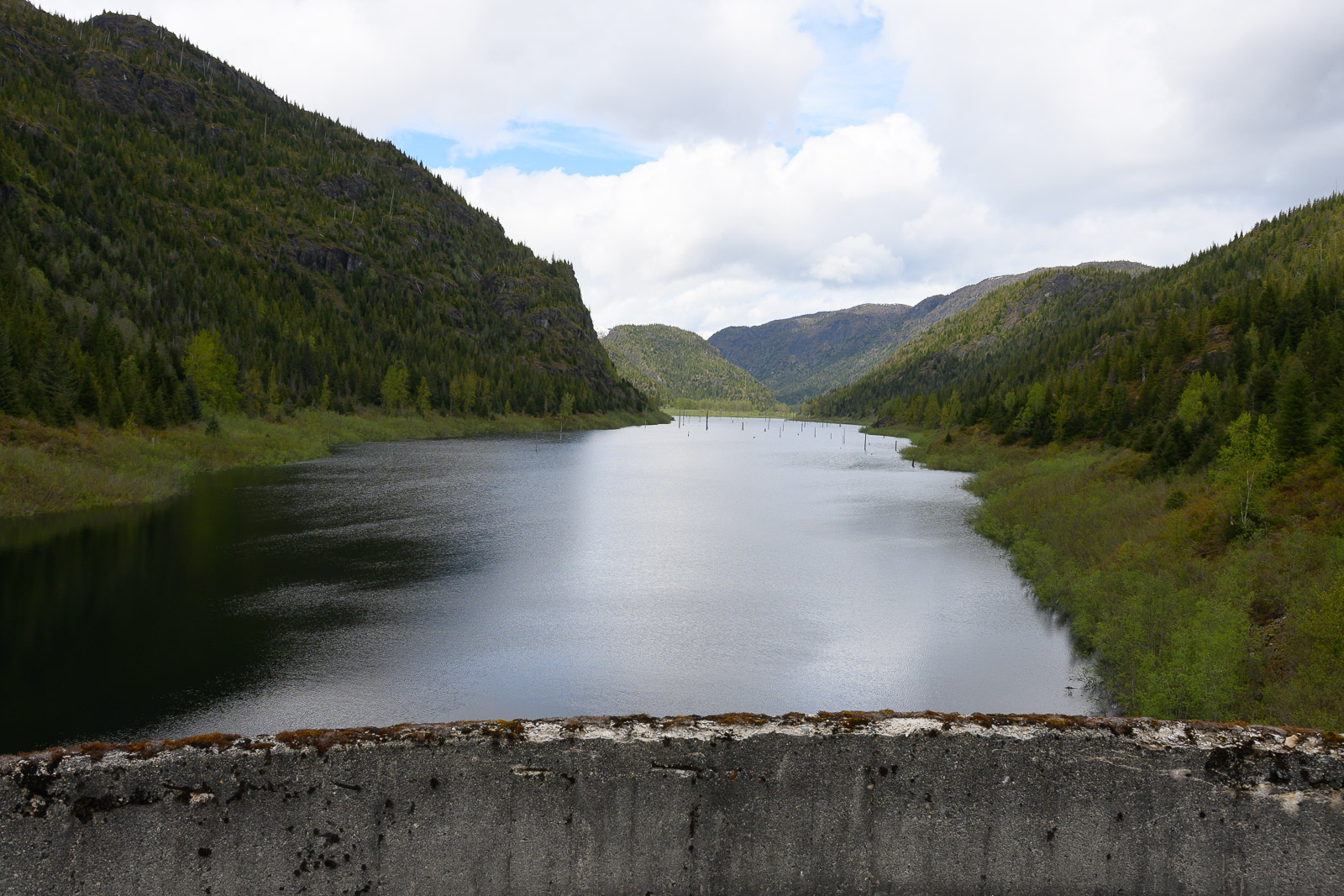
Built in an incredibly remote location accessible only by boat or float plane, the project was an engineering marvel for its era. Materials, machinery, and workers had to be transported through rugged coastal fjords and mountainous terrain. The dam collected water from a large alpine watershed above Anyox Creek, channeling it through pipelines and tunnels down to the powerhouse near the shoreline.
The dam itself used an early concrete arch design associated with engineer John S. Eastwood, a pioneer in hydroelectric dam construction. The structure was designed to withstand the immense pressure of the mountain reservoir while feeding the hydroelectric generators below.
The Collapse of the Town
Despite its success, Anyox’s prosperity depended entirely on copper prices. When the Great Depression struck in the early 1930s, global demand for copper collapsed. The company was unable to sell its stockpiled copper reserves, and operations were gradually scaled back. In 1935, the mine shut down permanently and the town was abandoned almost overnight.
Without the mine and smelter operating, the hydroelectric system was no longer needed. The dam was partially breached with holes blasted near its base to allow water to flow safely through the structure and reduce the risk of overtopping.
Throughout the late 1930s and 1940s, salvage crews stripped the town of valuable machinery, steel, and equipment. Much of the remaining infrastructure was later destroyed by massive forest fires that swept through the abandoned settlement. By the mid-1940s, nearly all wooden structures in Anyox had vanished.
Exploring the Ruins Today
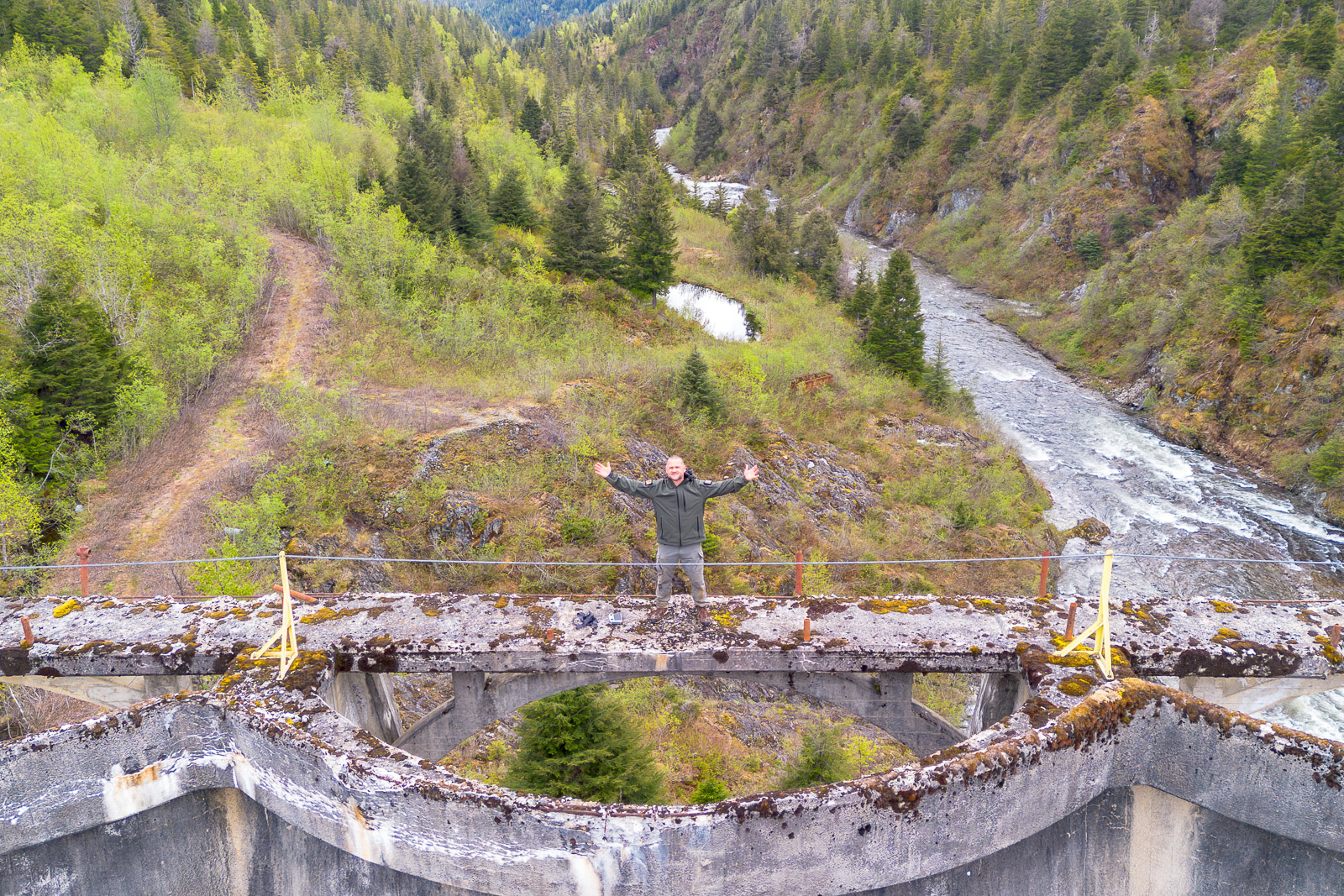
Today, the Anyox Dam remains one of the most haunting abandoned industrial sites in Canada. Although nature has reclaimed much of the area, the surviving concrete structures still reveal the scale of the original operation. The dam, powerhouse ruins, tunnels, foundations, and fragments of industrial machinery remain scattered throughout the rainforest-covered mountains surrounding Granby Bay.
Reaching the site is an adventure in itself. Anyox has no road access and can only be reached by boat, float plane, or helicopter. The isolation has helped preserve the ruins and contributes to the eerie atmosphere that draws photographers, historians, and urban explorers from around the world.
Visitors exploring the hydroelectric ruins often describe the site as frozen in time. Massive concrete walls emerge from the forest, rusted machinery sits abandoned beside waterfalls, and the remains of the powerhouse stand as reminders of a once-thriving industrial city hidden within the mountains of coastal British Columbia.
A Possible Future Revival
Although abandoned since 1935, the Anyox hydroelectric system may not be finished forever. In recent decades, the owners of the site have explored plans to rehabilitate the historic dam and return it to operation as part of British Columbia’s modern renewable energy infrastructure. Studies conducted on the aging concrete reportedly found the structure remained remarkably strong despite decades of abandonment.
Proposed redevelopment projects have suggested generating enough clean hydroelectric power to support industrial growth and northern communities in British Columbia. Whether those plans ever become reality remains uncertain, but they demonstrate the enduring significance of the Anyox Dam more than 100 years after it was first constructed.
The Legacy of the Anyox Dam
The Anyox Dam is far more than a forgotten industrial relic. It represents a time when massive engineering projects were carved into some of the most remote wilderness in North America to support Canada’s rapidly growing resource economy. Its survival through abandonment, salvage operations, harsh coastal weather, and nearly a century of isolation makes it one of the most extraordinary hydroelectric ruins in the country.
Today, the dam stands as a monument to ambition, industry, and the impermanence of boomtown prosperity. Hidden within the rainforest of northern British Columbia, the Anyox Dam remains one of Canada’s most fascinating abandoned places and one of the last surviving reminders of the once-powerful ghost town of Anyox.