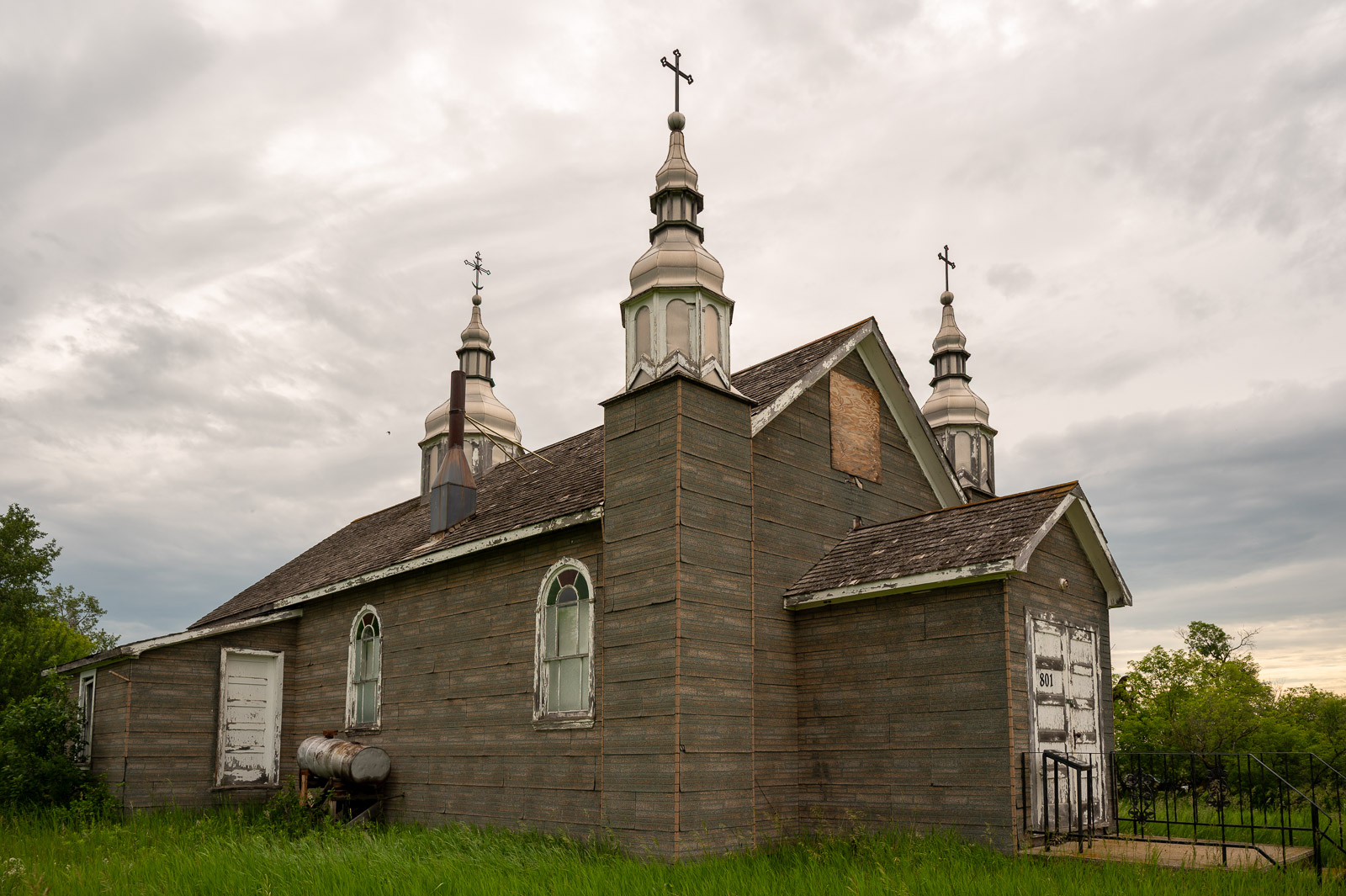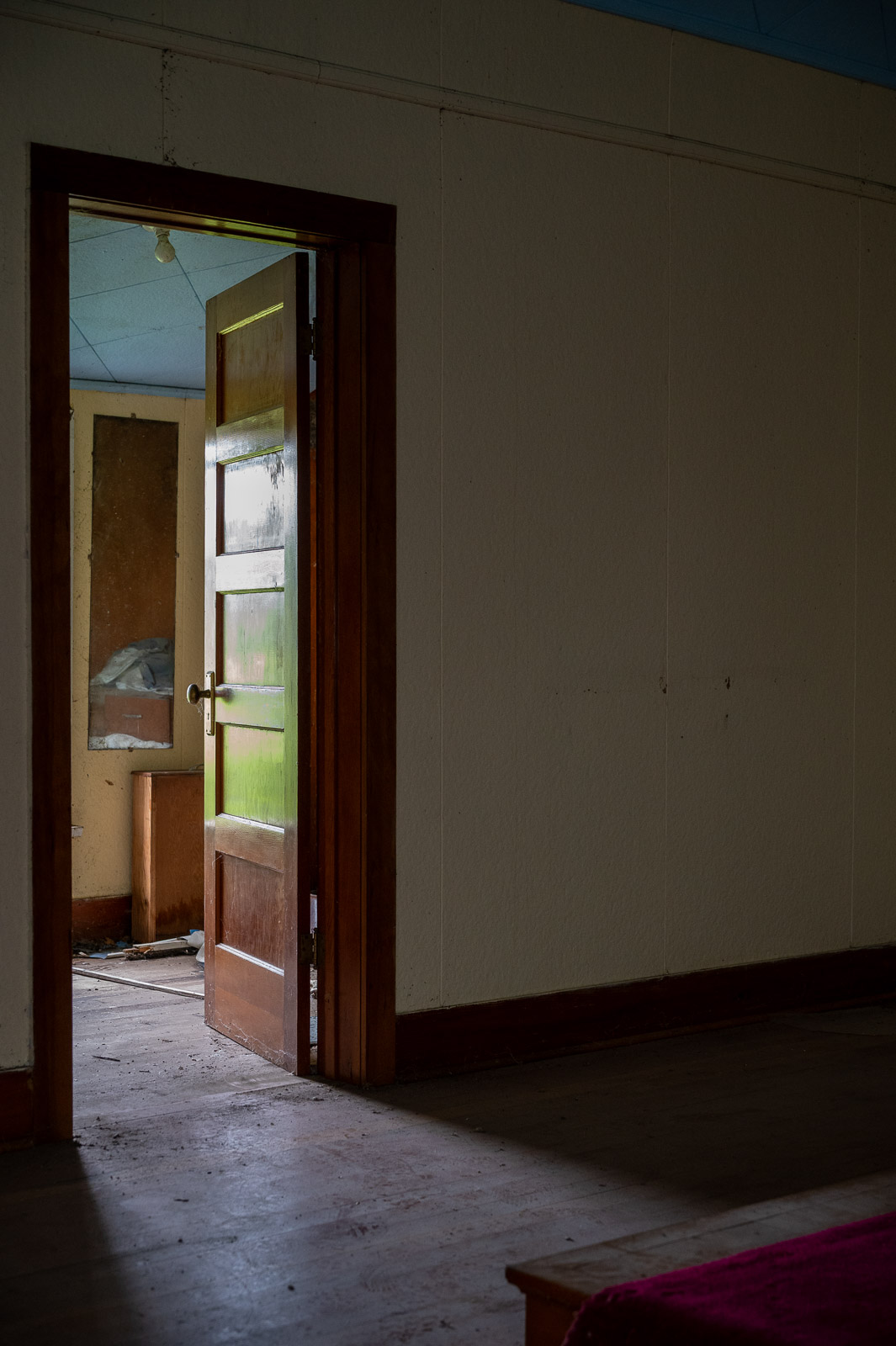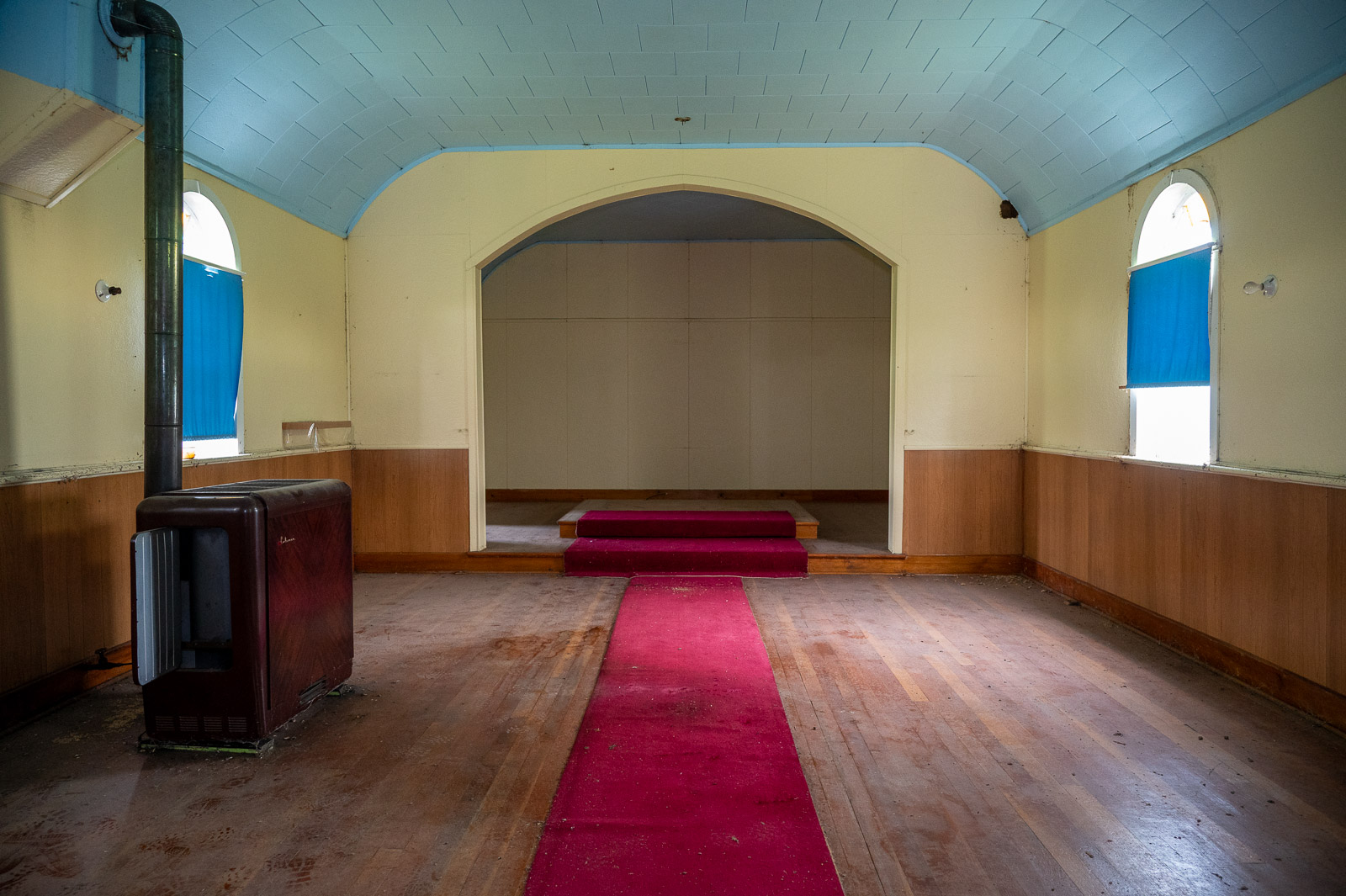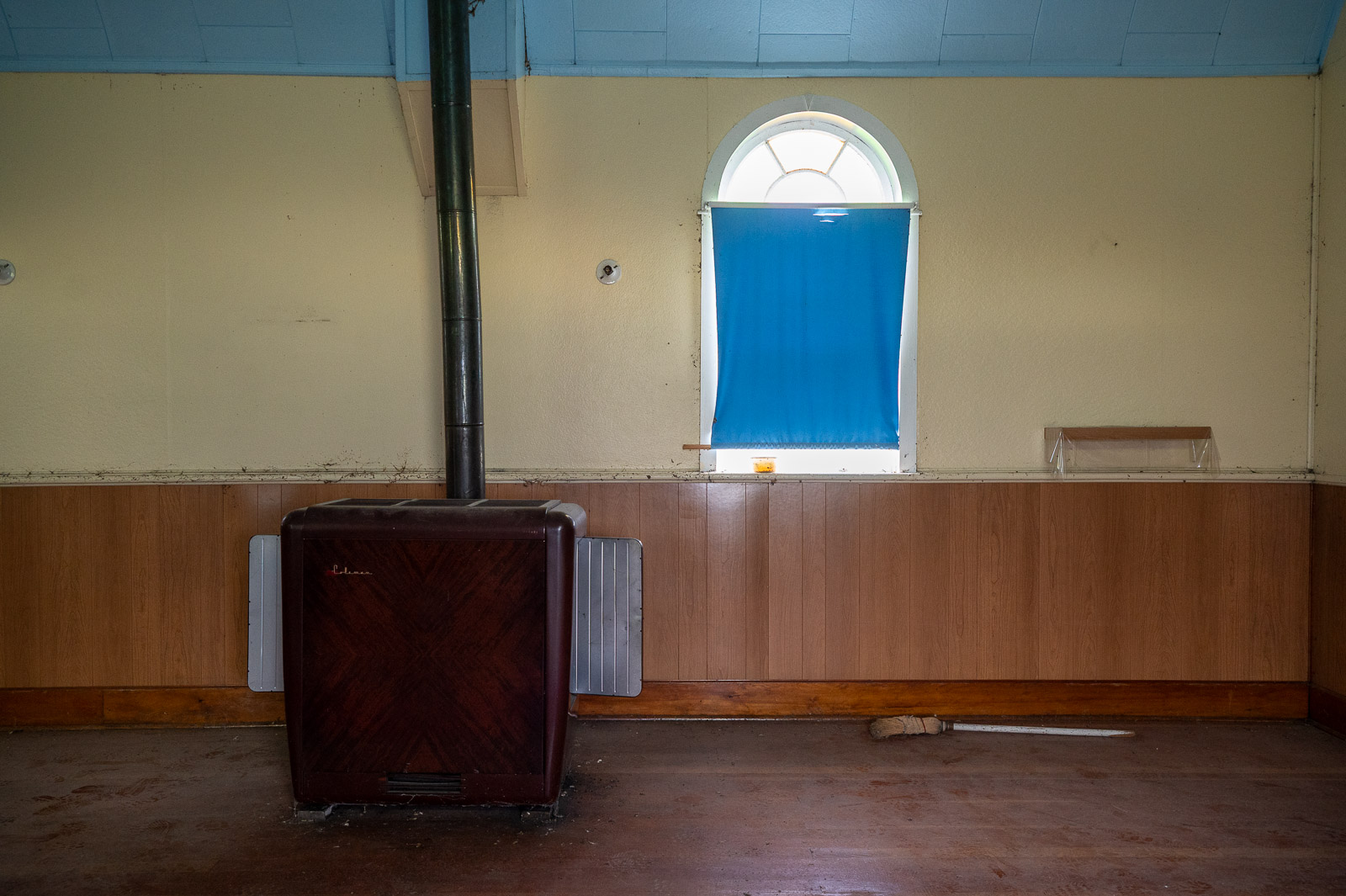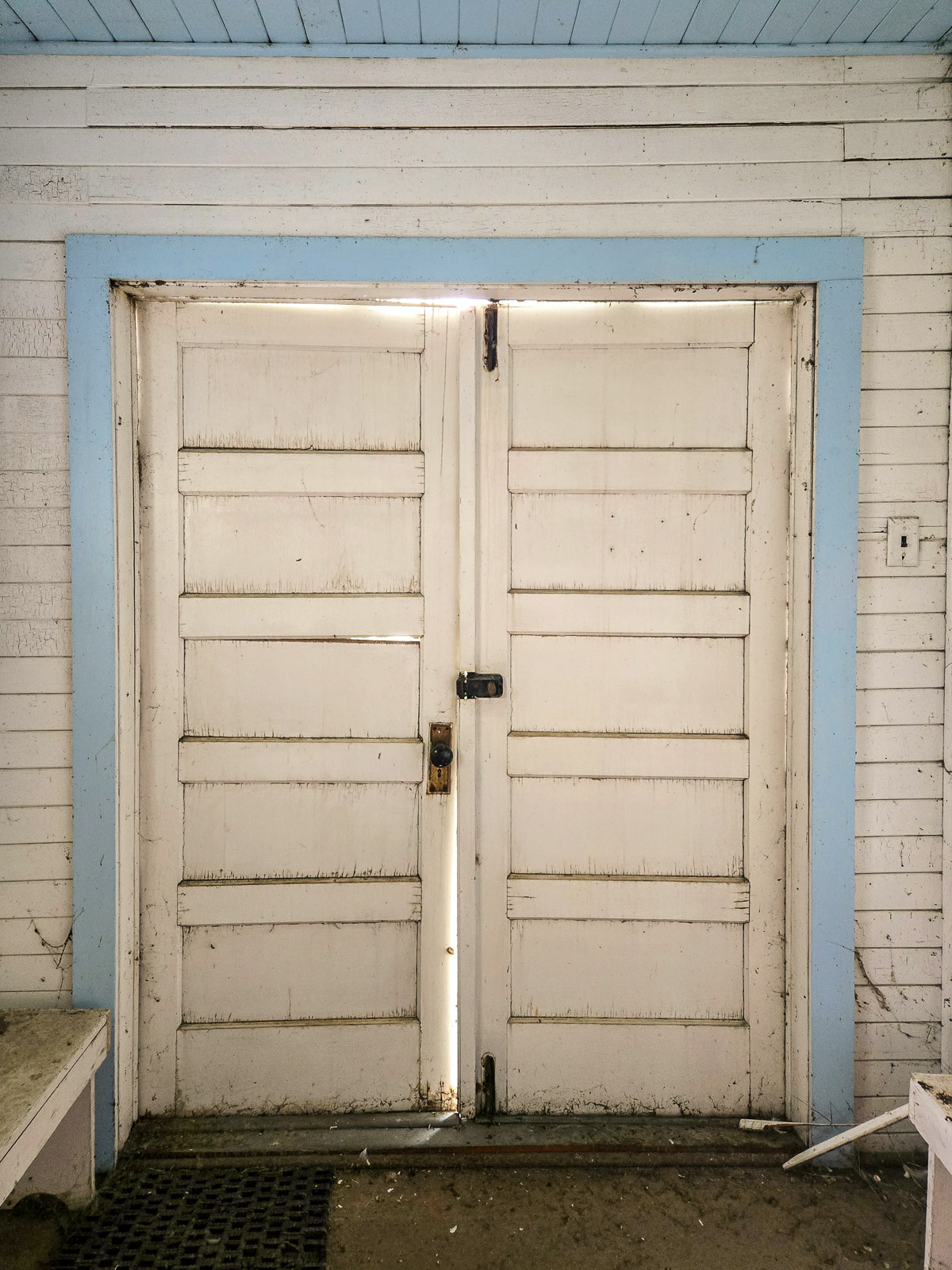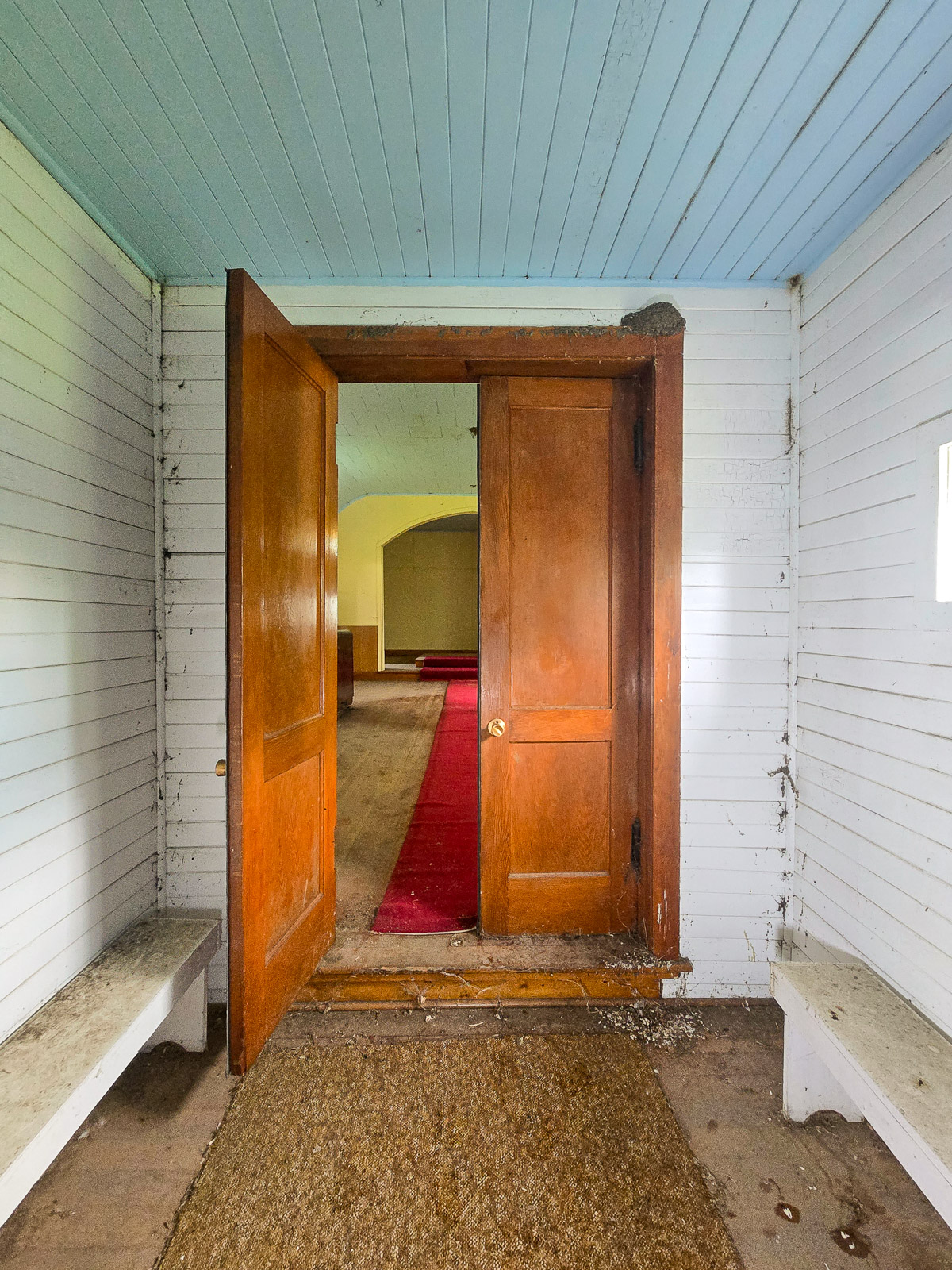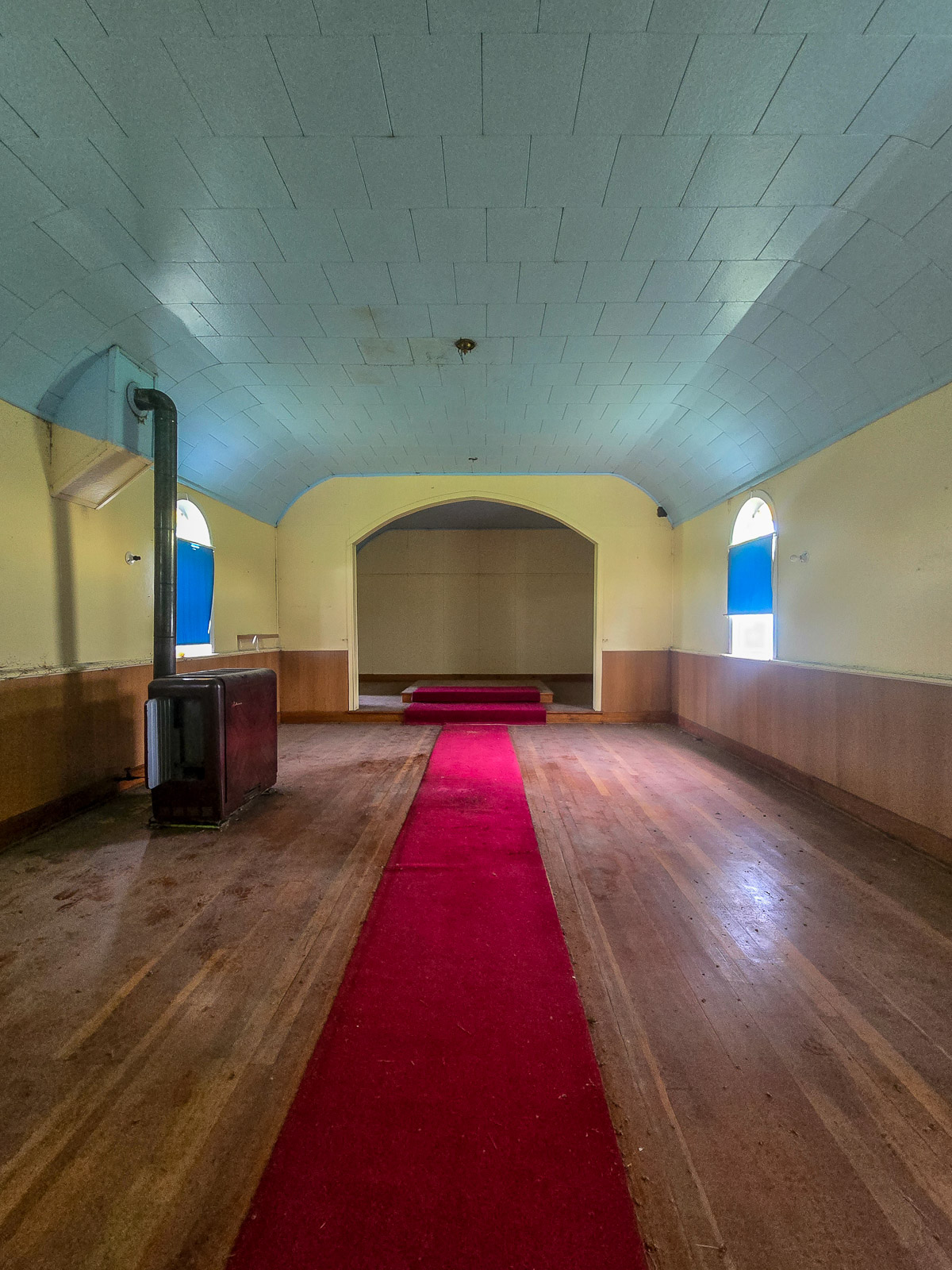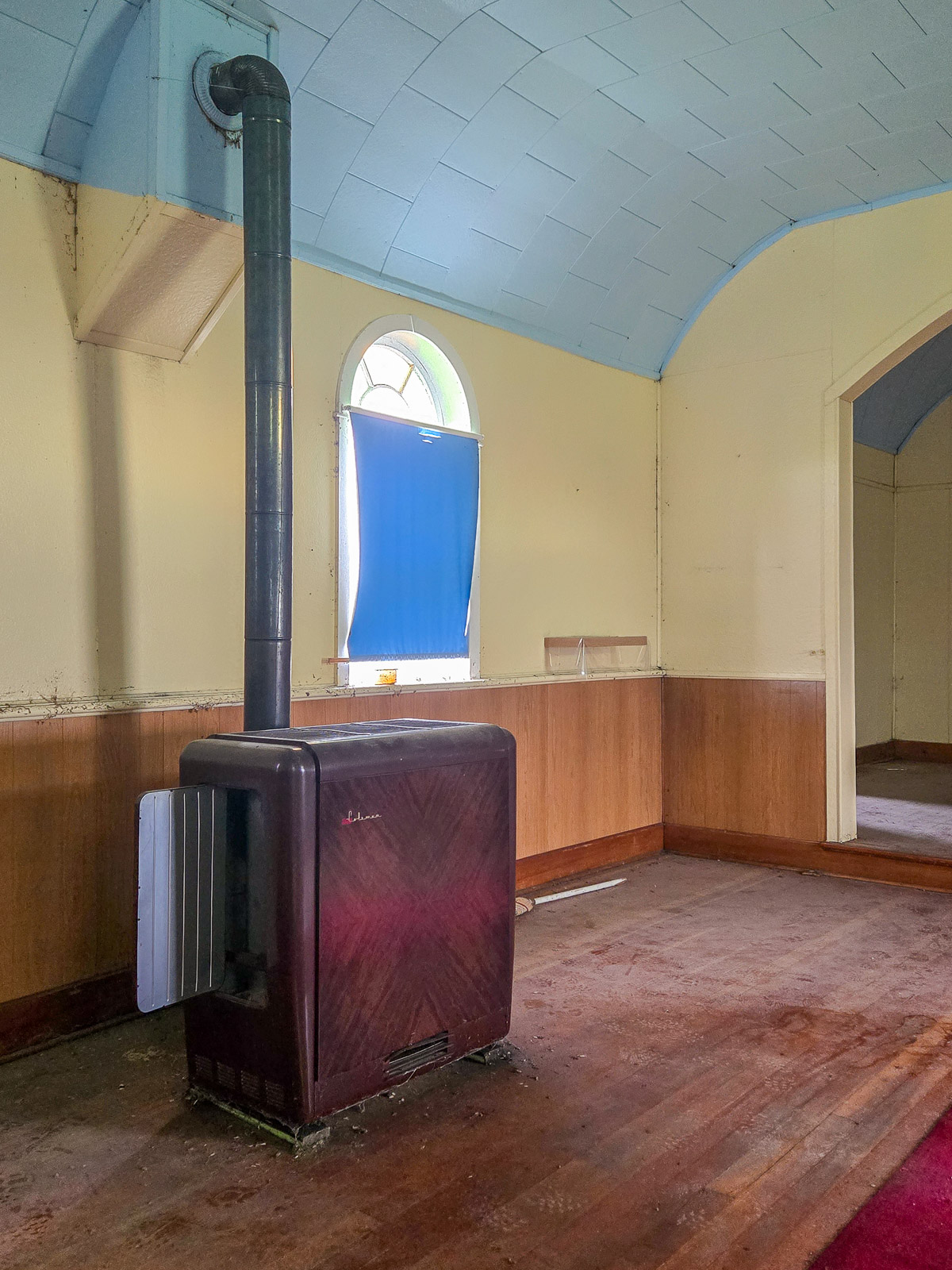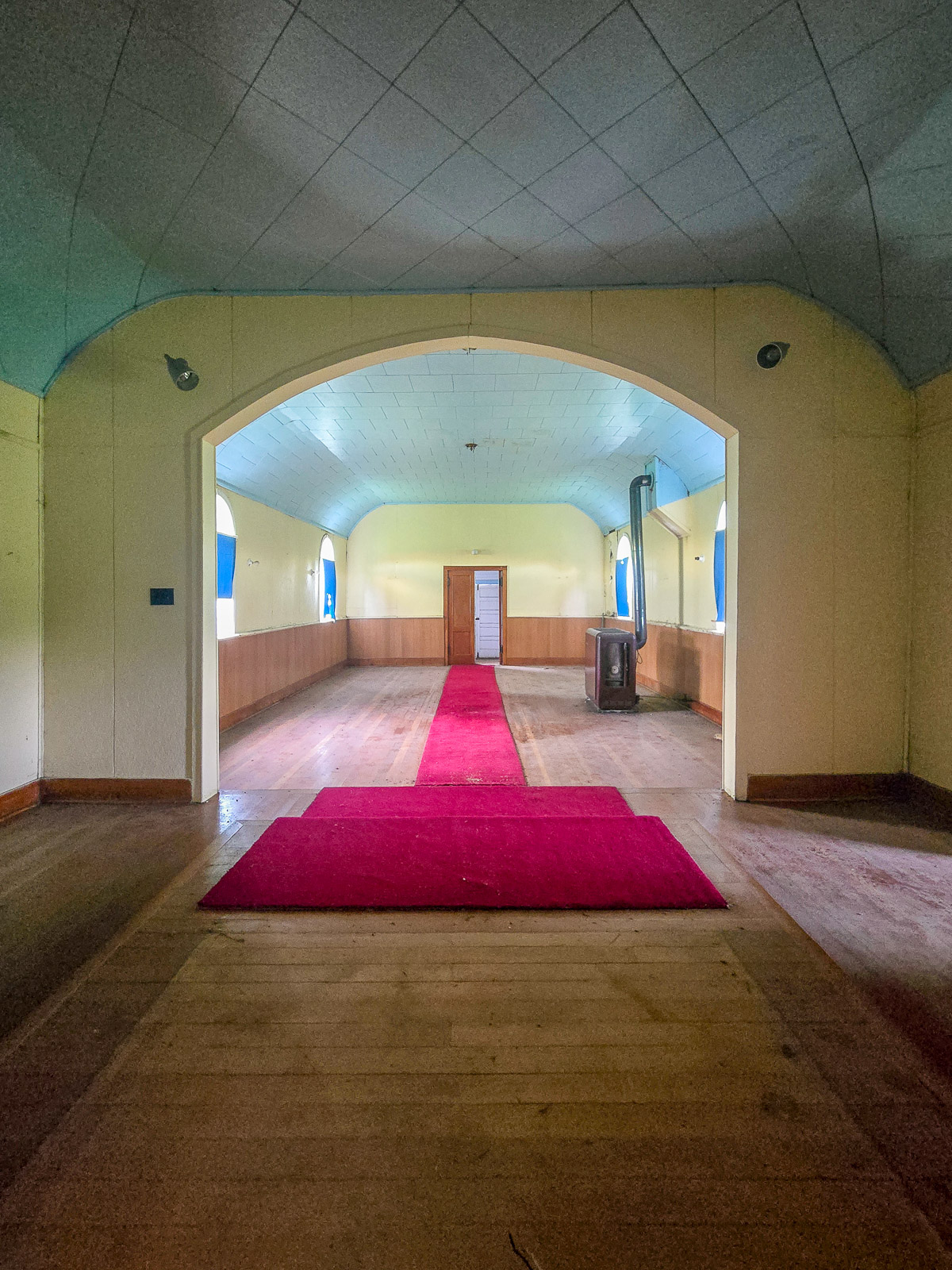
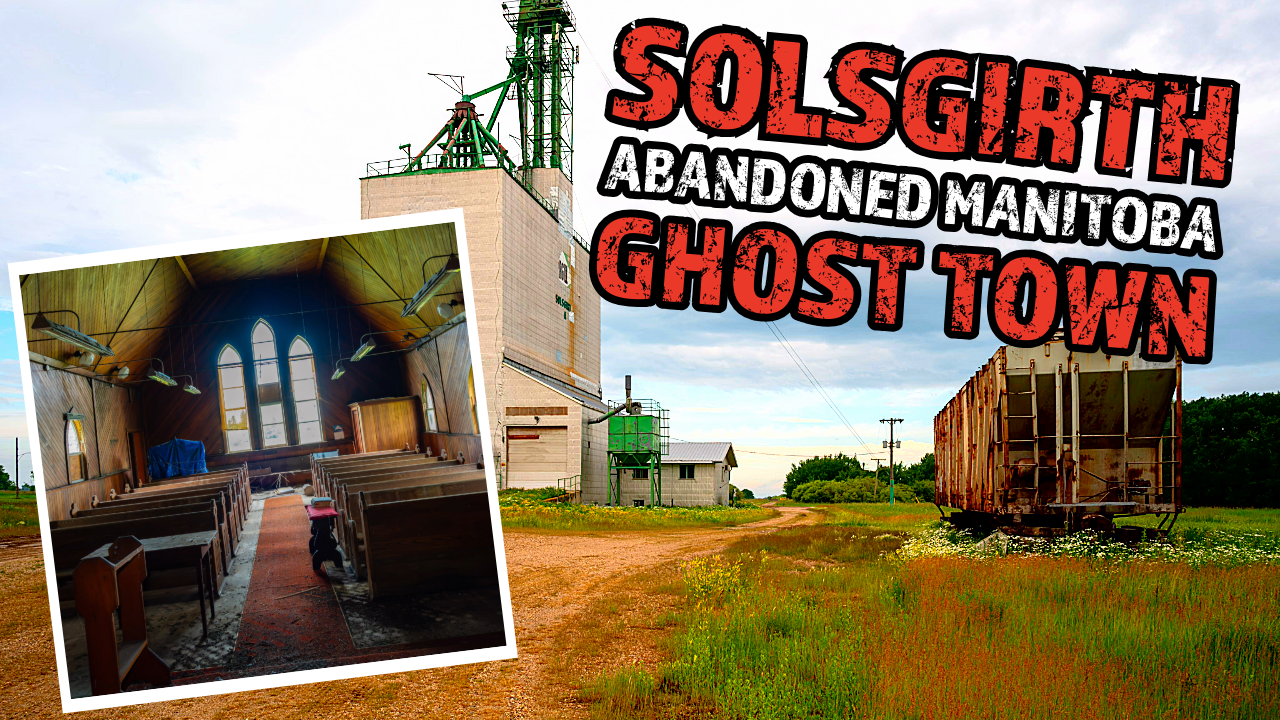
Solsgirth, Manitoba, didn’t start where it stands today. It began about 10 km north as a place called Toddburn, until the railway changed its route and the whole town picked up and followed it.
Settlers built St. Stephen’s Anglican Church here in 1906. Decades later, Ukrainian Catholic families moved an old one-room schoolhouse into the village and turned it into Holy Ghost Ukrainian Catholic Church, with onion domes hand-crafted by a local carpenter.
For 50 years, two faiths worshipped a stone’s throw apart. Then, in 2002, both churches held their final services in the same year.
Today they still stand side by side, quietly holding the story of the people who built this place.

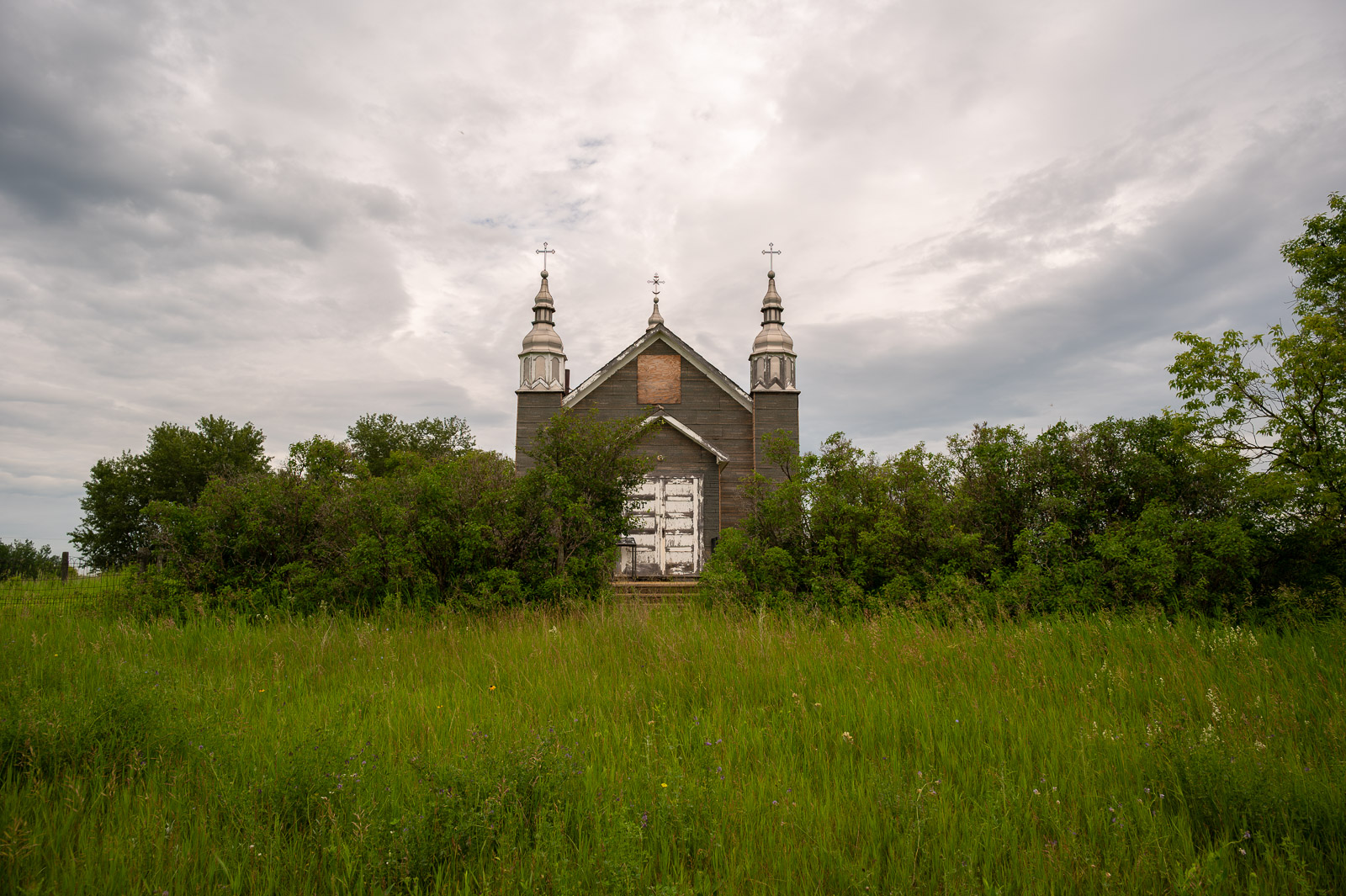
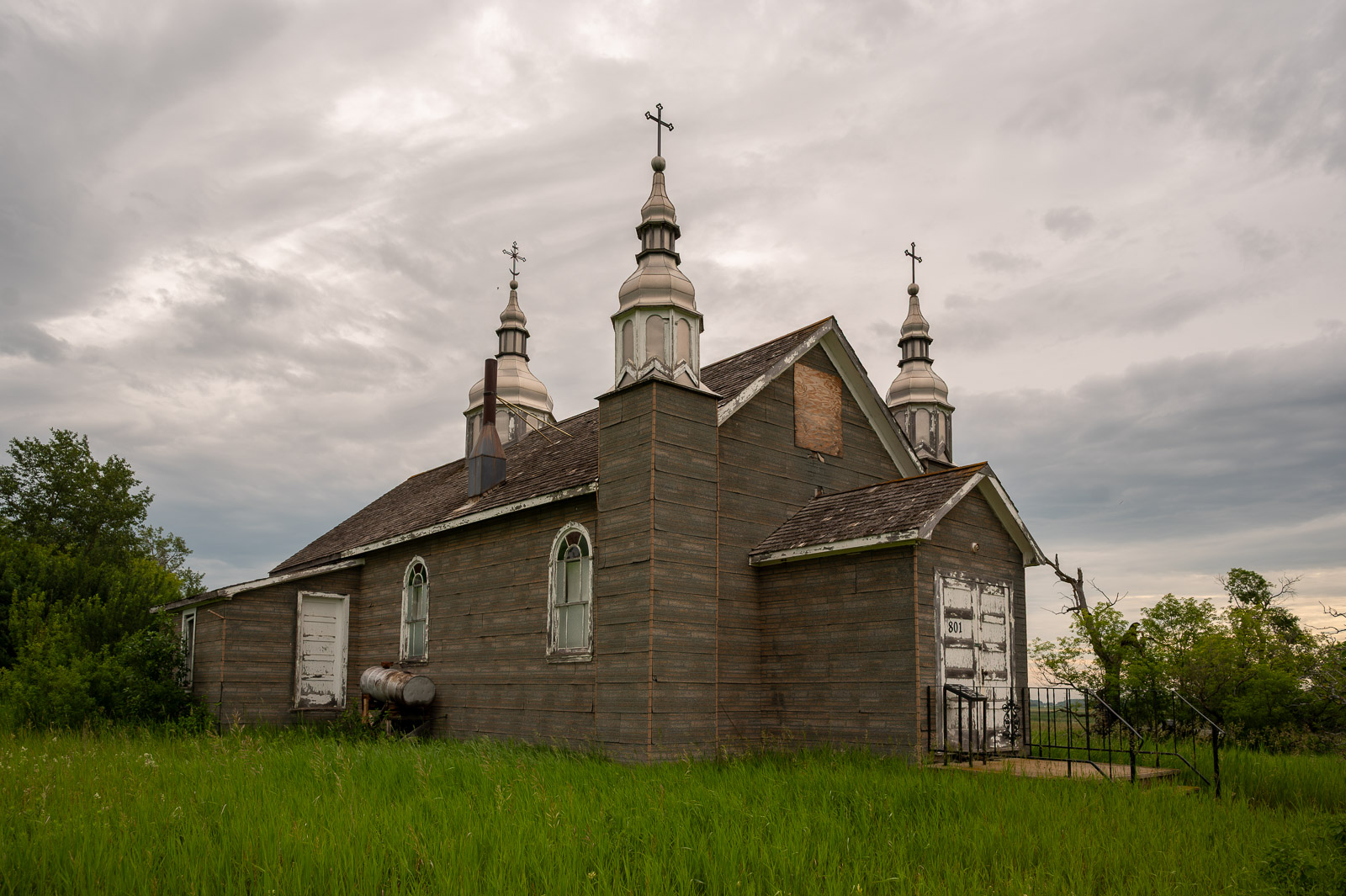
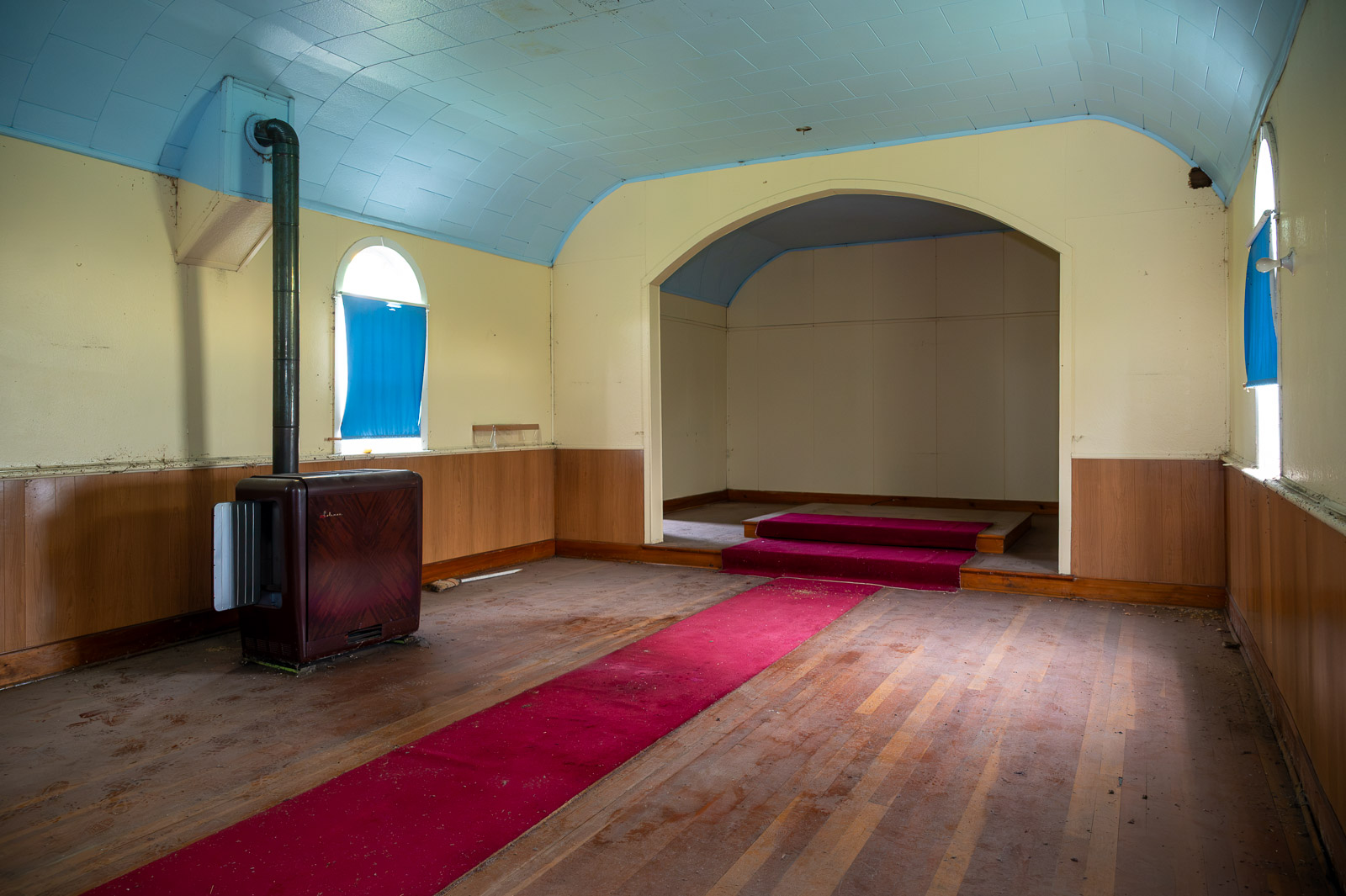
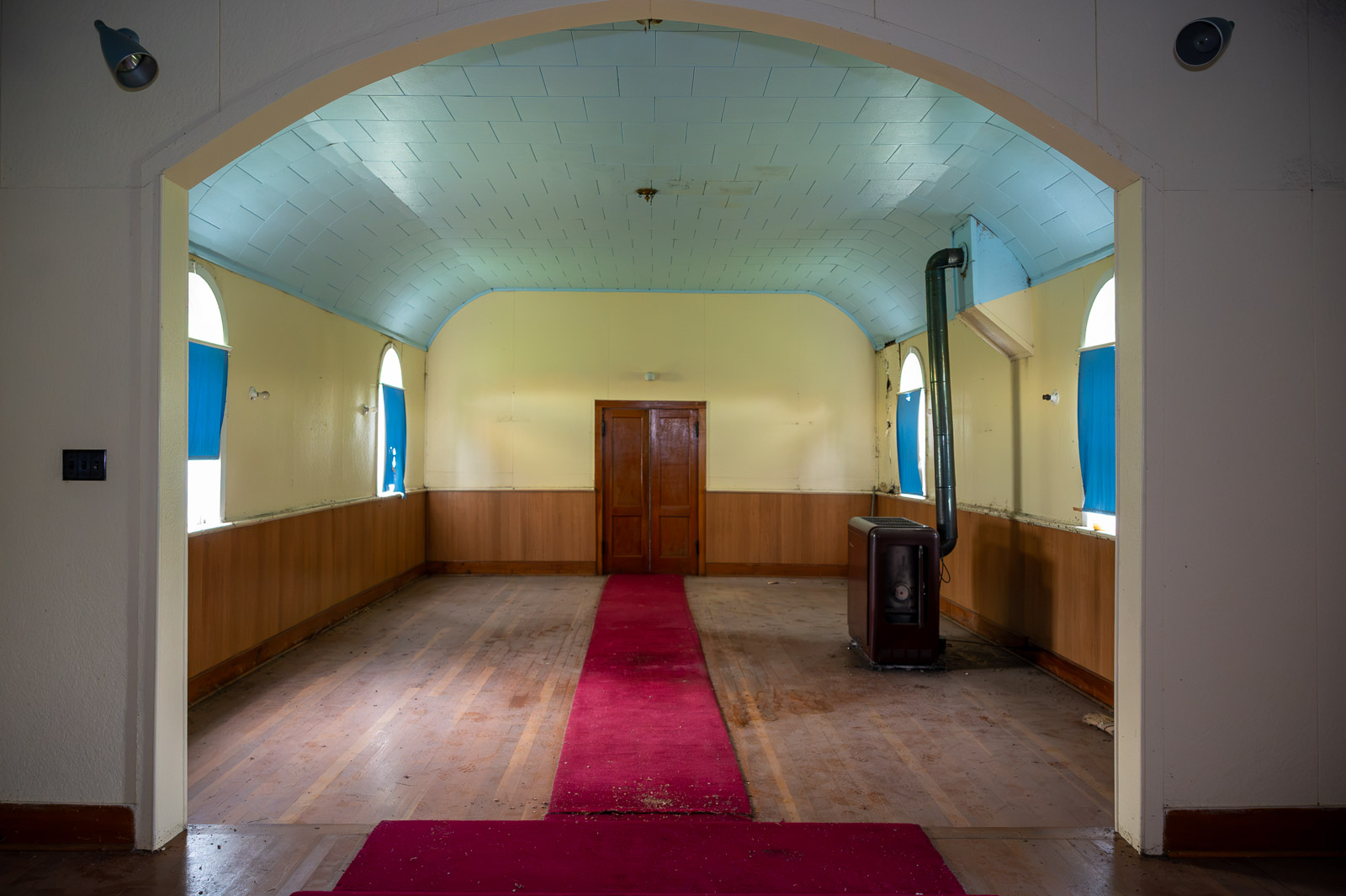
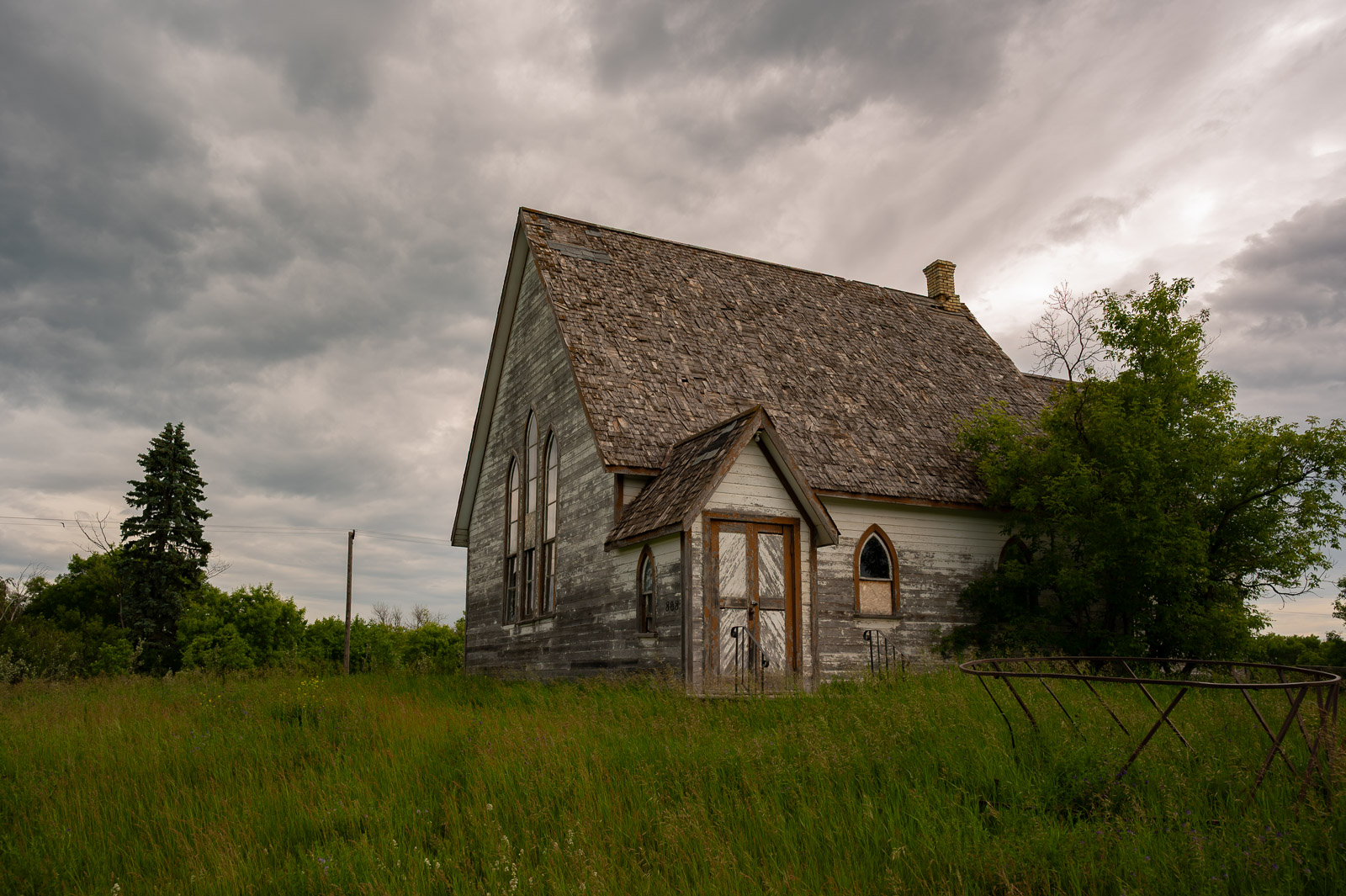
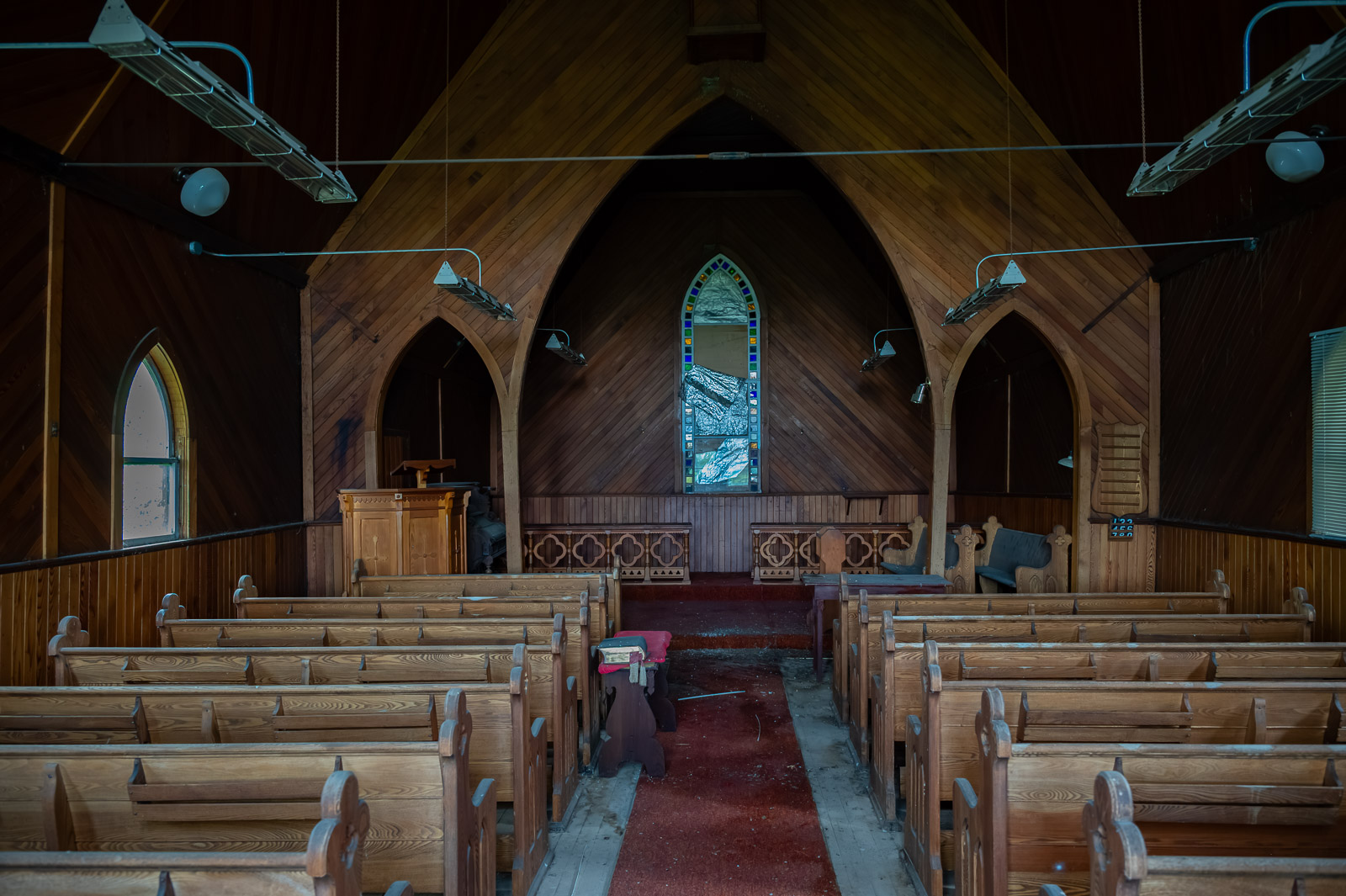
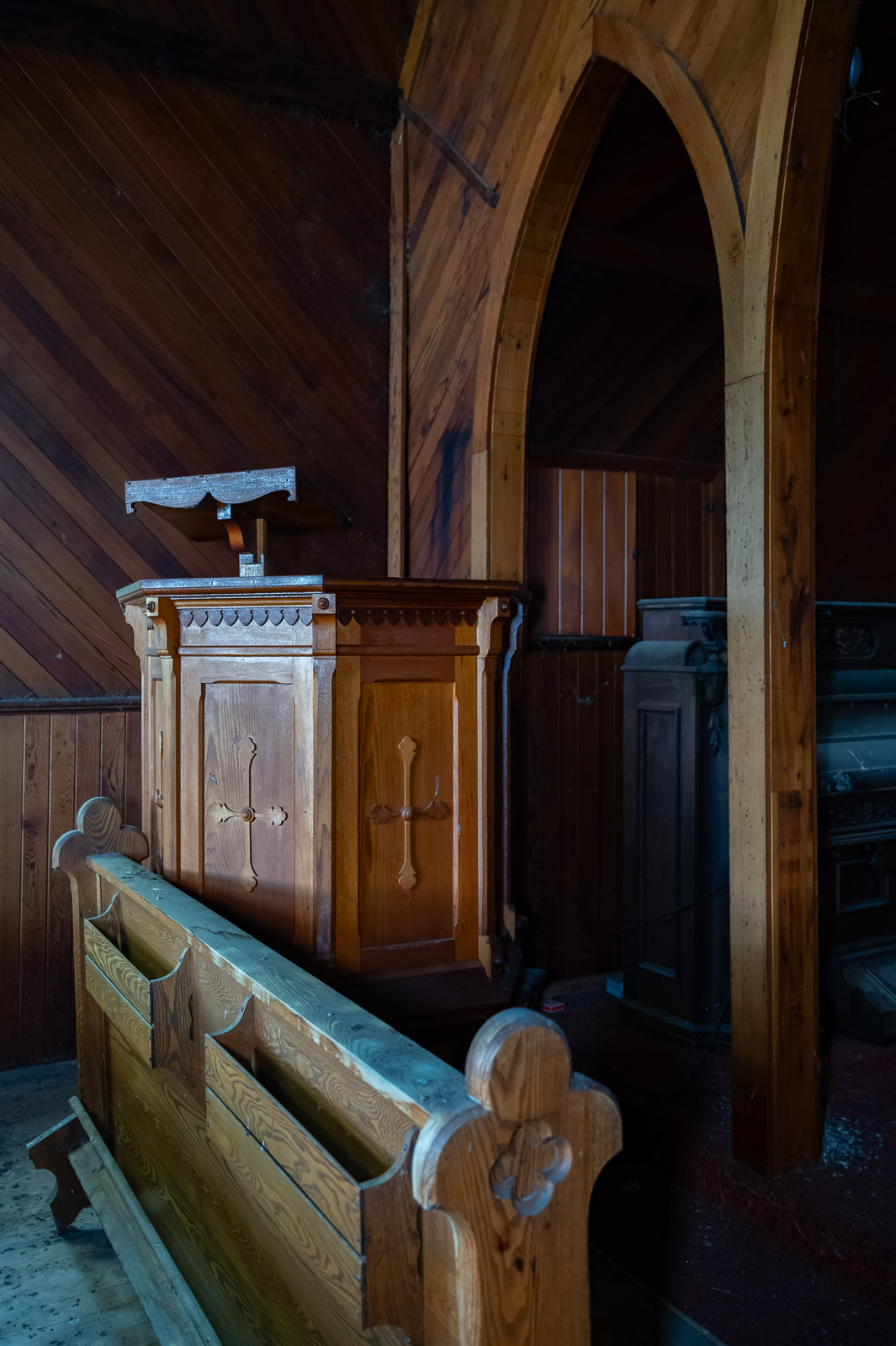
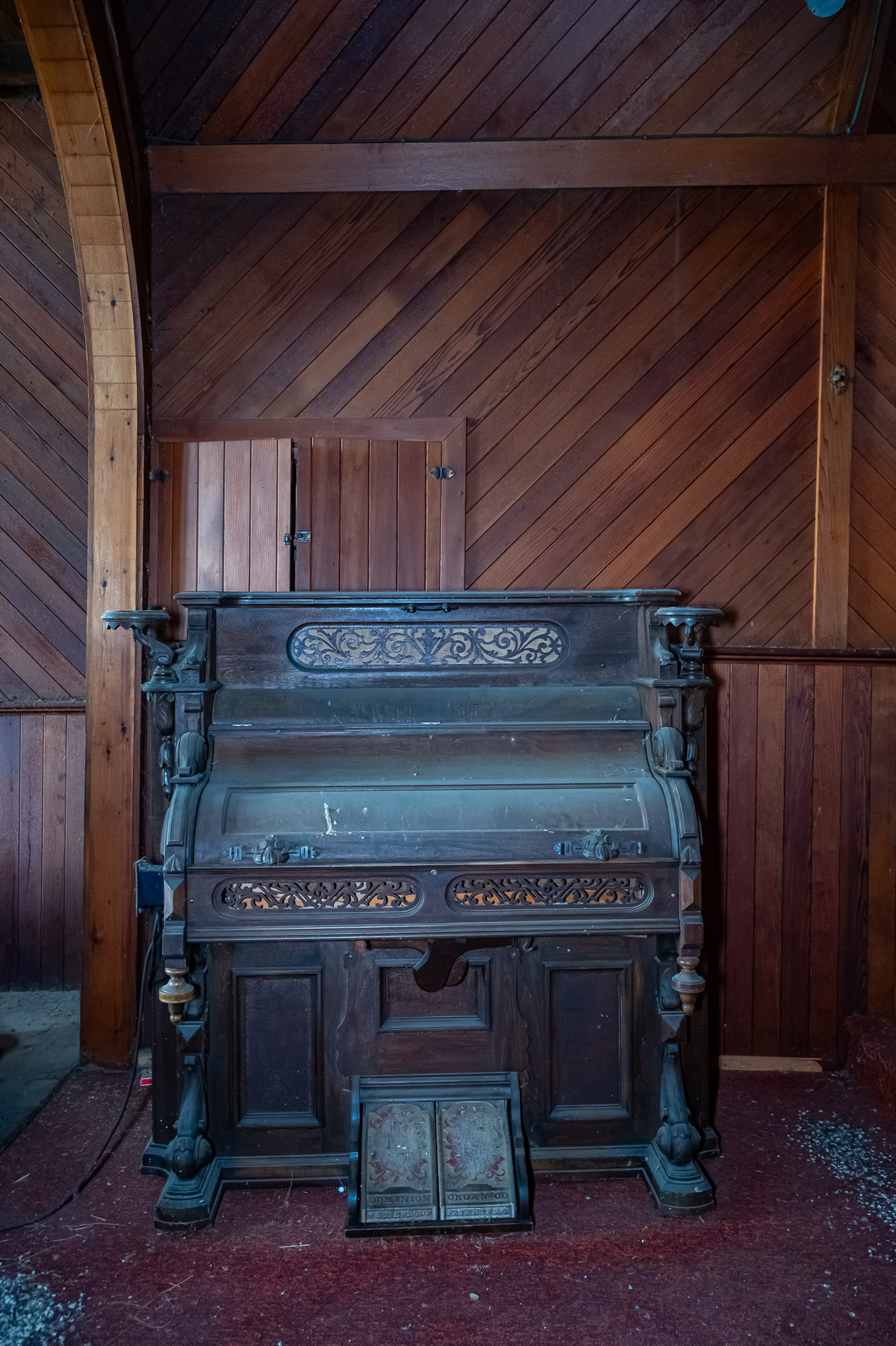
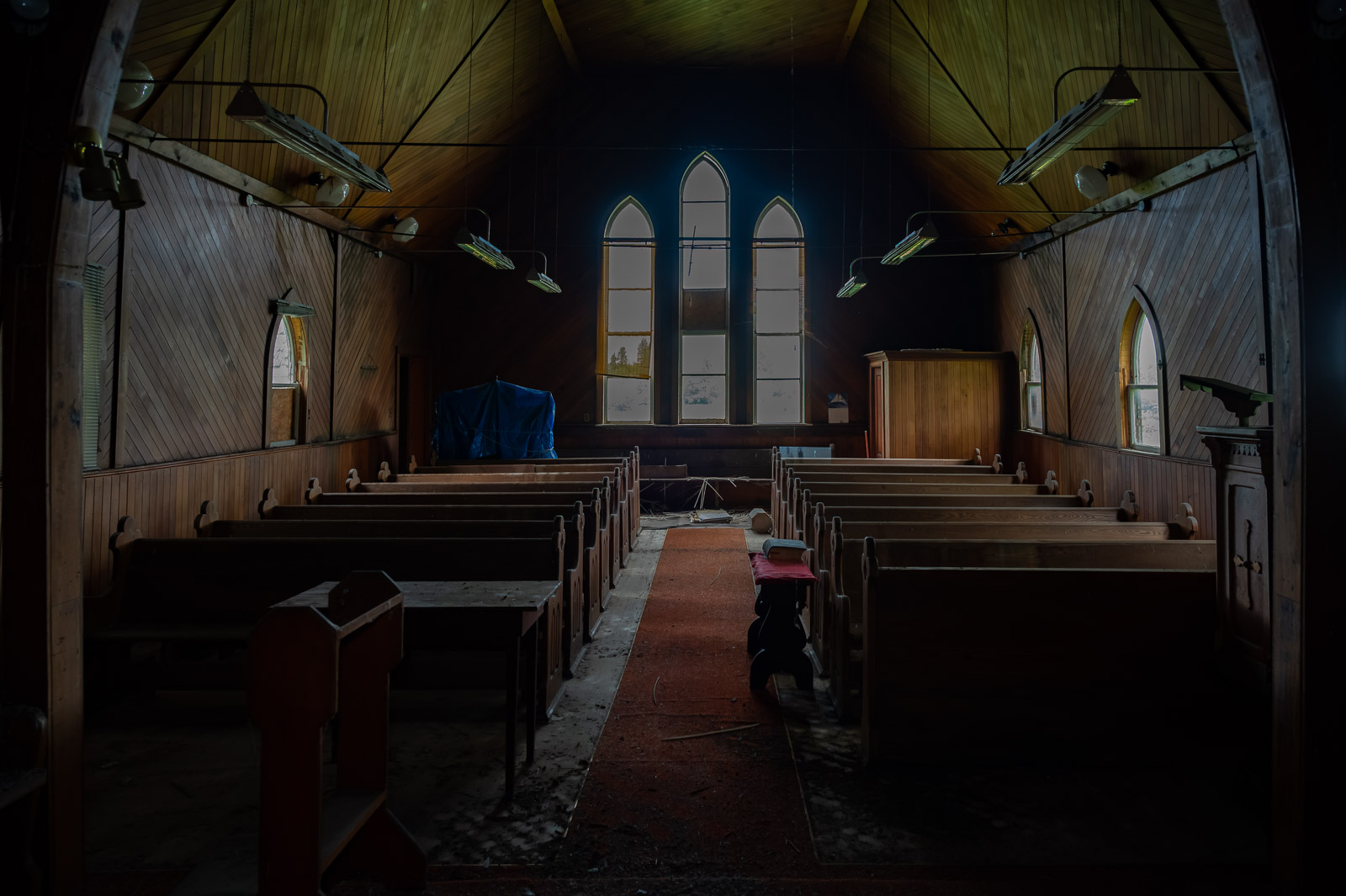
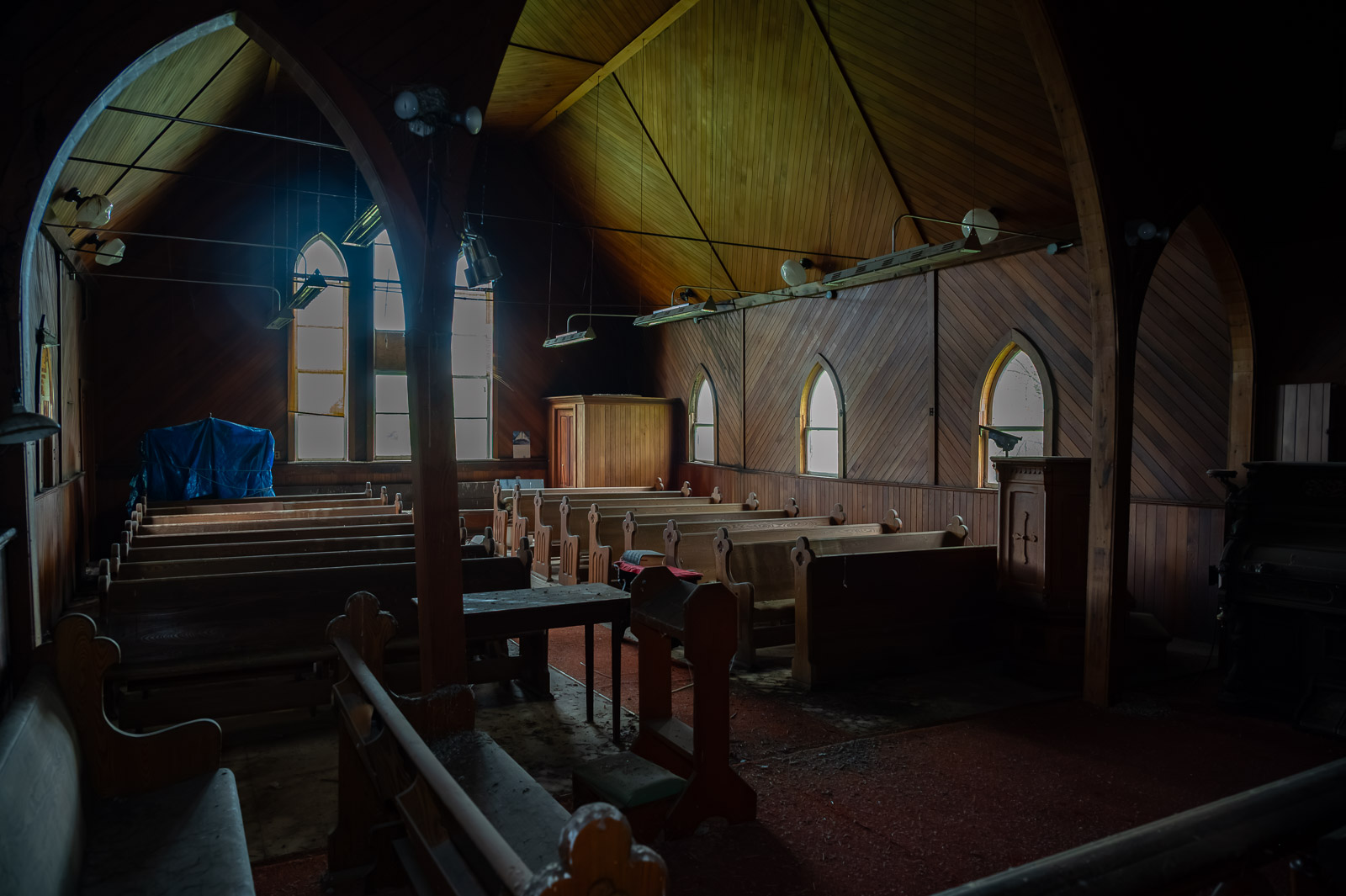
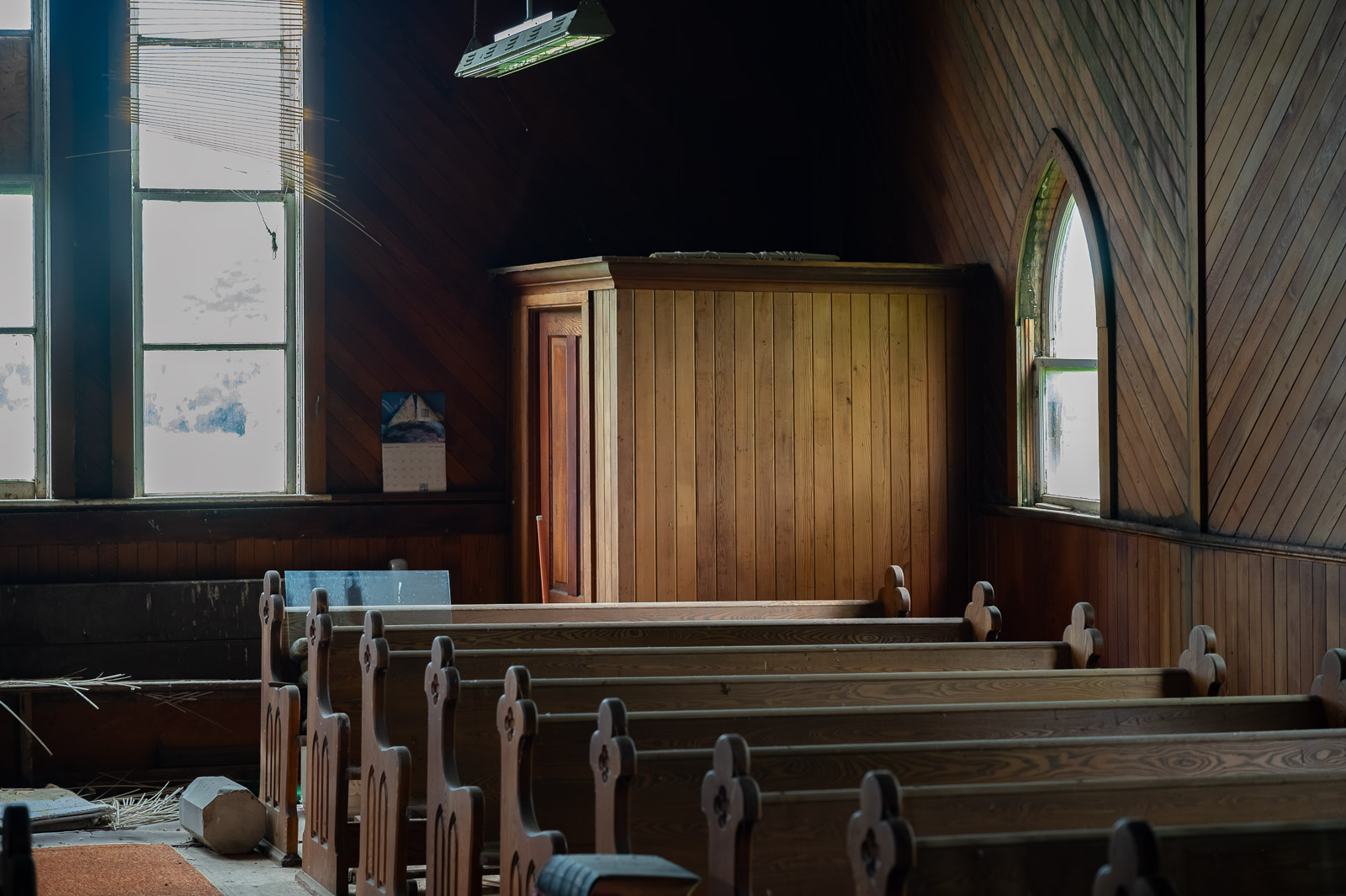
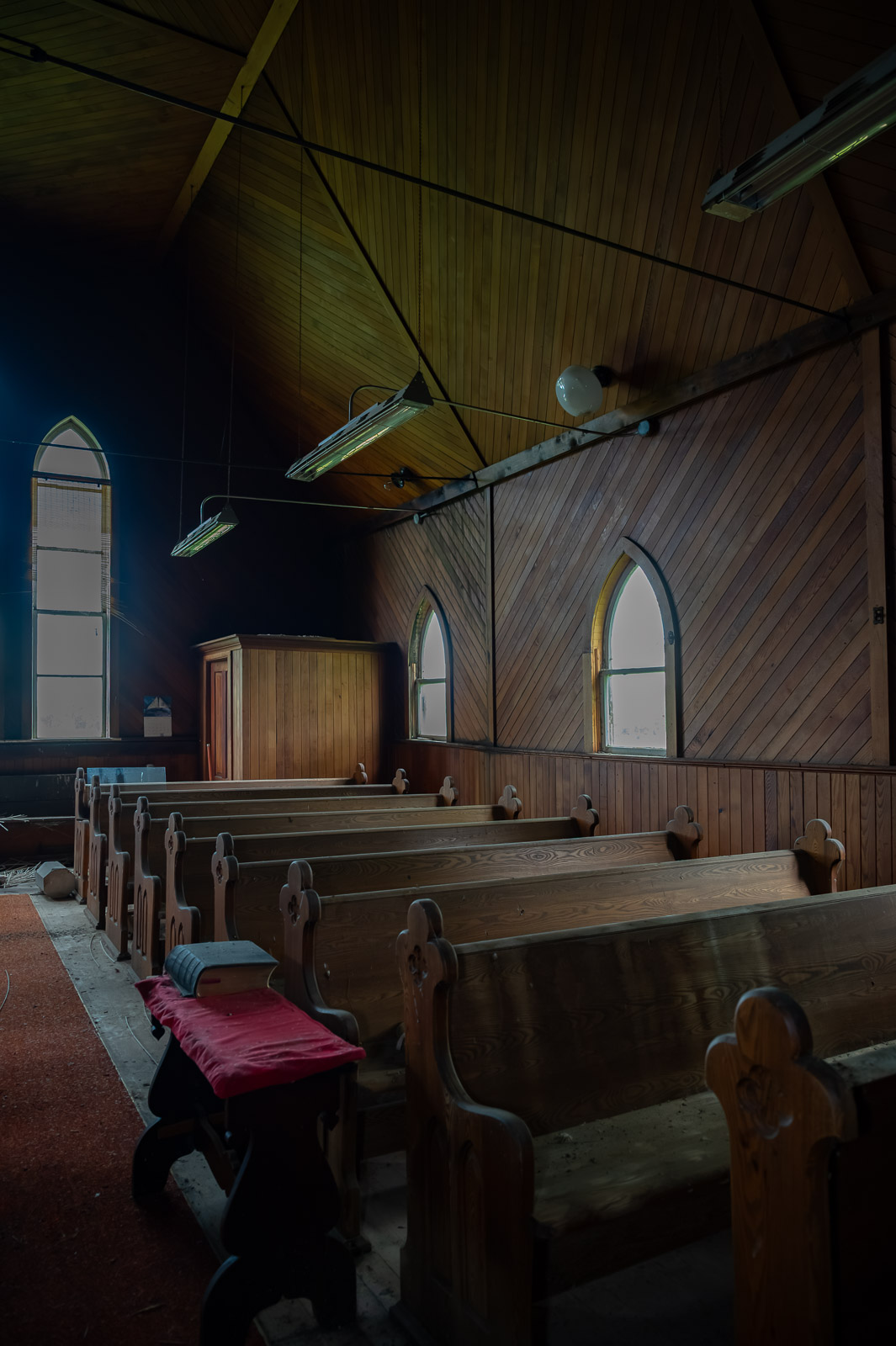
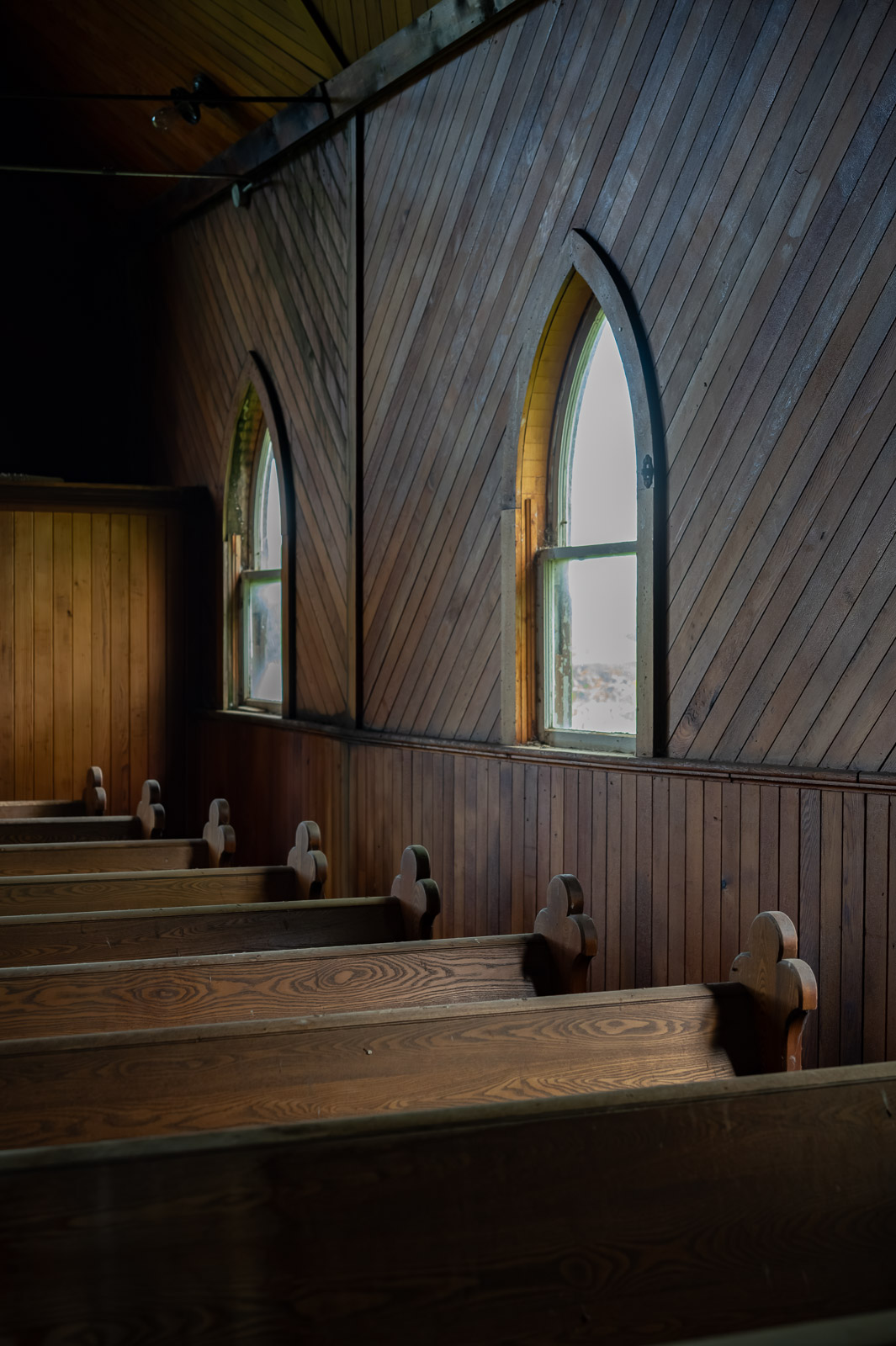
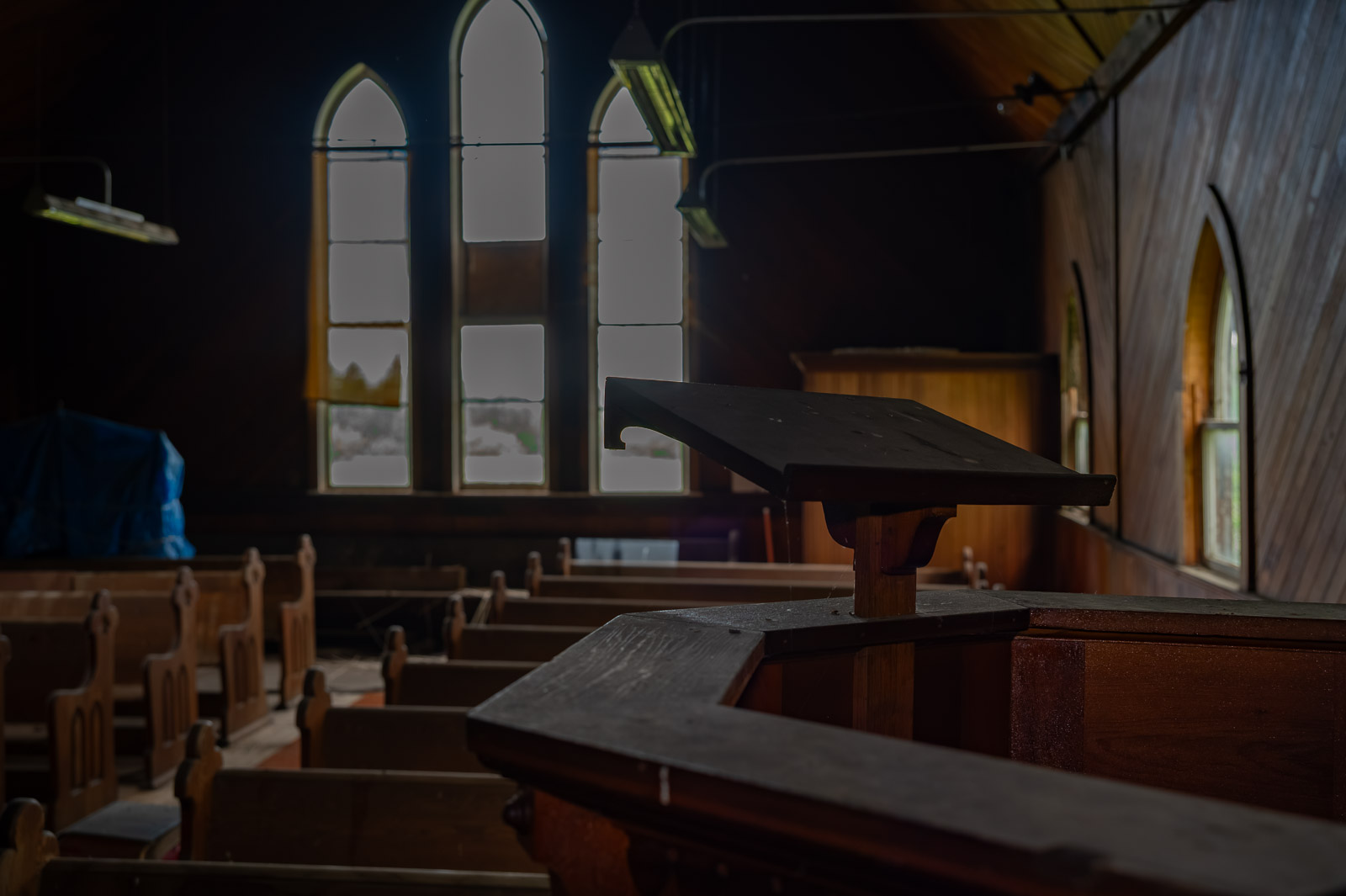
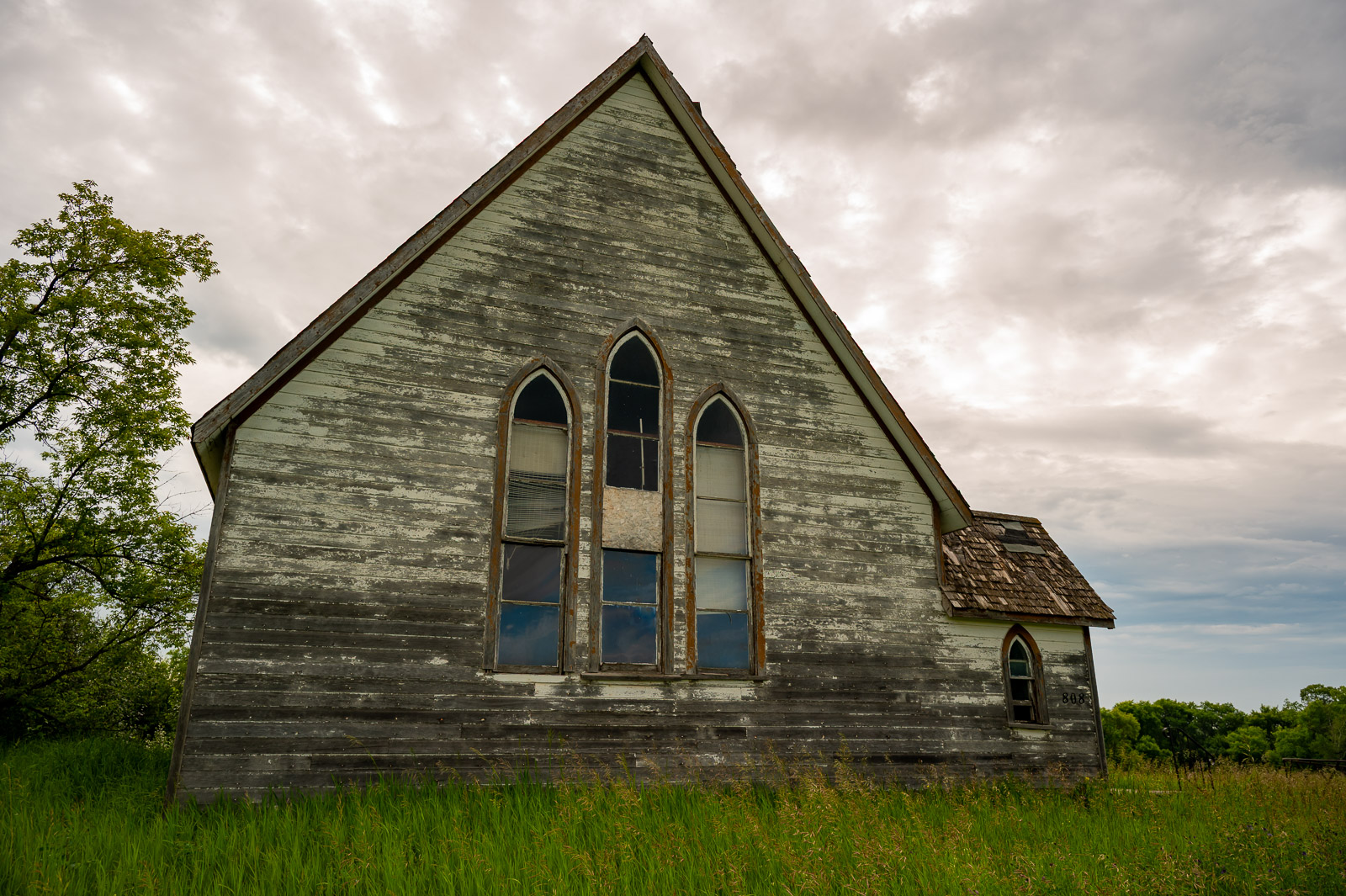
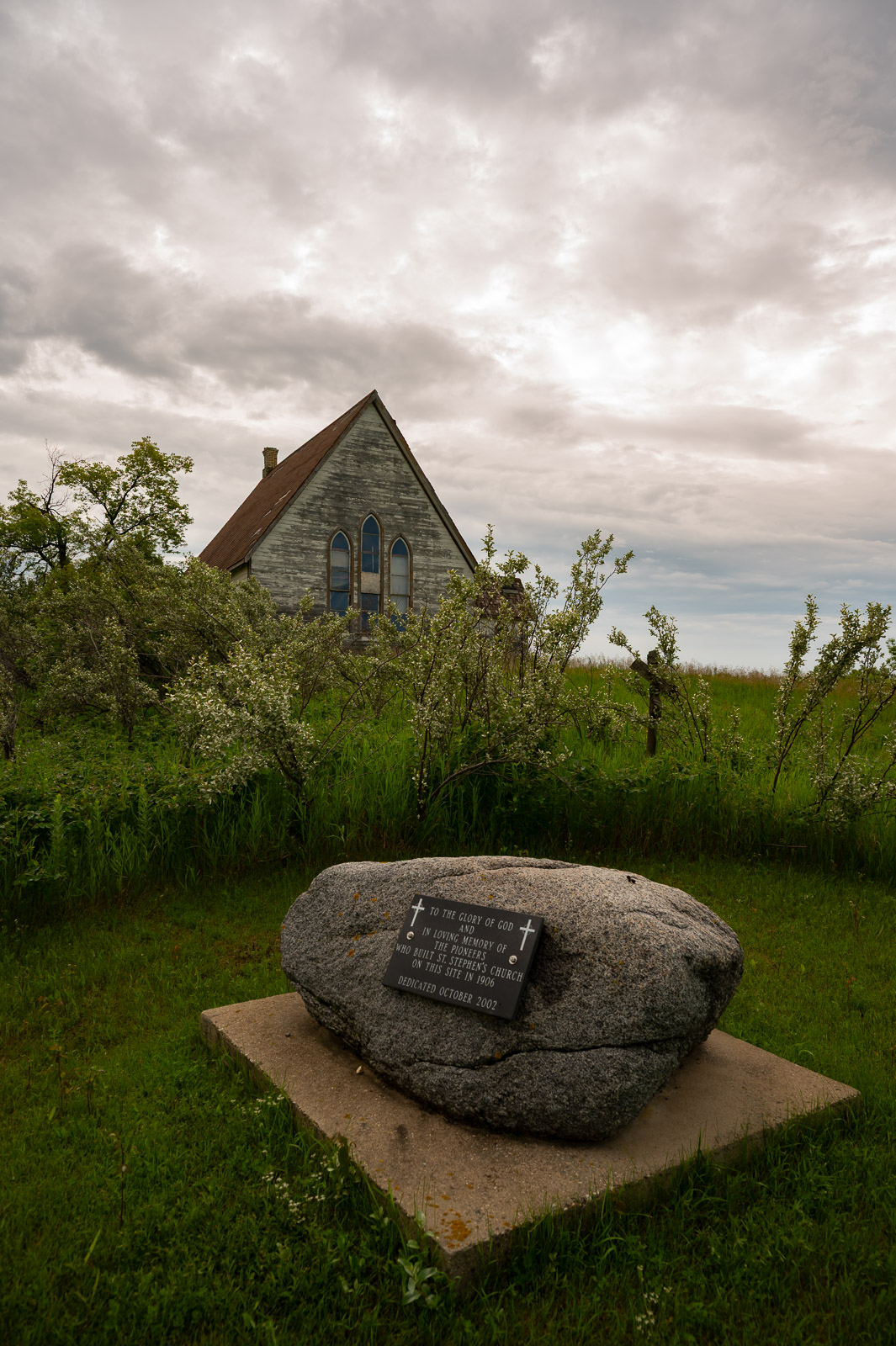
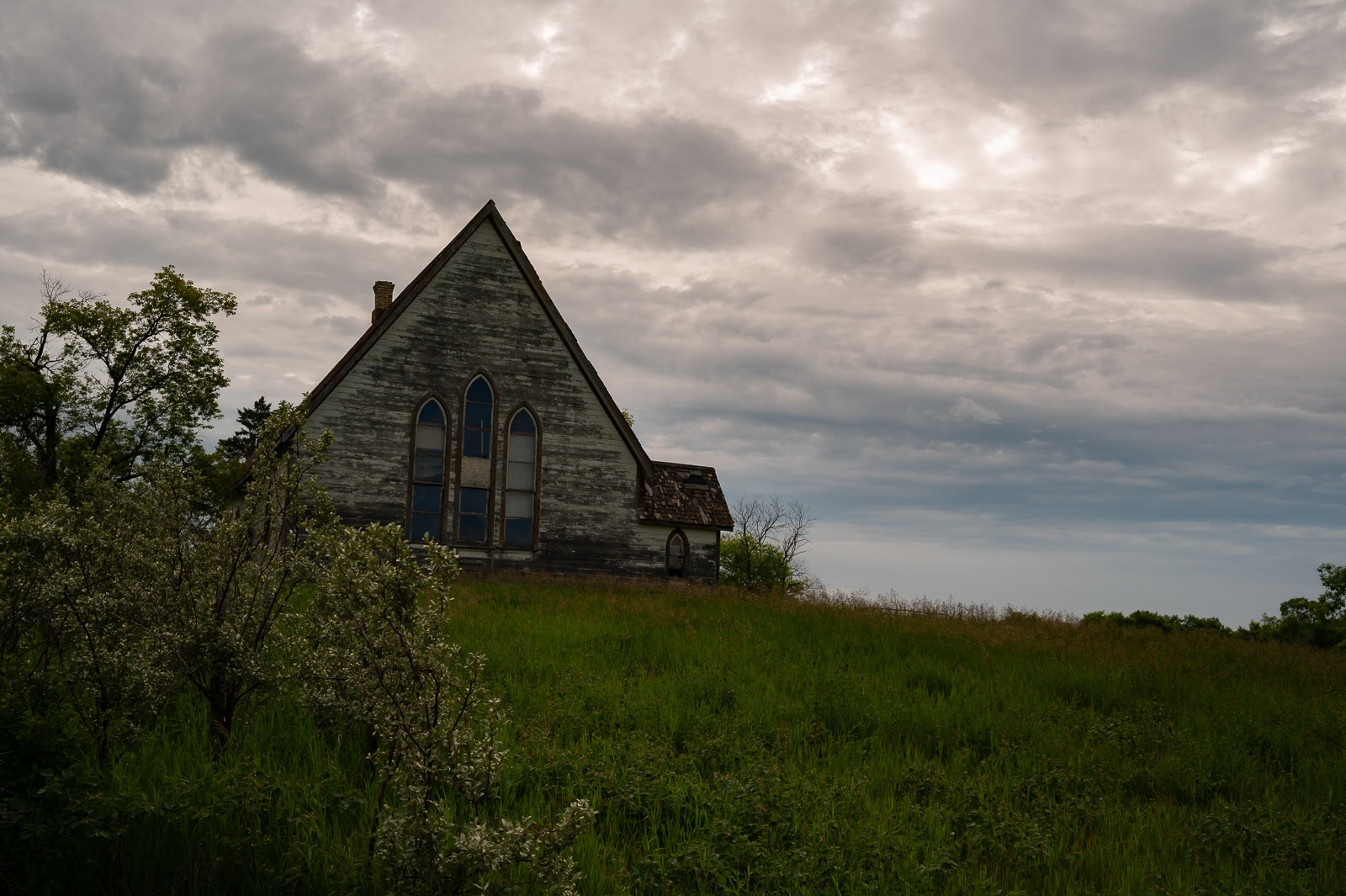
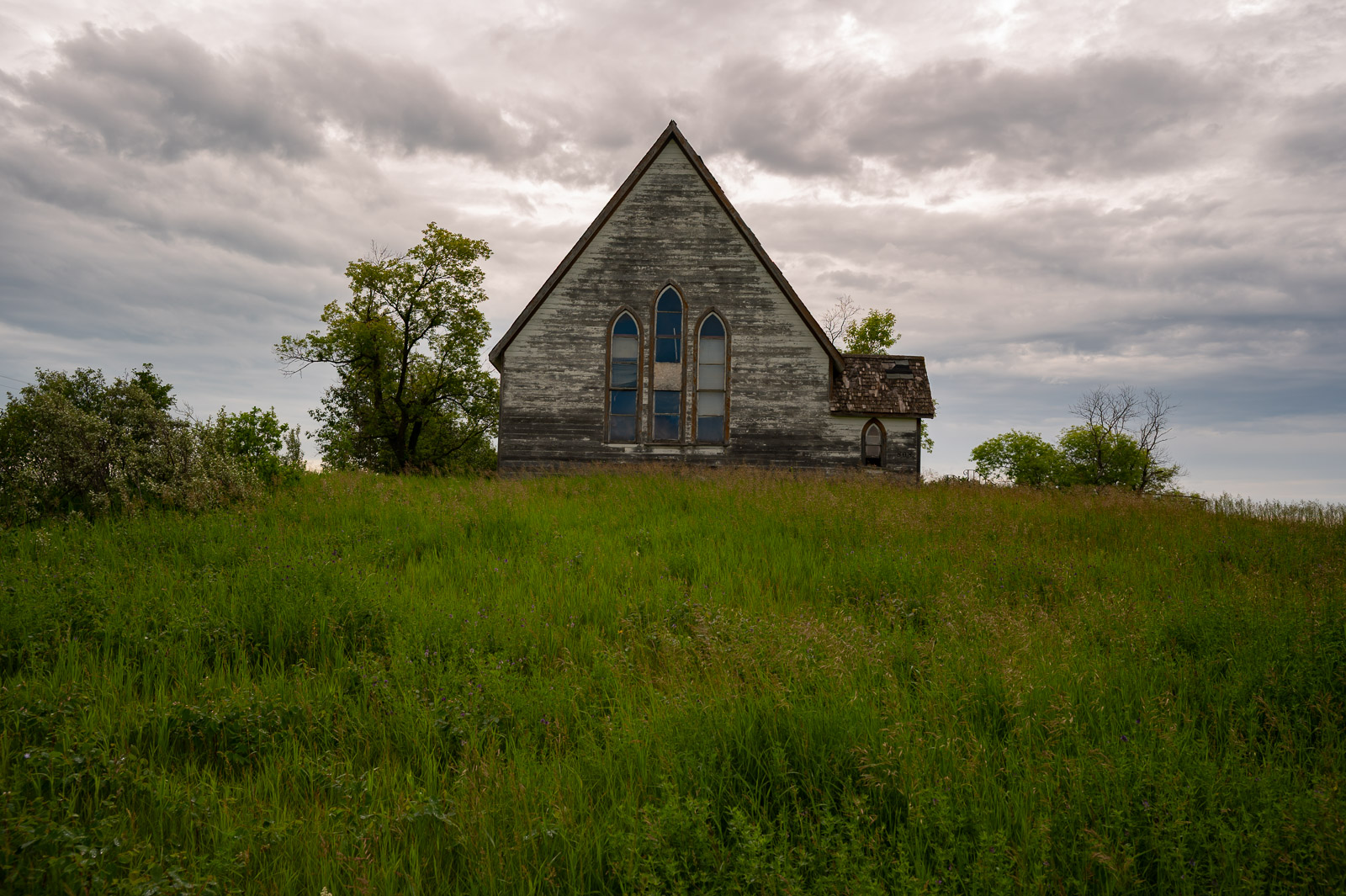
St. Stephen's Anglican Church – Solsgirth, Manitoba
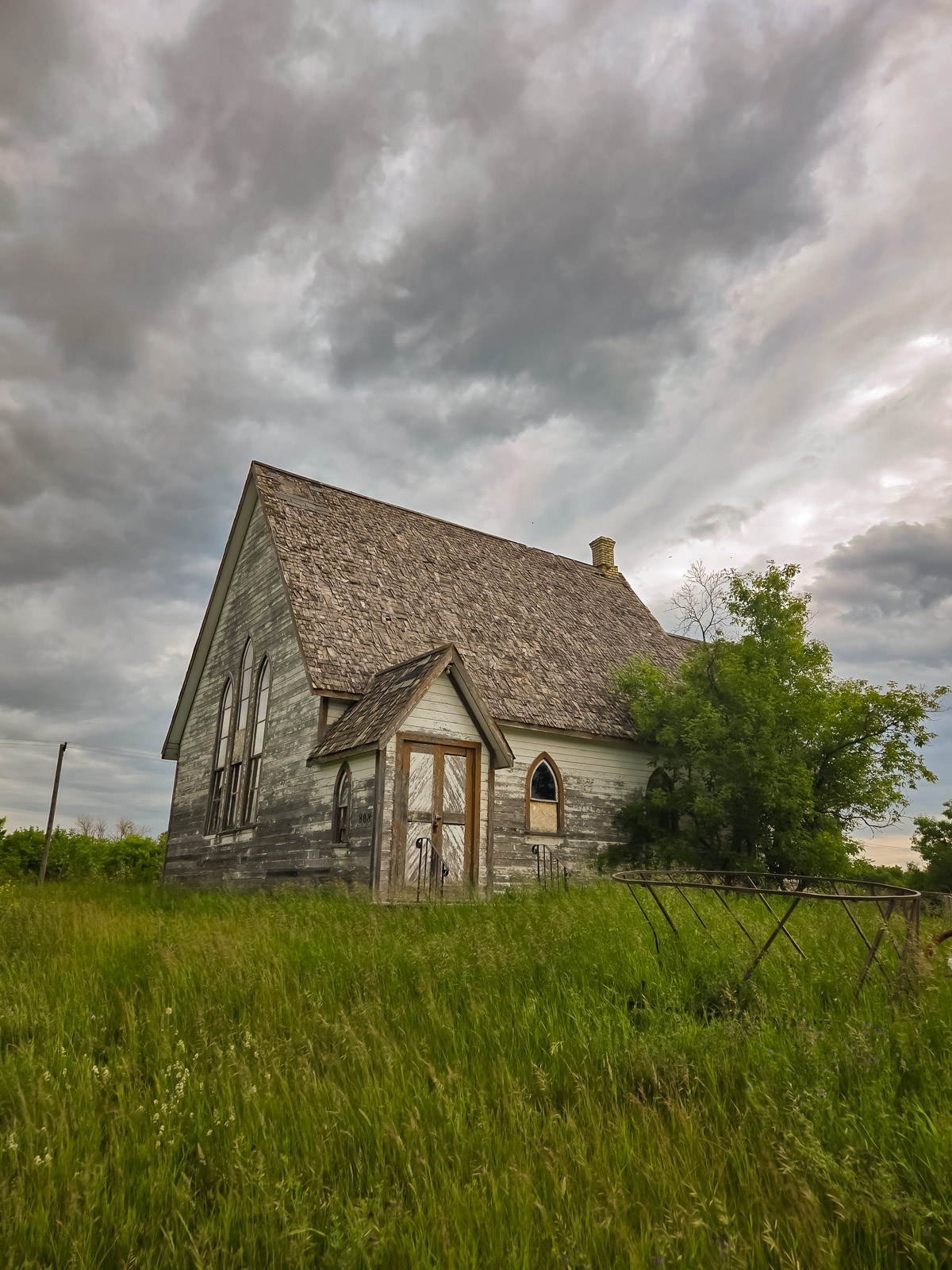
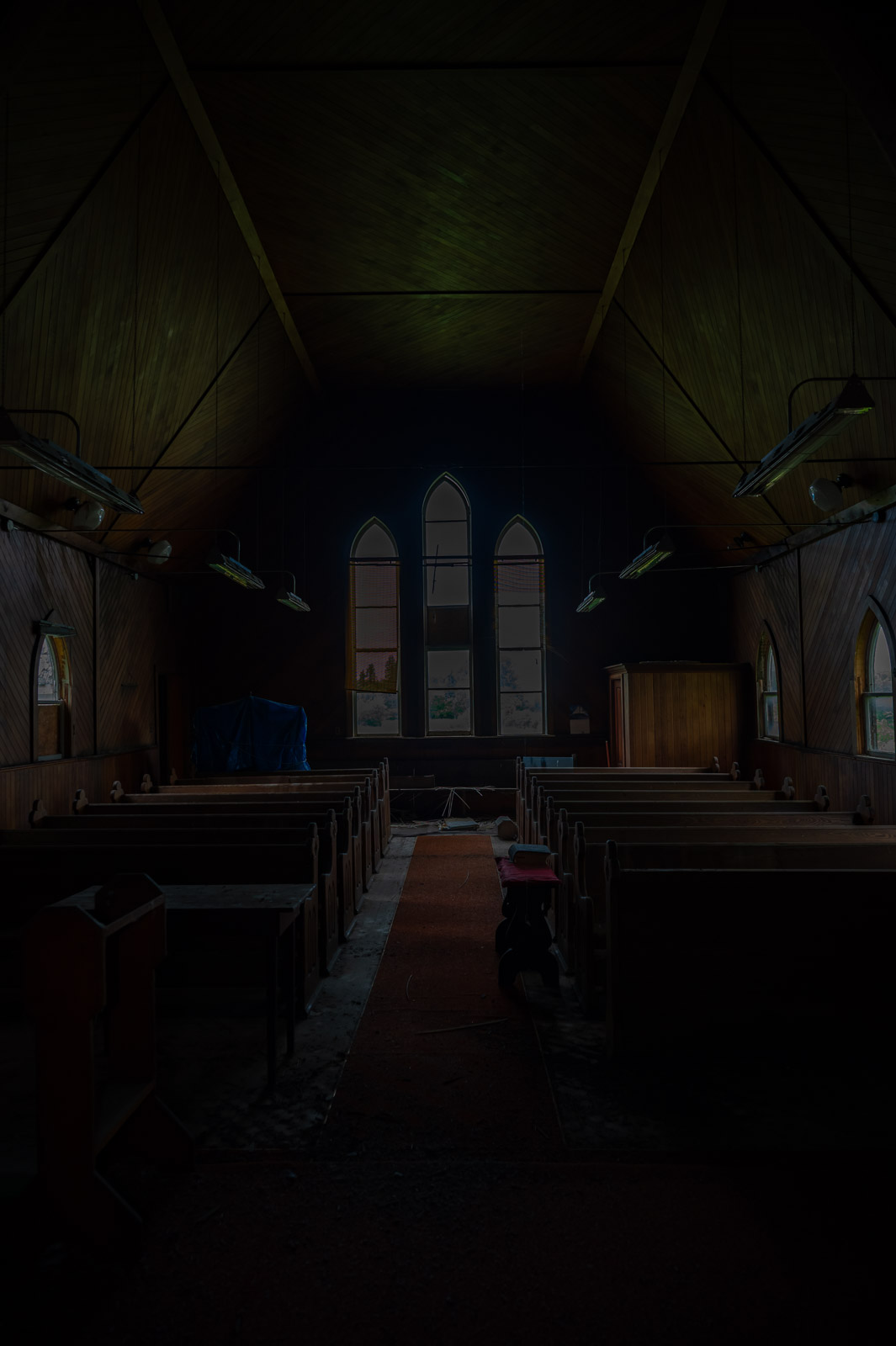
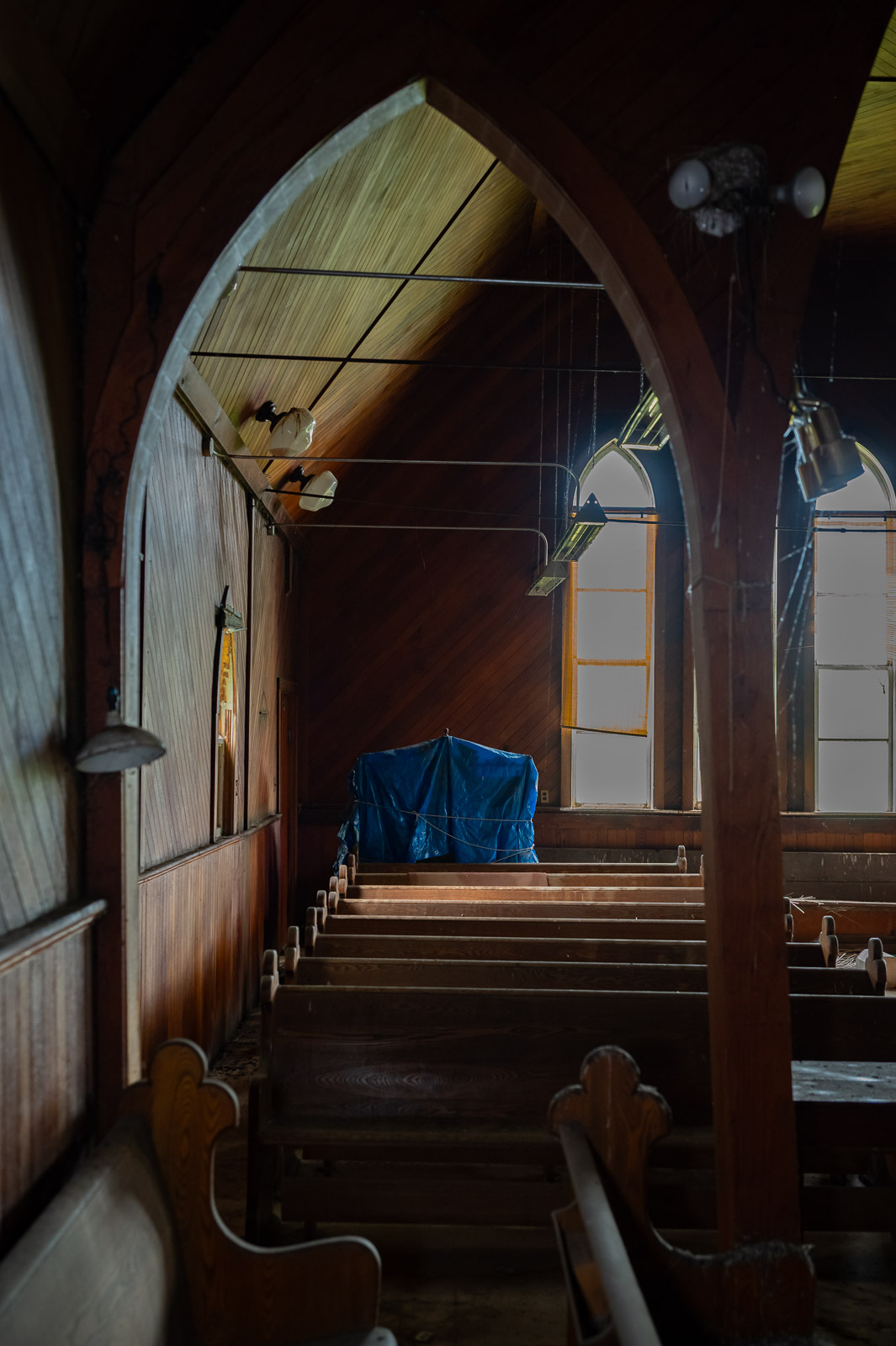
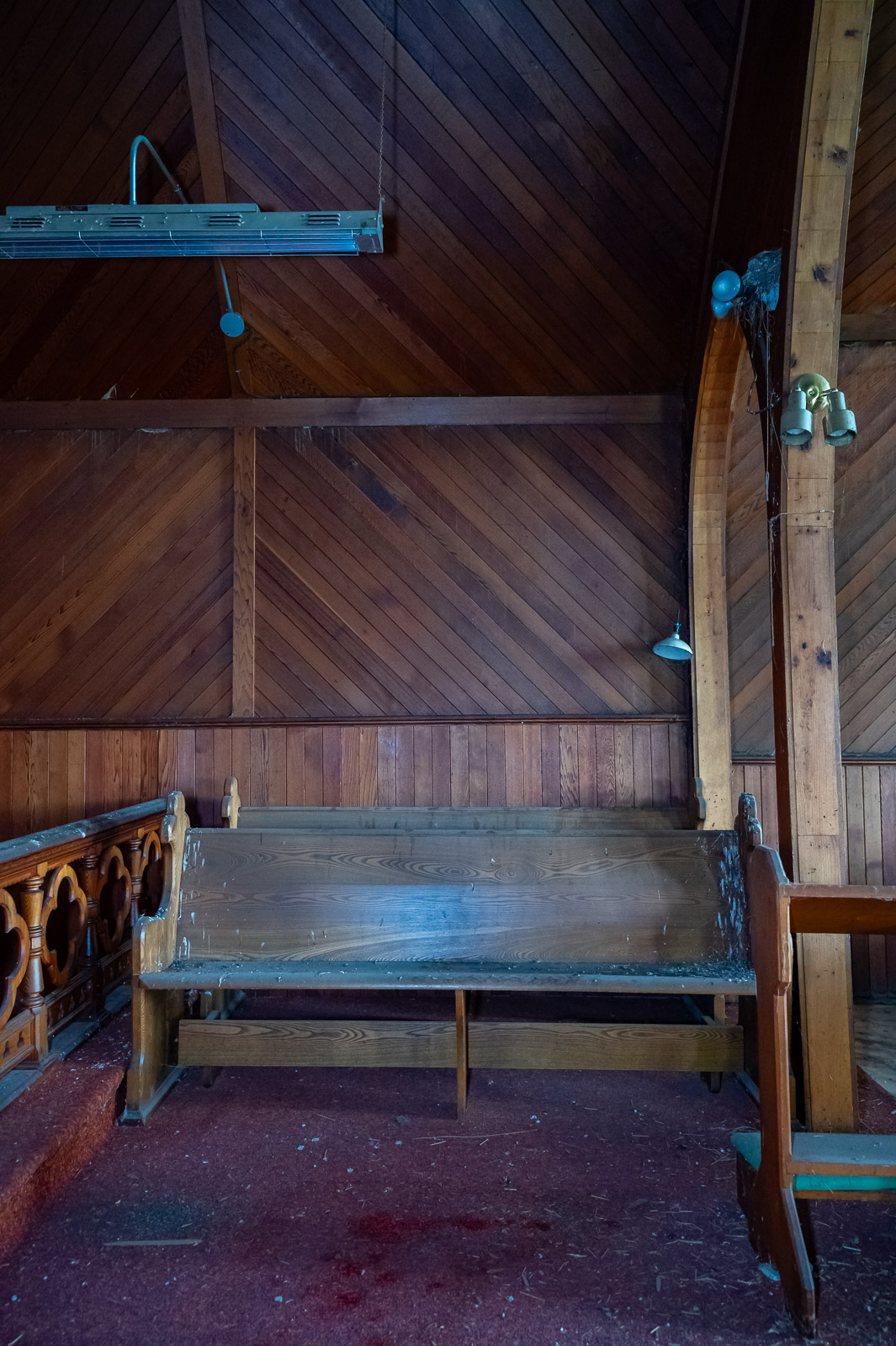
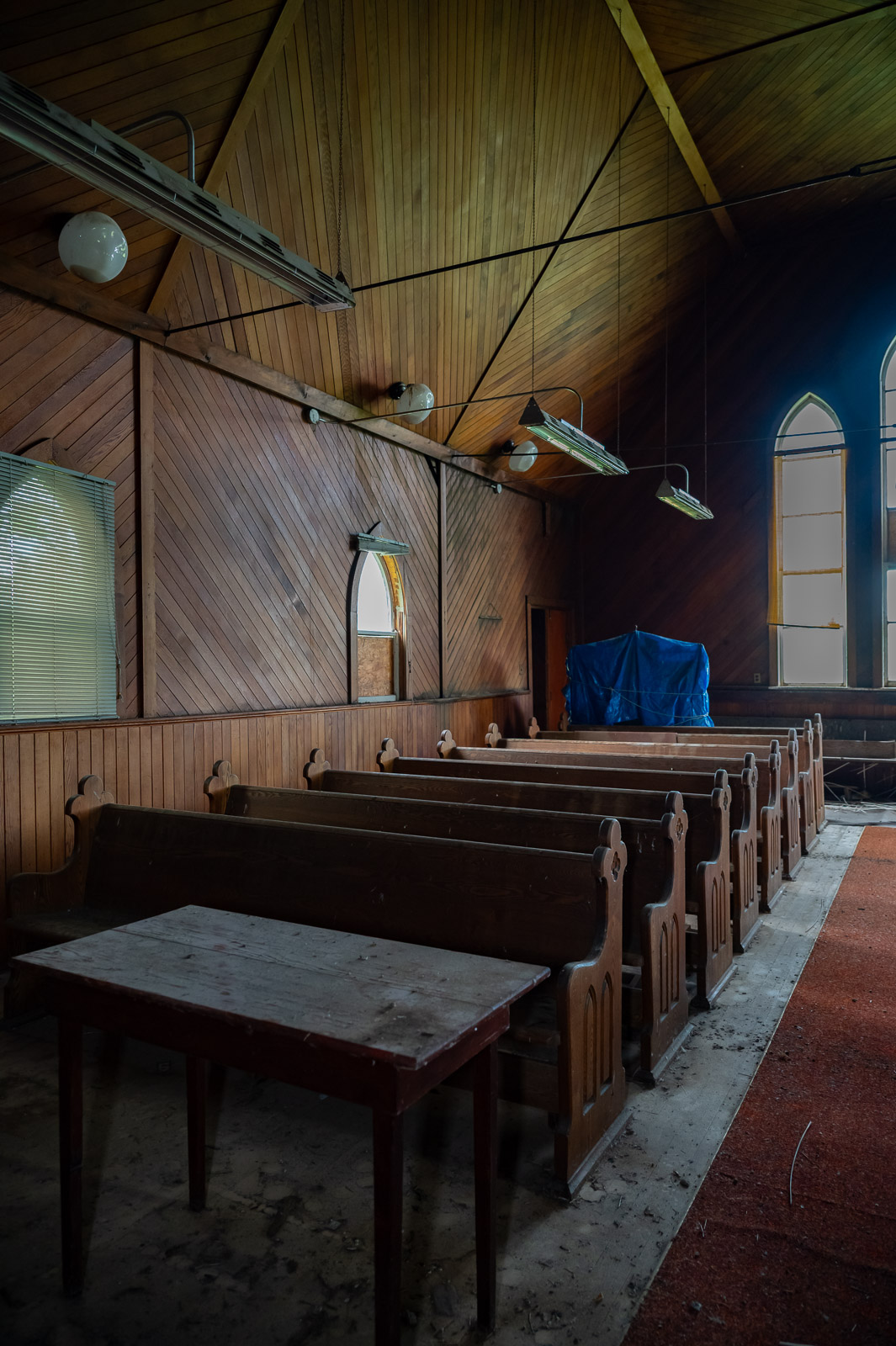
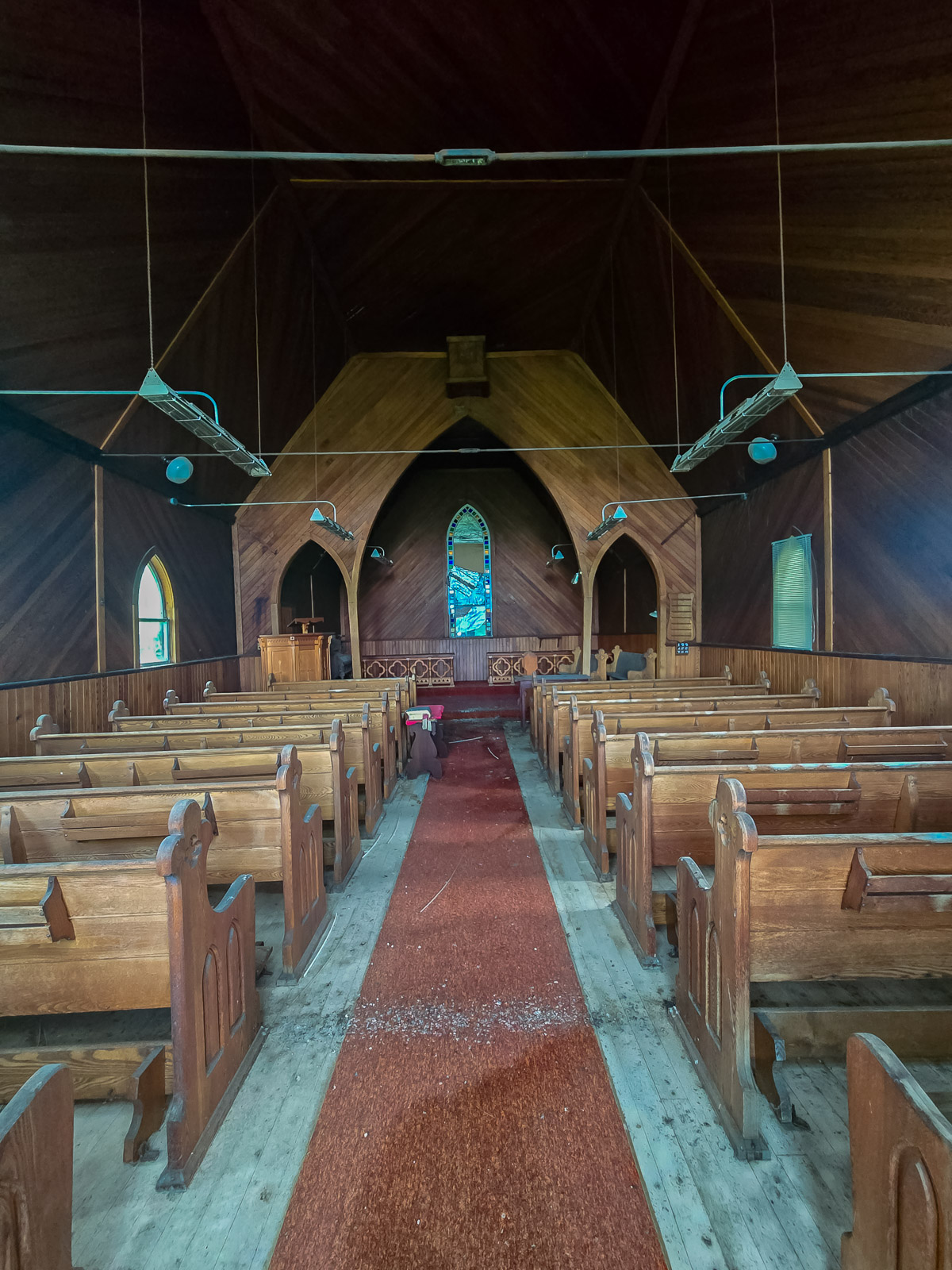
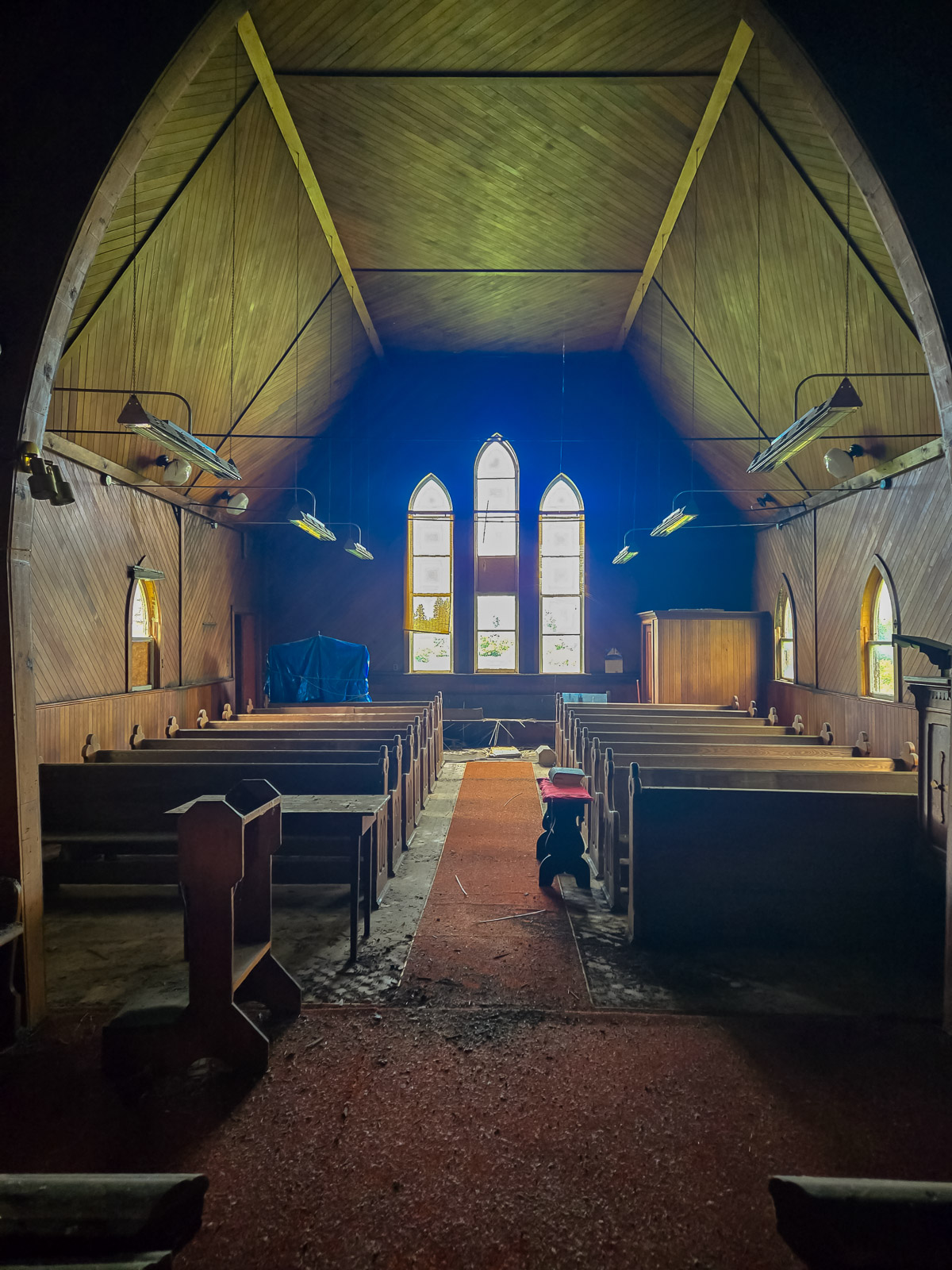
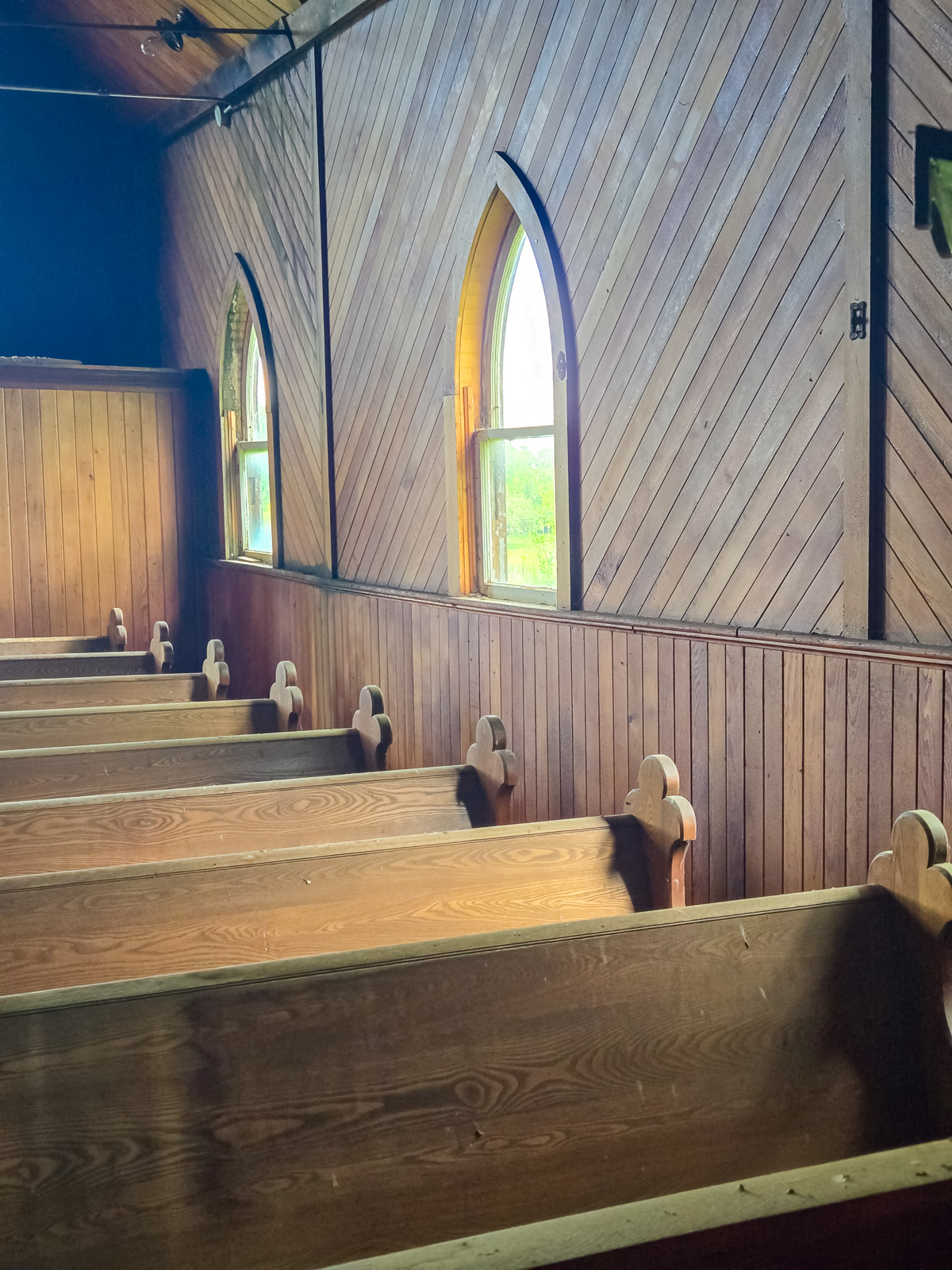
Just off the Yellowhead Highway in western Manitoba, in a village that now counts its residents by the household, stands a small white frame church that has outlived almost everything around it. St. Stephen’s Anglican Church was built by Solsgirth’s pioneers in 1906, held services for 96 years, and was formally secularized on Thanksgiving Sunday 2002. It was sold for a single dollar to a regional museum that intended to save it. More than two decades later, it is still standing exactly where its builders put it.
This is the story of how the church came to be, why it was built in defiance of an older congregation, and how a community said goodbye to it.
At a glance
|
|
|---|---|
Name | St. Stephen’s Anglican Church |
Location | Solsgirth, Municipality of Prairie View, Manitoba |
Coordinates | N50.49094, W100.91060 |
Cornerstone laid | 23 July 1906, by the Birtle Masonic Lodge |
Founded by | Rev. E. C. R. Pritchard, rector at Birtle |
Denomination | Anglican (latterly Diocese of Brandon) |
Final service | 13 October 2002 (Thanksgiving) |
Status | Secularized 2002; owned by the Prairie Mountain Regional Museum, Shoal Lake; still on its original site |
Before St. Stephen’s: the church on Hazel Hill
The Solsgirth district was settled from the late 1870s. The first white settler is believed to have been J. Lionel Ridout, a young Ontarian who had joined the North-West Mounted Police at Shoal Lake. Around 1878 he claimed a wooded rise above the Birdtail Valley, thick with wild fruit and hazelnuts, and named it Hazel Hill.
On 1 April 1879, a special train carrying roughly 100 settlers left Stratford, Ontario, bound for the Solsgirth–Toddburn area. Families named in local accounts include the Todds, the Tyes, Mr. Tait and H. I. Harrison. From the end of the rail line they pushed on by ox team, covered wagon and pony.
For years there was no church at all, and F. B. Miller held services in his own home. Ridout eventually donated land on Hazel Hill, and in 1891 St. James Anglican Church went up there, high on the valley edge where it could be seen for miles. St. James still stands, with its cemetery, north of the village.
A church born from a split
By 1905 the village of Solsgirth had grown up along the railway, several kilometres from Hazel Hill. Some parishioners wanted St. James physically moved down into the village, where it would be easier to reach. The proposal met fierce resistance from those attached to the hilltop church and its graves.
The compromise was a second church. Rev. E. C. R. Pritchard, the Anglican clergyman based at Birtle, organized the effort to build St. Stephen’s in the village itself. On 23 July 1906 a large crowd gathered as the Birtle Masonic Lodge laid the cornerstone.
The result was unusual for a prairie hamlet: two Anglican churches a short drive apart, one on the hill and one in the village, served for decades by the same rotating clergy out of Birtle.
Nearly a century of services
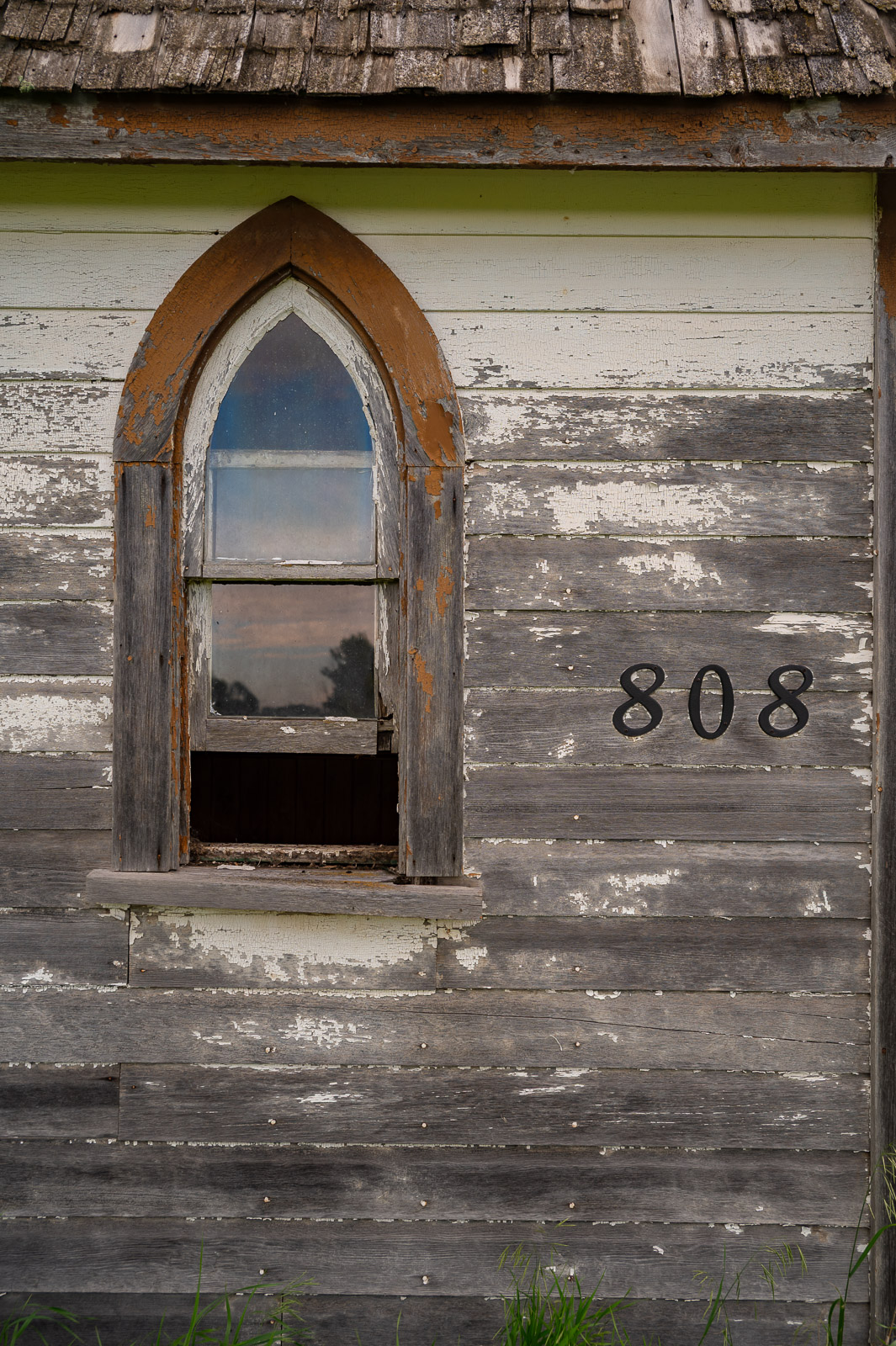
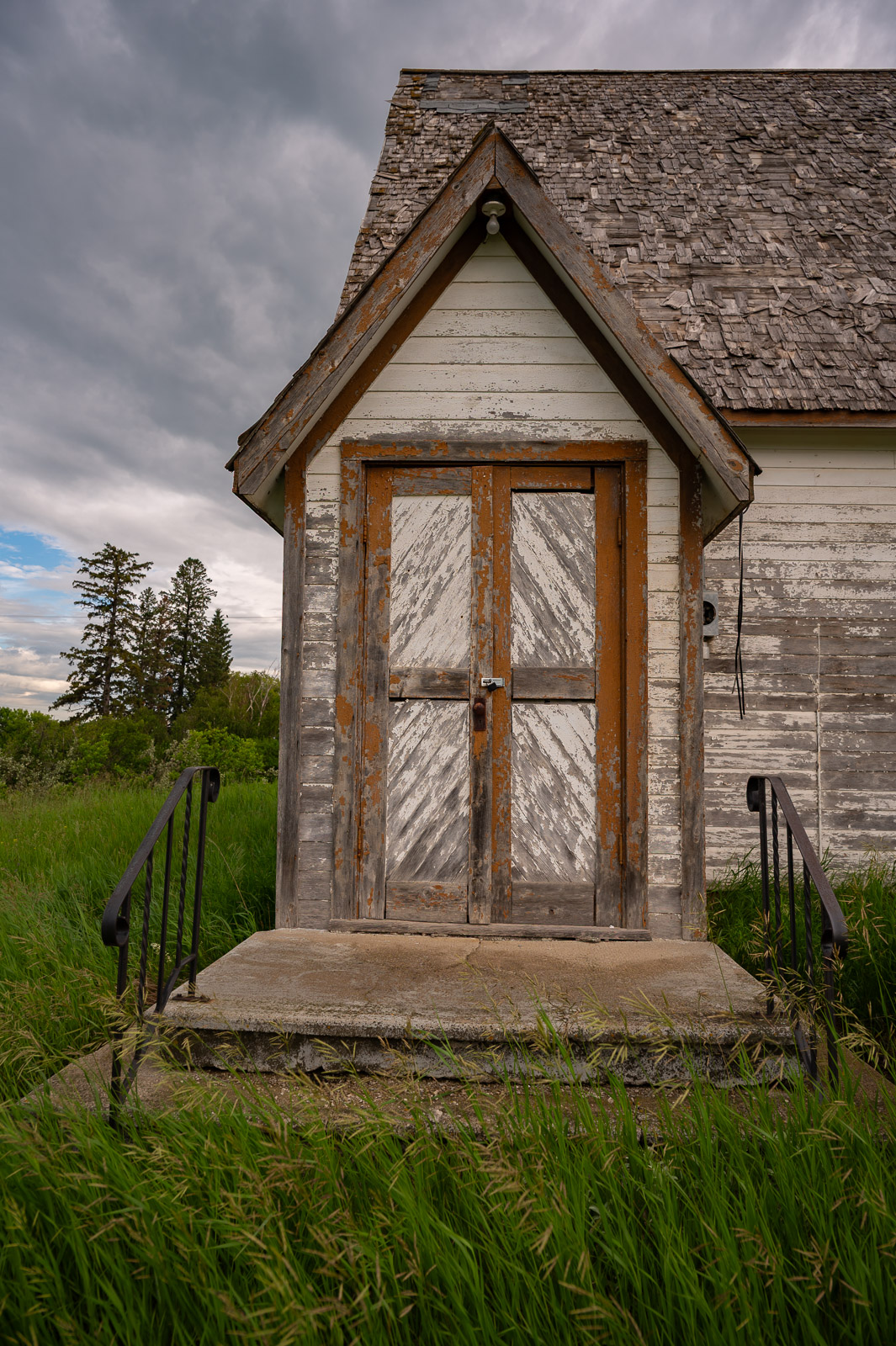
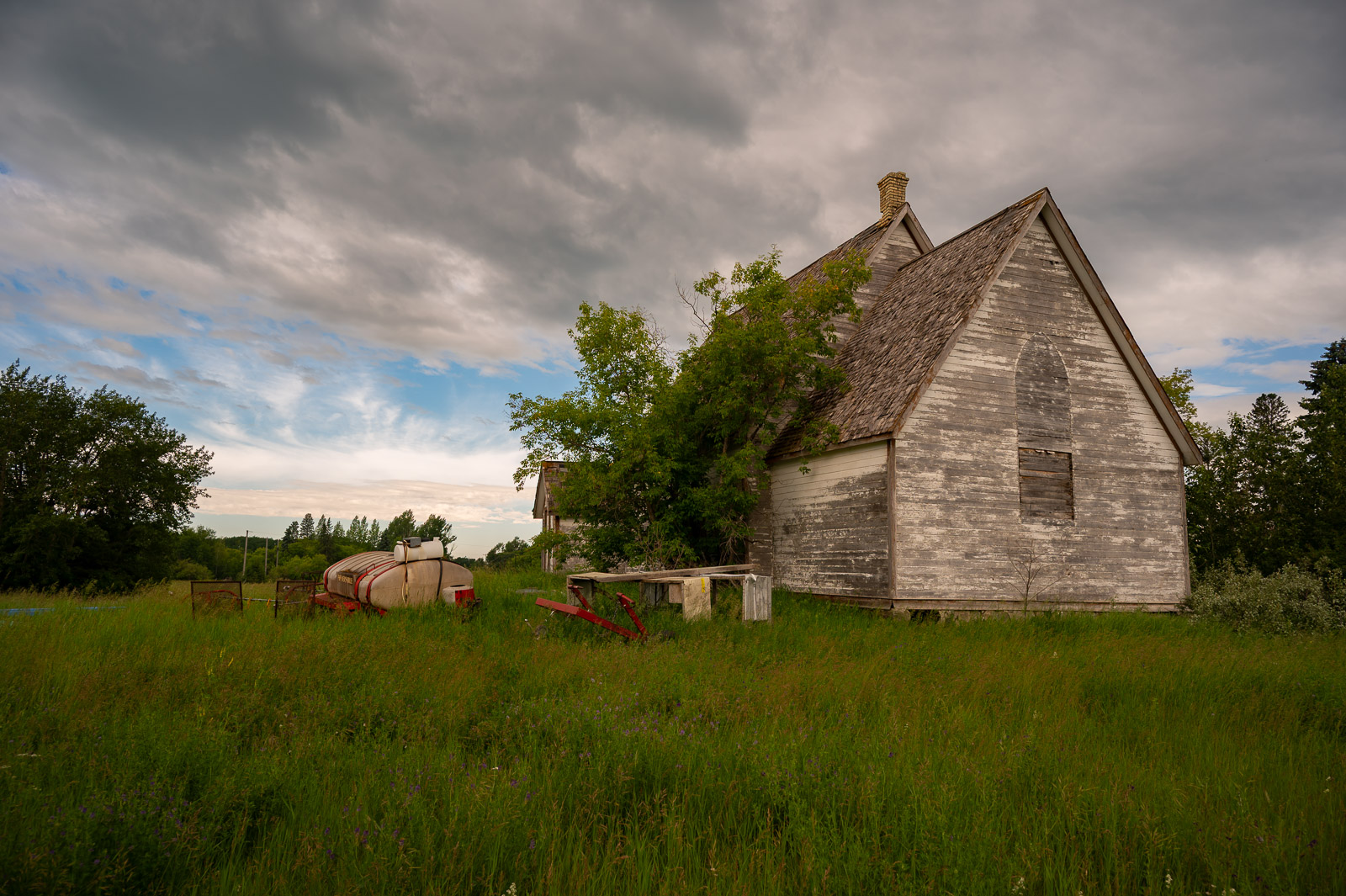
St. Stephen’s is a modest wood-frame building, typical of the churches settlers raised across the Manitoba parkland. Photographs from around 1940 show volunteers reroofing it. Over the years the steeple was taken down, the south slope of the roof was redone in cedar shingles and the north slope later in asphalt. An undated postcard in the Manitoba Historical Society collection shows the church in earlier days.
The parish shared its clergy with St. James. Rectors included T. J. Latornell, W. H. Boyd, and W. J. Finch, who served from 1927 to 1946, the longest stretch on record. The last rector was Rev. Laura Hermakin, who arrived in 2000.
As the surrounding farms consolidated and young people left, the congregation shrank. By 2002 the village had lost its services, and both of Solsgirth’s churches were forced to close that same year.
The last service: Thanksgiving 2002
On 13 October 2002, about 50 current and former parishioners from Solsgirth and Birtle filled the pews one final time. Rev. Laura Hermakin led the Thanksgiving Eucharist, assisted by Bishop Jim Njegovan of the Anglican Diocese of Brandon.
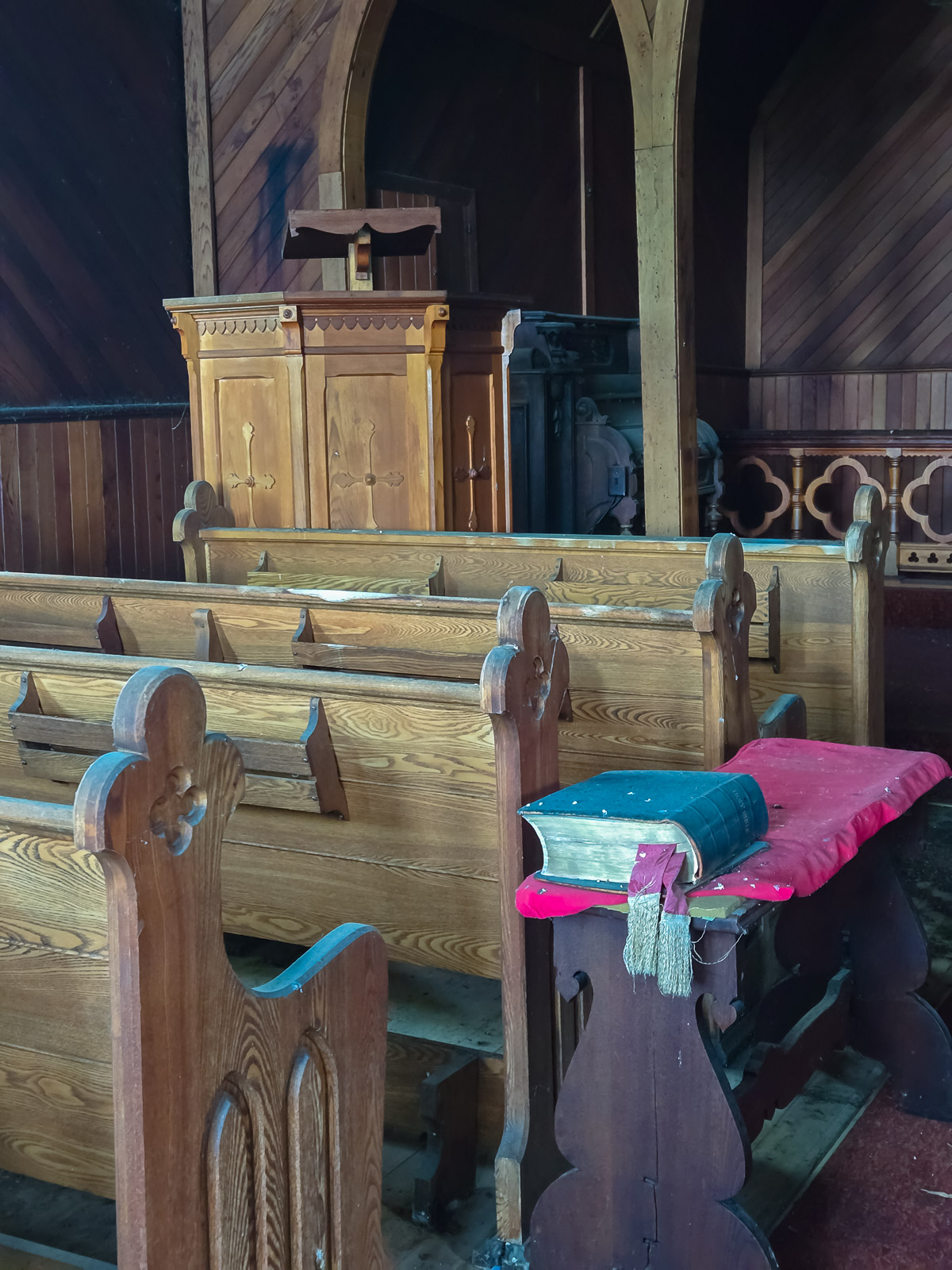
After communion, people’s warden Jim Nickel read the bishop’s declaration secularizing the building. Liturgical ornaments were then carried from the sanctuary to the back of the church, a symbolic act marking that St. Stephen’s was no longer a consecrated place of worship.
The congregation followed the bishop outside to a newly built stone cairn on the church grounds. He dedicated it to the glory of God, to the pioneers who built the church in 1906, and to everyone who had worshipped there since. The cairn still stands beside the church.
Sold for a dollar, still waiting
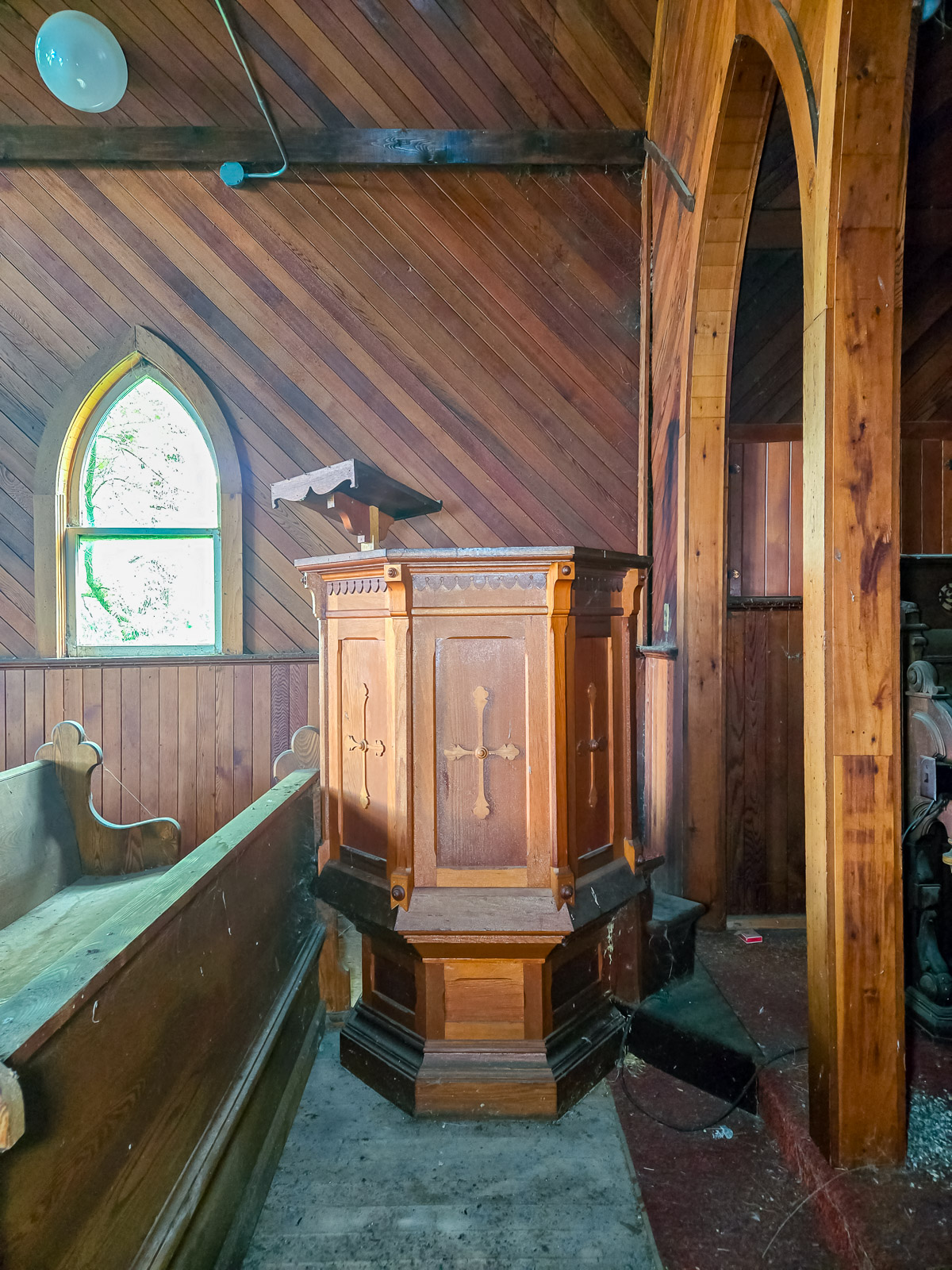
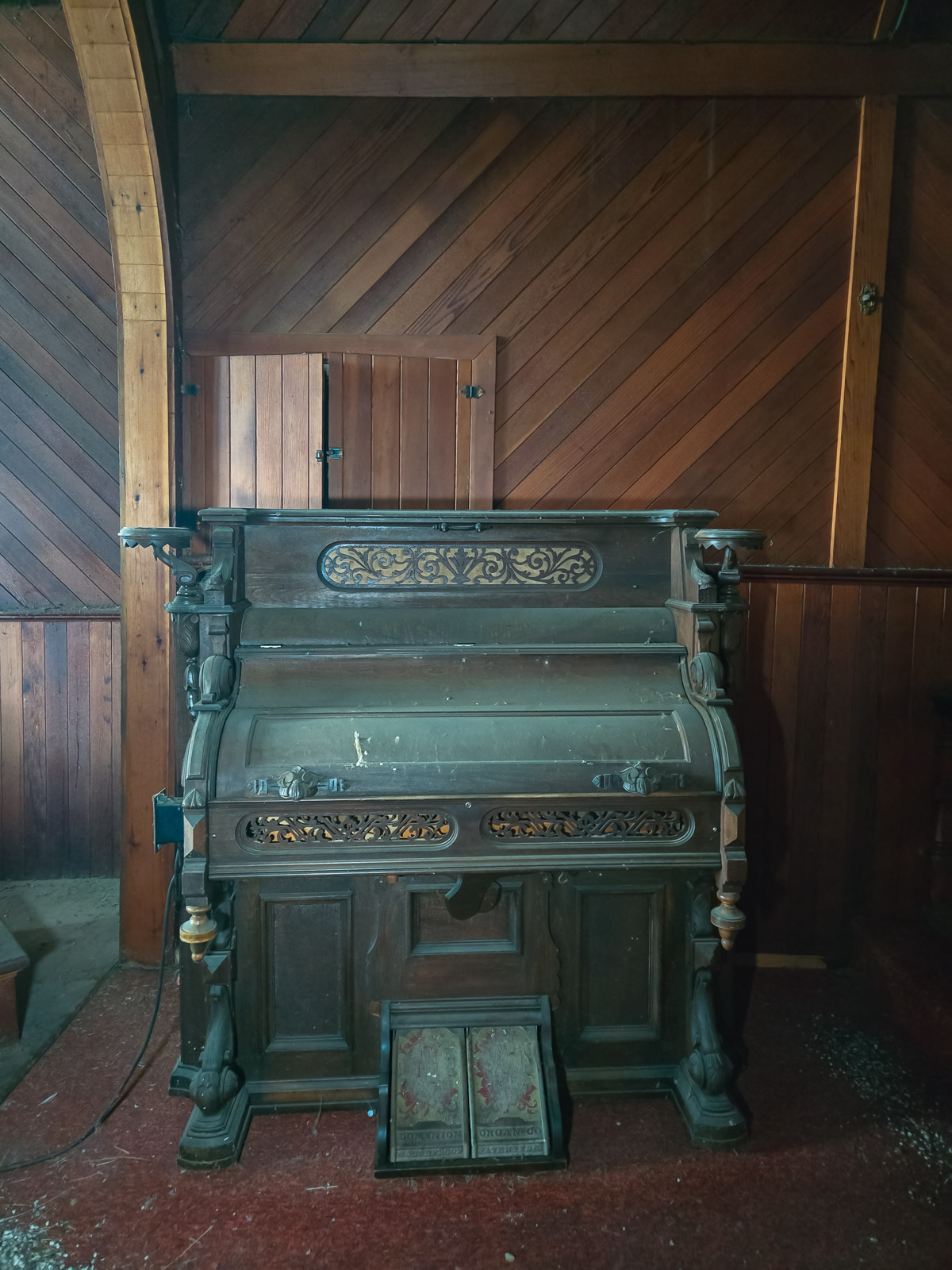
After the closing, the parish sold St. Stephen’s for $1 to the Prairie Mountain Regional Museum in Shoal Lake. The plan was to move it to the museum grounds and preserve it as a pioneer church. That move has never happened. Photographs by the Manitoba Historical Society from 2016 and 2020 show it still on its original lot, and the society photographed its interior in 2016.
Next door stands Solsgirth’s other church, the former Holy Ghost Ukrainian Catholic Church. It began life as the Burdette School, moved to the village and converted, with domes handmade by local carpenter Mike Swistun. It held services from 1950 until 16 June 2002, closing just four months before St. Stephen’s. Its congregation first offered it to the same museum, but later sold it as a planned private residence.
Together the two buildings are a snapshot of the people who built Solsgirth: English and Ontario Anglicans who came first, and the Ukrainian families who followed.
Solsgirth: the village that moved
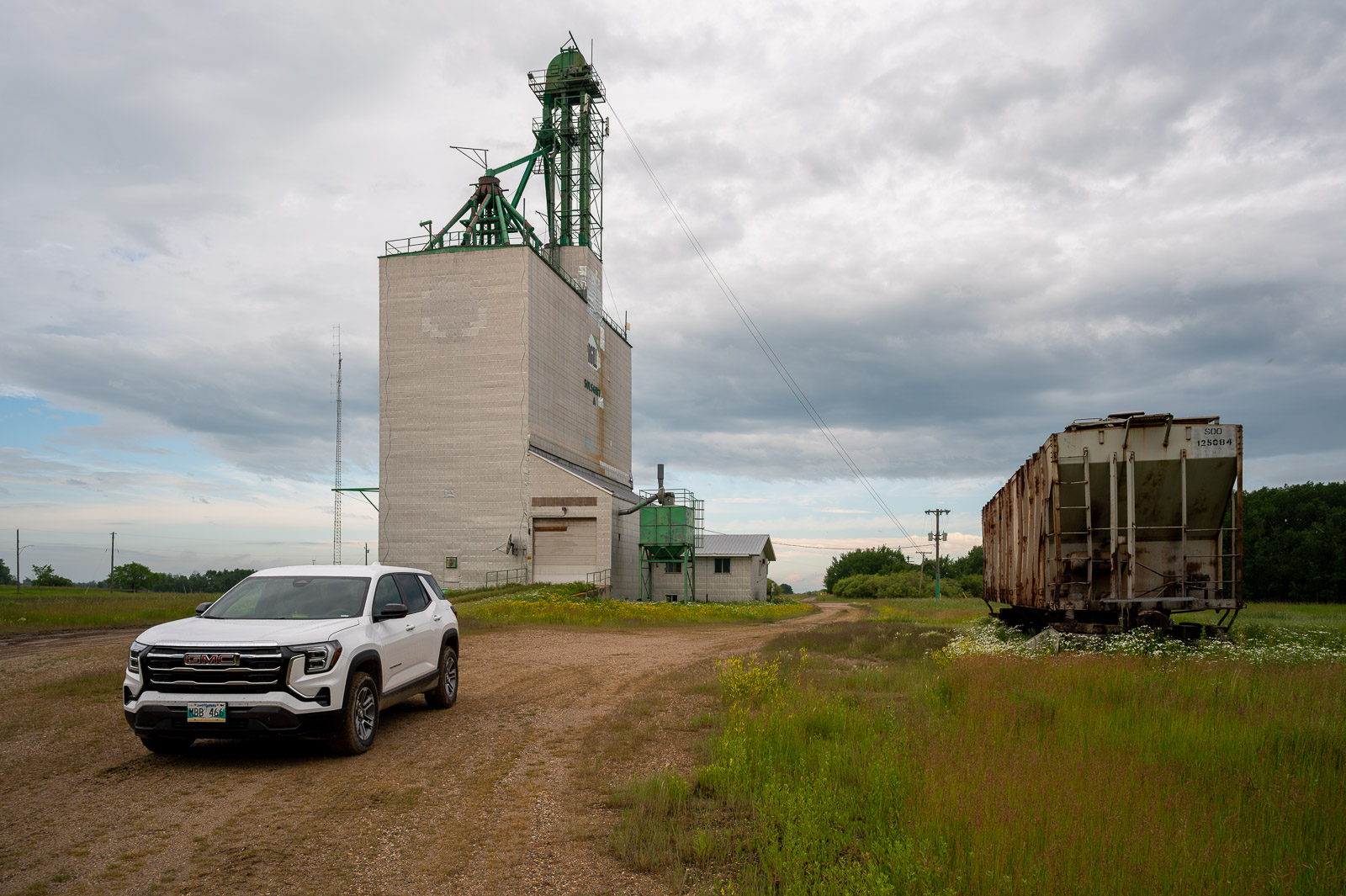
Solsgirth was never quite where it started. The settlement first grew up as Toddburn, about 10 km to the north, where the railway was originally surveyed to run. When the railway changed its route, the town picked up and followed it. Longtime resident Garry Workman calls it “a movable feast” from the very beginning.
In its heyday the village had a railway station, general stores, an implement dealer, grain elevators and a Women’s Institute rest room by the tracks. The local school district dates to 1885. The museum’s exhibit gives the name’s meaning as “girth of the sun.”
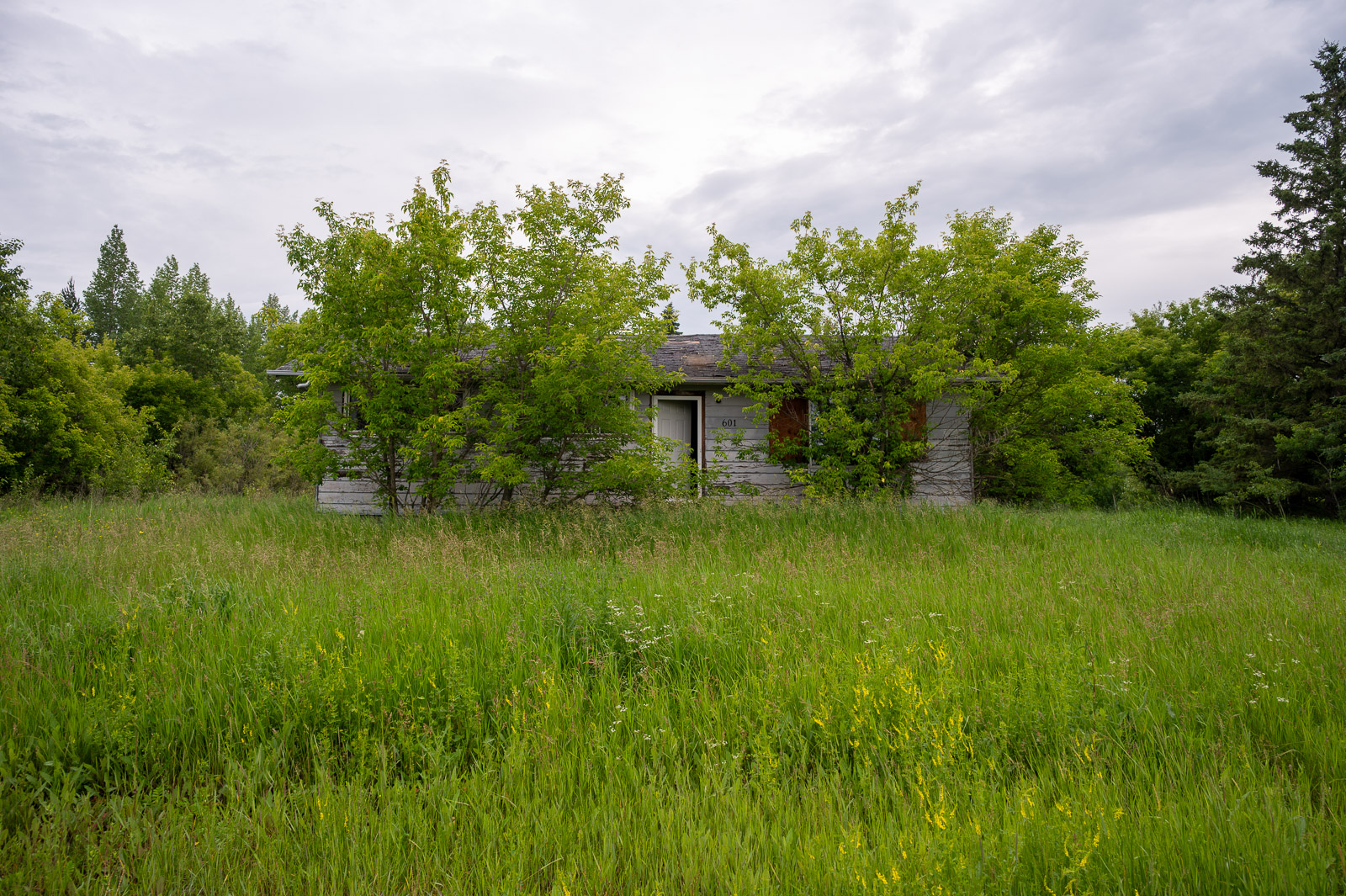
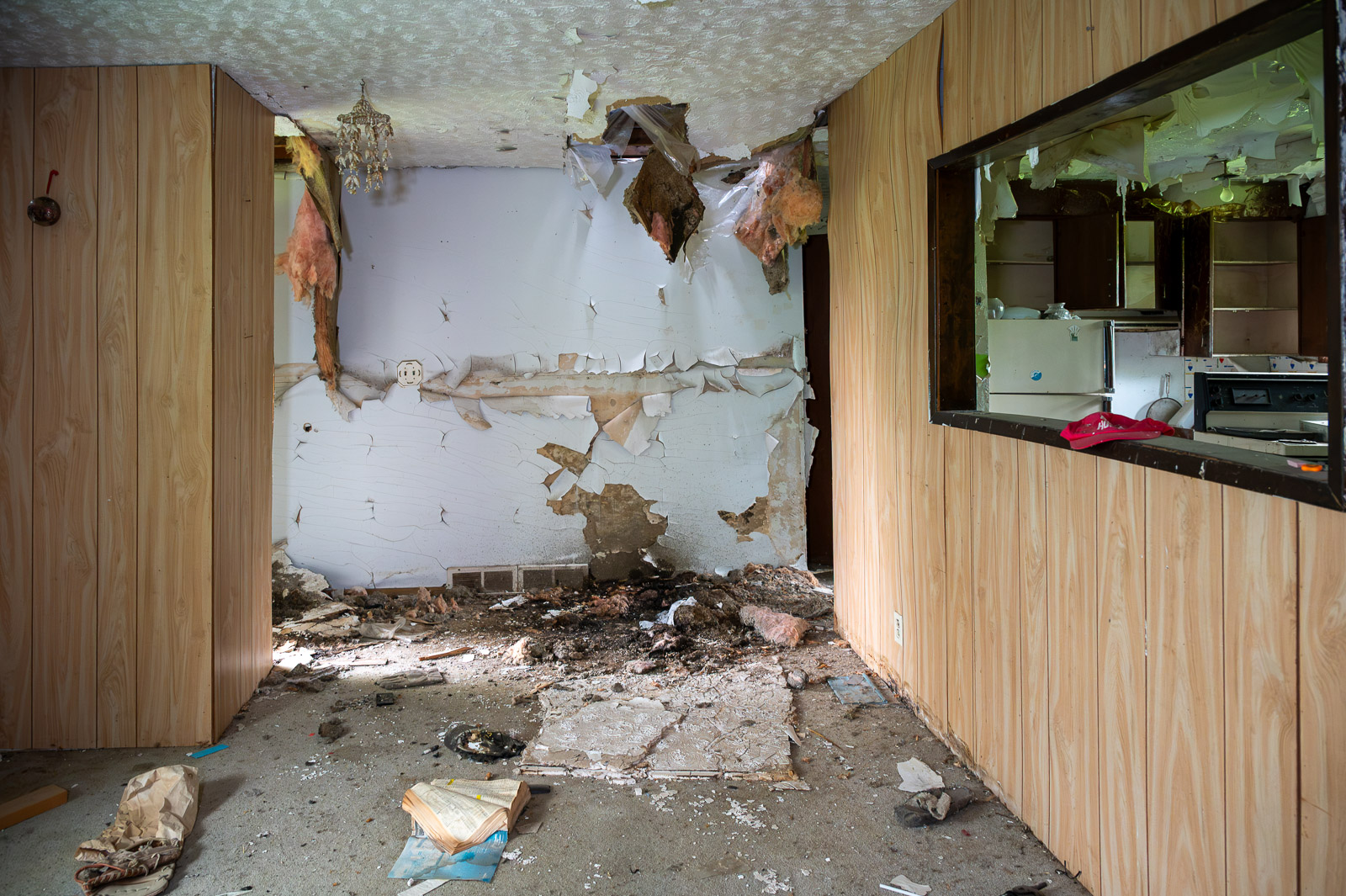
Today the stores, station and school are gone, and a single former Cargill elevator was still standing as of 2019. By 2021, Workman counted just three households still living in the village, his own included.
Visiting
St. Stephen’s sits in the village of Solsgirth, just off the Yellowhead Highway (Highway 16) between Shoal Lake and Russell, at N50.49094, W100.91060. The building is museum property, so contact the Prairie Mountain Regional Museum in Shoal Lake about access before going inside. St. James Anglican Church and its cemetery on Hazel Hill, north of the village, are worth the short detour.
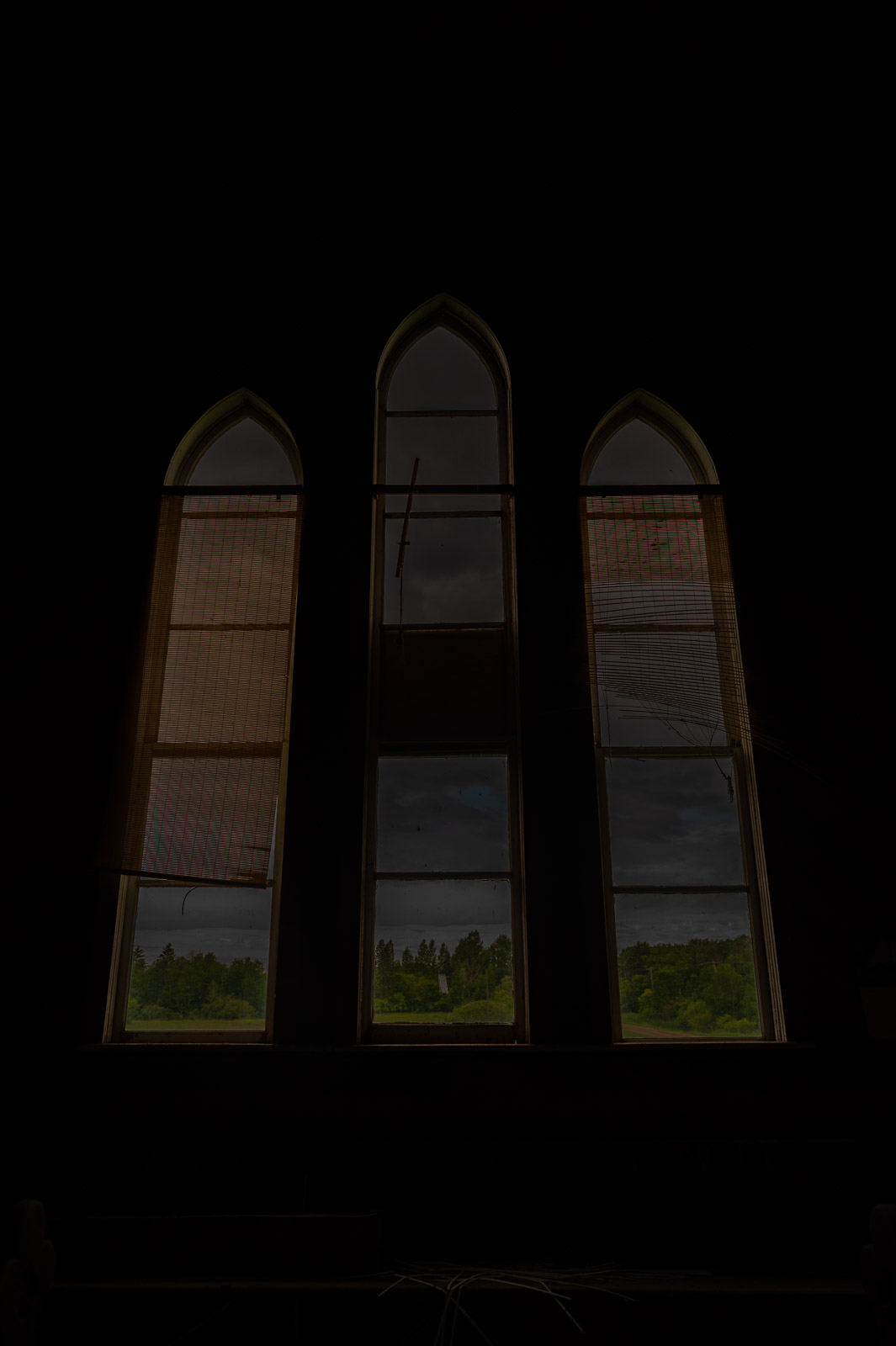
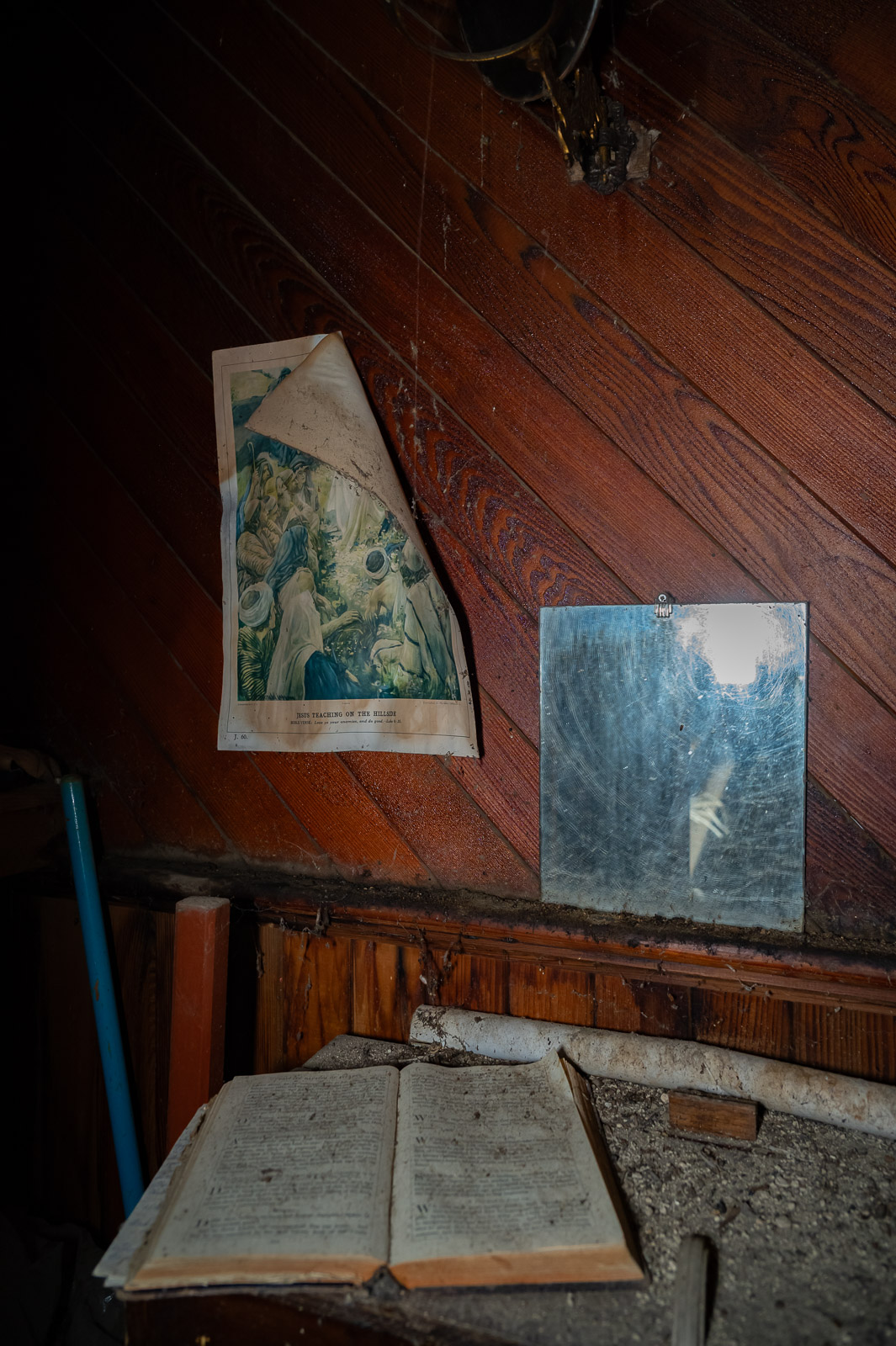
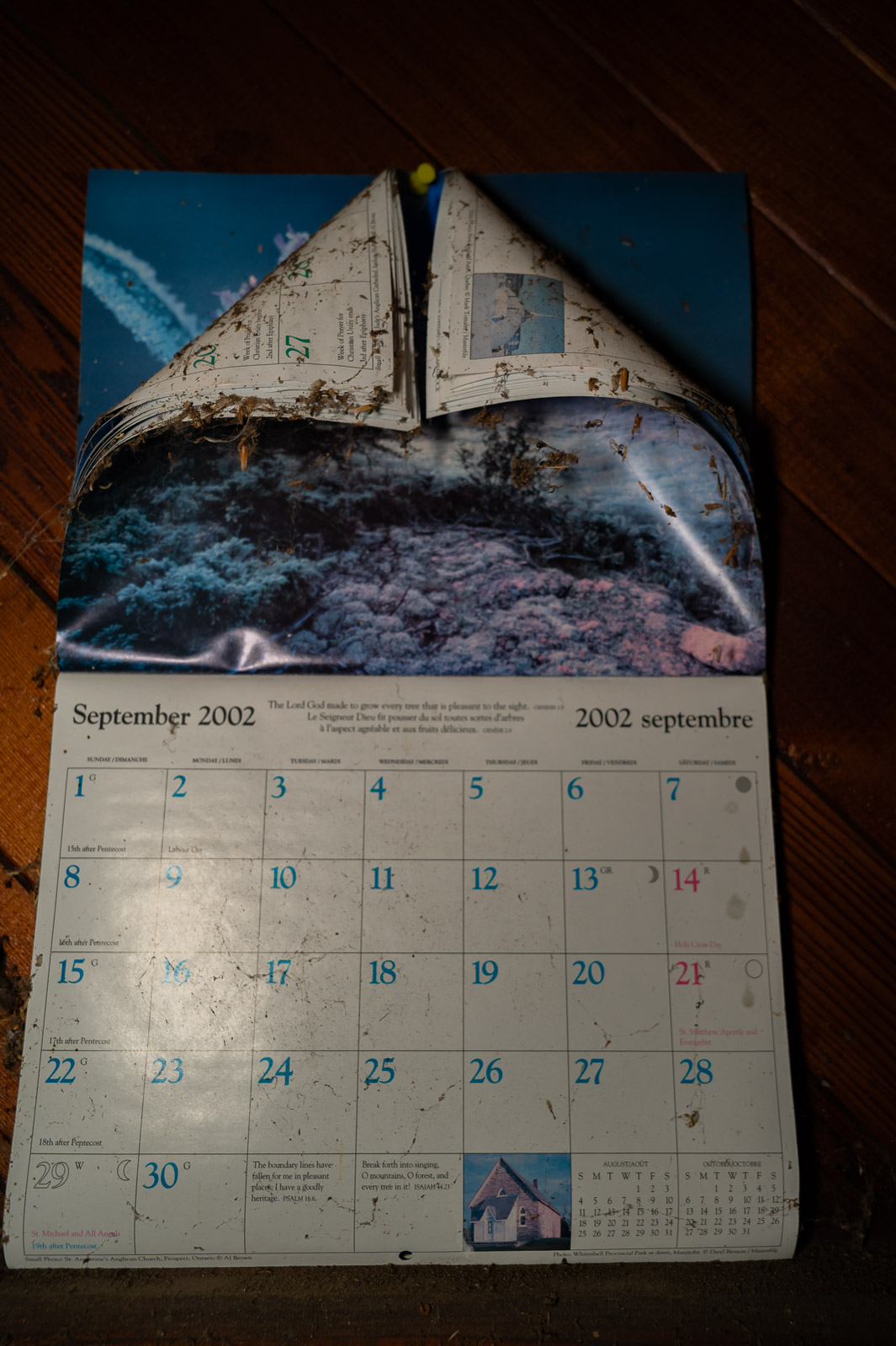
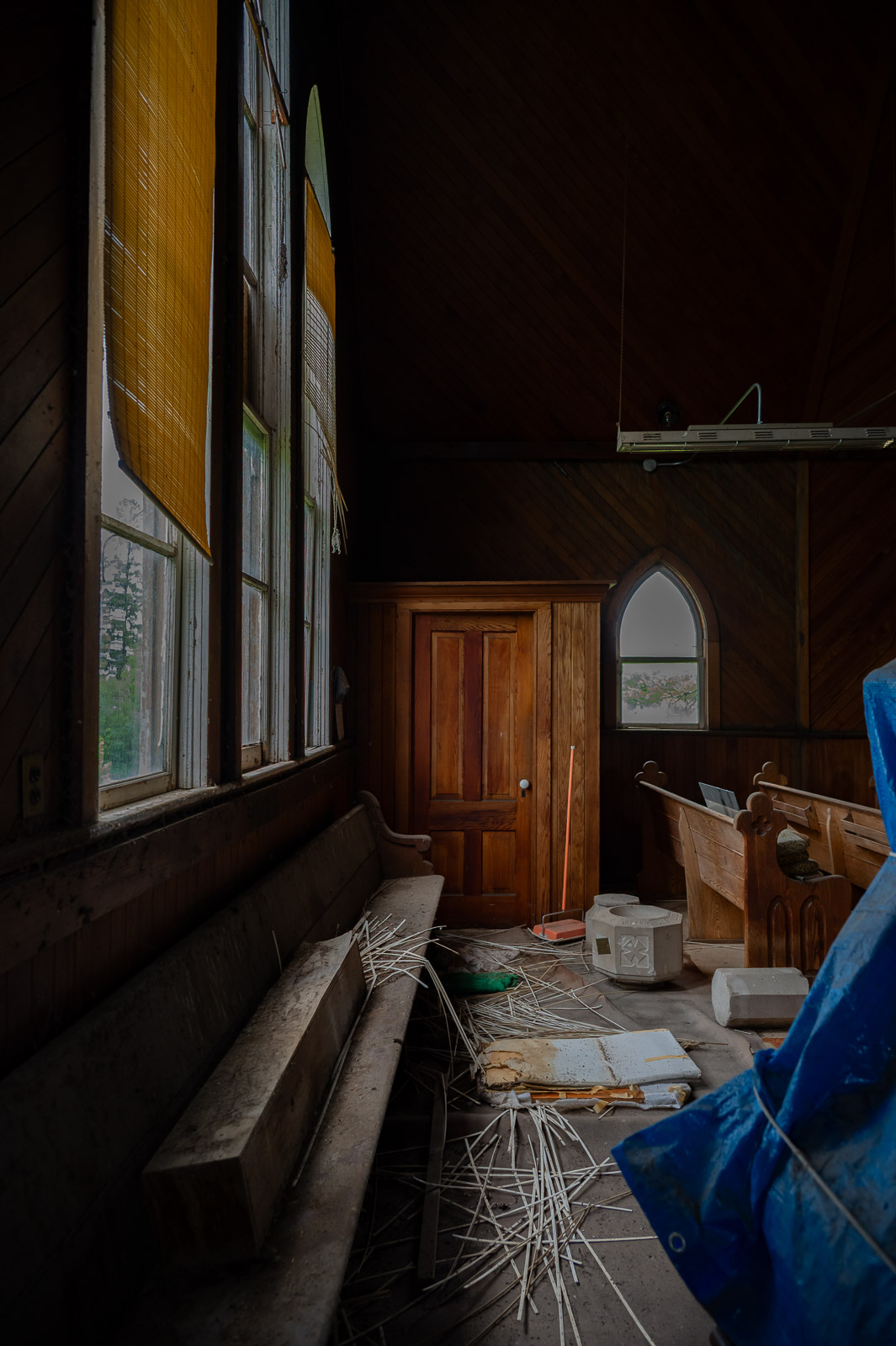
The Schoolhouse That Became a Church: Holy Ghost Ukrainian Catholic Church, Solsgirth, Manitoba
The little white church on the edge of Solsgirth, Manitoba, started out as a one-room country schoolhouse. Farm kids studied in it for 76 years, from 1882 to 1958. It was then hauled into the village and became the Holy Ghost Ukrainian Catholic Church. The congregation dates from 1950, and the last service was held in June 2002.
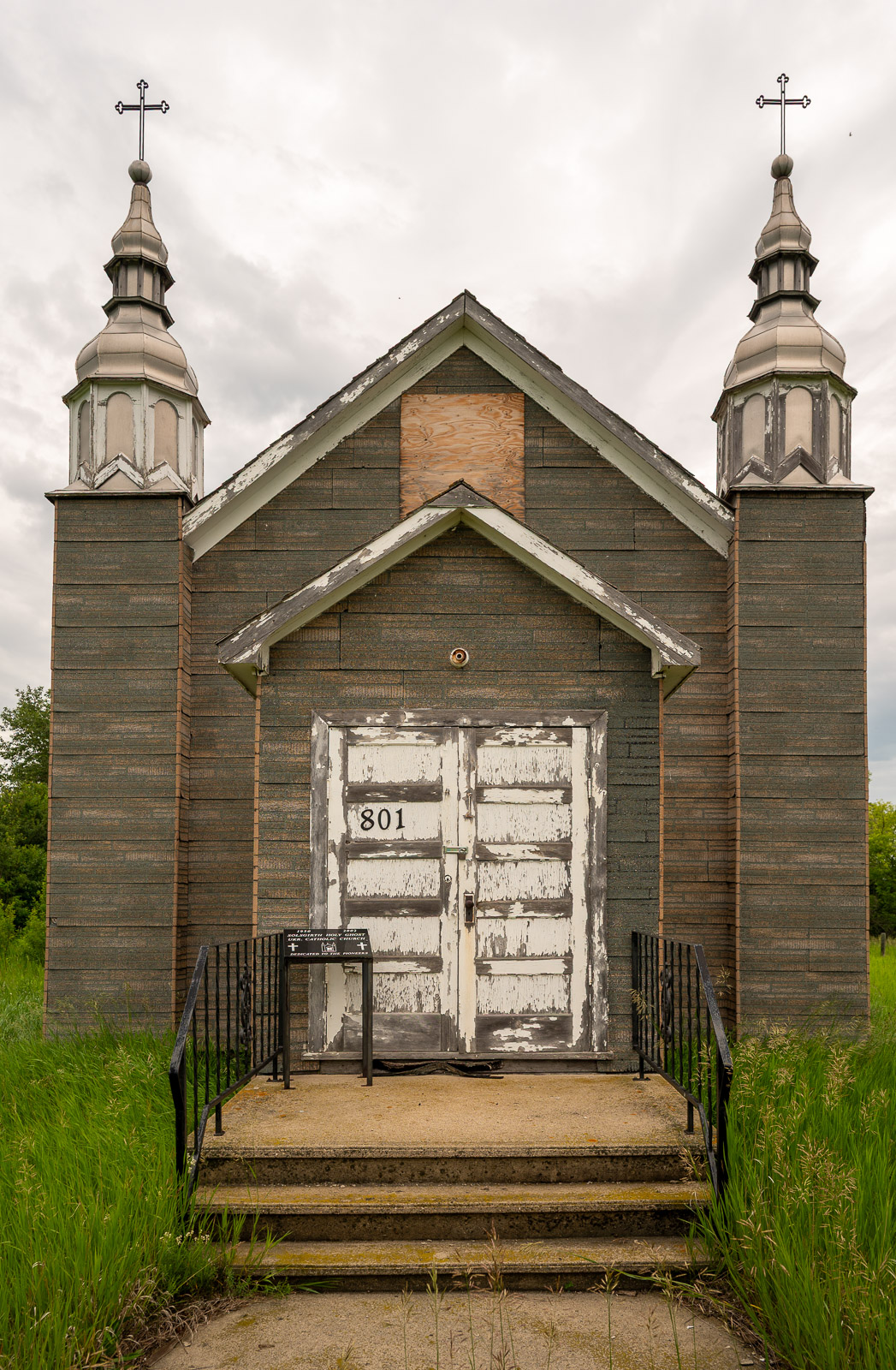
I stopped in Solsgirth in July 2026. At the foot of the church steps, on a black iron stand, sits a granite plaque. White peeling paint and old shingle siding show behind it. The plaque reads simply:
1950 – 2002 Solsgirth Holy Ghost Ukr. Catholic Church Dedicated to the Pioneers
The plaque has two crosses and a small line drawing of the church, with its centre gable and two cross-topped towers. It’s a modest memorial. The story behind it turned out to be much bigger. It involves a prairie village that moved itself to meet the railway, a pioneer school district from 1882, and church domes built by a man once billed as “The Strongest Man in the World.”
Solsgirth: the village that moved to meet the railway
Solsgirth sits in the rolling Birdtail country of western Manitoba, in what is now the Municipality of Prairie View. It’s south of Riding Mountain National Park and between the towns of Birtle and Shoal Lake.
Its story begins on April 1, 1879. That day, about 100 settlers arrived by special train from Stratford, Ontario, to take up land in what was called the Solsgirth–Toddburn settlement. Among the first families were the Todds and the Taits. The original village was Toddburn, about six miles (10 km) north of today’s Solsgirth. When the railway changed its mind about where the line would run, the community simply picked up and followed it.
In the early 1900s, Solsgirth was a busy place. It had a railway station (one local history puts it at 1915), general stores, an implement dealer and a Women’s Institute rest room (1930). Grain elevators lined the tracks, including a Manitoba Pool elevator built in 1928, a United Grain Growers elevator, and the former Cargill elevator that still stands today. The village school district was set up in 1885. It became Solsgirth Consolidated School No. 462 in 1911 and later took in students from closing rural schools around it.
Then came the slow fade that hit so many prairie railway towns. Farms got bigger, roads got better, and people started driving to larger centres. By 2021 the Manitoba Co-operator reported that only three families still lived in Solsgirth. Today it’s often listed as a ghost town.
One of those remaining residents, Garry Workman (born 1938), has done a lot to keep its memory alive. In 2020 he published A Walking Tour of Solsgirth, As I Knew It as a Boy Growing Up in the 1940s and 1950s. He also saved a village history scrapbook that local women put together around 1950. It’s now held at the Birdtail Country Museum in Birtle.
There’s a Solsgirth estate near Dollar, Scotland, and the village was probably named after it. I couldn’t find a source that confirms it, though.
First life: Burdette School No. 163
Before it held a single church service, the building was a schoolhouse in the country south of Solsgirth.
The Burdette School District No. 163 was organized in September 1882, only three years after the Stratford settlers stepped off their train. Its one-room school stood about 8 km south of the village, in the old Rural Municipality of Birtle. For more than 75 years it was the classic prairie country school. One teacher handled every grade, kids walked or rode in from the surrounding farms, and the school doubled as a community gathering place.
Records name Eileen Dutkywich as one of its teachers in 1954–55, near the end of its run. Burdette School closed in December 1958, part of the wave of consolidation that emptied one-room schools across Manitoba in the 1950s and 60s. Its last students went to Birtle Consolidated School No. 132.
The Burdette site wasn’t forgotten. A fieldstone monument and a model of the schoolhouse now mark where it stood. The district’s Second World War honour roll hangs in Birtle Legion Branch #55. It includes Pilot Officer Frederick Lloyd Butcher of the Royal Canadian Air Force, who was killed on May 24, 1944.
Second life: Holy Ghost Ukrainian Catholic Church
After Burdette School closed, its building was moved into Solsgirth and turned into a church for the area’s Ukrainian Catholic families. It went on a fitting spot: the site of the village’s own first school.
Ukrainian immigrants had been settling the parkland belt of western Manitoba since the late 1890s. They were especially numerous around Rossburn, Olha and Seech, just north of Solsgirth. By the mid-20th century, enough Ukrainian Catholic families farmed around Solsgirth to support a congregation of their own.
The church followed the Ukrainian Greek Catholic (Byzantine) rite, under what is now the Ukrainian Catholic Archeparchy of Winnipeg, in the Dauphin deanery. It was never a parish with a resident priest. Instead it was a mission of Sacred Heart of Jesus parish in Rossburn, about 21 km away, and a priest drove down from Rossburn to celebrate the Divine Liturgy. Its formal name was Holy Ghost, or Holy Spirit in today’s usage. Catholic directories still list it as the Church of the Holy Spirit, Solsgirth.
Converting a plain schoolhouse into an Eastern-rite church took real work. The biggest change was adding the onion domes that mark a Ukrainian church on the prairie skyline. The plaque’s line drawing shows the result: a centre gable flanked by two towers, each topped with a cross.
A date puzzle
The plaque gives 1950 as the start of the church’s life. But Burdette School didn’t close until December 1958. The likeliest explanation is that the congregation organized in 1950 and worshipped somewhere else, such as in homes or a borrowed hall, until it got the schoolhouse around 1959. The published sources don’t settle it. If you know the answer, or have family photos of the church in the 1950s, I’d love to hear from you in the comments.
The strongman who built the domes
The domes on Holy Ghost were handmade by a local carpenter named Mike Swistun. He may be the most remarkable person tied to this little church.
Michael Swistun was born on November 14, 1901, near Olha, Manitoba, in the Ukrainian farm country north of Rossburn. His parents were Ukrainian immigrants Wasyl “Bill” Swystun and Barbara Lucyk. As a young man he was enormously strong. In the summer of 1923 he toured with the Ringling Bros. and Barnum & Bailey Circus, billed as “The Strongest Man in the World.”
He didn’t stay in show business. Swistun came home to the Rossburn district, farmed, raised a family, and made music. He also became a church builder, putting his hands to the domes and woodwork of the Ukrainian churches that dot this corner of Manitoba. The domes at Solsgirth are one of the jobs credited to him.
Swistun died at Rossburn on July 16, 1980, and is buried in the Seech Parish Cemetery, among the same Ukrainian farm communities whose churches he helped raise. When you look up at those domes, you’re looking at the work of a former circus strongman.
2002: the year Solsgirth’s churches went quiet
The last Divine Liturgy at Holy Ghost was held on June 16, 2002, after 52 years of the congregation’s life. The granite plaque, dedicated “to the Pioneers,” was most likely put up to mark the closing.
Holy Ghost wasn’t the only church in Solsgirth. About 100 metres away stands St. Stephen’s Anglican Church, the village’s English congregation. Its cornerstone was laid by the Birtle Masonic Lodge on July 23, 1906. Rev. E.C.R. Pritchard led the push to build it as a more central replacement for the older St. James Church, which had stood up in the valley hills. St. Stephen’s got new cedar and asphalt shingles in 1940.
Four months after the Ukrainian Catholics closed their doors, the Anglicans did the same. St. Stephen’s held its final service on October 13, 2002, and was deconsecrated. A memorial cairn to its pioneers and worshippers was dedicated on the grounds that October.
So in one year, Solsgirth lost organized worship completely. The two churches had stood within a stone’s throw of each other, one Ukrainian and one Anglo-Ontarian, and they shut their doors only months apart. It’s a quiet snapshot of how the different pioneer communities of the prairies grew up side by side, and how they faded together too.
What’s left today
When the congregations closed, both buildings looked set for preservation. Holy Ghost and St. Stephen’s were both offered to the Prairie Mountain Regional Museum in Shoal Lake, with plans to move them onto the museum grounds. St. Stephen’s was sold to the museum for one dollar.
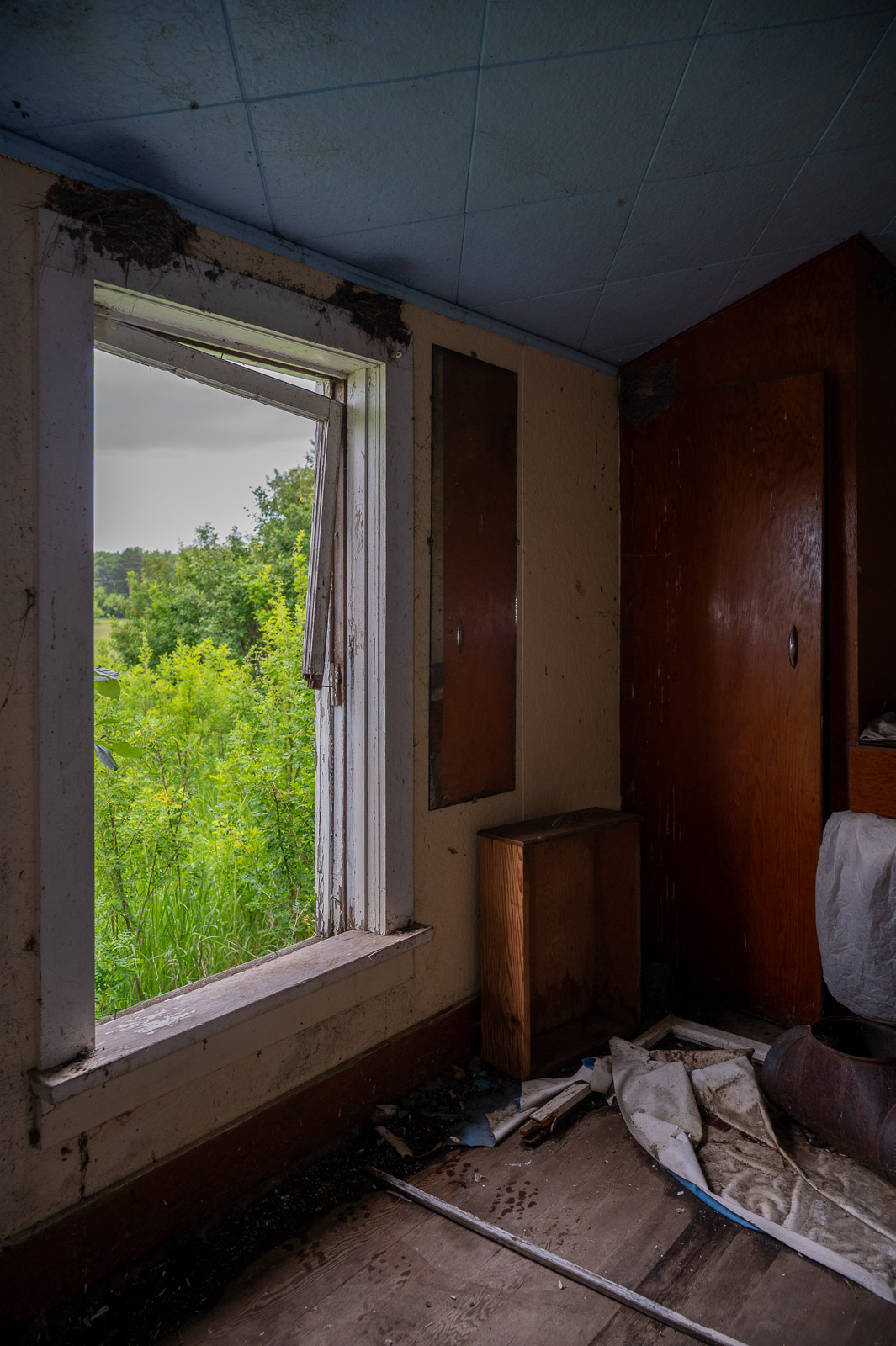
Neither move ever happened. Sometime after 2009, Holy Ghost was sold to private owners who planned to turn the old school-turned-church into a home. When the Manitoba Historical Society visited in March 2016, the conversion still wasn’t finished. An aerial photo from September 2020 shows the building still standing. St. Stephen’s also still stands on its original lot.
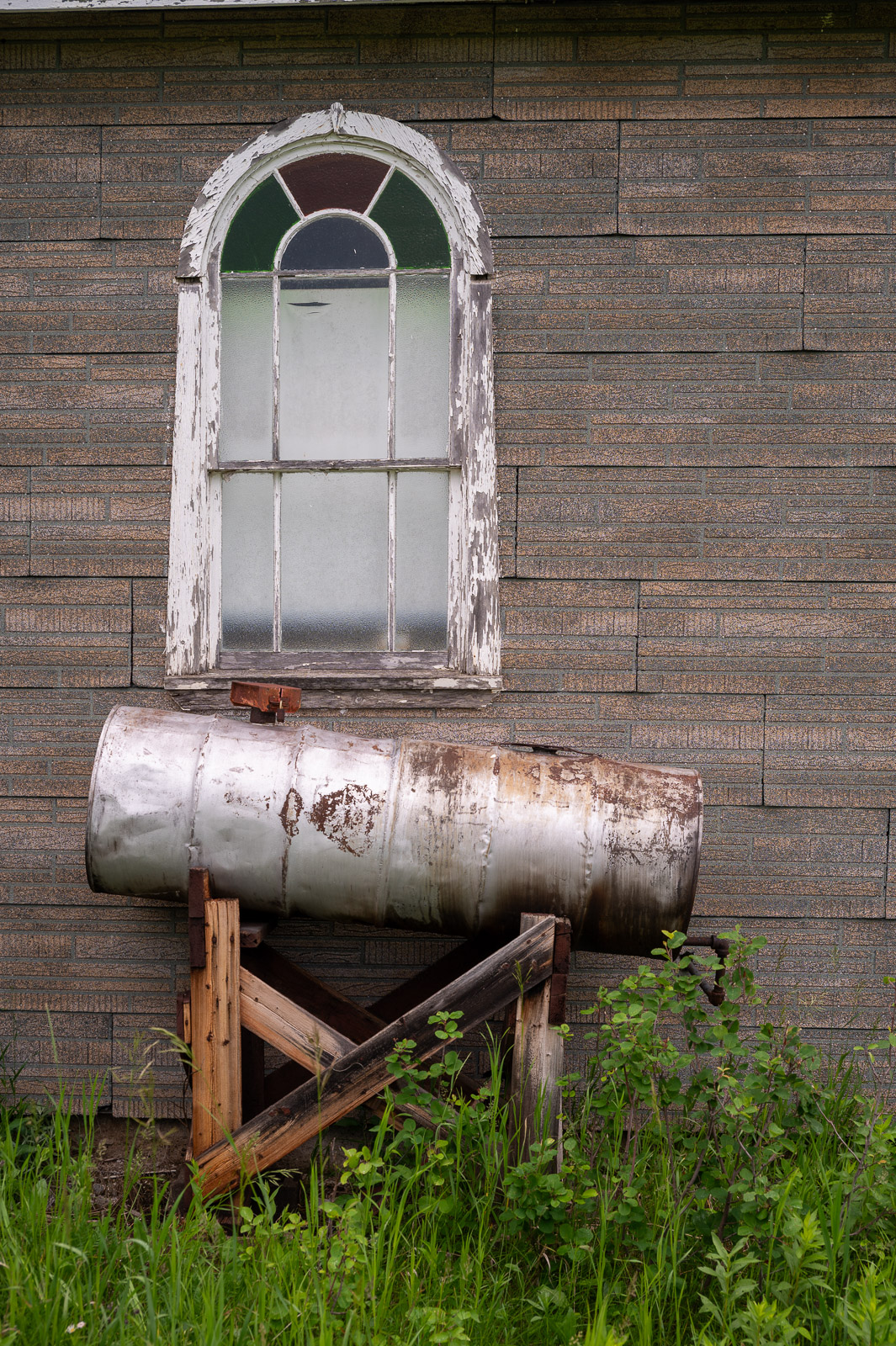
In July 2026, the plaque was still in place at the foot of the steps, with the church’s white paint peeling off the old clapboard behind it. Down the road, the former Cargill grain elevator still rises over a working rail siding. The old consolidated school building, about 400 metres south of the church, is now used for storage.
If you visit: Holy Ghost sits at about 50.4901° N, 100.9111° W, with St. Stephen’s just to the north. The church is private property. Admire and photograph it from the road, and respect the owners’ privacy.