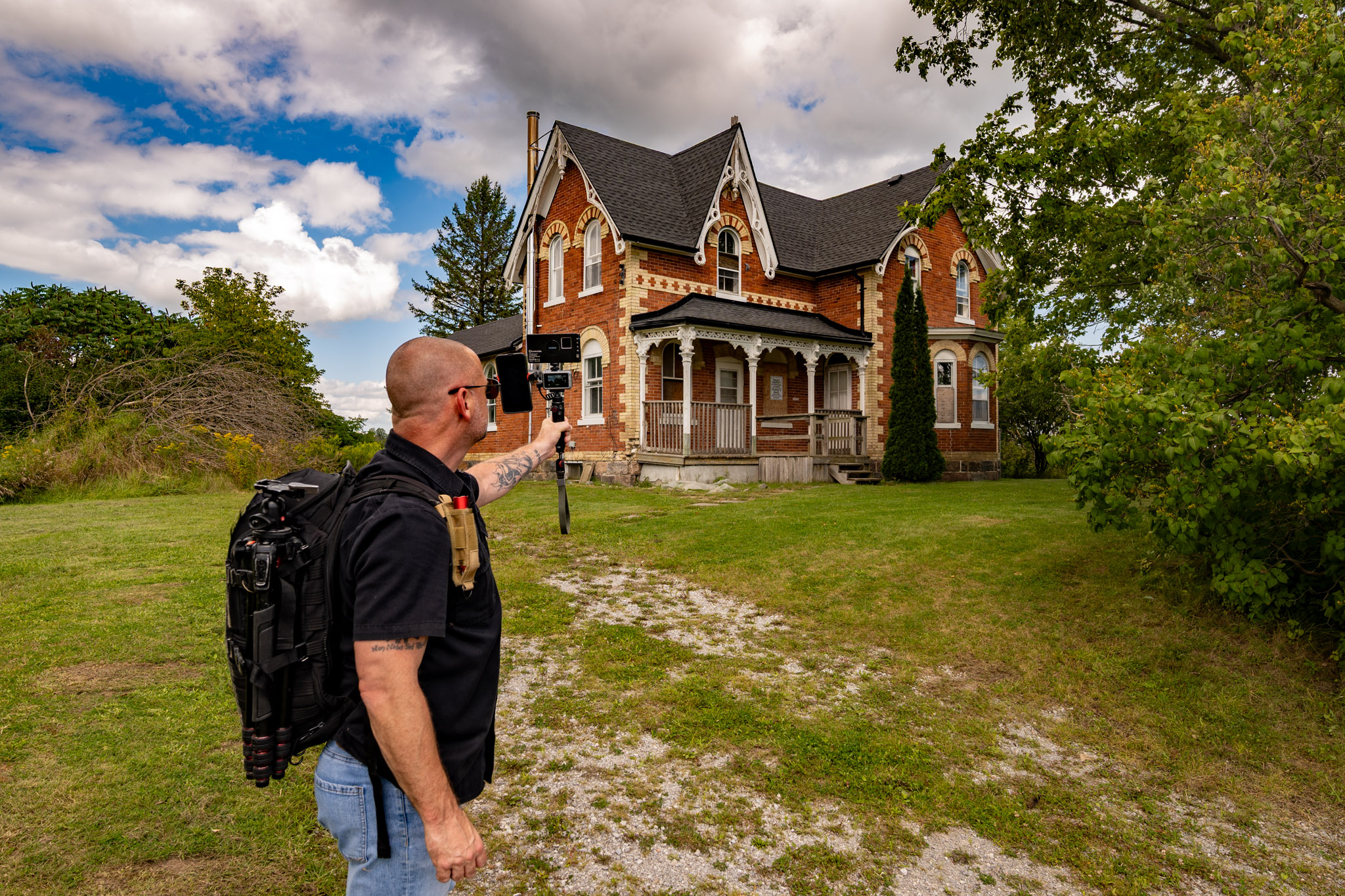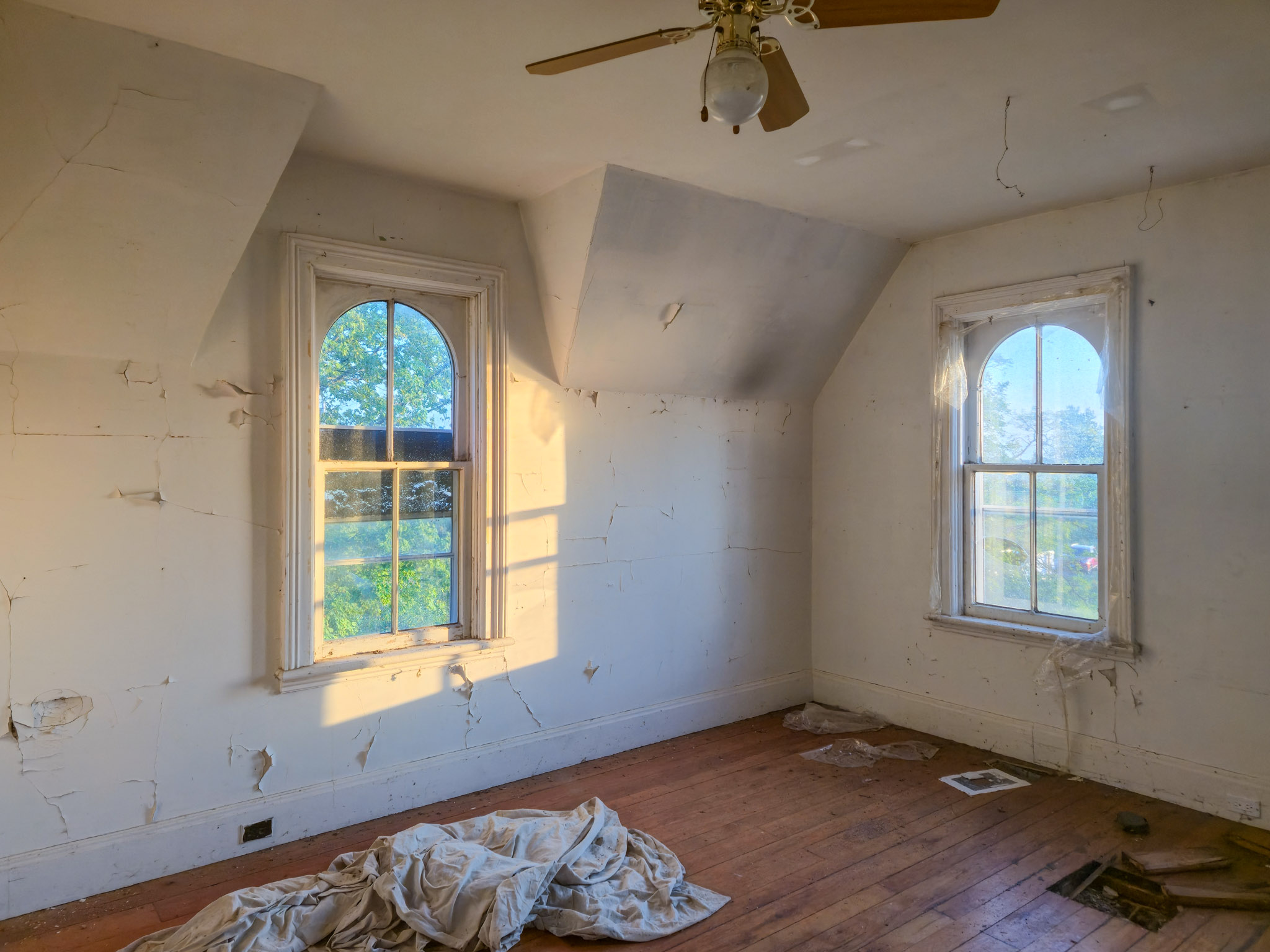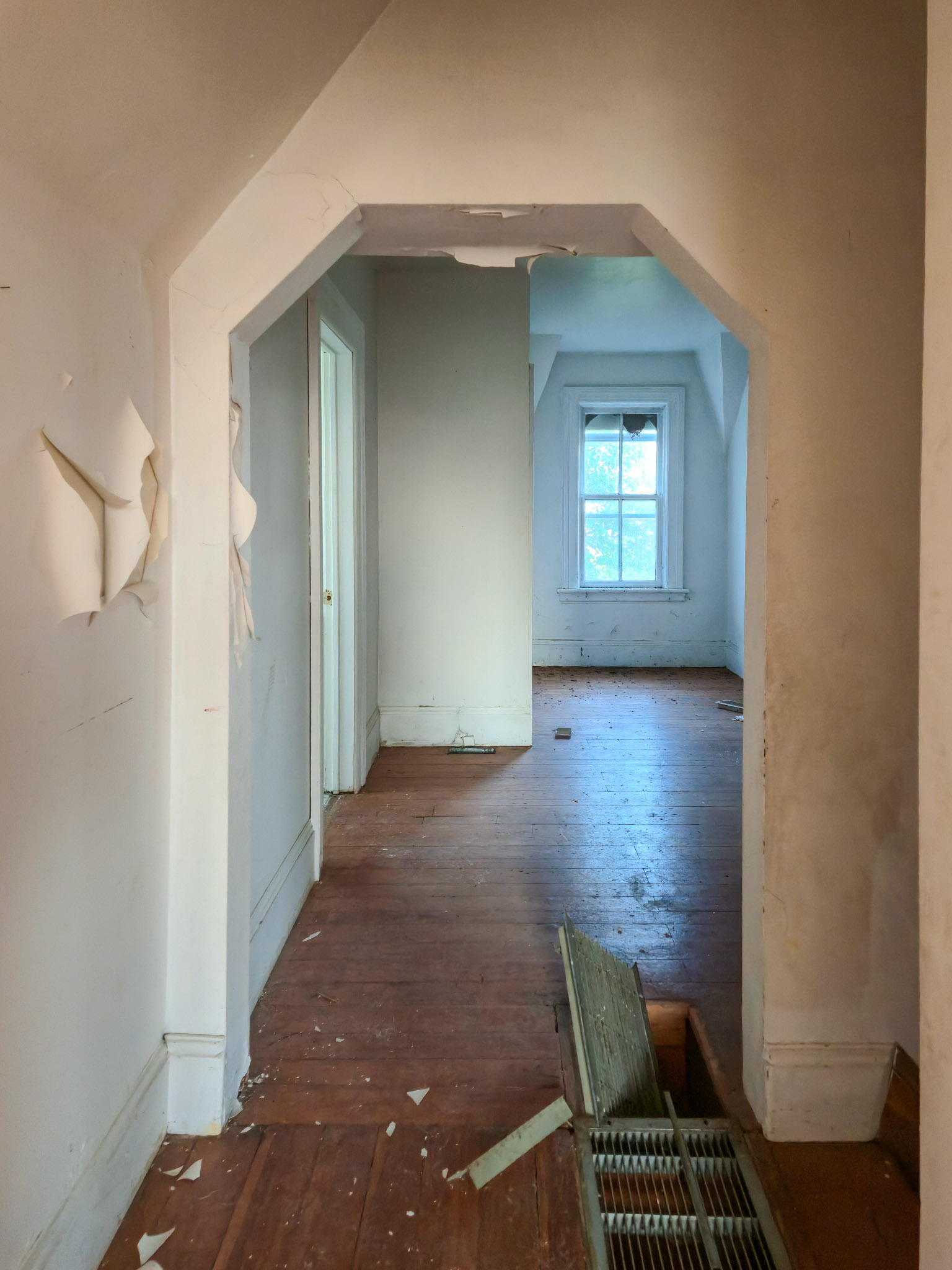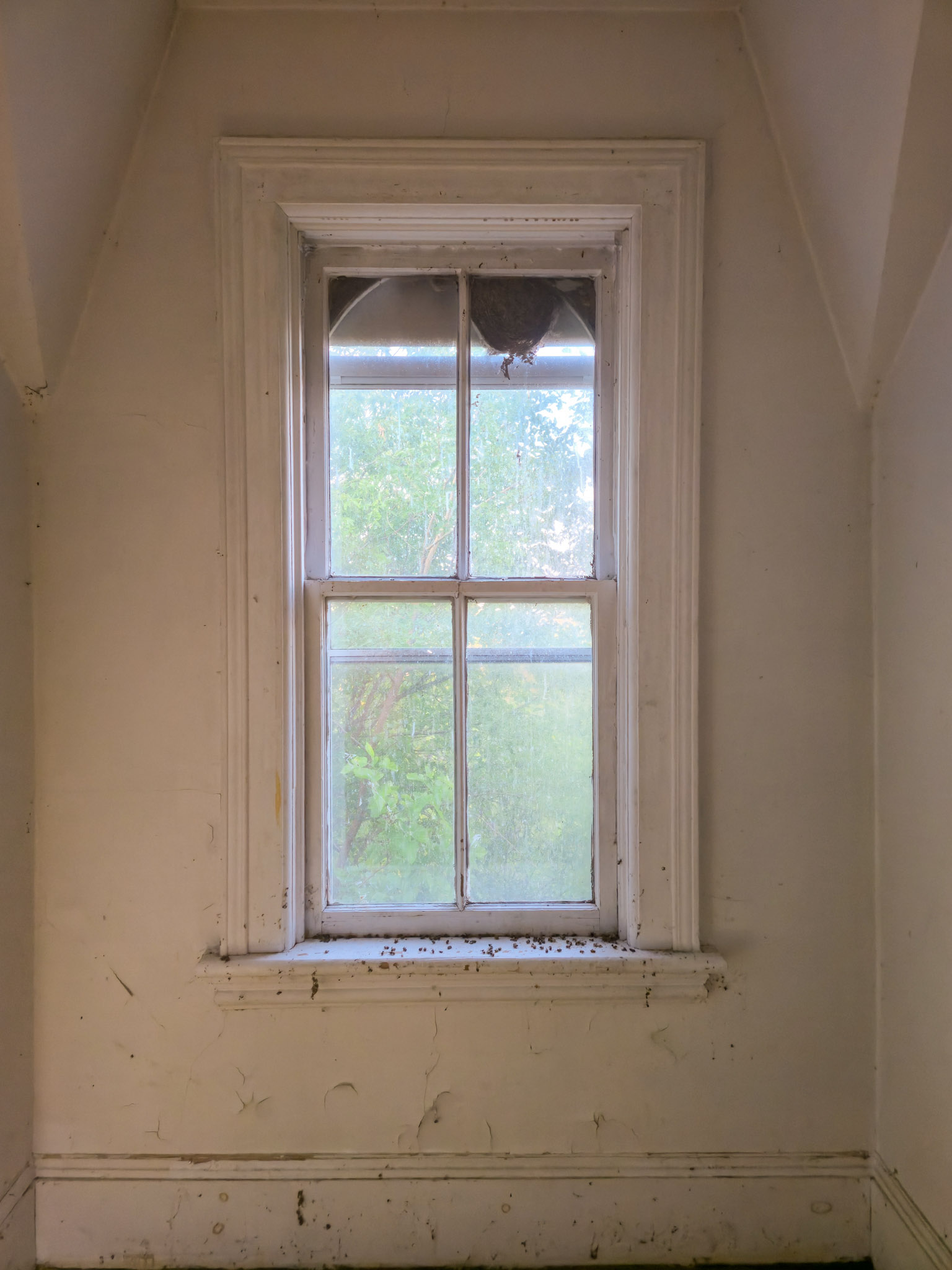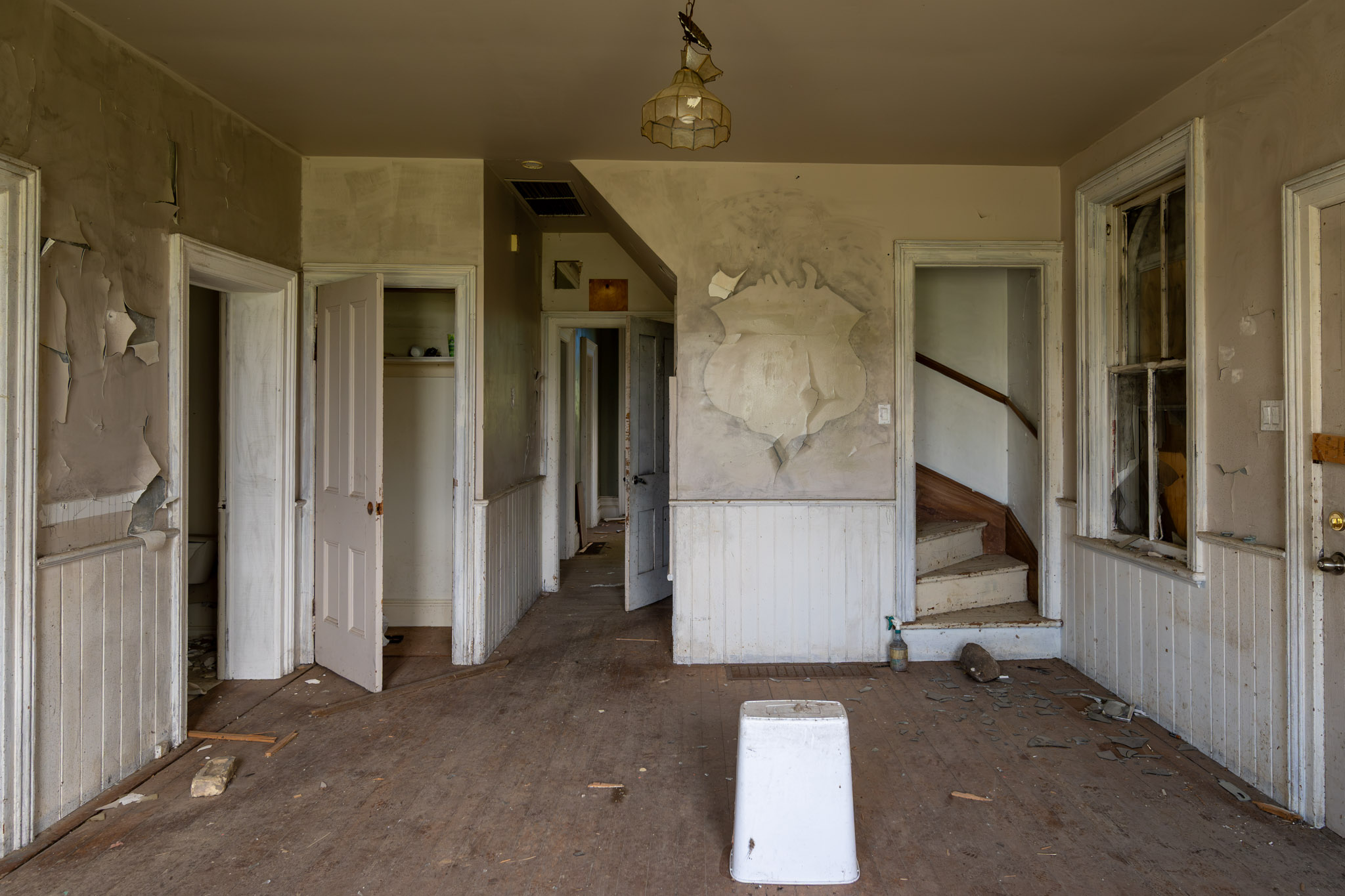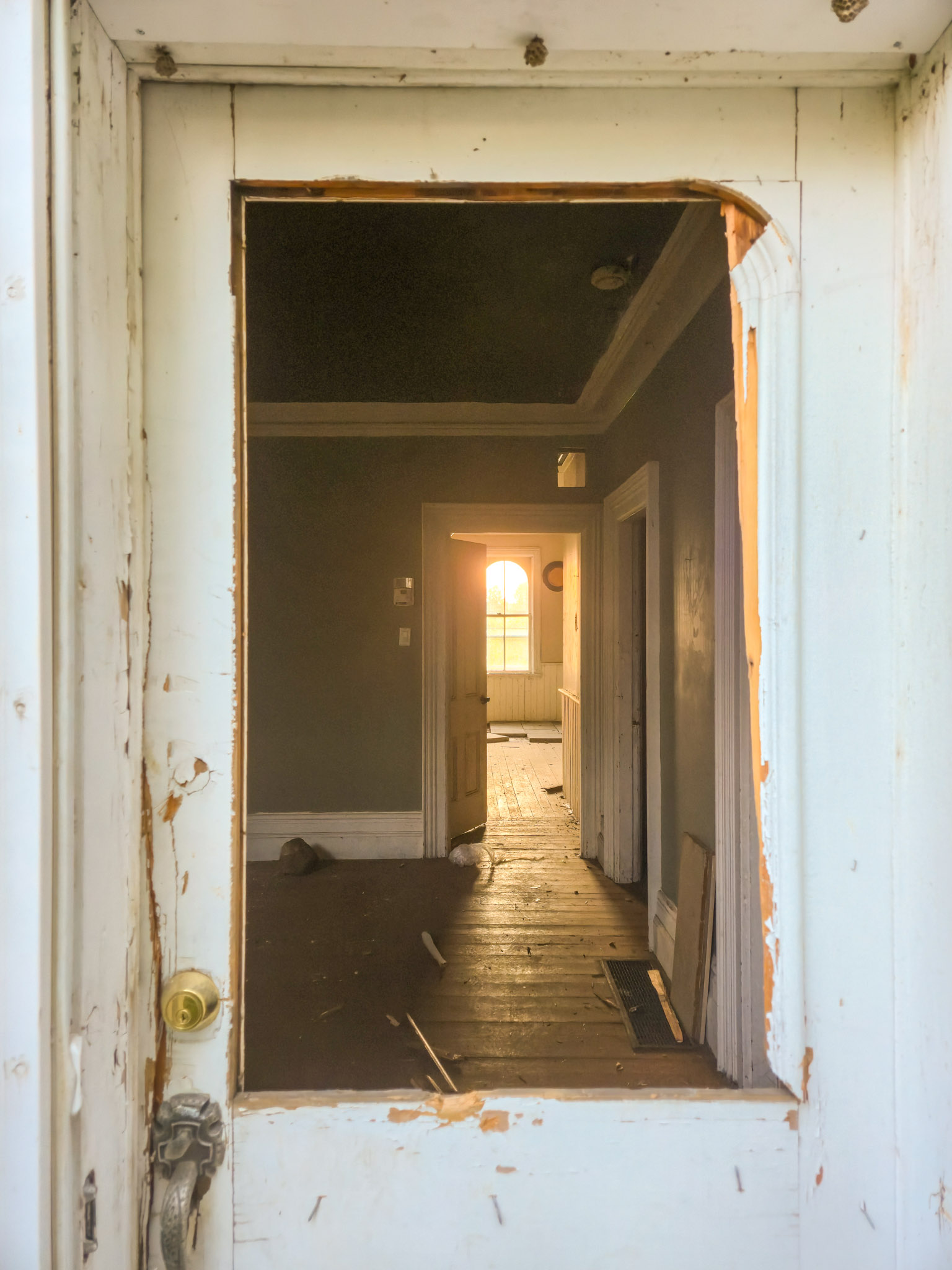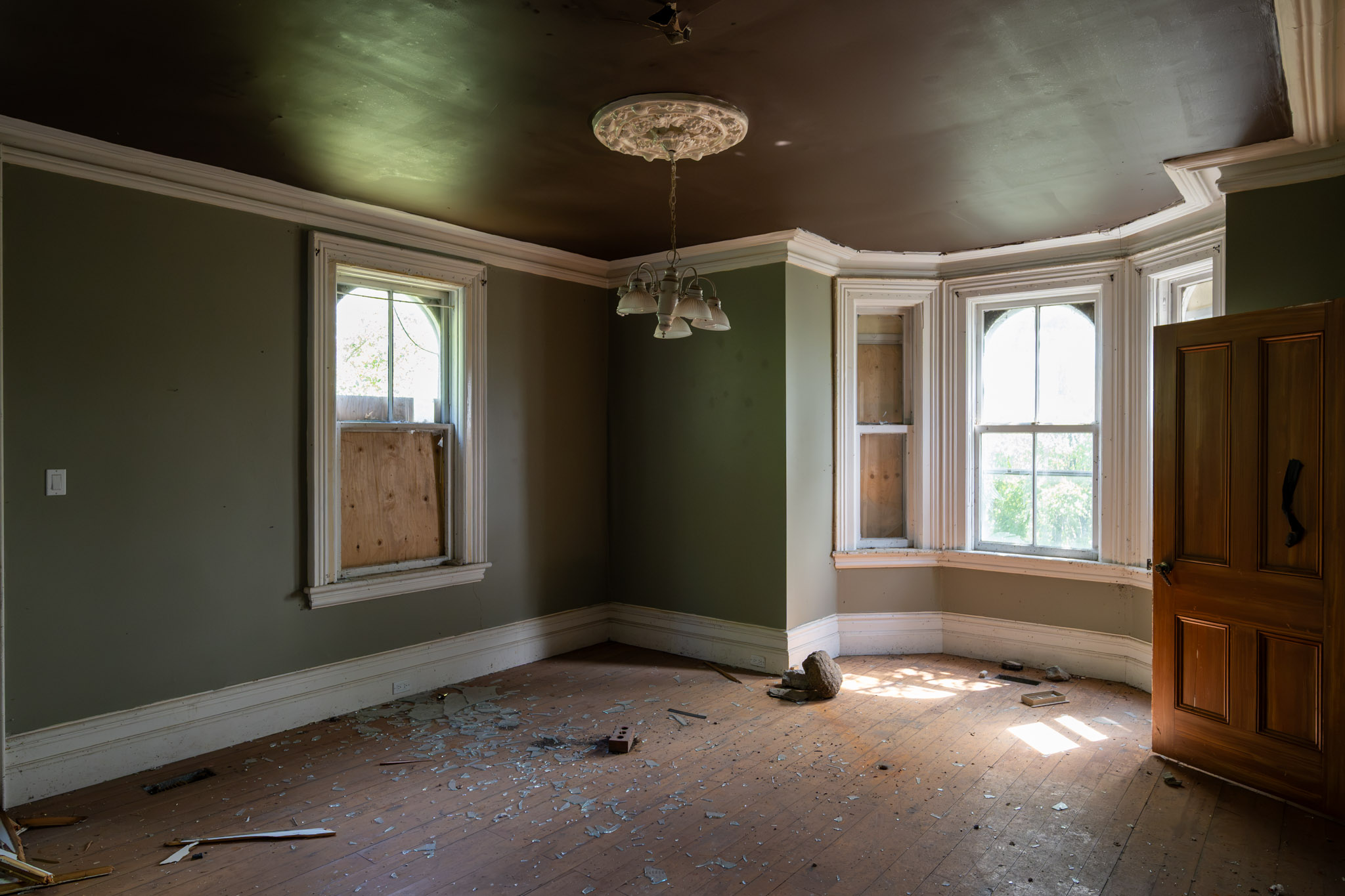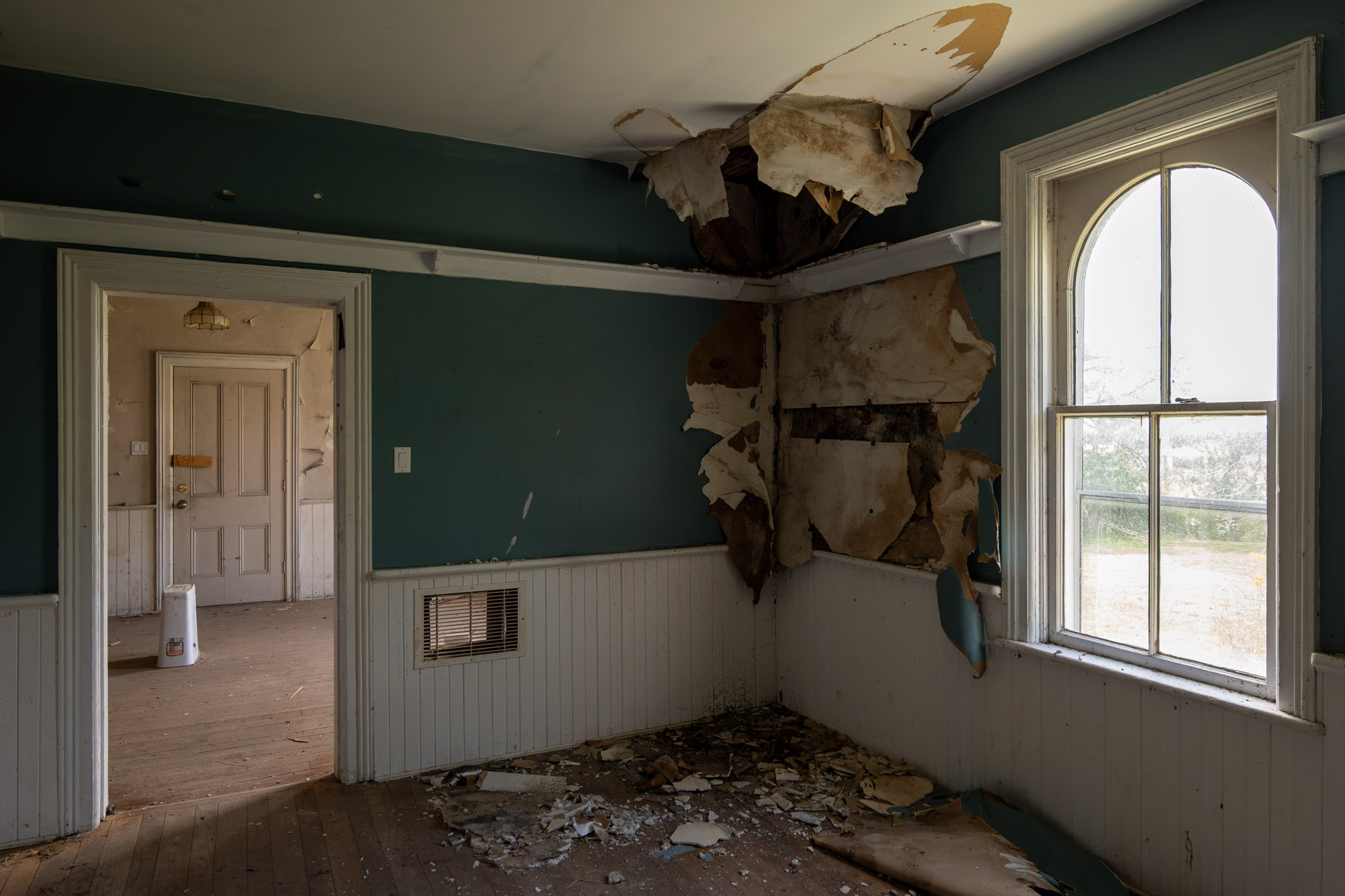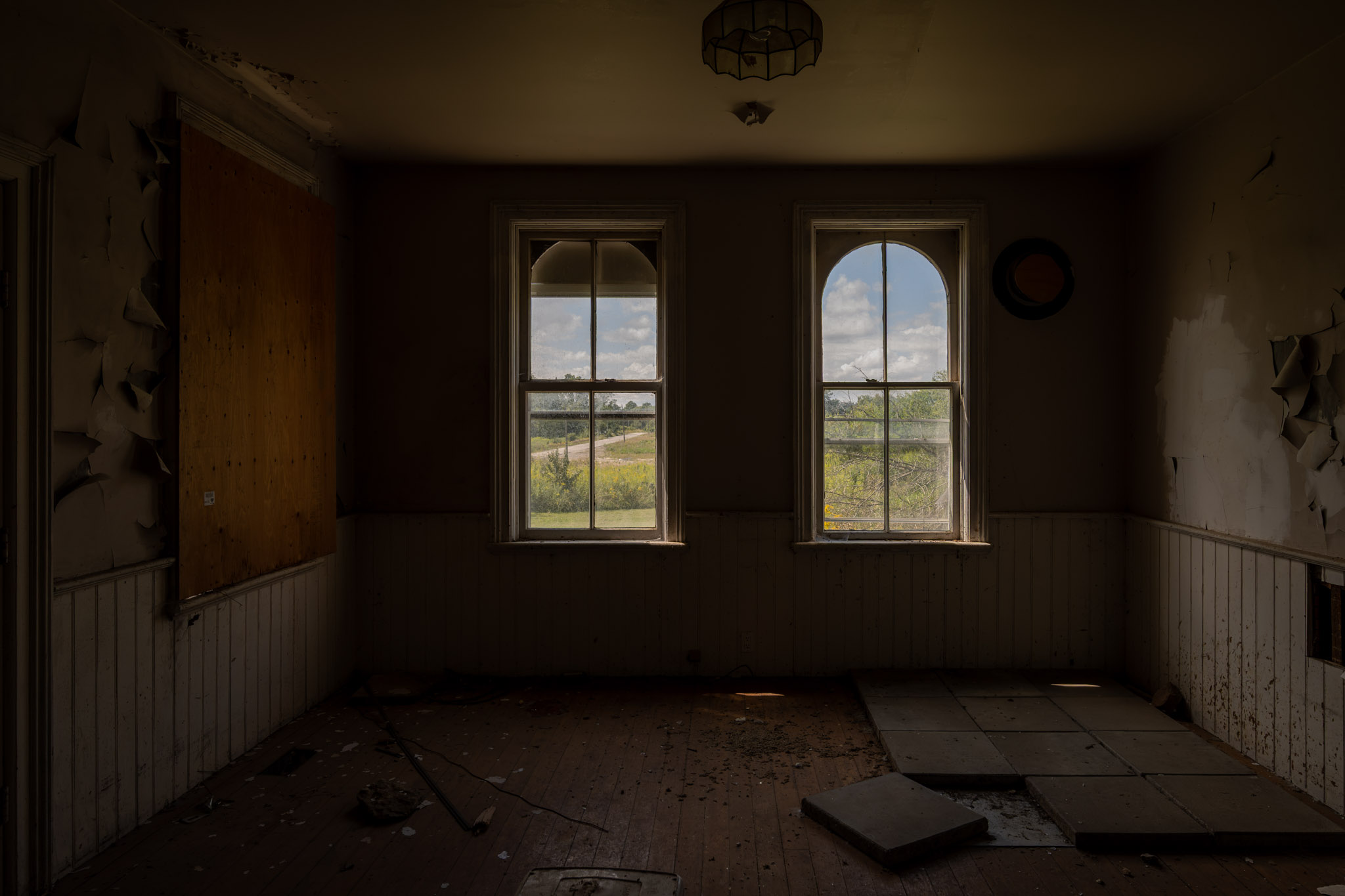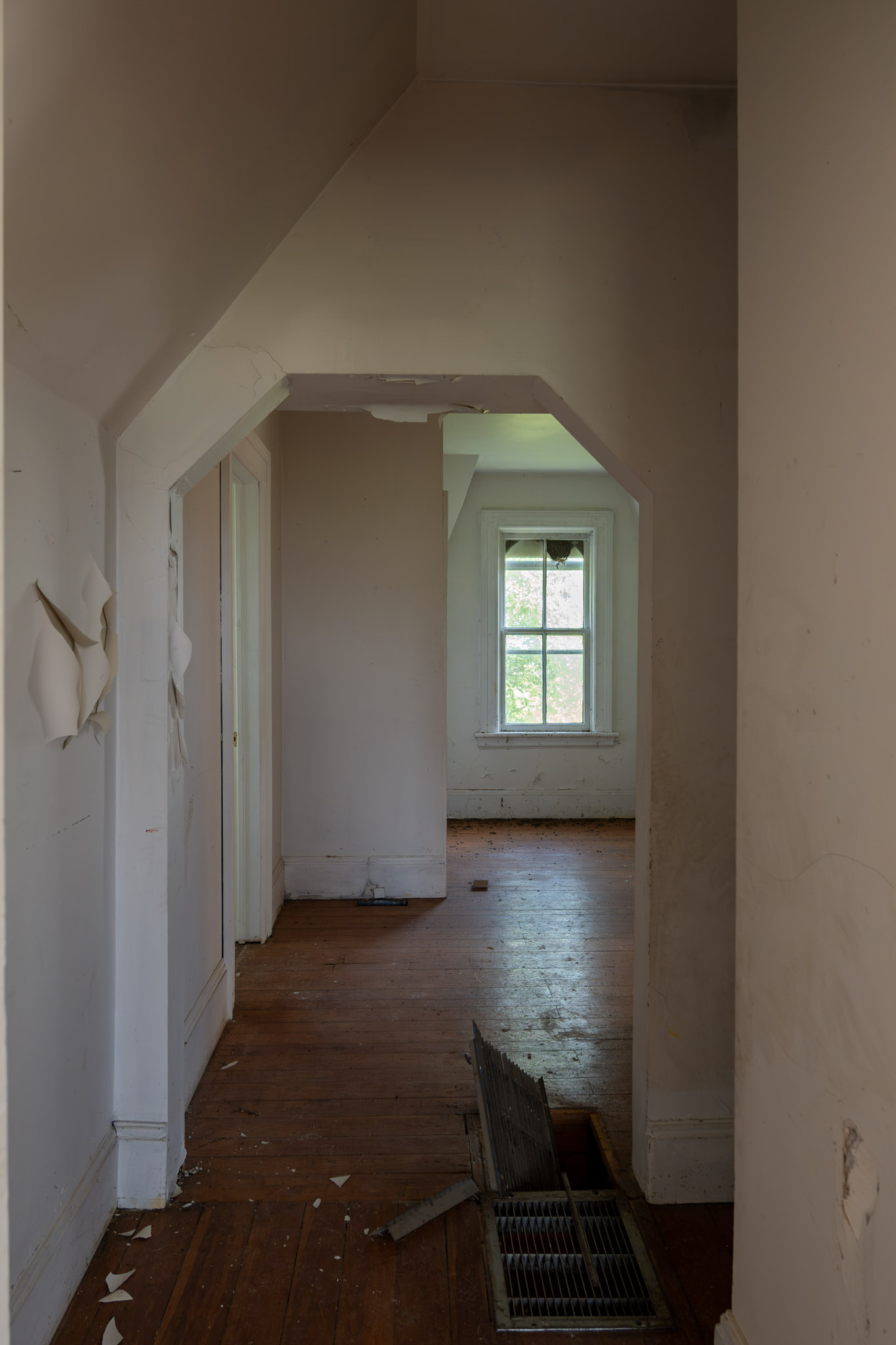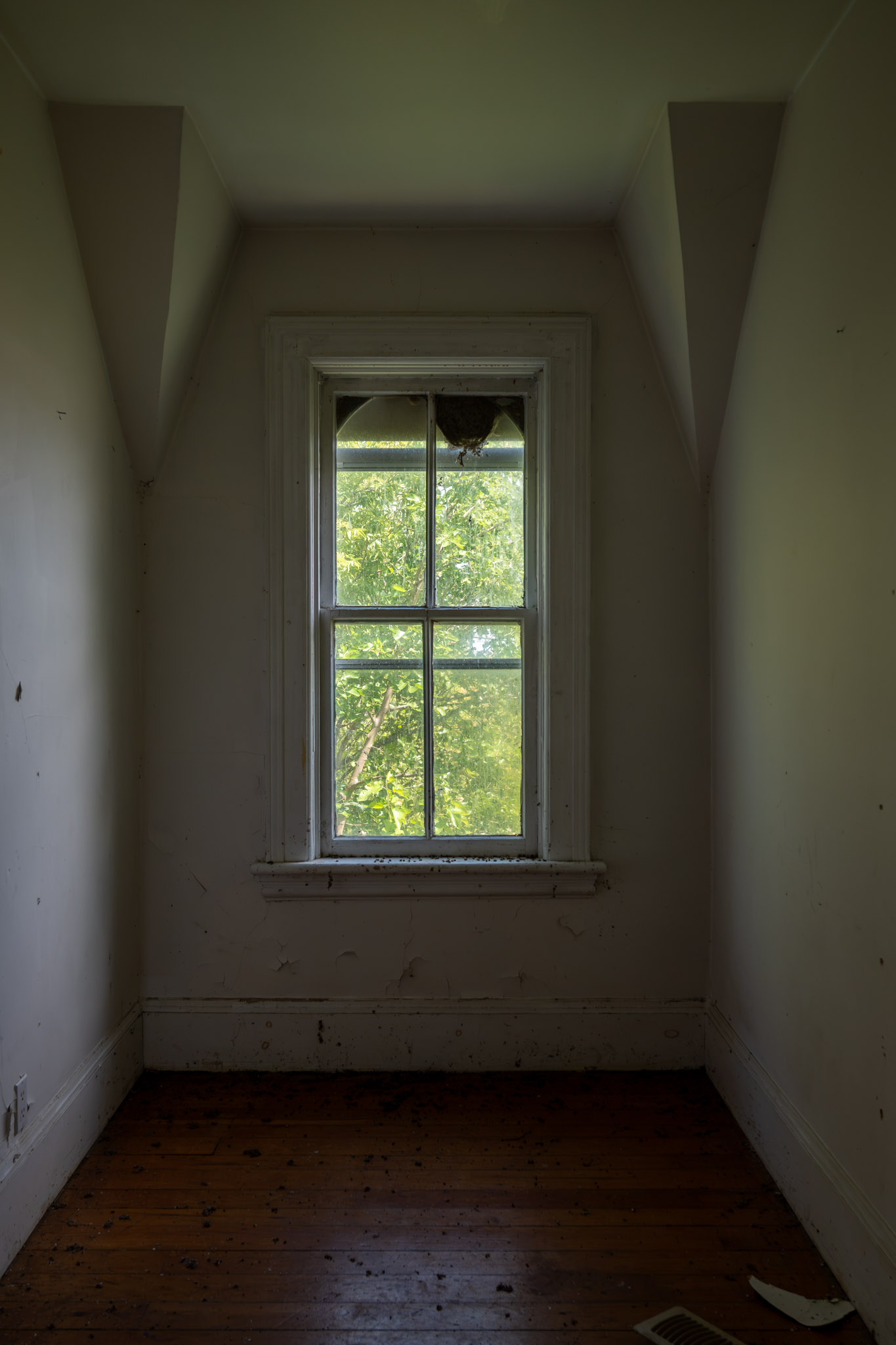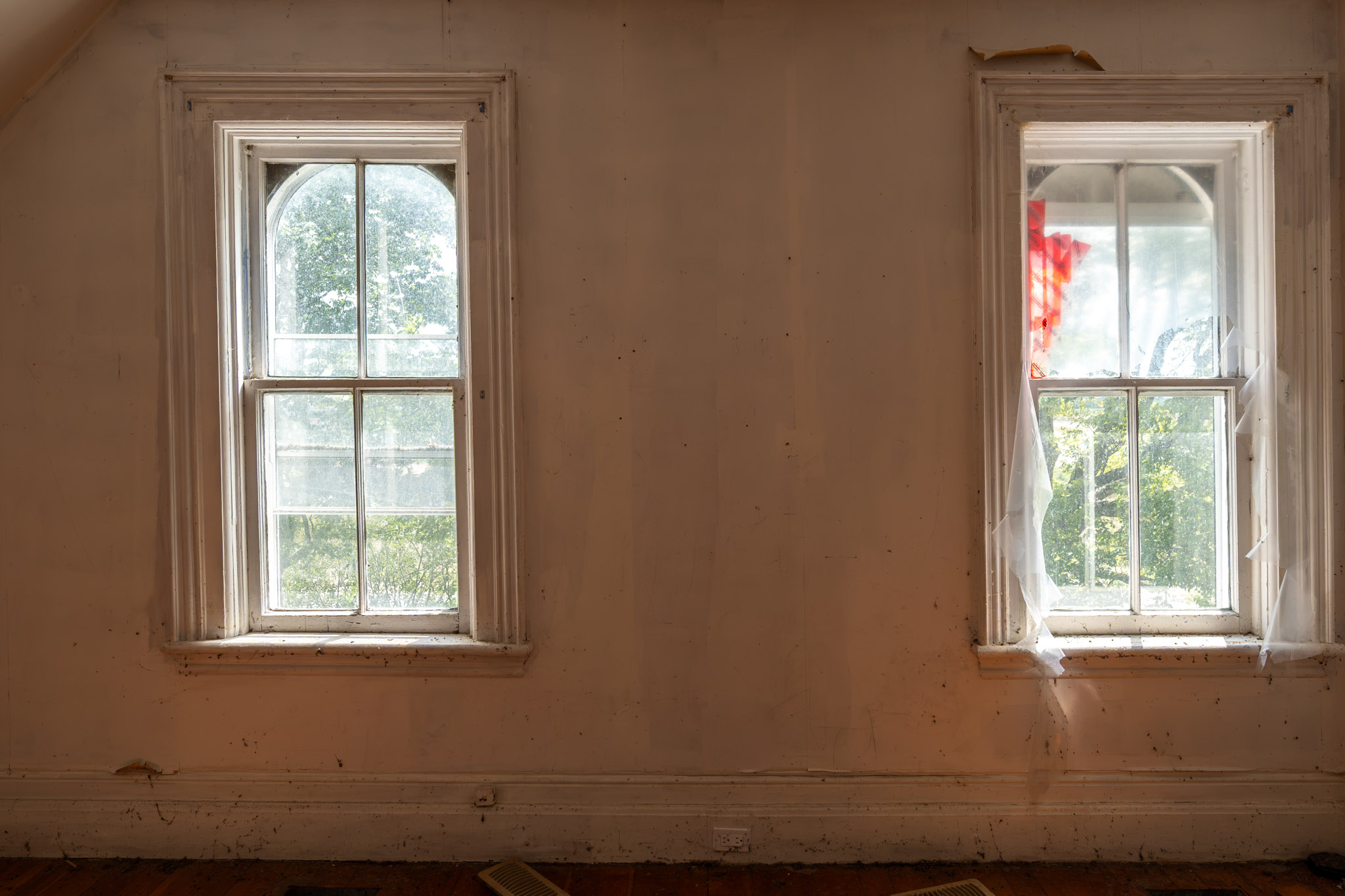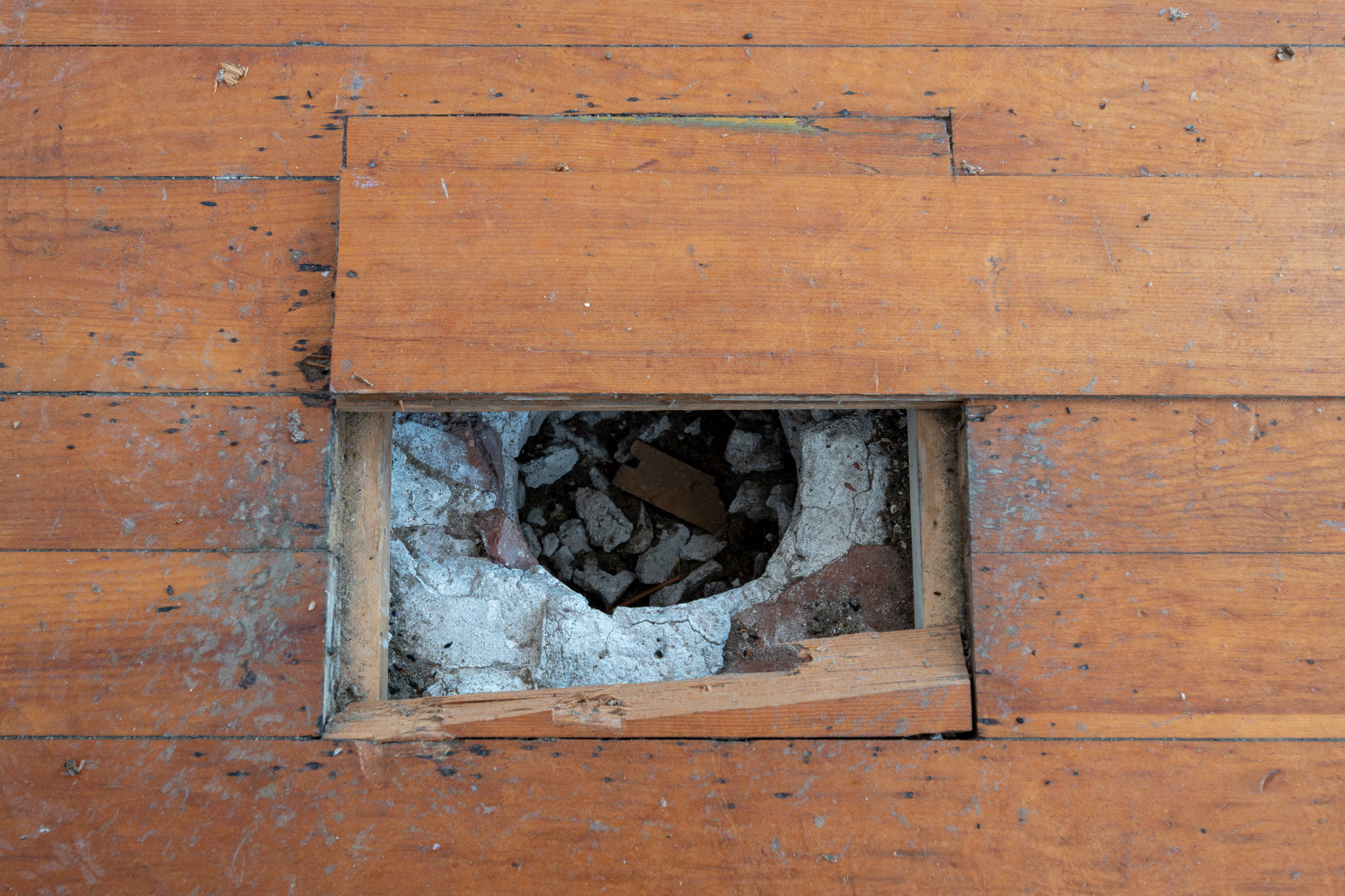
Some abandoned places are tucked away in the woods. This one stands alone in the open, on a stretch of country road where nearly everything else has already been knocked down.
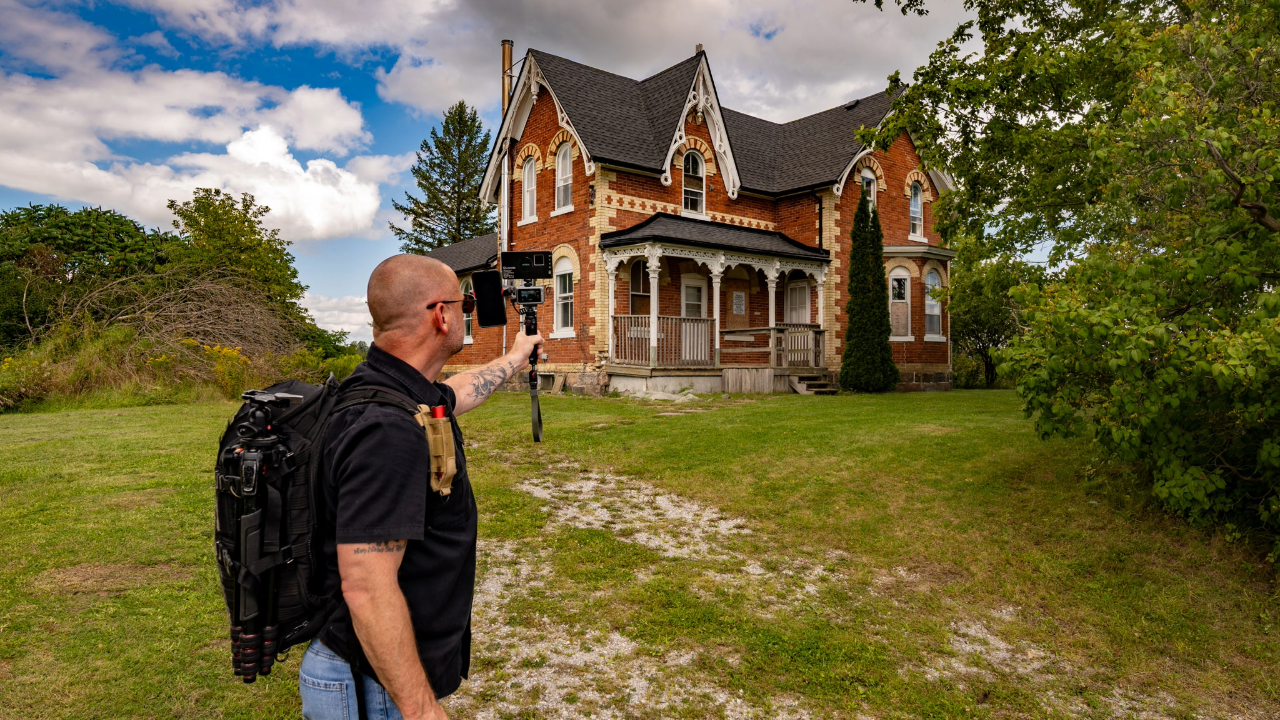
It’s a red-brick Victorian farmhouse, more than 150 years old, and it’s one of the last reminders of the farm country that once covered this land.
A Farmhouse Built in Stages
The first part of the house was built in the mid-1870s by a farmer named William Brignal. In the early 1880s, a later owner, John Tool, expanded it into the T-shaped house that stands today. A one-storey kitchen wing was added at the back, probably in the early 1900s.
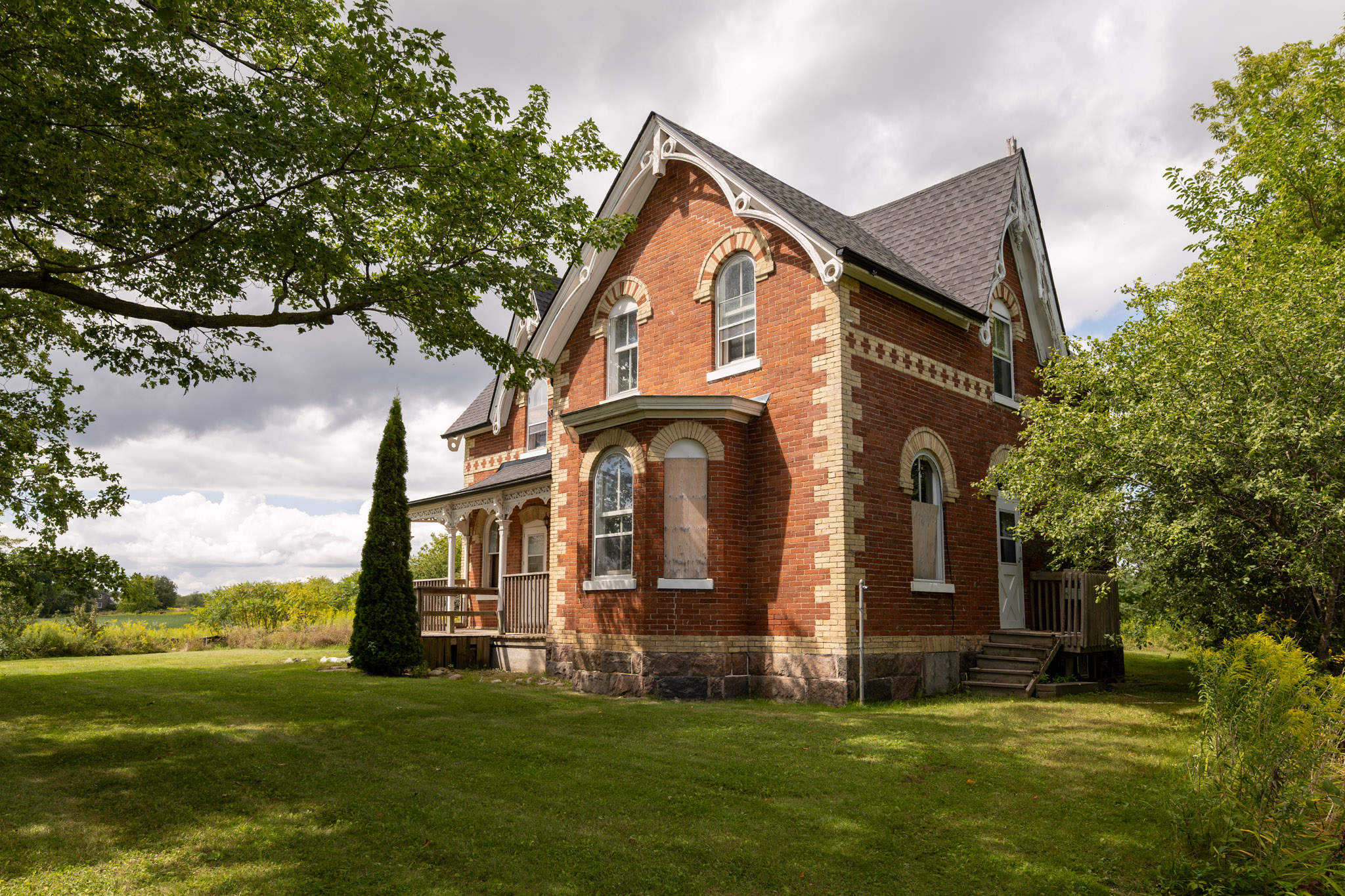
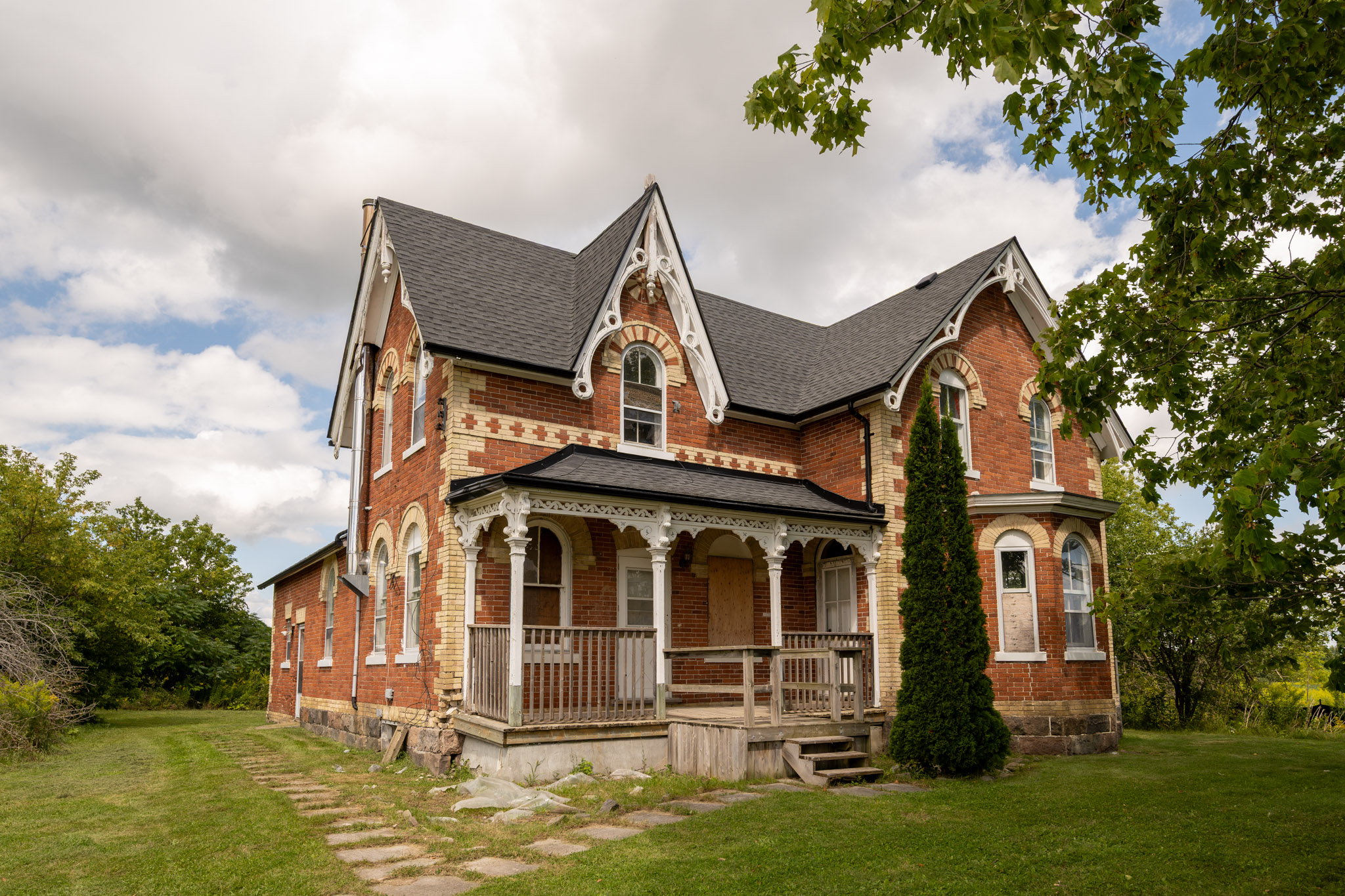
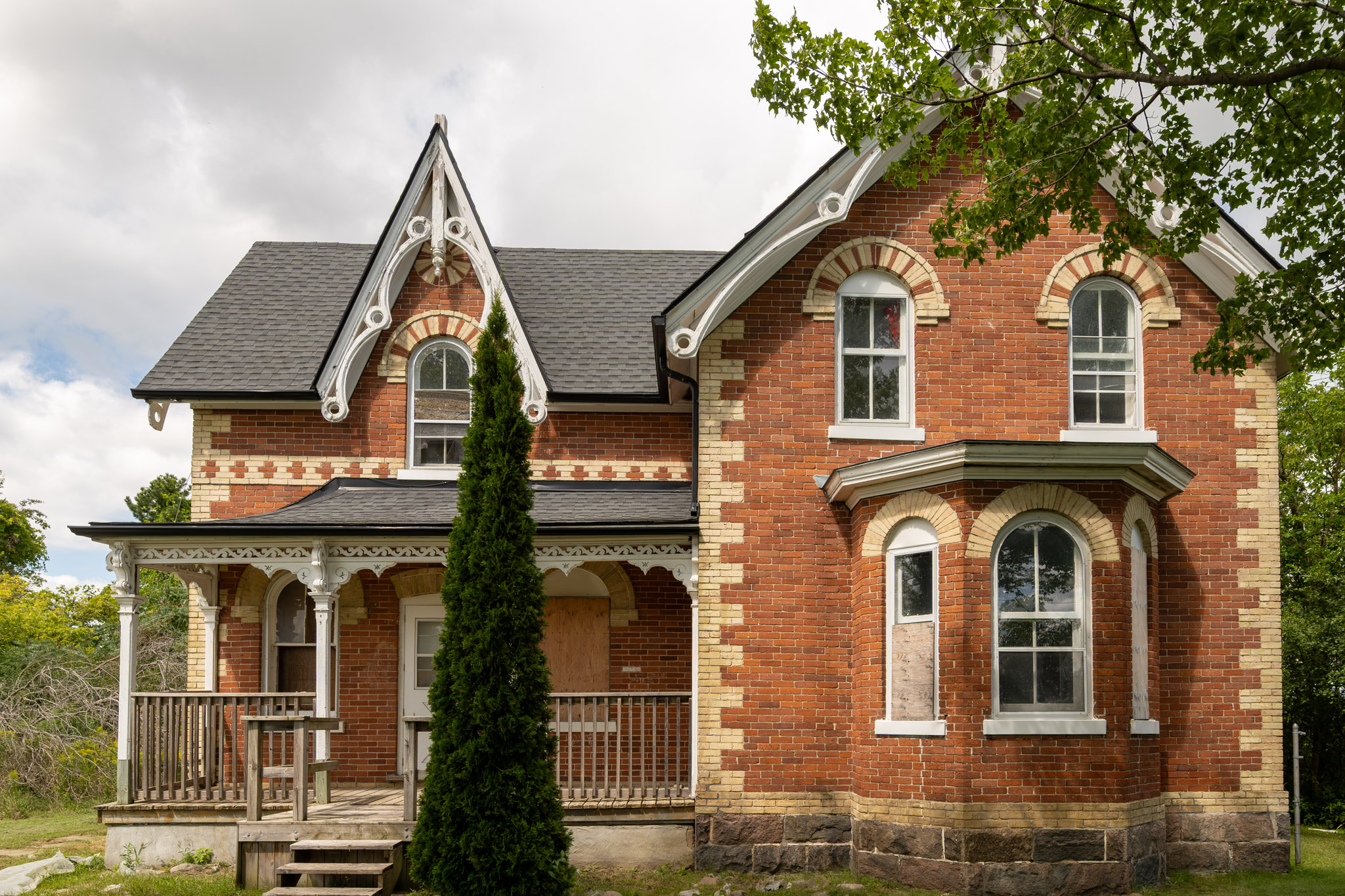
Architecturally, it’s a classic example of the Ontario cottage style of the Victorian era. It has a one-and-a-half-storey layout, a steep roof with a centre gable over the front door, and windows set out in neat, symmetrical rows.
Details Worth Slowing Down For
What makes this house special is how much effort went into decorating what was, at heart, a working farmhouse.
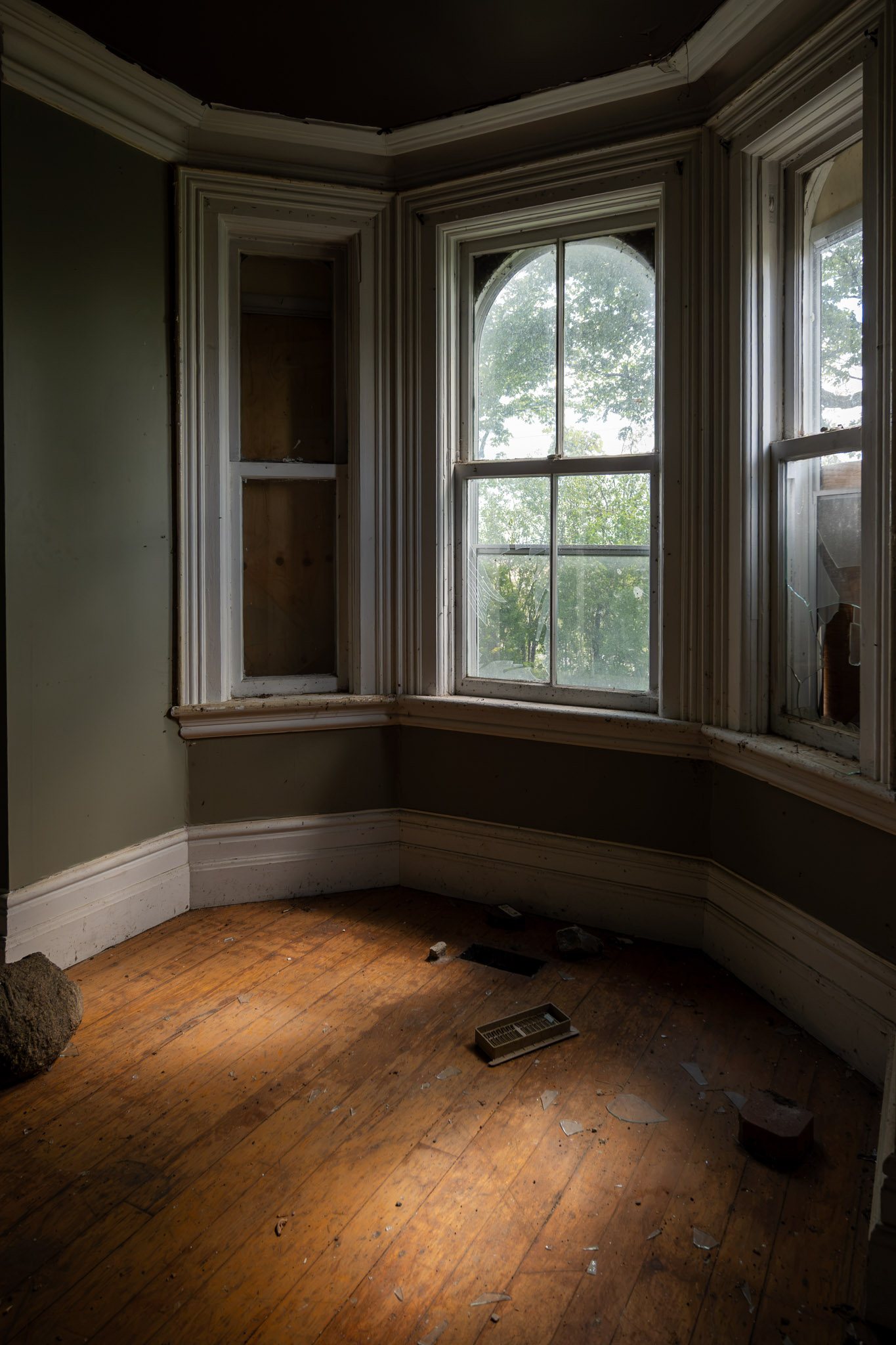
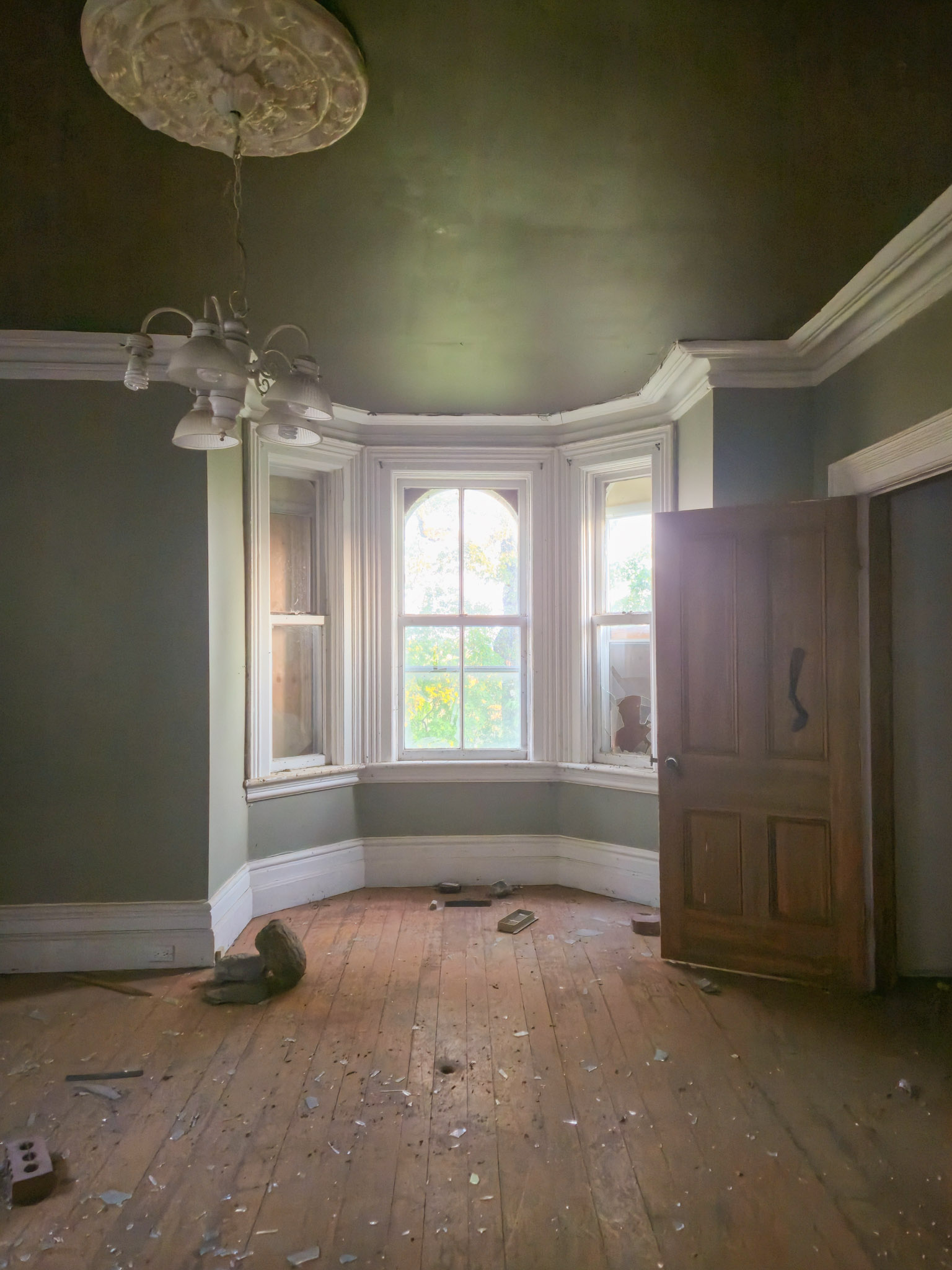
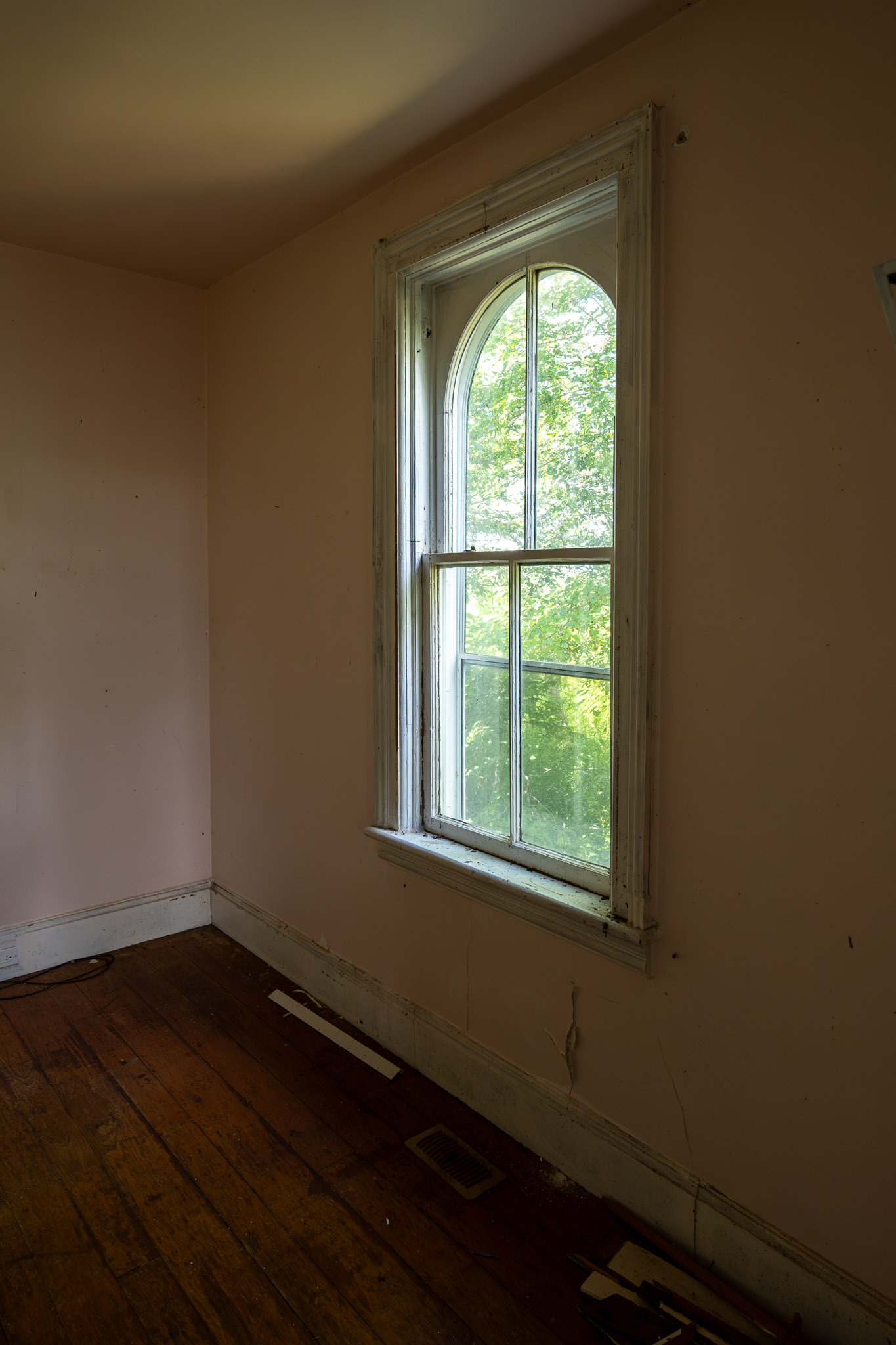
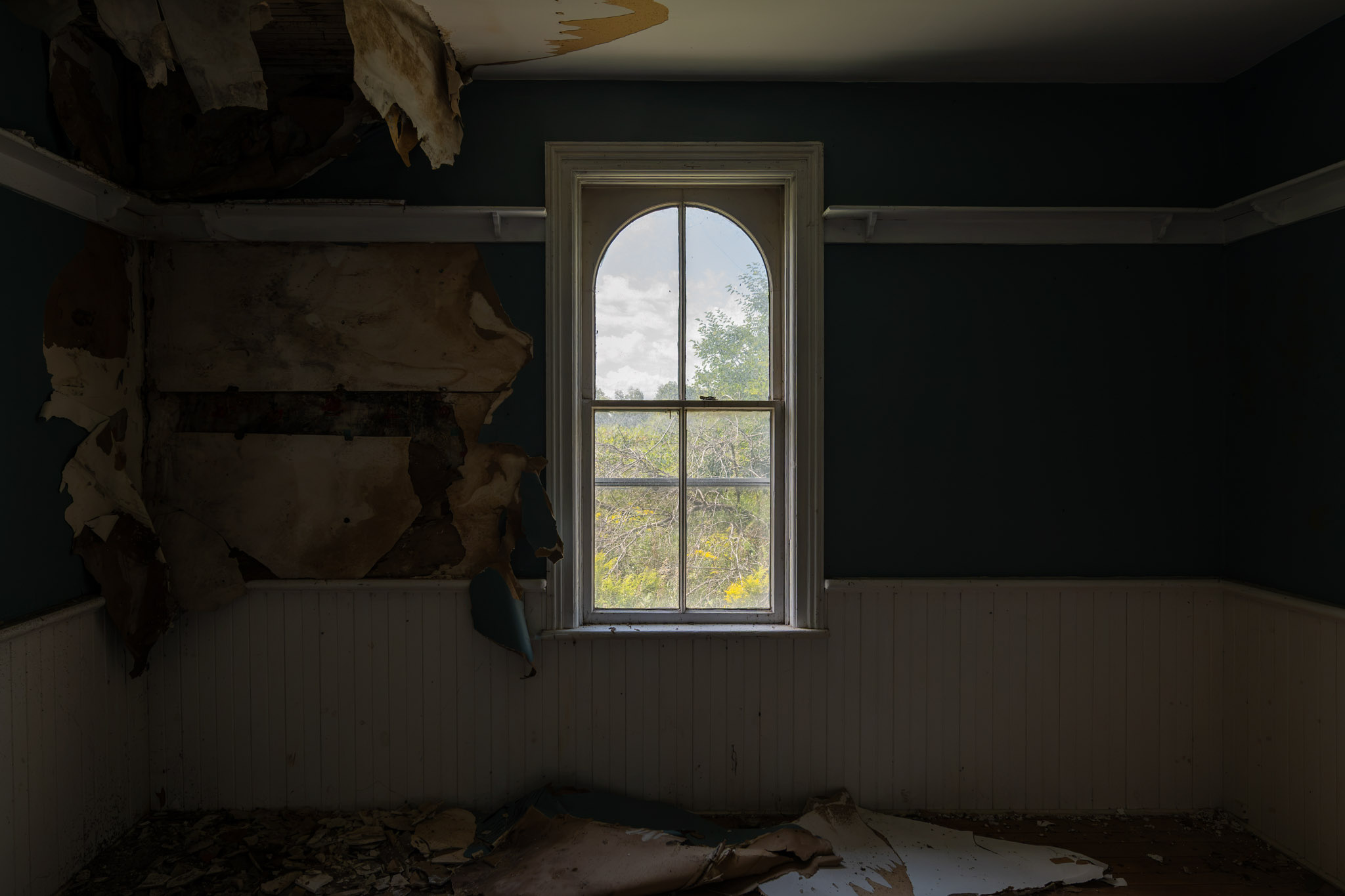
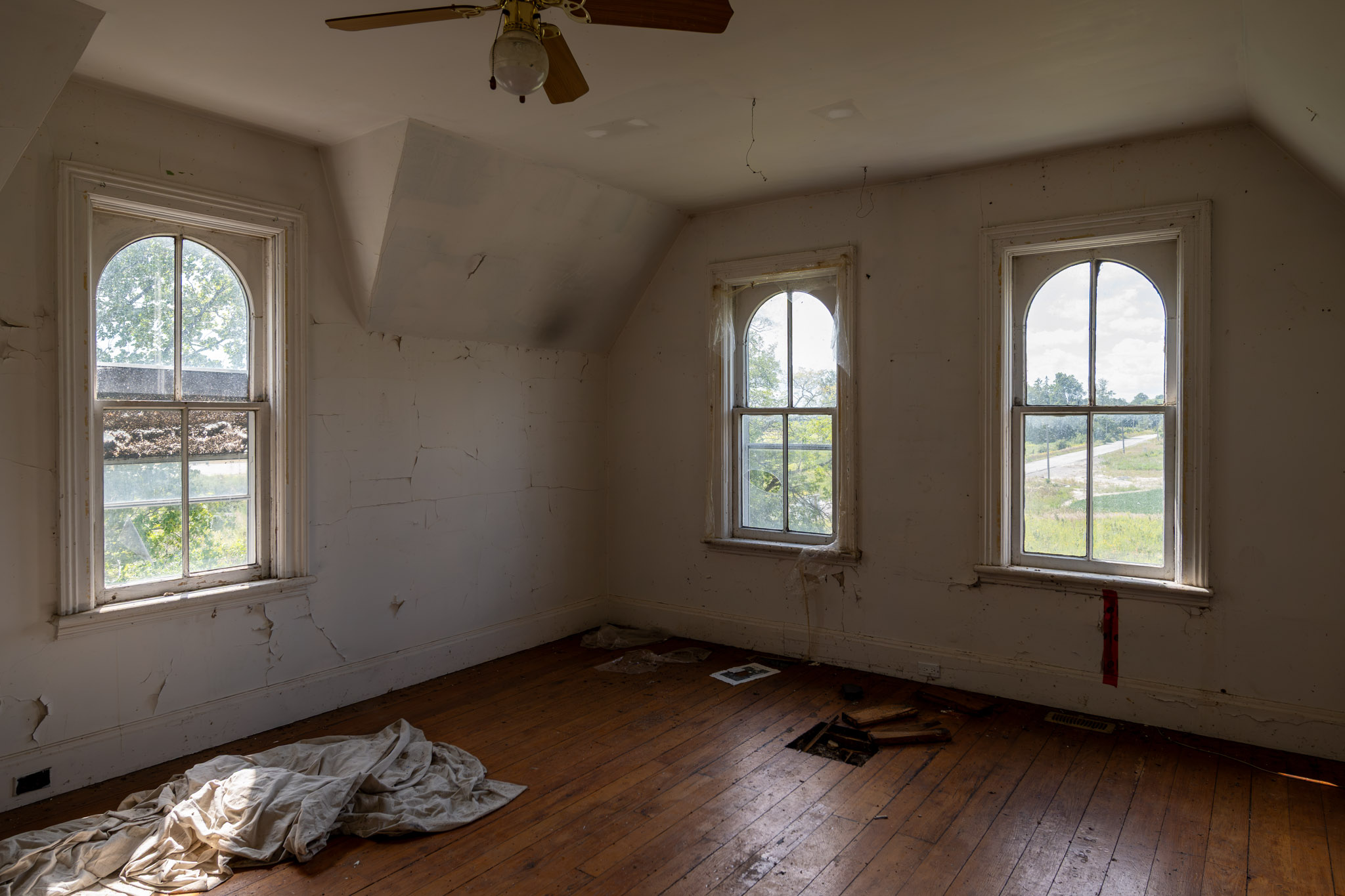
The red brick walls are trimmed in cream-coloured buff brick. Buff brick runs up every corner in a pattern of quoins, frames each window in a rounded arch, and forms a checkerboard pinwheel tucked just under the front peak. Every gable is edged with carved wooden bargeboard finished with ball-and-drop pendants. The front verandah has a flared roof, delicate fretwork and chamfered posts, and on one side a bay window holds three round-arched windows.
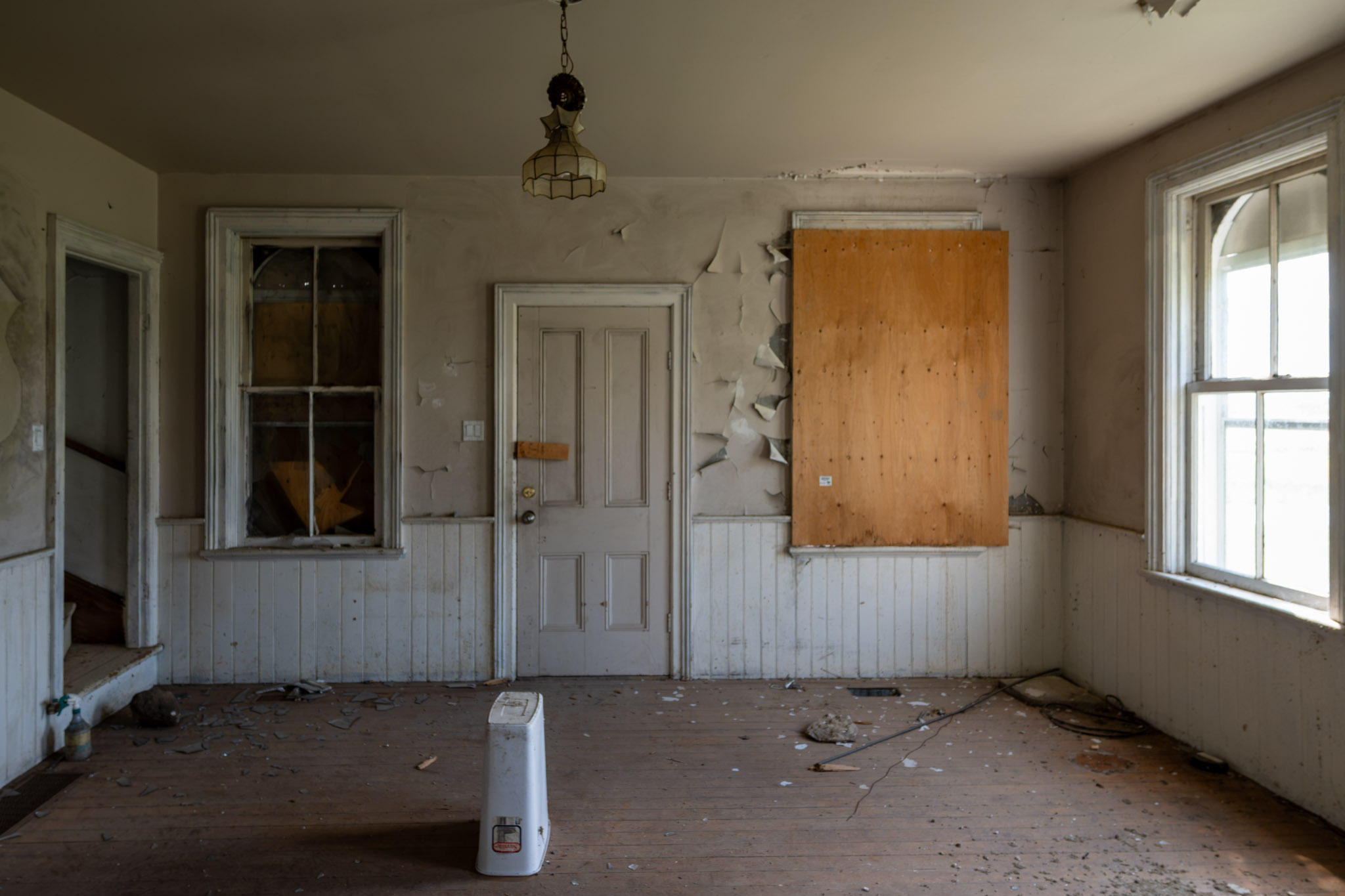
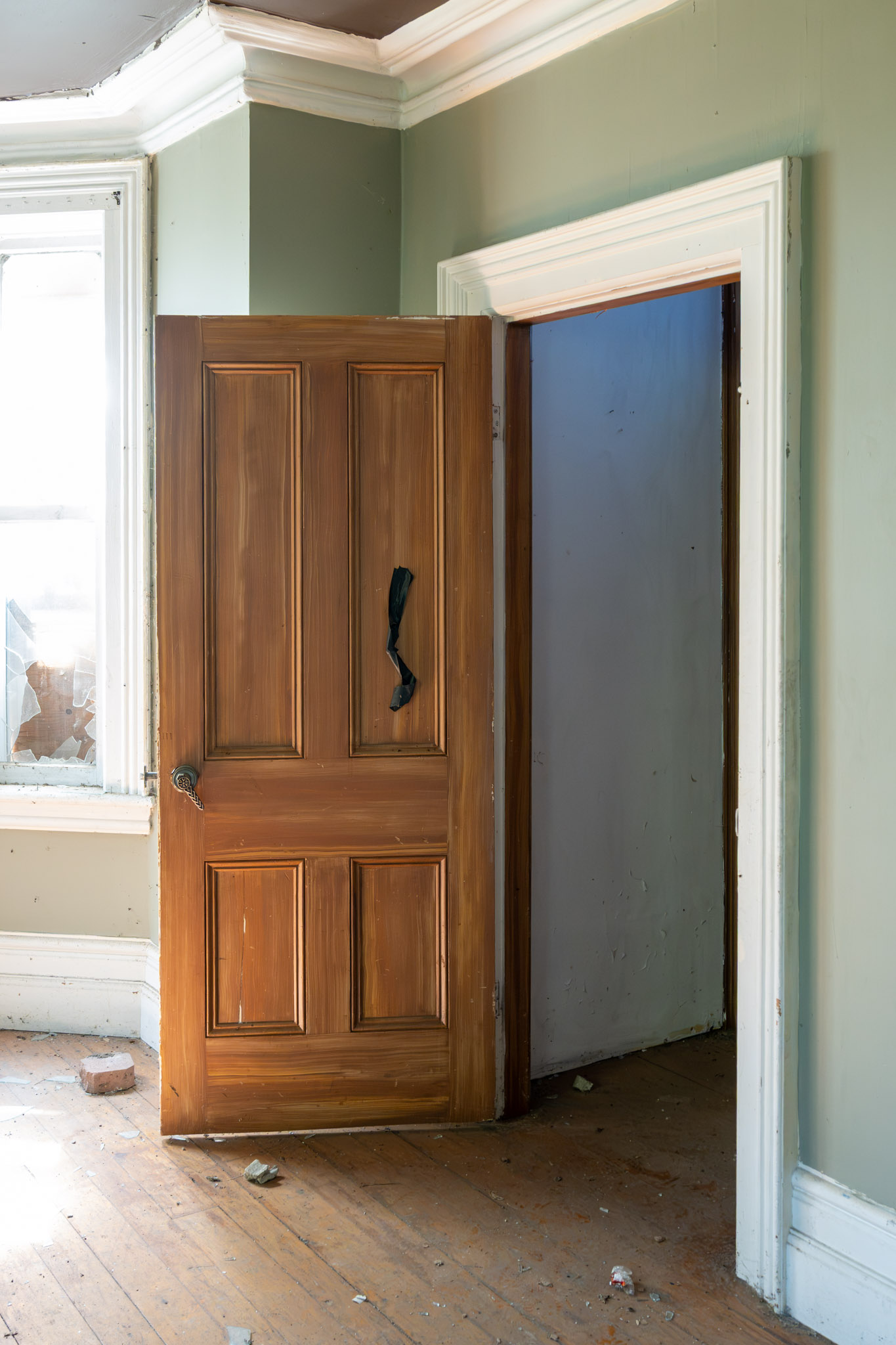
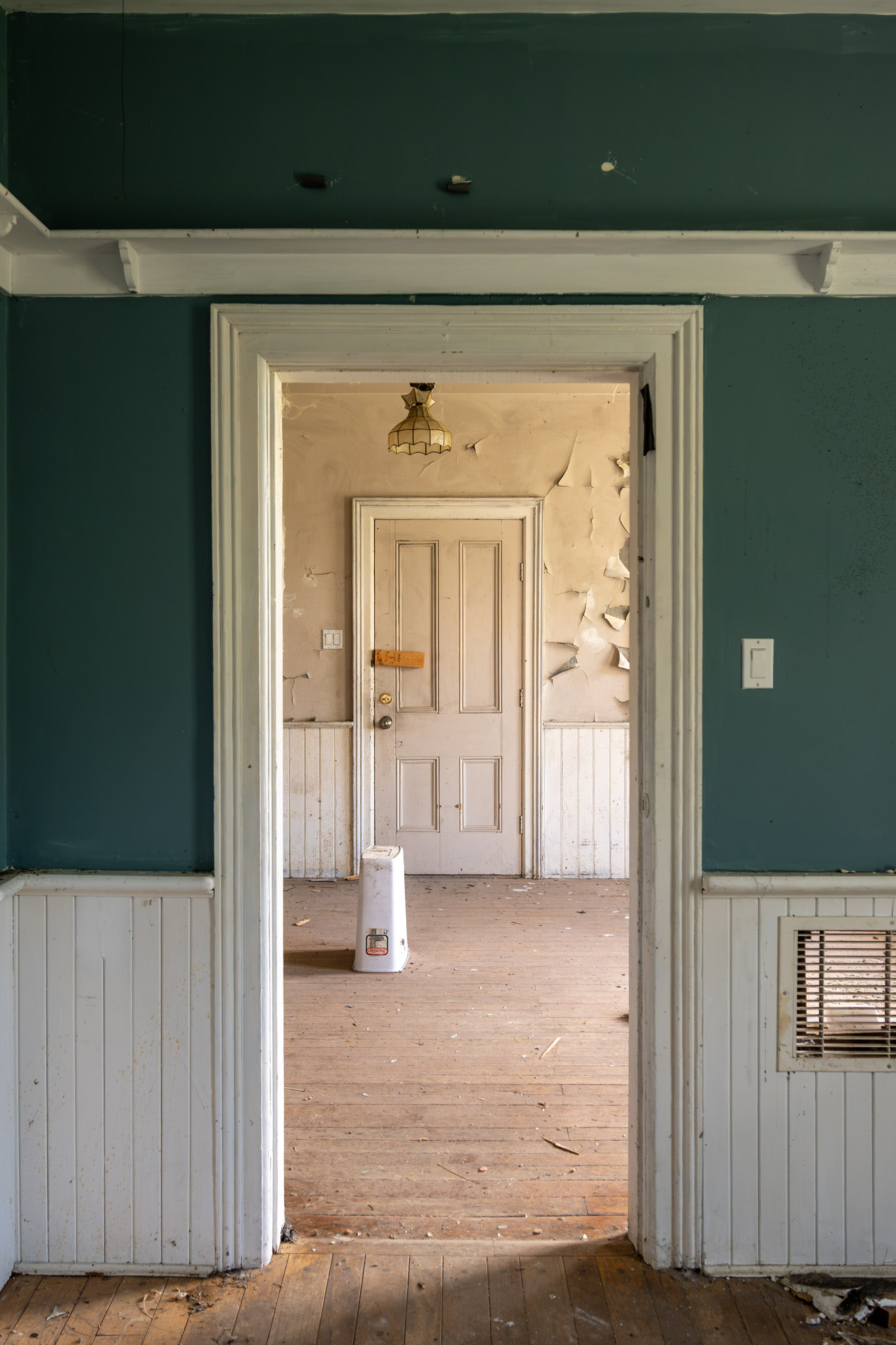
Then there are the two front doors. Houses like this sometimes had a second entrance because two families, or two generations of the same family, lived under one roof. Each wing had its own matching façade and its own door.
Why Is It Still Standing?
In the 1970s, the province expropriated thousands of acres of farmland here to build a planned new city. The project stalled for decades, and many of the old homesteads sat empty, were vandalized, or simply disappeared.
Now that city is finally being built. Subdivisions are moving in, and the old farmhouses are being cleared one by one.
This house survived because in 2018 it was formally designated a protected heritage property. The designation protects the brickwork, the woodwork, the verandah, the windows, and even the way the house faces the road.
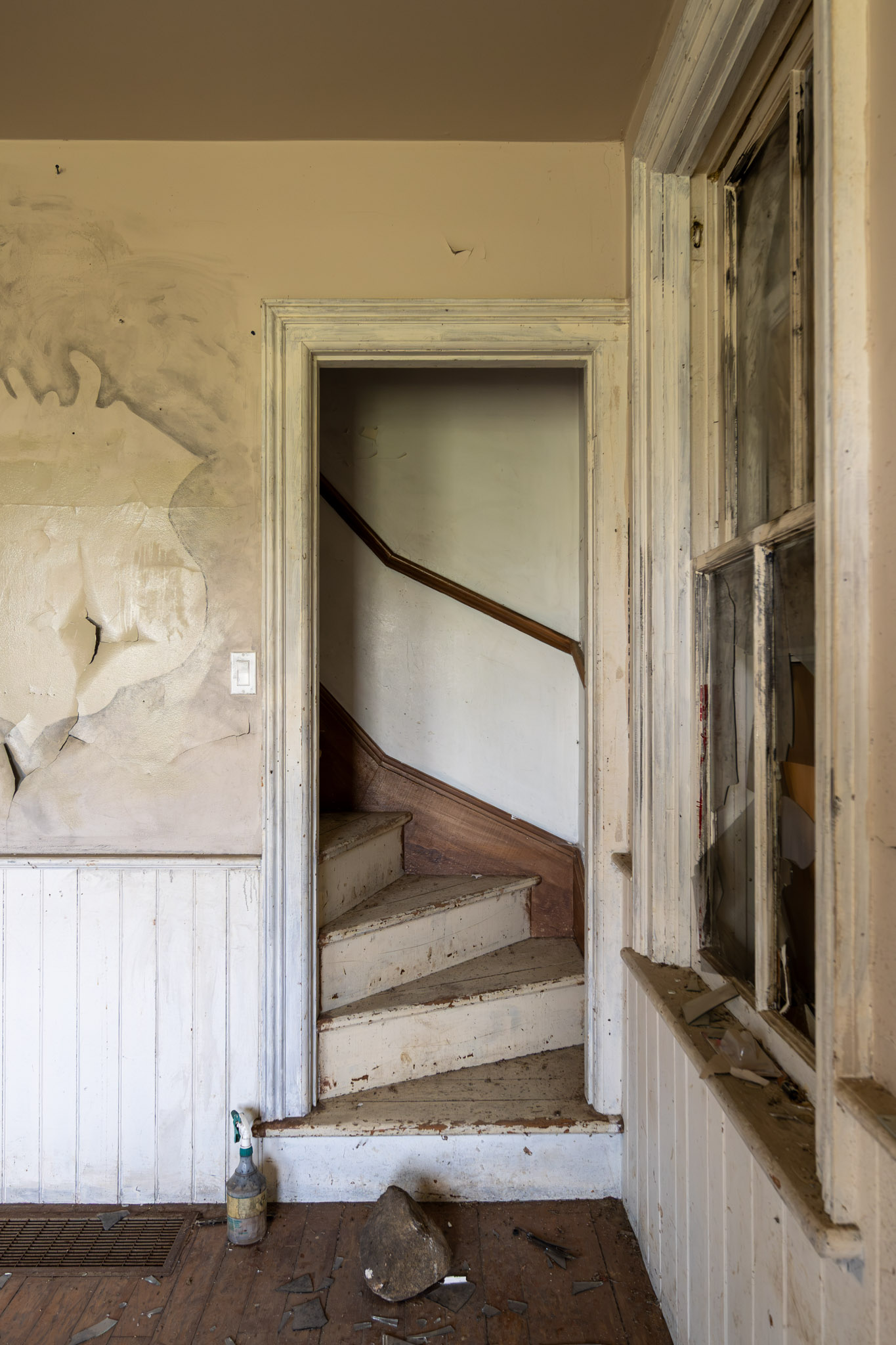
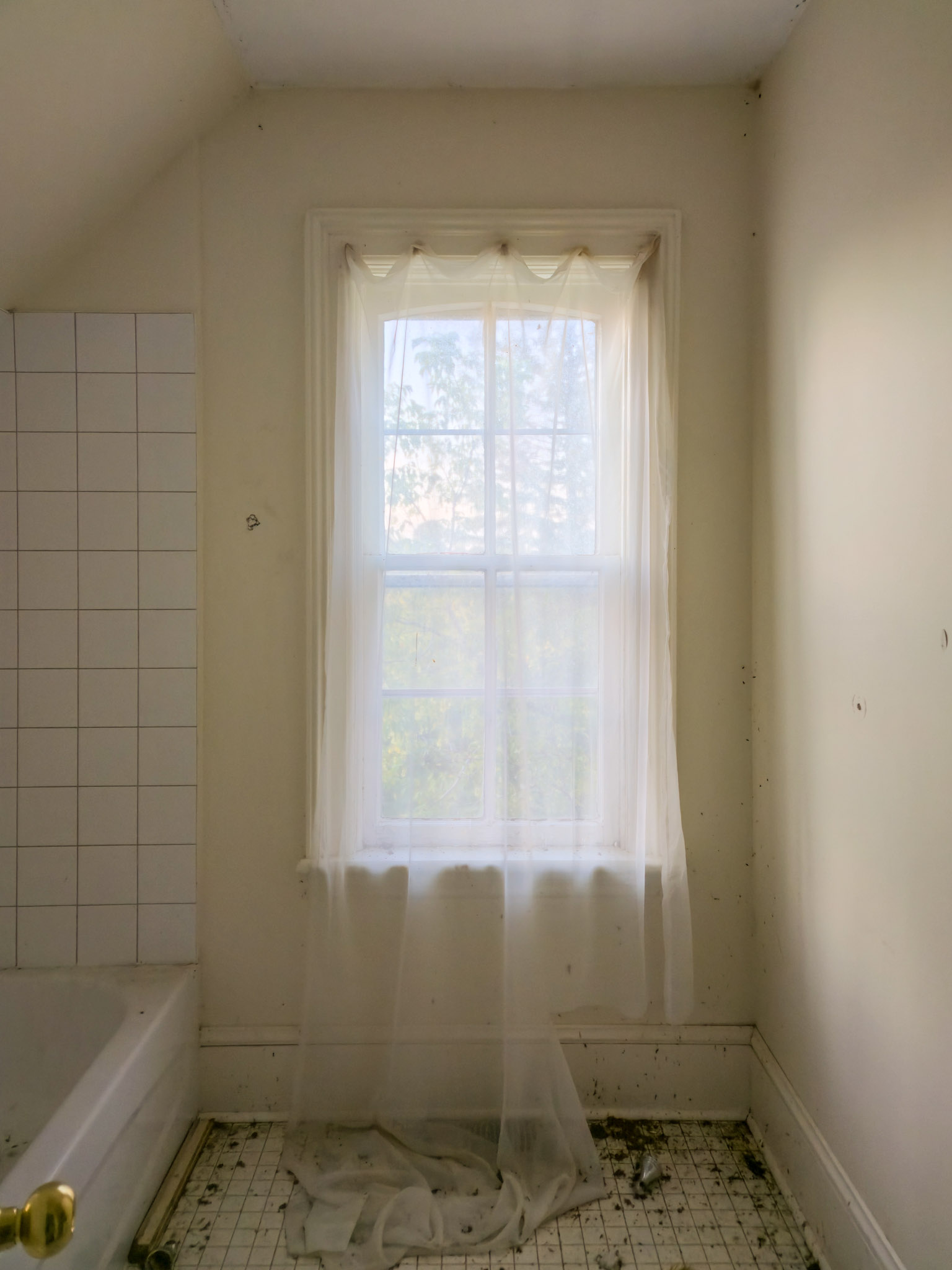
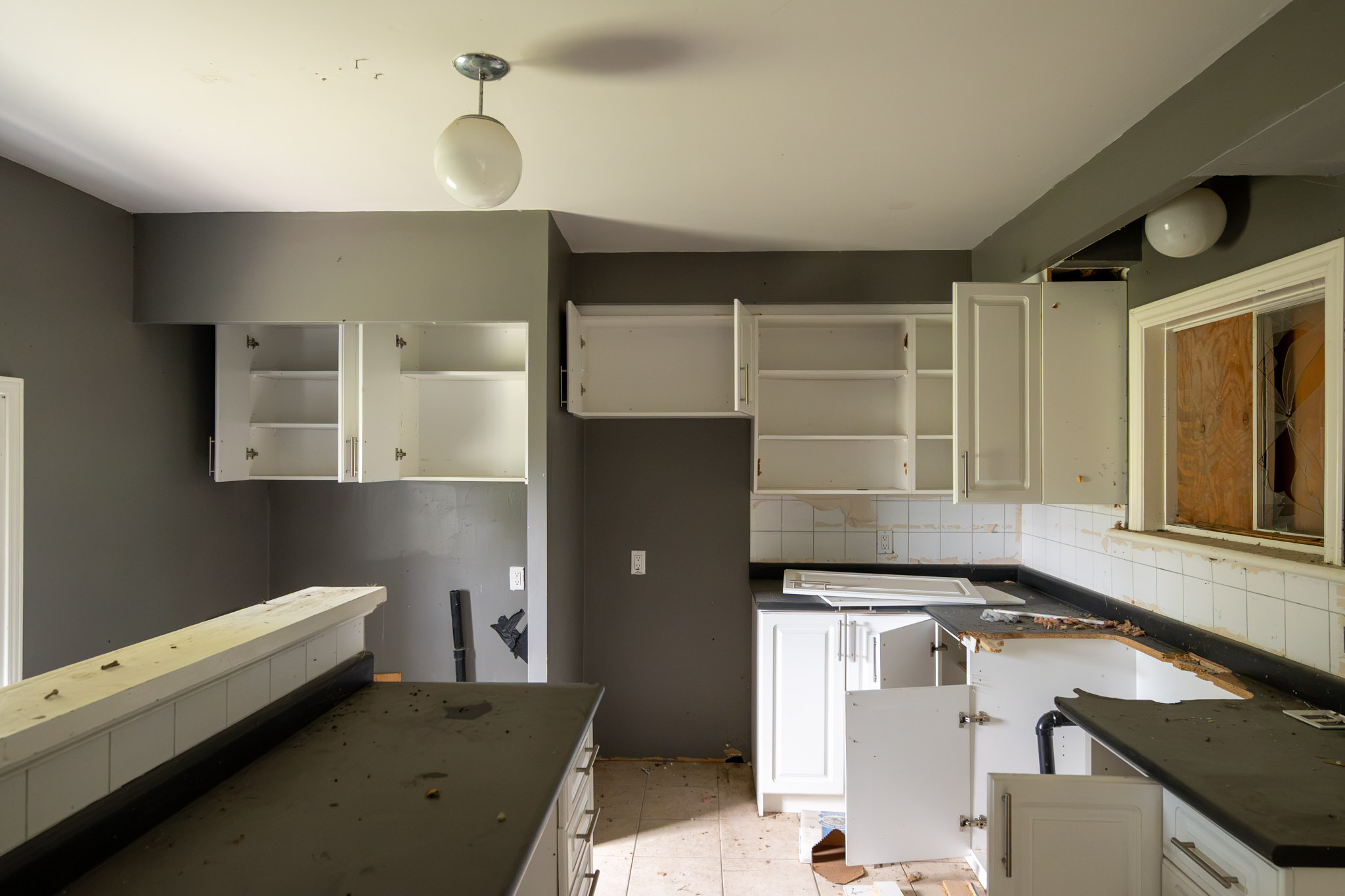
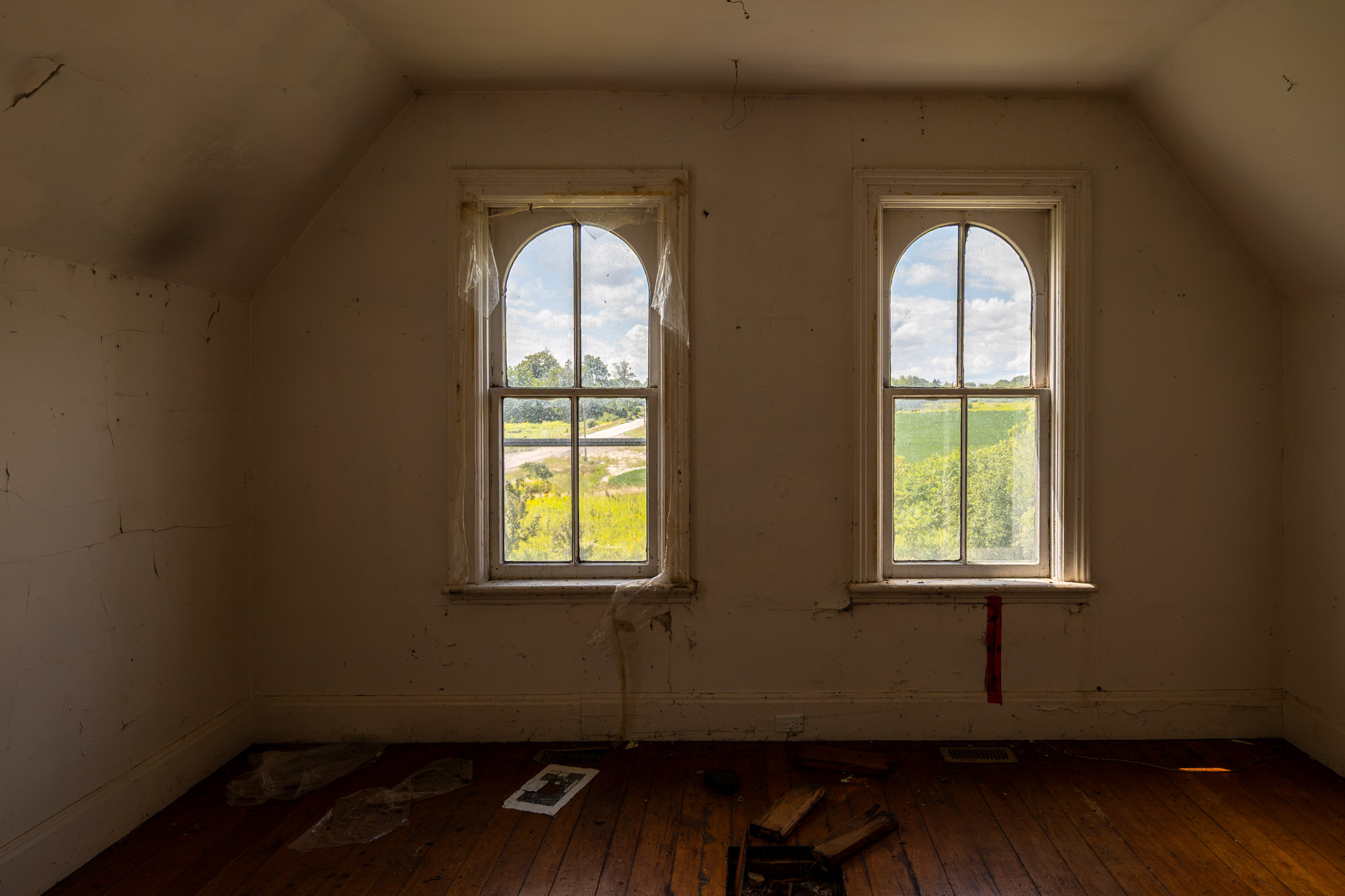
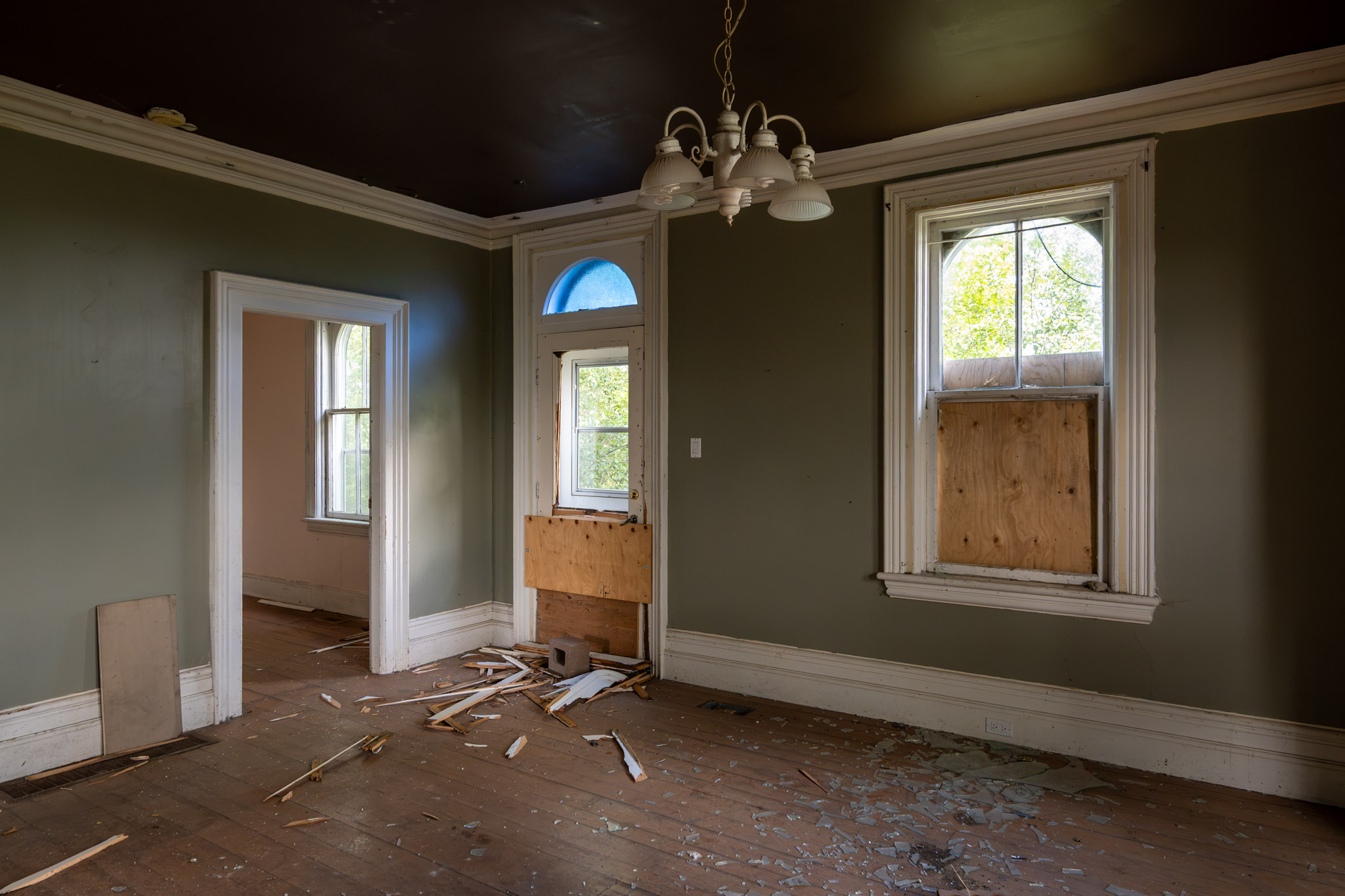
Protection doesn’t mean it’s being lived in or looked after. The doors are boarded, the yard is overgrown, and the fields around it are turning into streets. For now, though, it’s still here.