
On a quiet Saturday, I spent the day in the photography studio at the Art Gallery of Burlington with a single idea: could I recreate the look and feel of sunrise light using only one light source? What followed was a fun, low-tech, highly intentional lighting experiment that became both a creative exercise and a learning opportunity.
The result is this timelapse video — which you can find on Reddit — alongside a set of photos from the finished setup.
The Concept
Natural window light at sunrise has a quality that’s hard to fake: it’s warm, soft yet directional, and full of subtle gradients that bring out texture and mood. I wanted to see how close I could get to that feel inside a studio, without using complex gear, reflectors, or multiple strobes. The only source of illumination in this setup was one constant light positioned to mimic the angle and warmth of morning sun through a window.
This wasn’t about replicating the sun exactly. It was about understanding how light behaves when it interacts with surfaces, fabrics, and shadows — and how small adjustments can completely change the emotional tone of a frame.
Building the Set
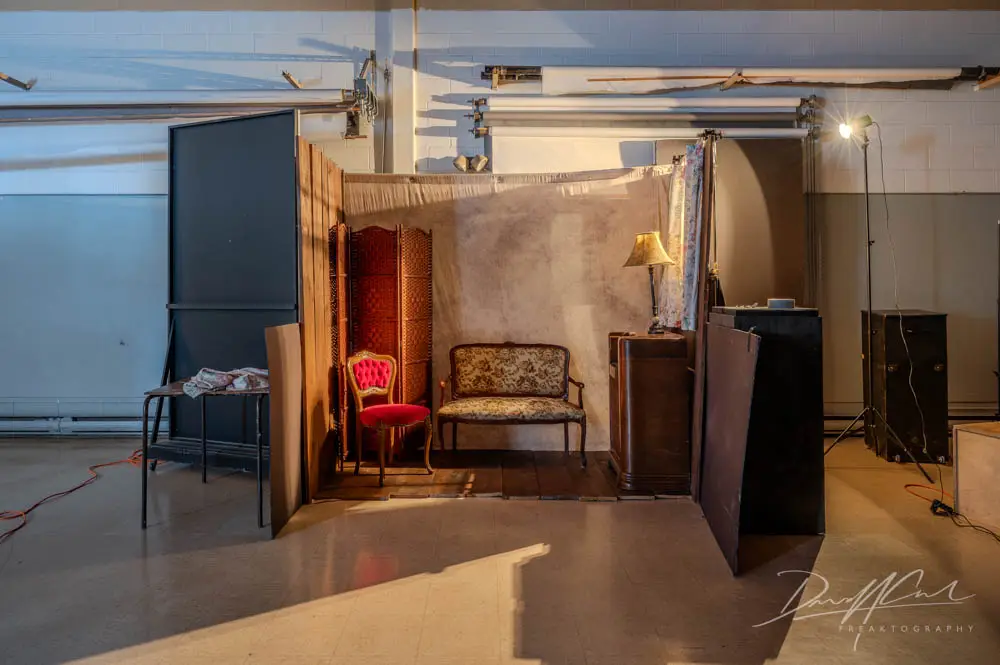
I built a small room within the studio using a canvas backdrop, a few vintage pieces of furniture, and curtains that would work as diffuse “window” material. The key elements were:
The light source: A single constant light with a warmer color temperature to emulate sunrise warmth.
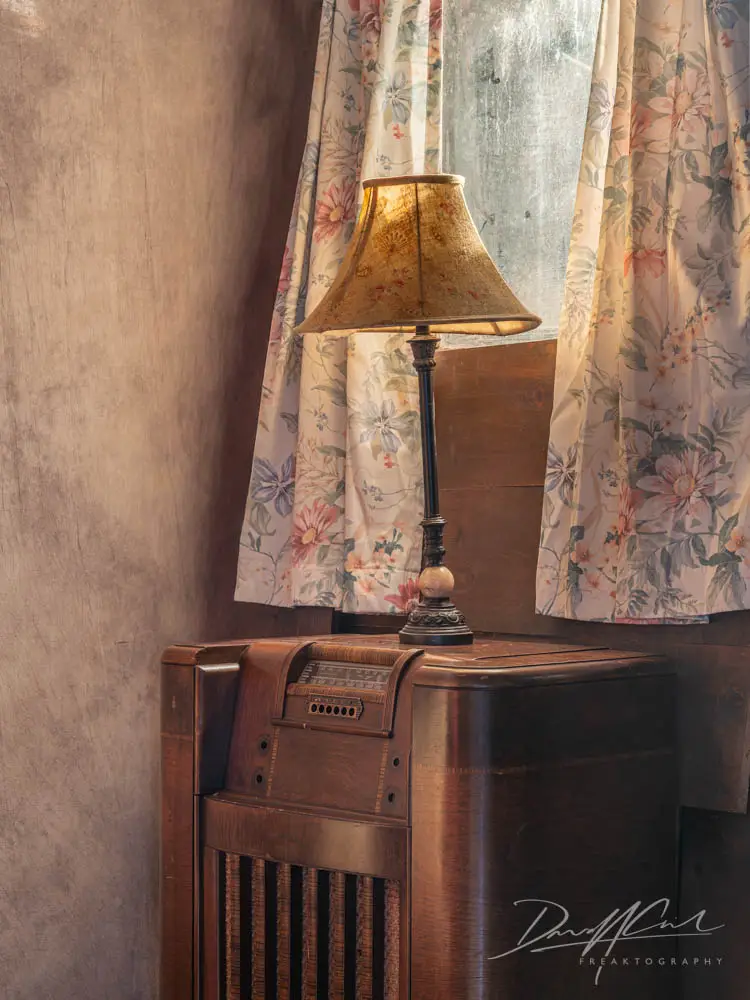
Window proxy: Floral curtains mounted to simulate a real window frame.
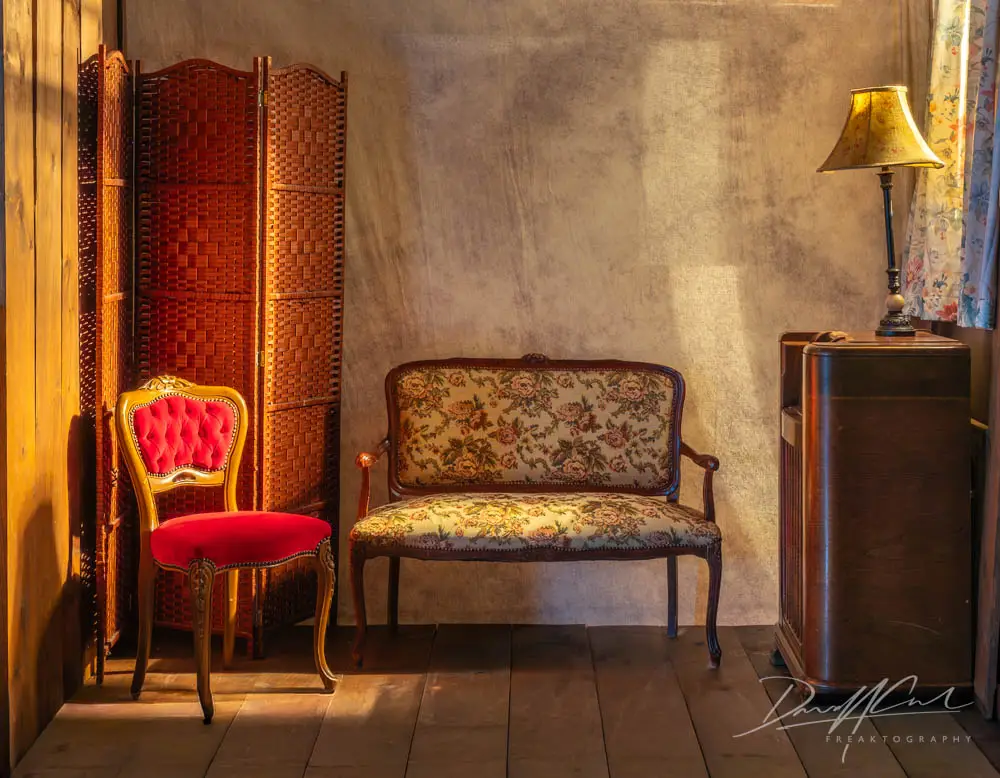
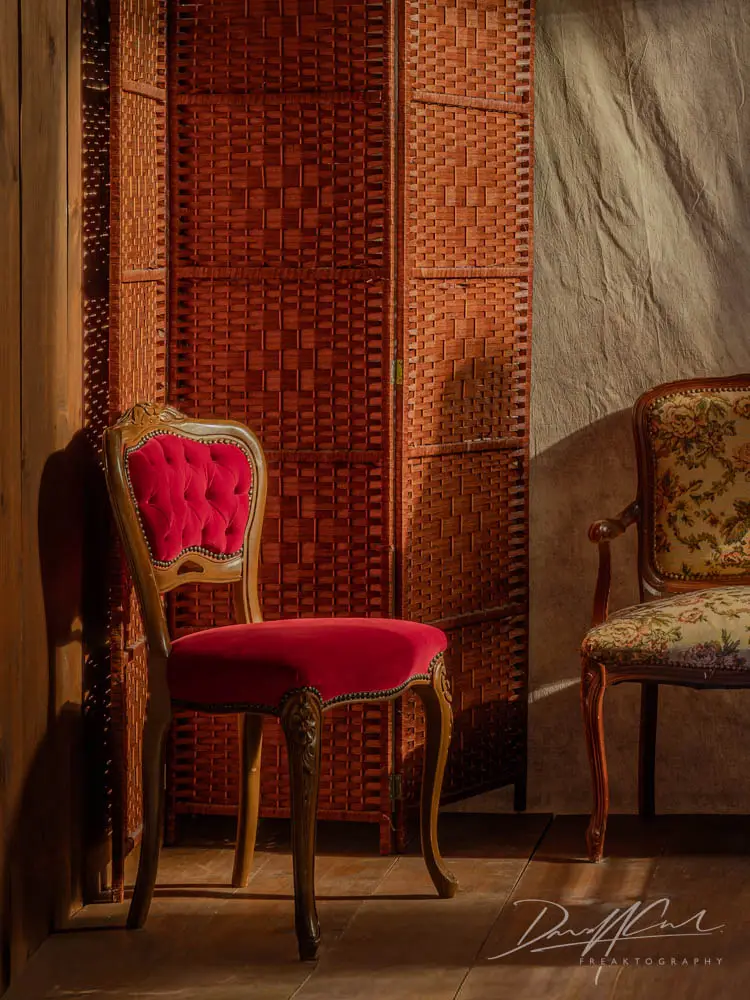
Scene elements: Vintage chairs, an old radio cabinet, folding screens — textures that catch light in interesting ways.
Flooring: Wooden planks to give a natural, grounded feel underfoot.
The goal was not perfection but exploration: testing how one light can be shaped and calibrated to give the illusion of early morning sun.
The Lighting Process
Here’s how the lighting evolved:
Warm Color Temperature: I dialed in a warm Kelvin setting to get close to the golden hue of sunrise. This made fabrics and wood tones feel rich without looking artificial.
Angle and Distance: Moving the light closer and further, higher and lower, changed dramatic qualities in shadow length and texture. The angle that worked best brought long, soft shadows across the floor and walls, very much like early morning sun.
Intensity Tuning: Instead of adding fill lights, I simply adjusted the power of the one light, watching how the scene gained or lost contrast.
Curtain Interaction: The “window” curtains became key diffusers — the light passing through them created layered shadows and midtones that made the scene feel organic.
By capturing a timelapse of this process — from bare studio to finished “sunrise room” — I was able to see how each adjustment influenced the final mood.
The Finished Photographs
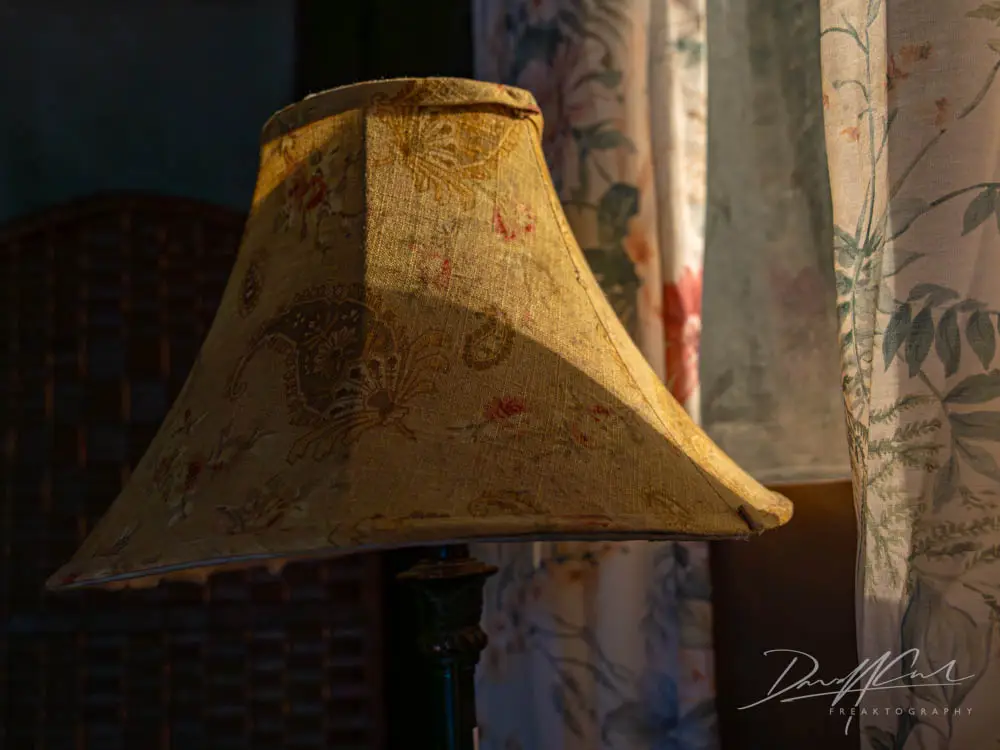
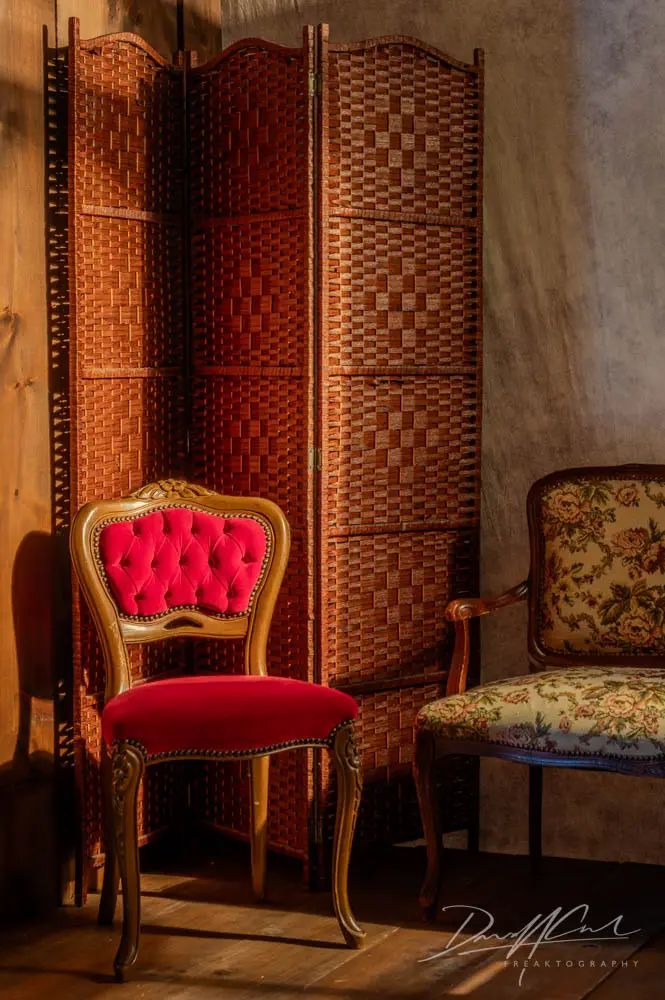
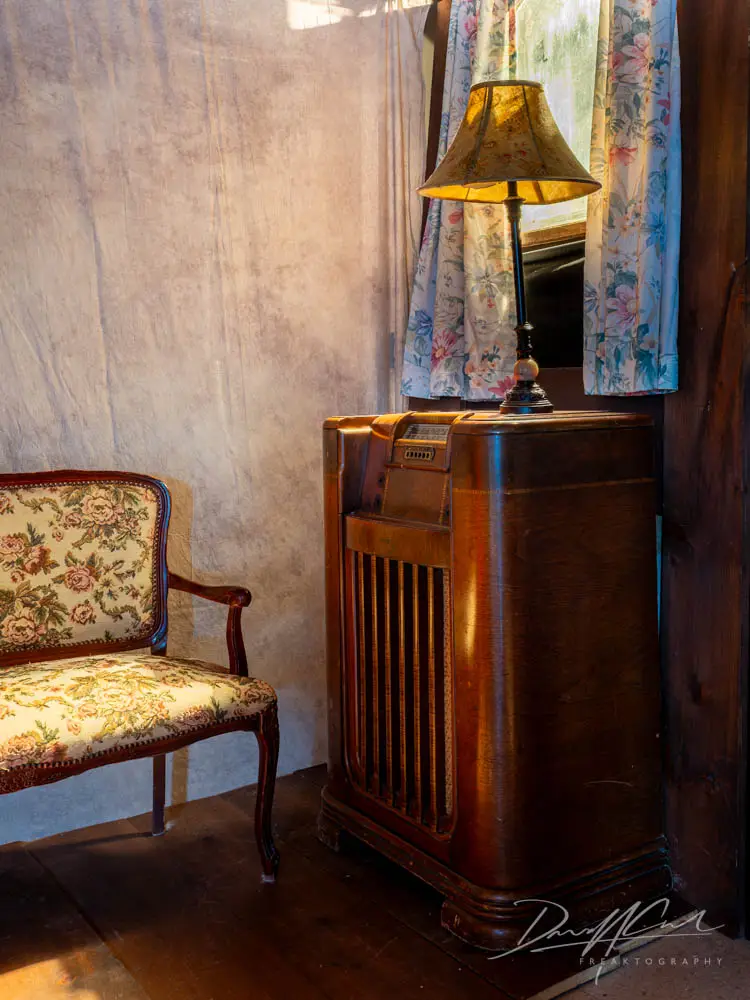
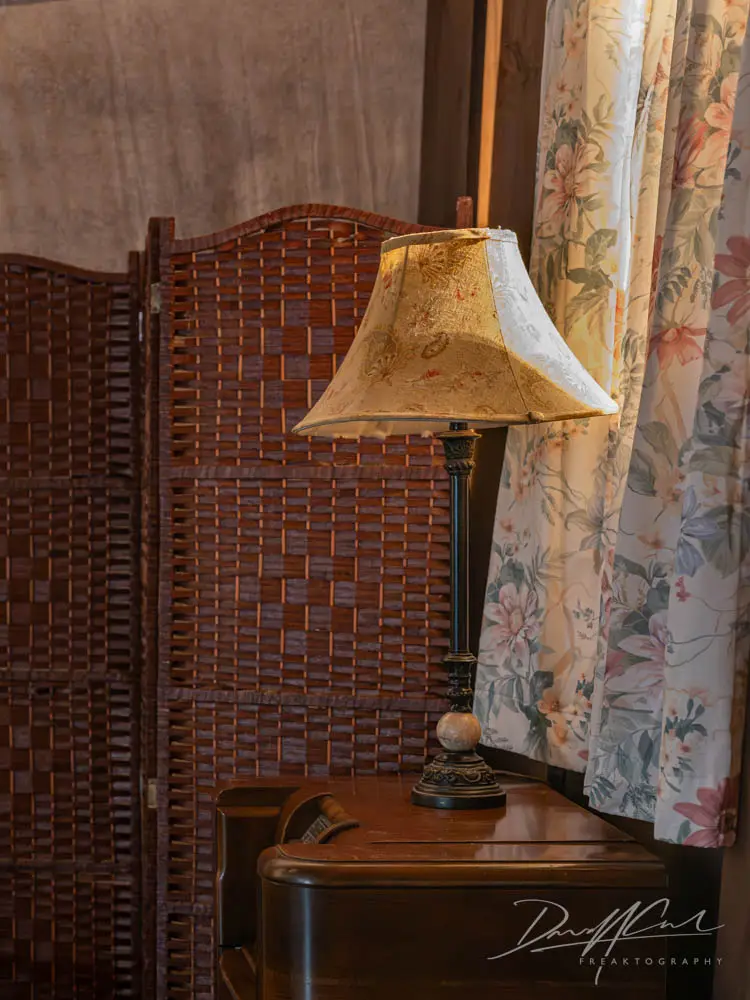
Once the lighting was locked in, I stepped back and made still photographs of the scene. What’s remarkable isn’t just how convincing the light can look, but how much storytelling potential lies in simple light and shadow.
The photos show textured surfaces, warm hues, and an intimate atmosphere — almost as if the sun had crept in through an unseen window at exactly the right moment.
What I Learned
This experiment reminded me of a few key lessons:
One light is enough — if it’s placed thoughtfully.
Warmth and angle matter more than quantity of lights.
Textures respond beautifully to directional illumination.
Intentional limitations can lead to creative discoveries.
I walked away with new ideas for lighting studies and setups, and I’m excited to push this concept further in future projects.