
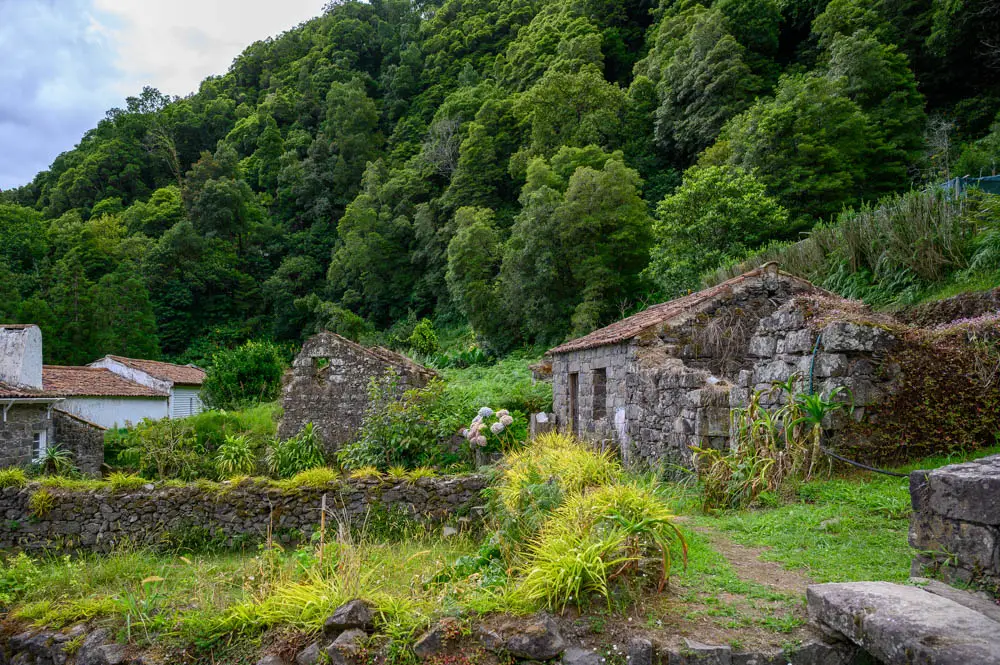
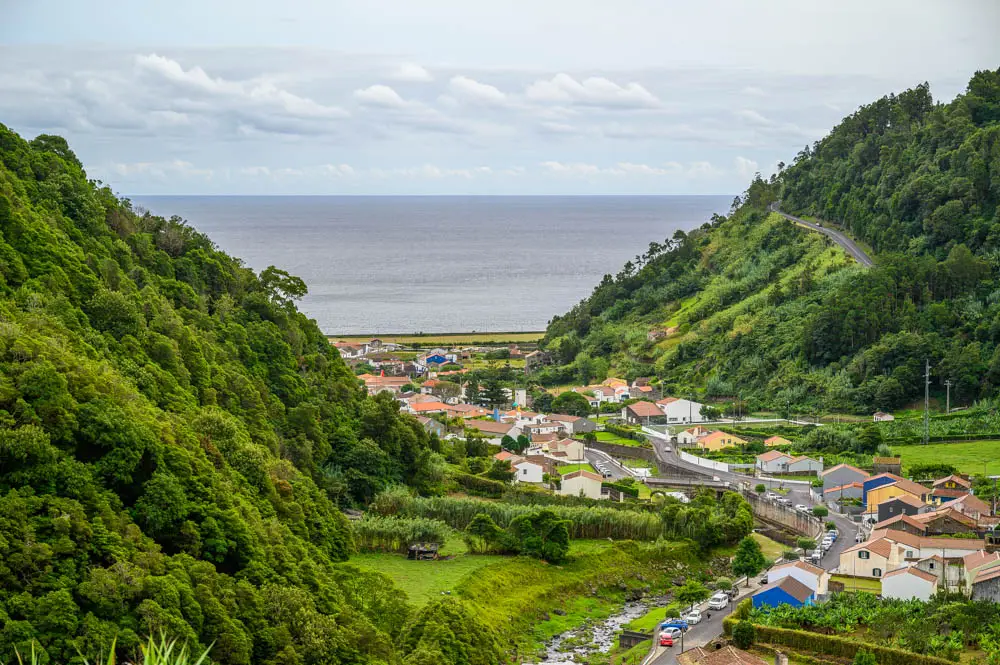
Deep in the forests of São Miguel Island in the Azores, you can find a place most visitors never reach, the Lost Village of Sanguinho. There are no roads to the village. If you want to see it, you hike in, and you earn every step. This page breaks down the full experience, the hike, the roosters, the waterfall, the village itself, and a final scenic stop in Furnas on the drive back.
The Hike
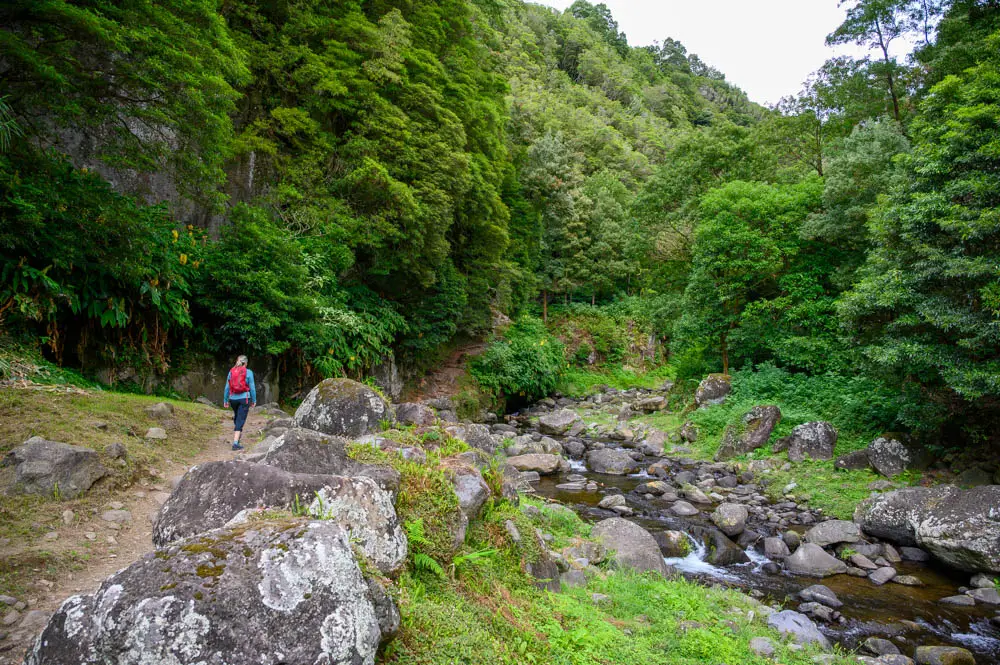
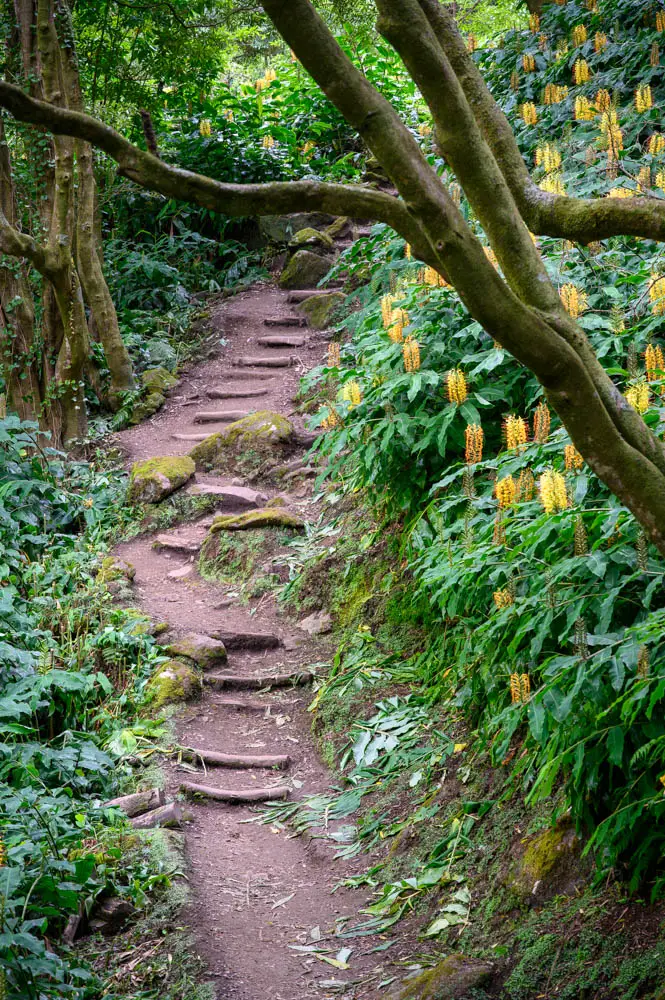
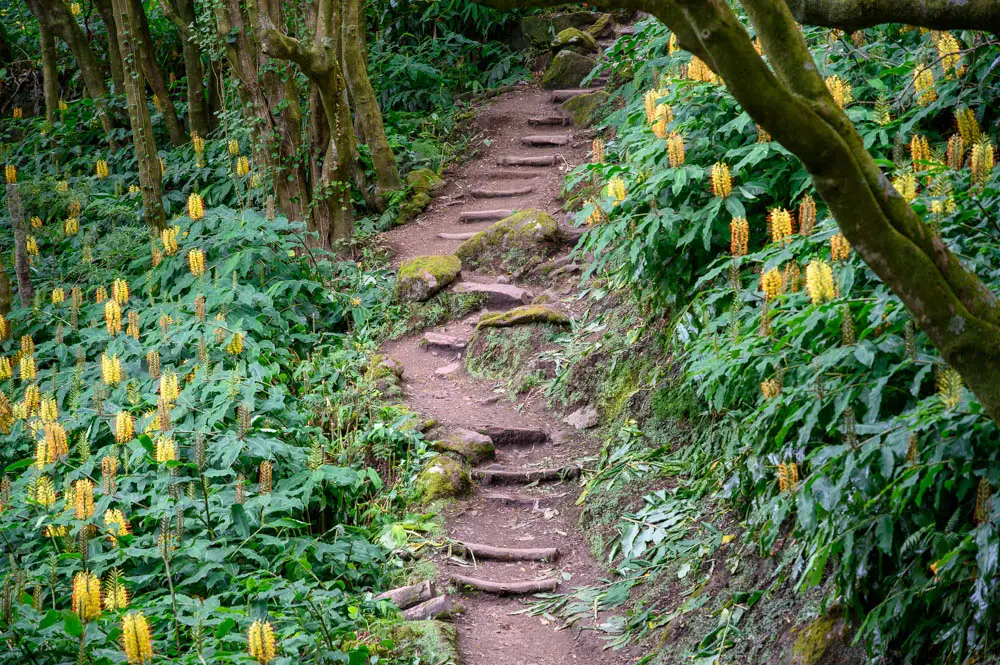
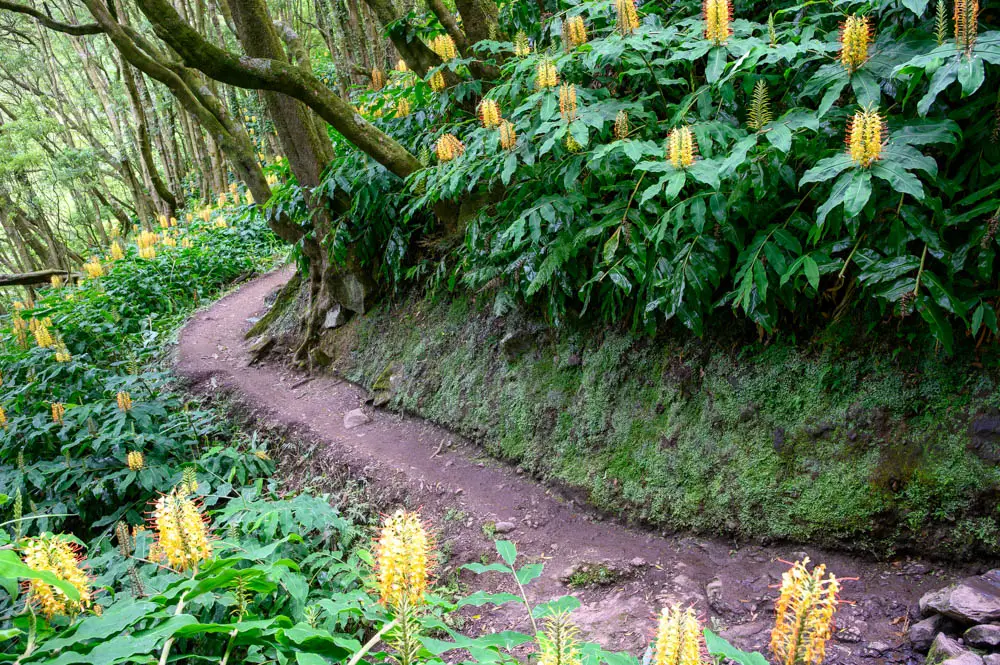
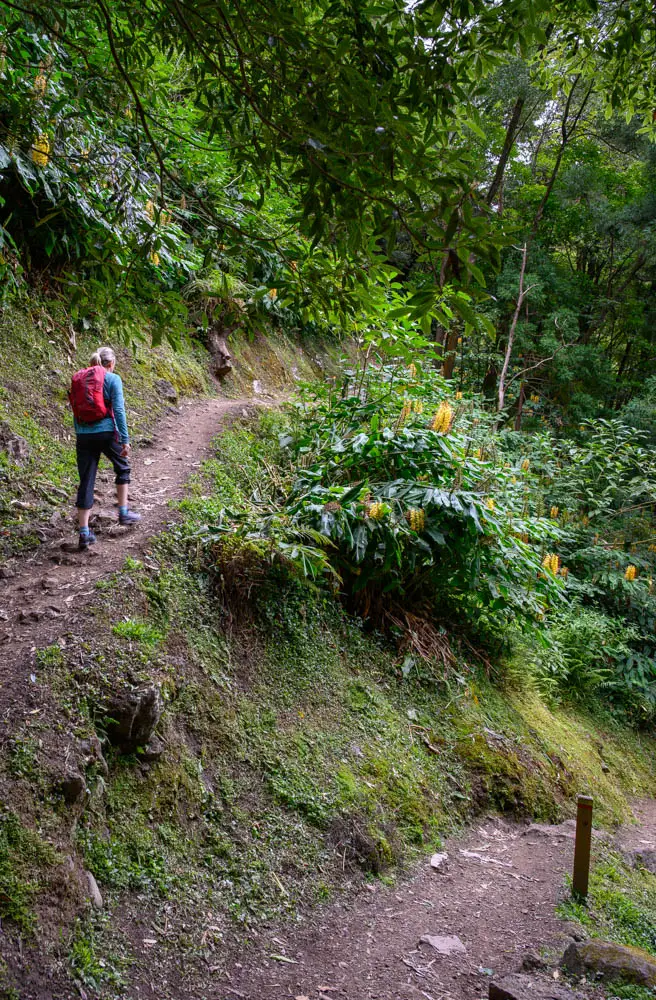
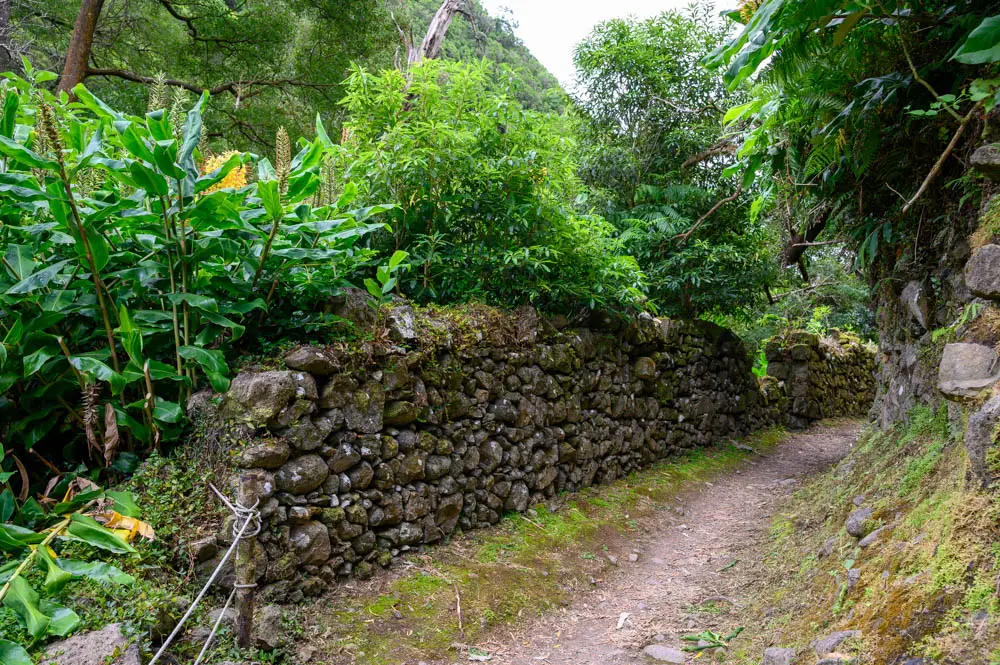
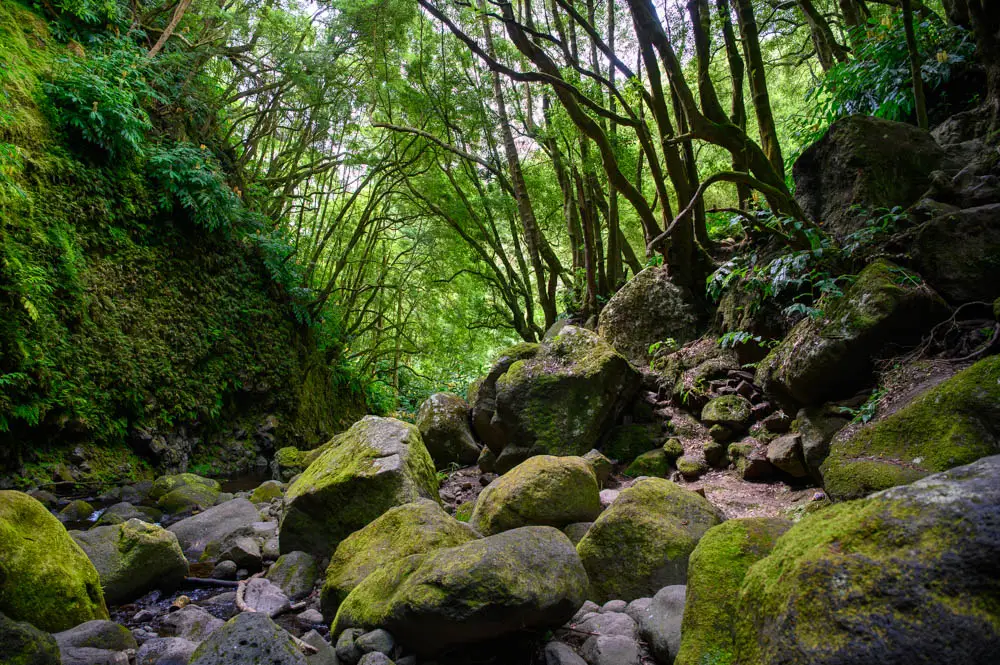
On paper, the route sounds simple. Park near Faial da Terra, hike to the waterfall, continue on the trail to Sanguinho, then return via the steep cobblestone path to the parking area. In real life, it is a demanding walk. The hike starts around 24 metres above sea level and climbs to roughly 230 metres, with long steep grades that can hit 20 to 35 percent. Underfoot, you are dealing with rocks, roots, uneven ground, and constant elevation changes. If you take your time, watch your footing, and treat it like a proper hike instead of a quick stroll, it becomes one of the most rewarding walks you can do on São Miguel.
The Roosters
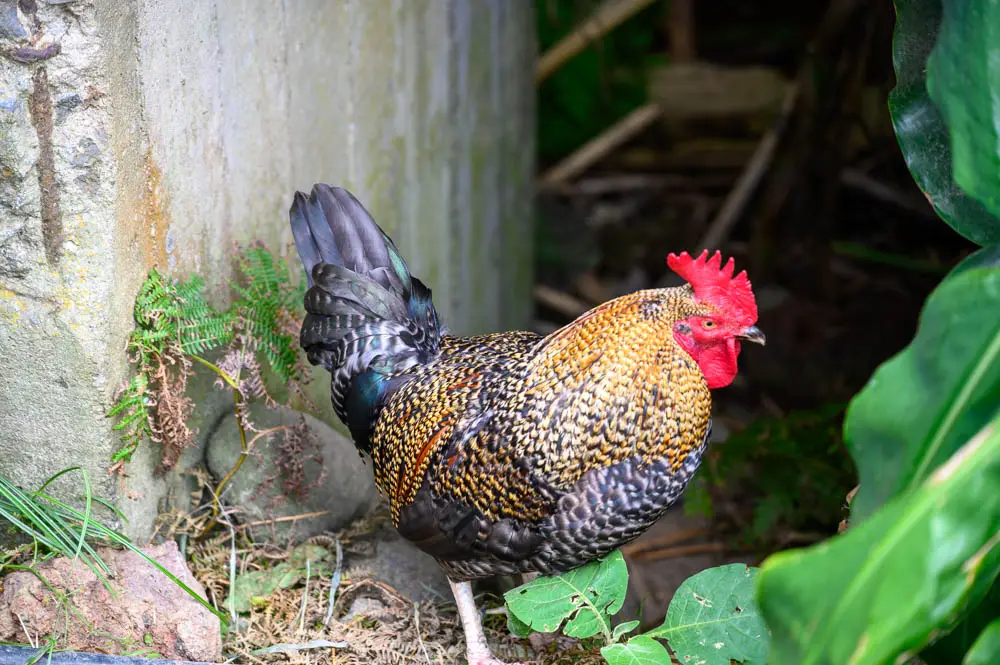
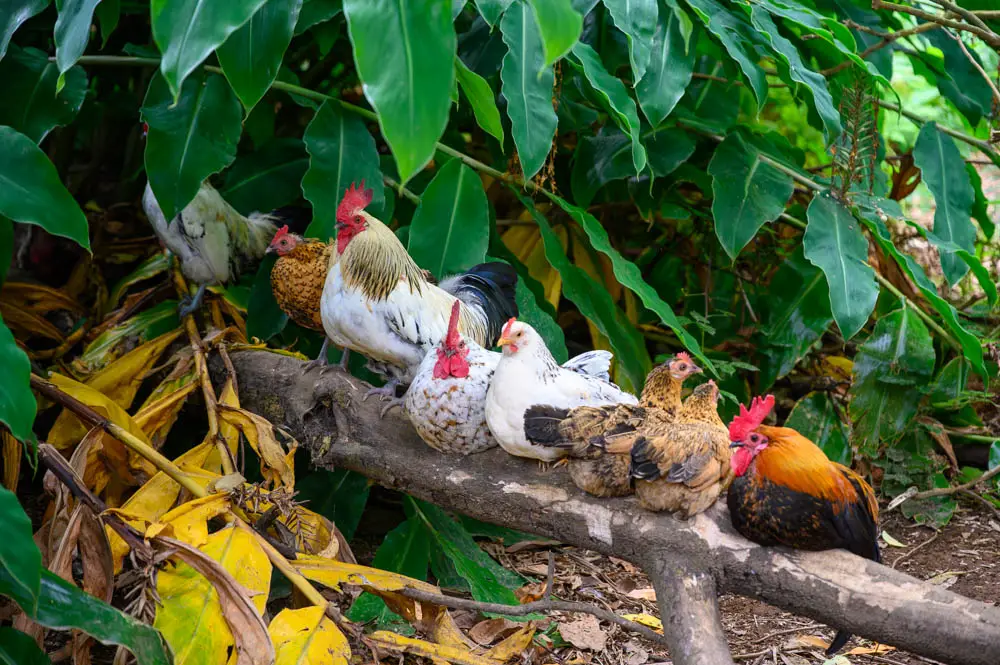
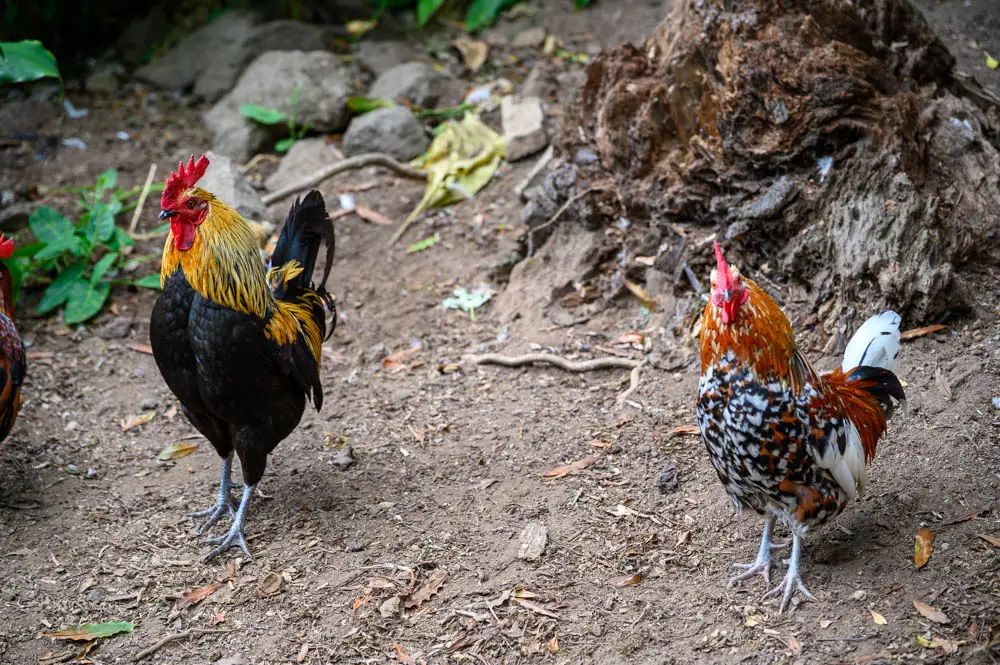
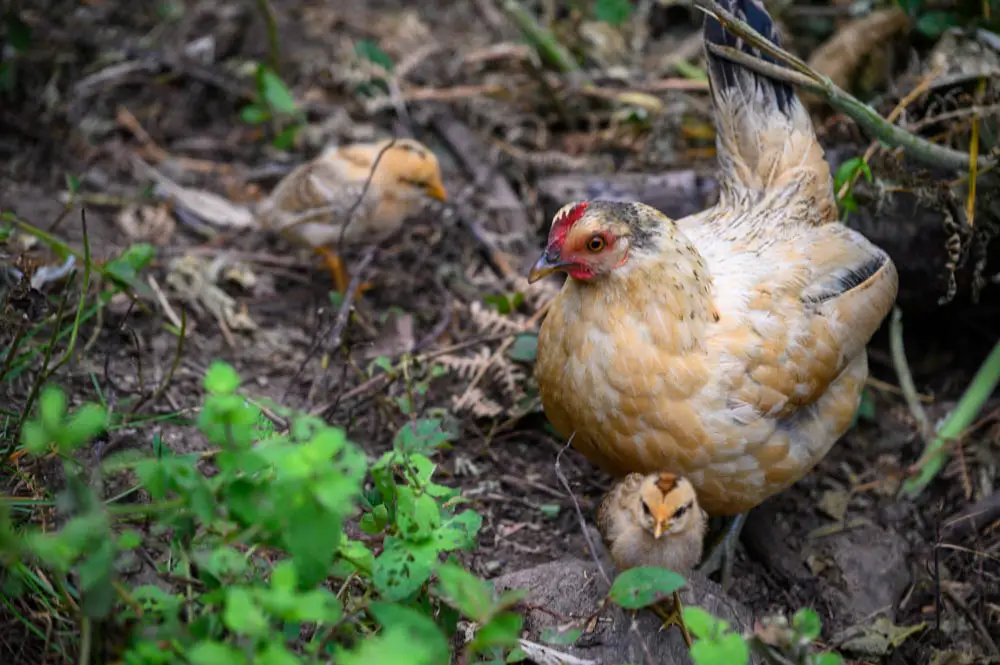
One of the most surprising details on this route is the sound. Roosters are everywhere, and you do not just hear them near homes or clearings. Their calls carry through the valley for much of the hike. You also see wandering baby chicks along the trail. It adds a strange contrast to the effort of the climb. You are pushing through a rugged forest route, but you are constantly reminded that life is thriving here.




The Waterfall
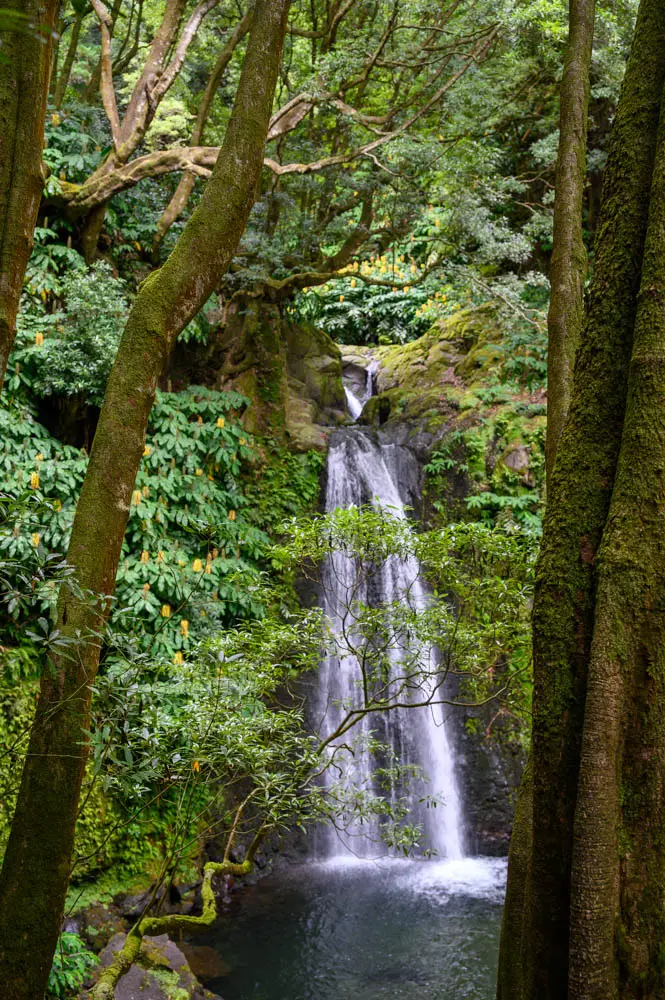
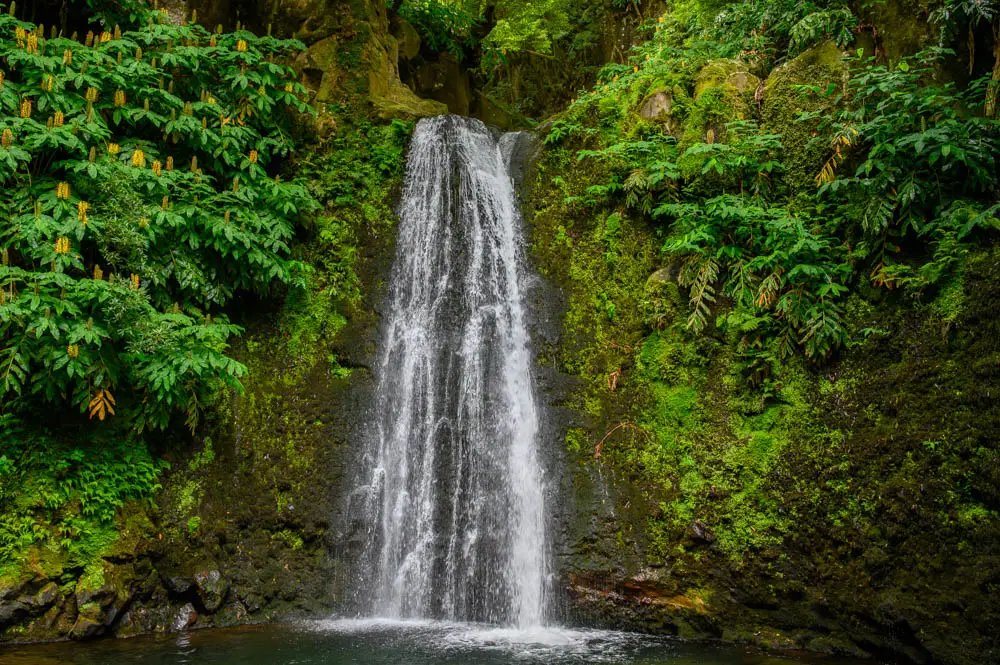
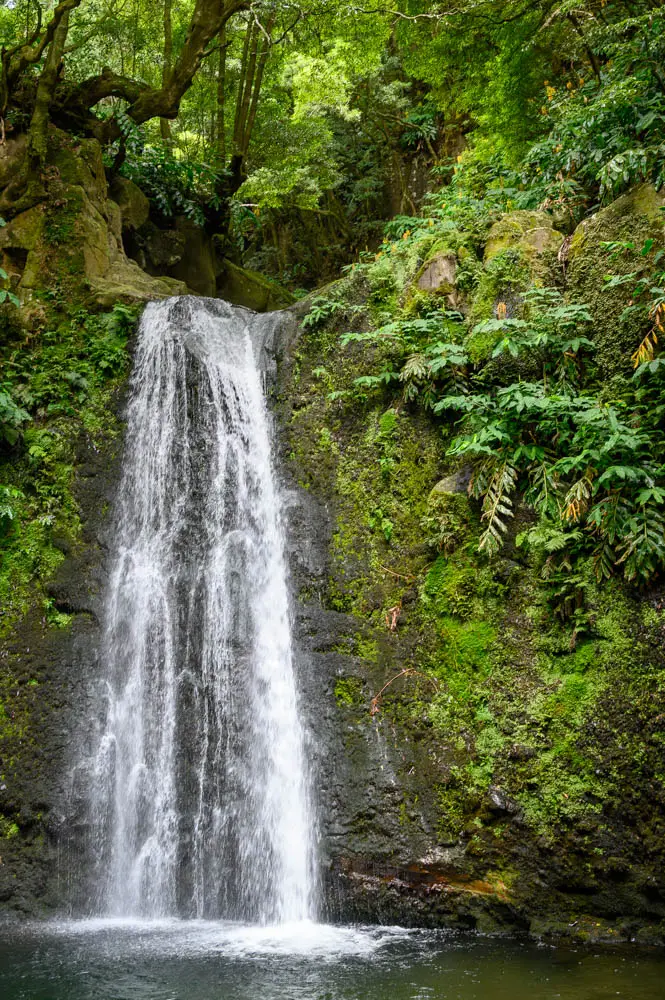
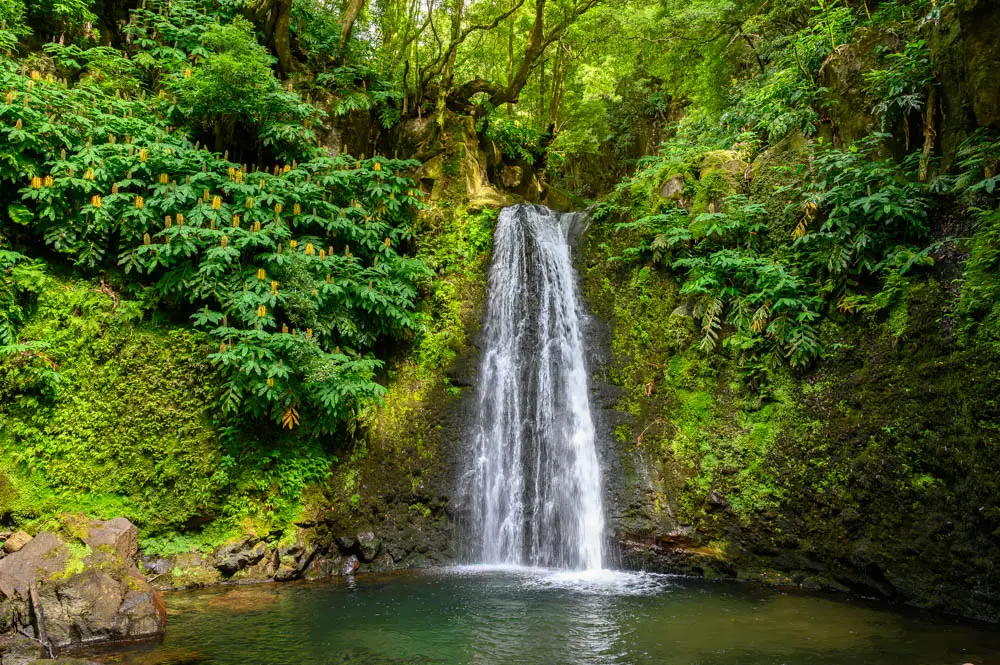
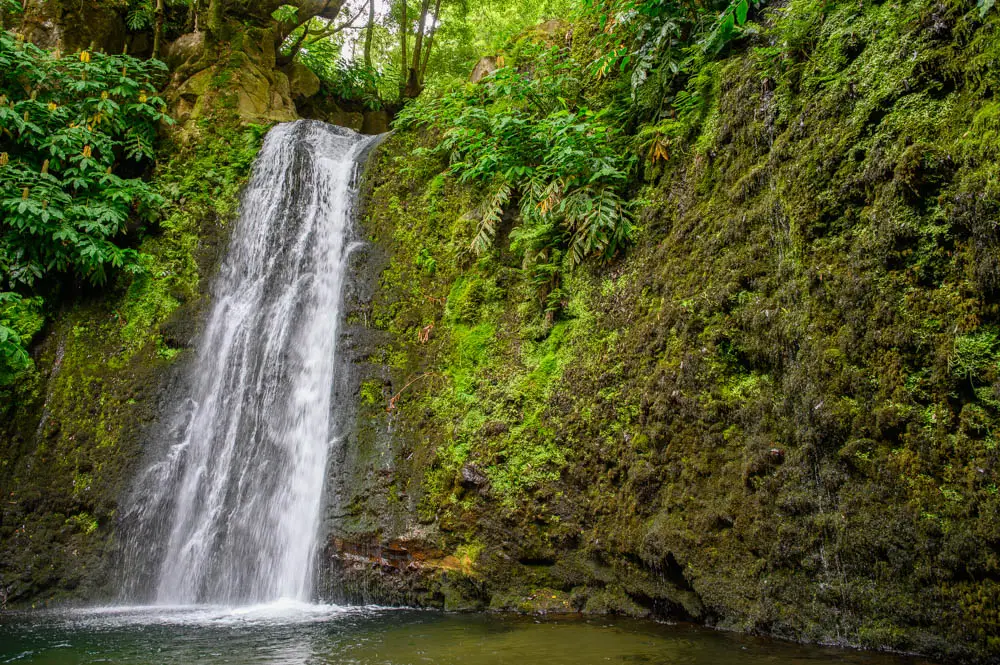
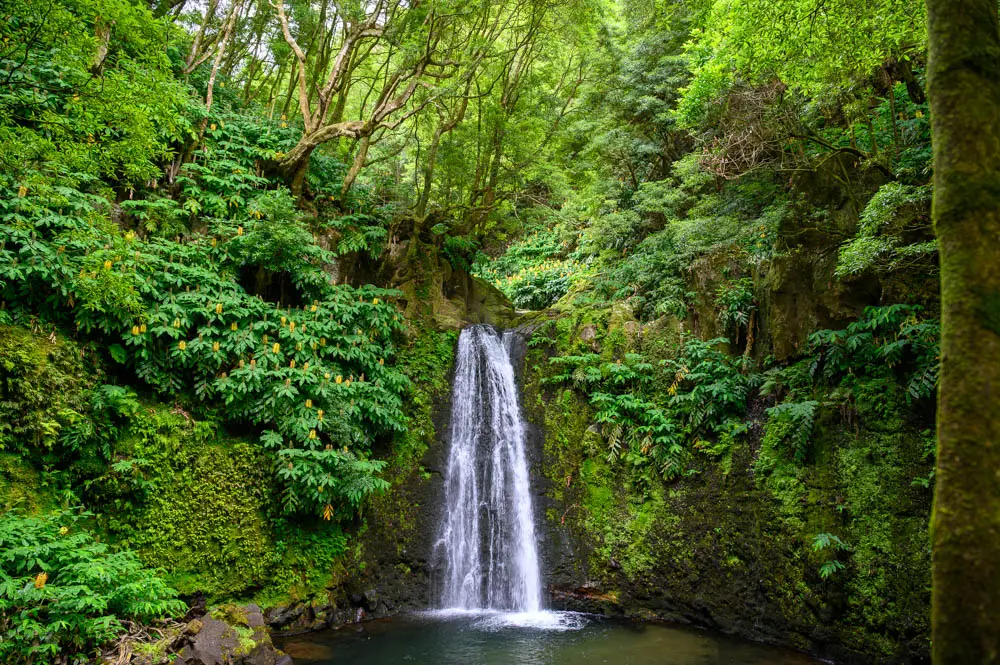
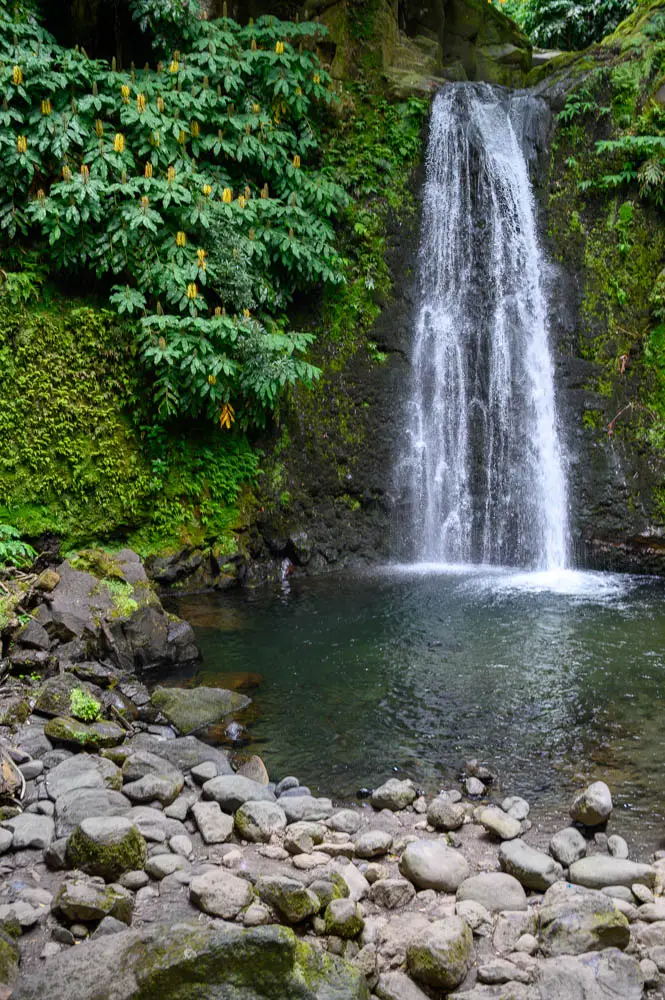
Salto do Prego is a highlight on its own, and it makes a perfect mid-hike reward. When we visited, it was not very busy, and that is likely because you cannot drive to it. You have to hike in, which naturally filters out the crowds. Salto do Prego is one of the most visited waterfalls on São Miguel Island, located in the municipality of Faial da Terra on the southeastern end of the island. Clear water drops from high above into a pool surrounded by dense green walls, and the area is known for its natural landscape. Because access is on foot only, it often feels better preserved than waterfalls you can reach with a short walk from a parking lot.
The Village
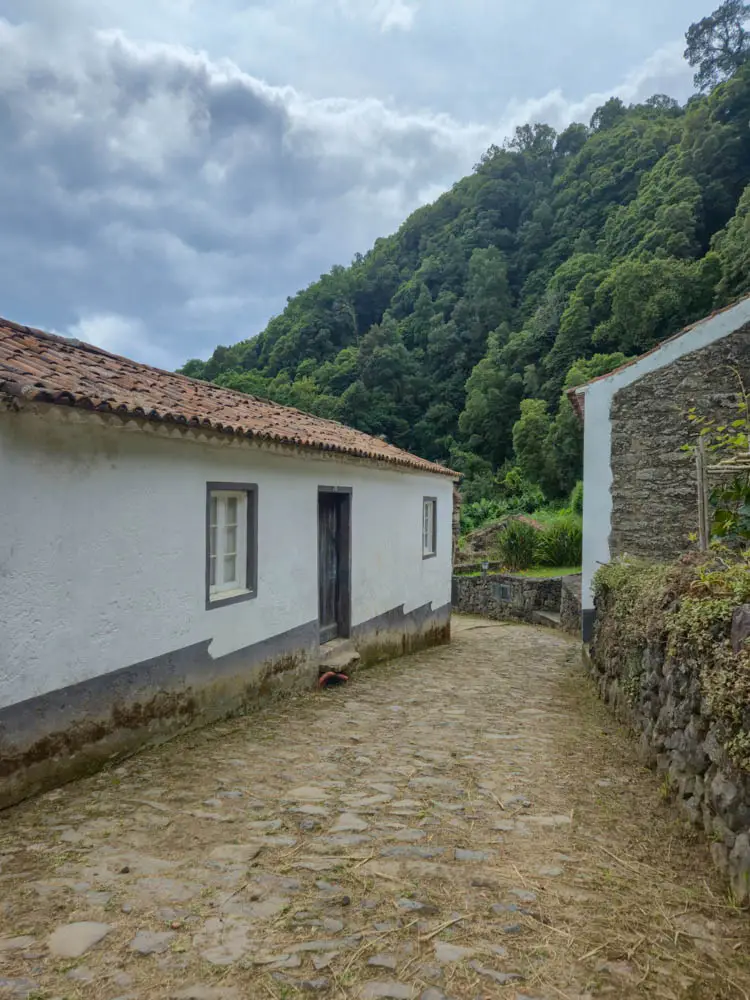
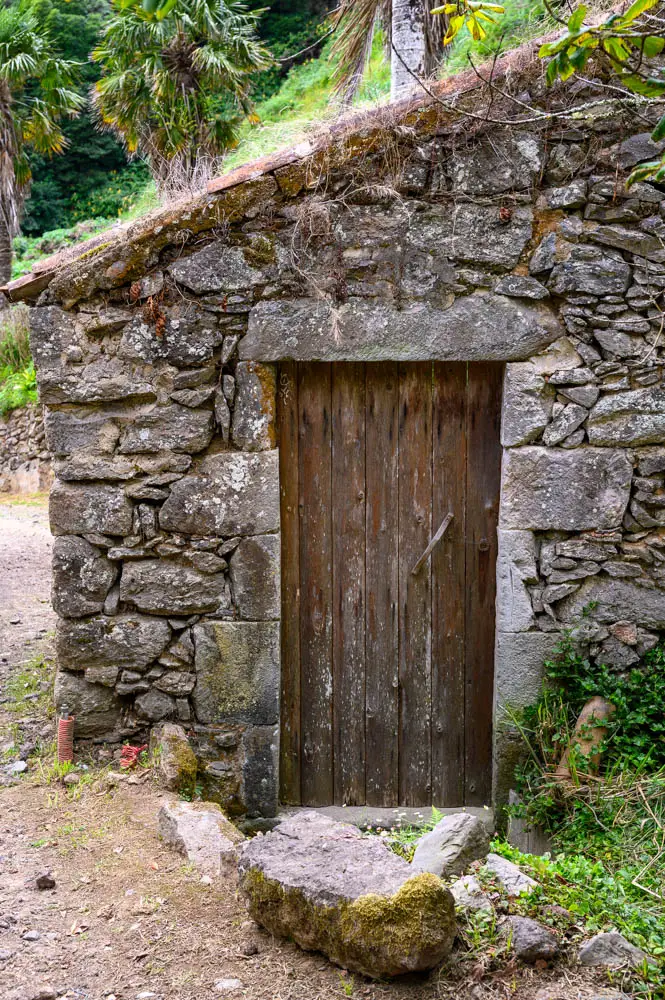
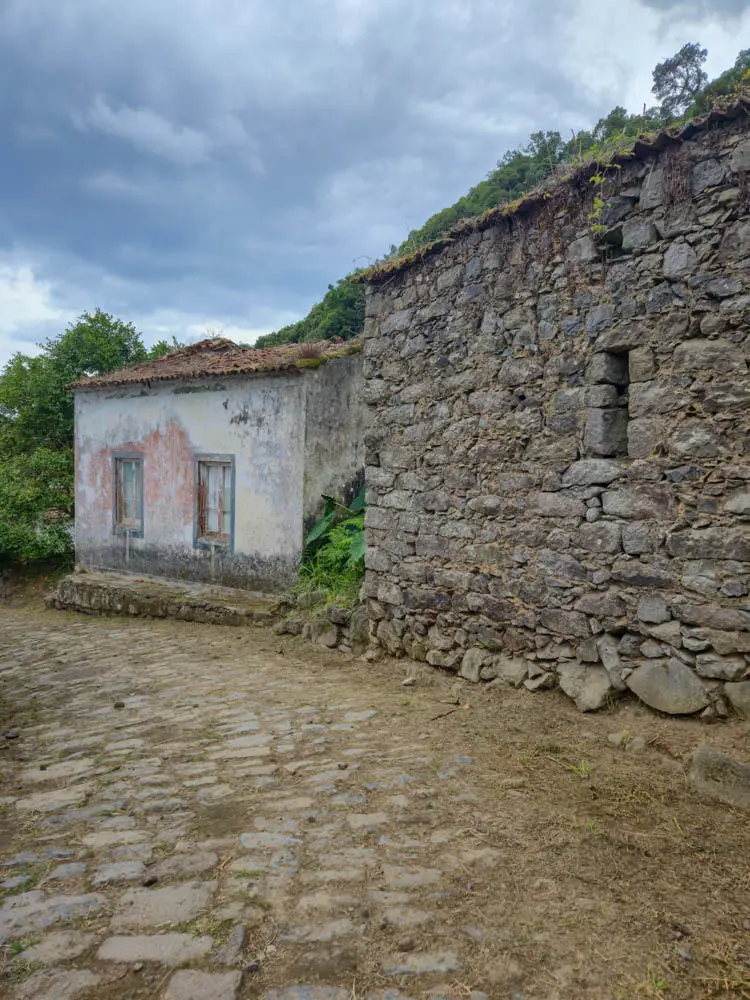
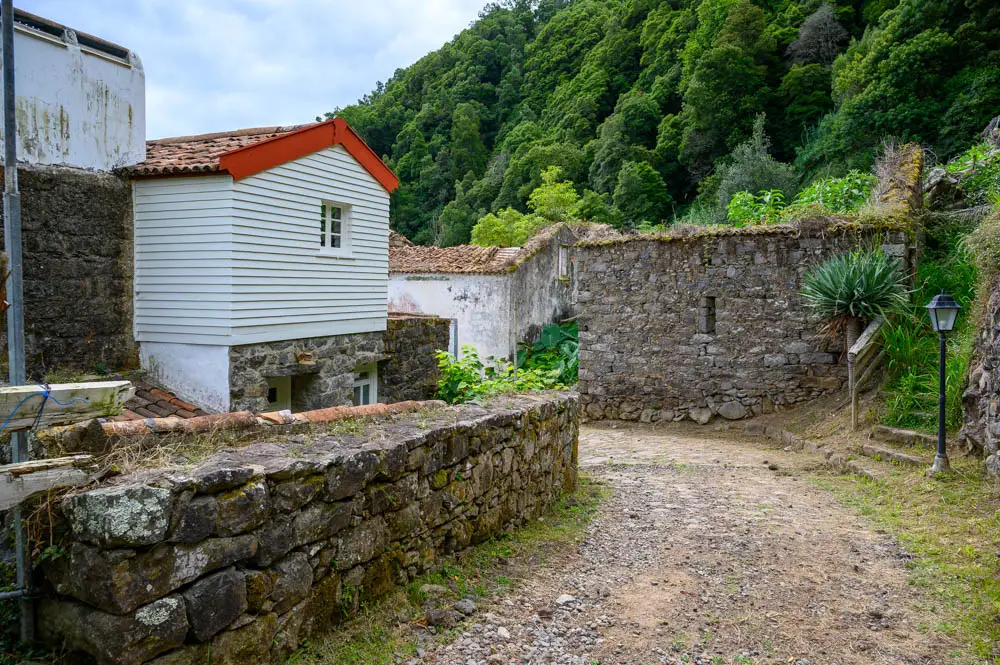
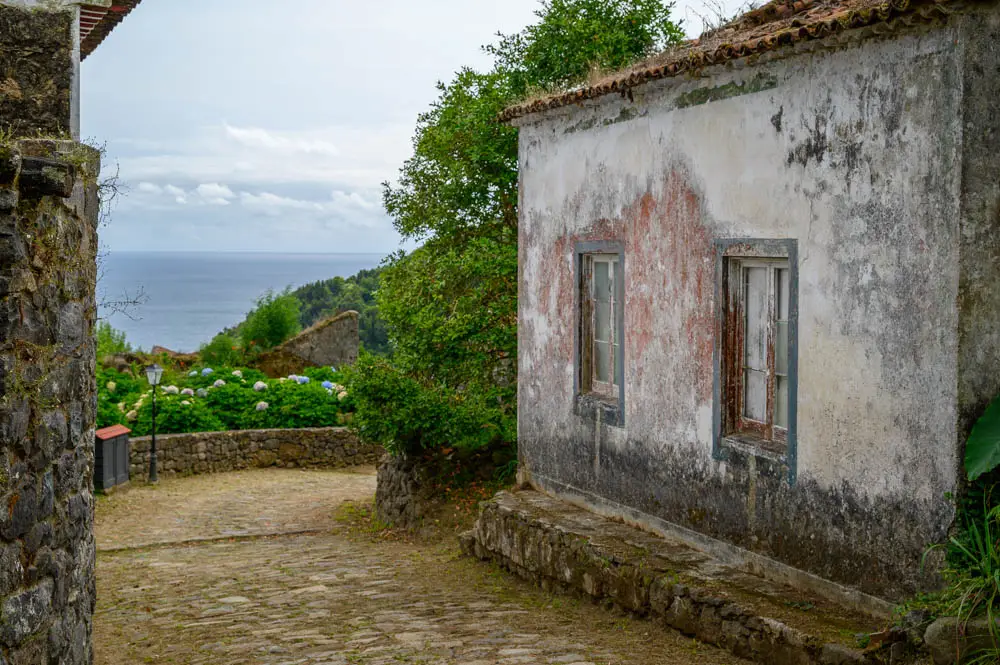
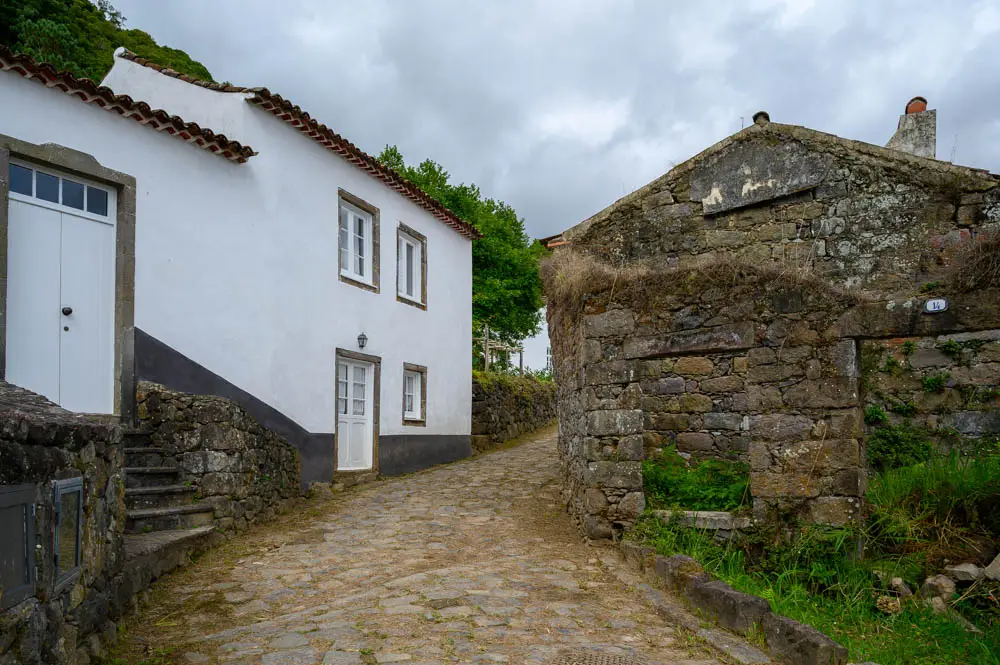
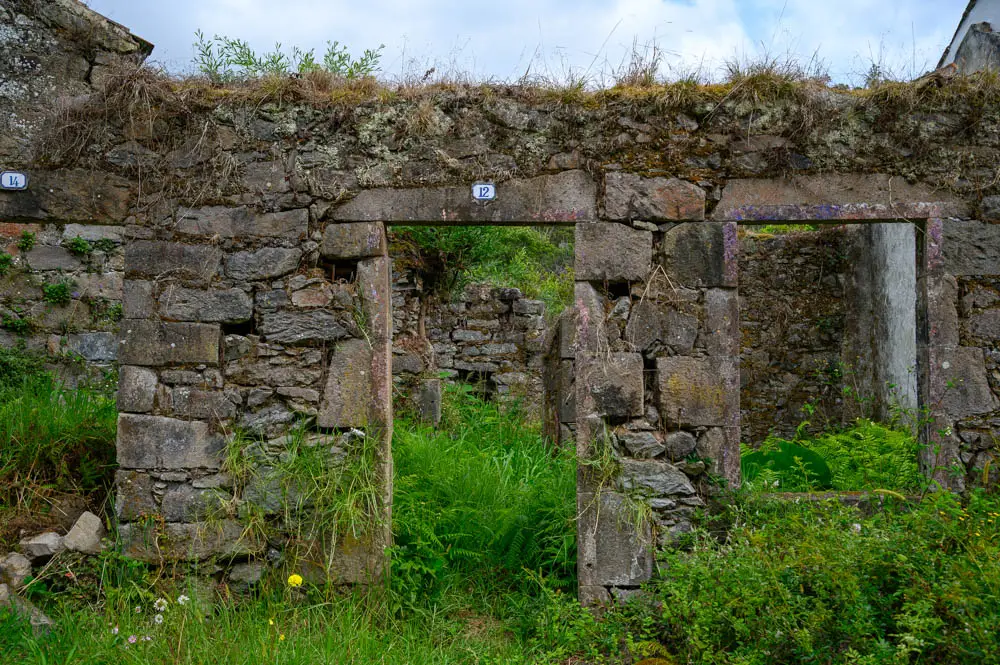
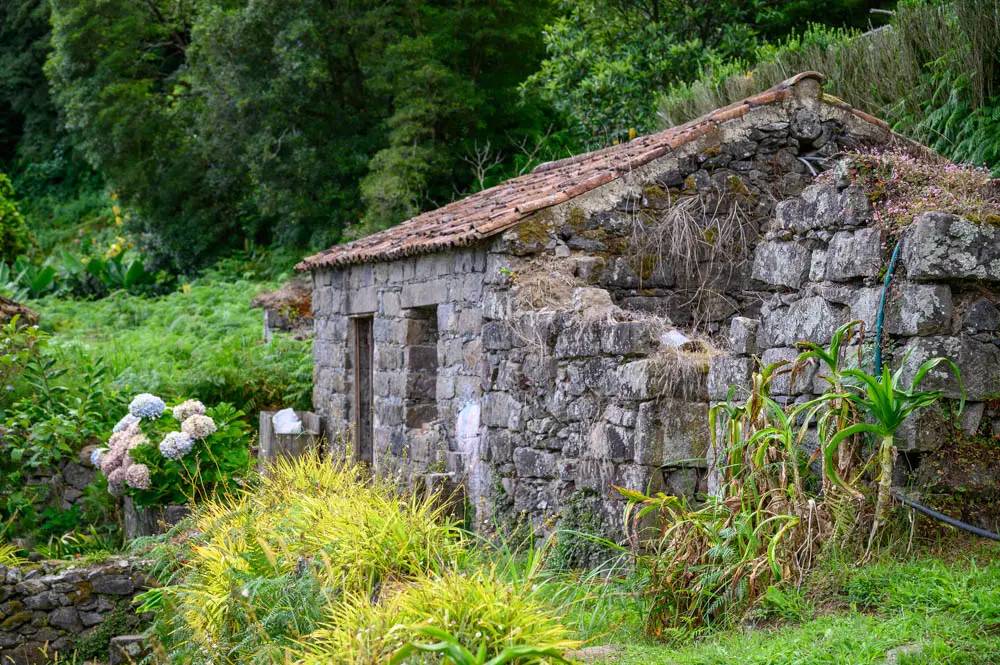
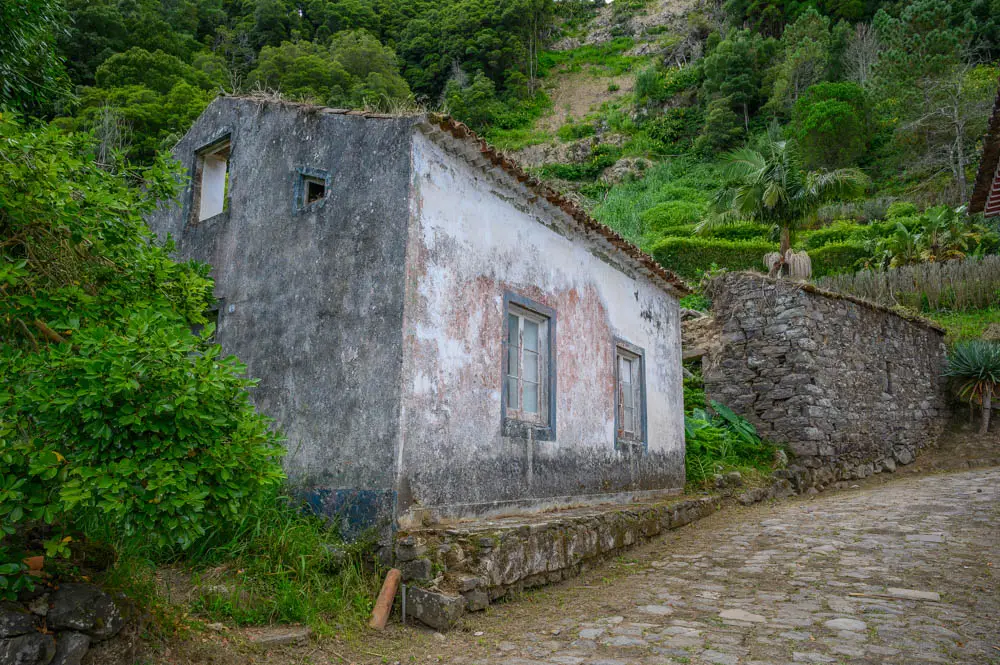
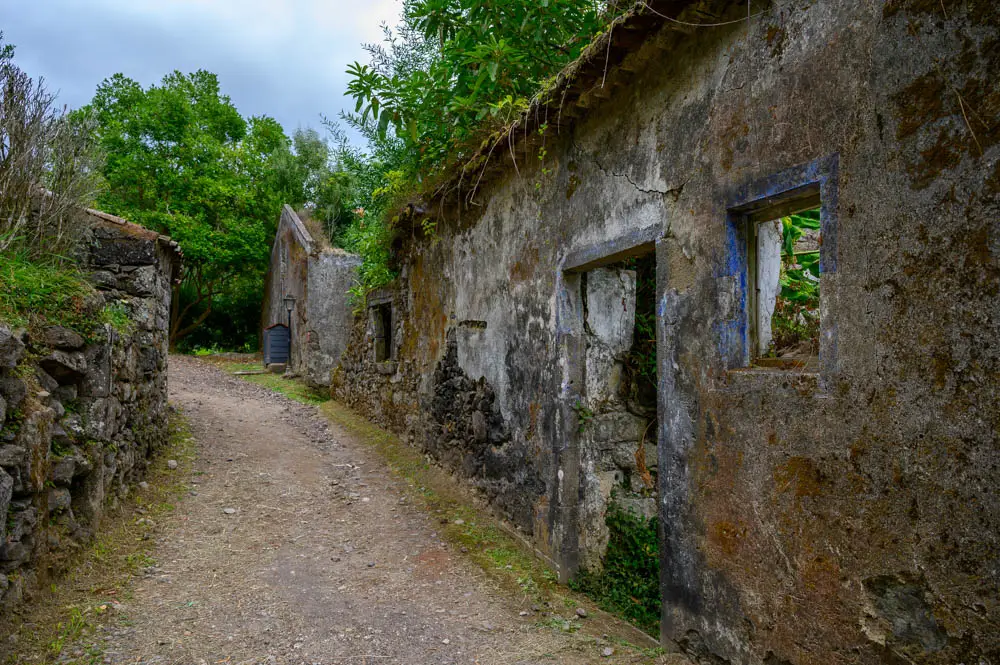
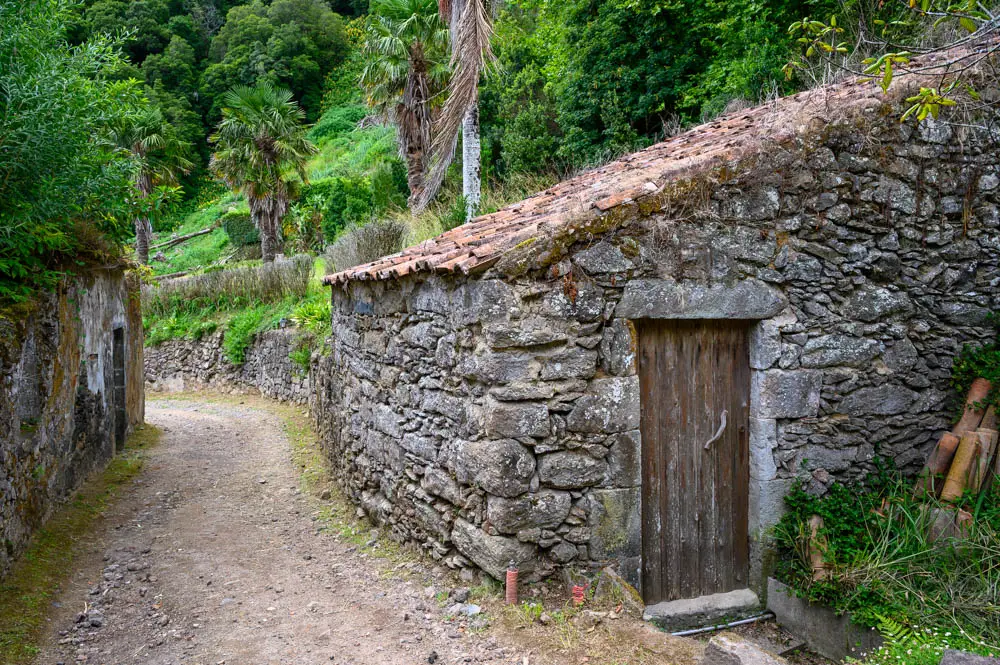
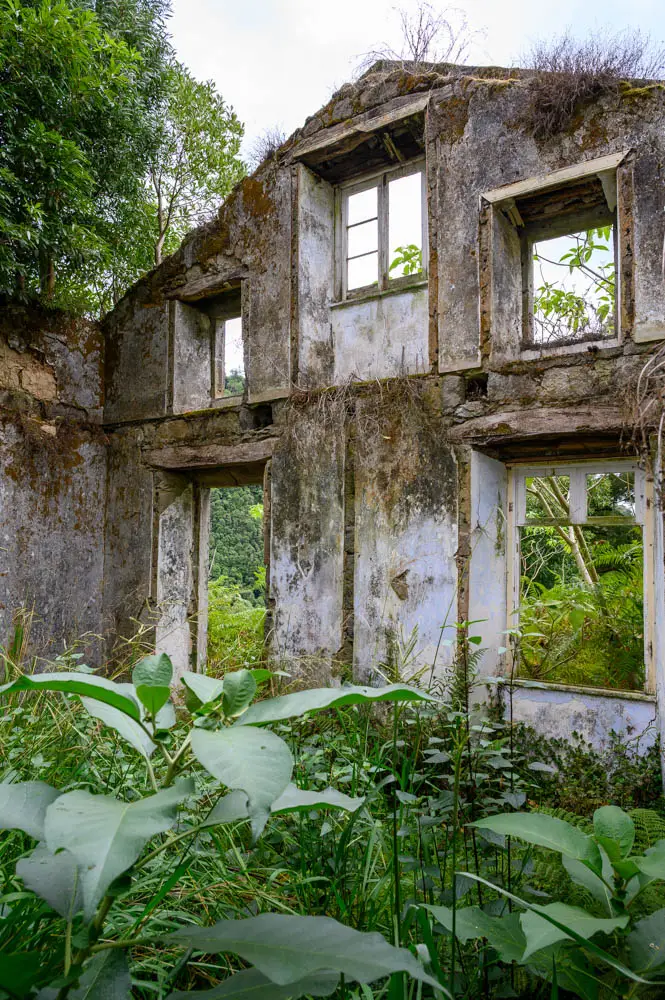
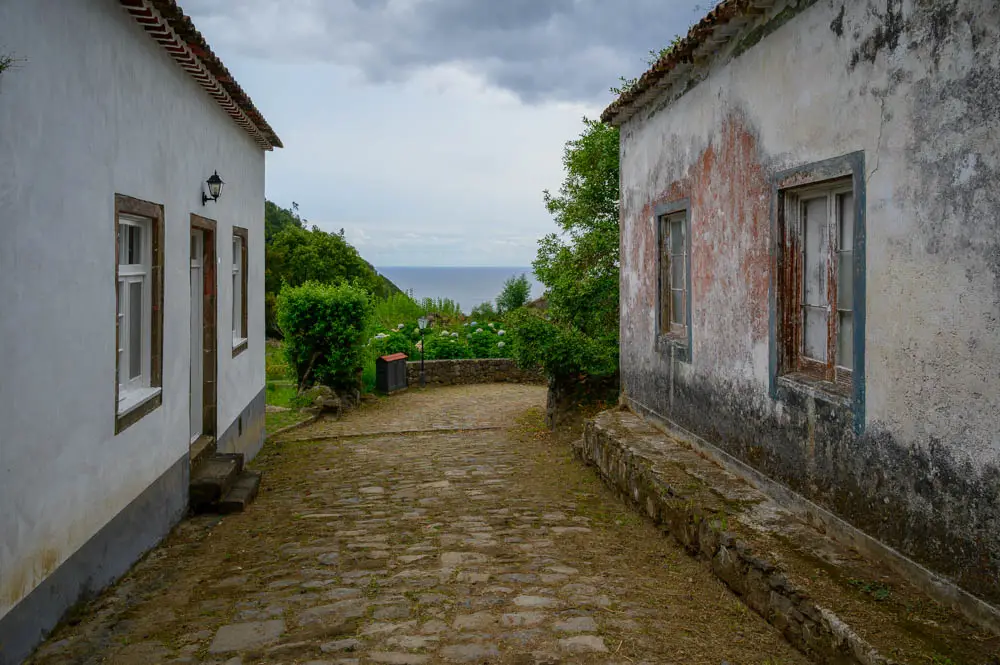
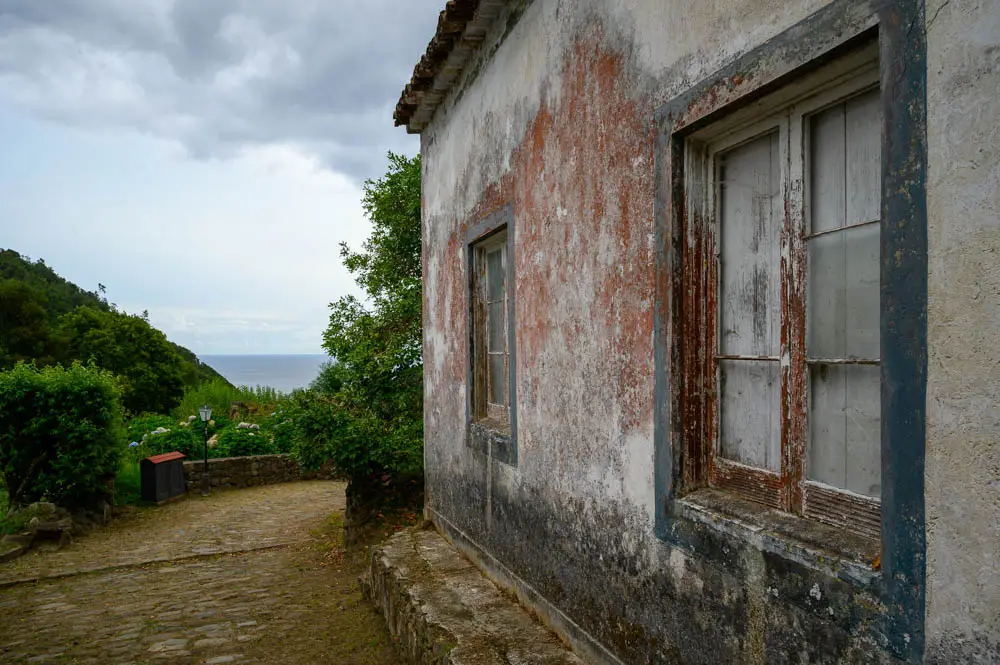
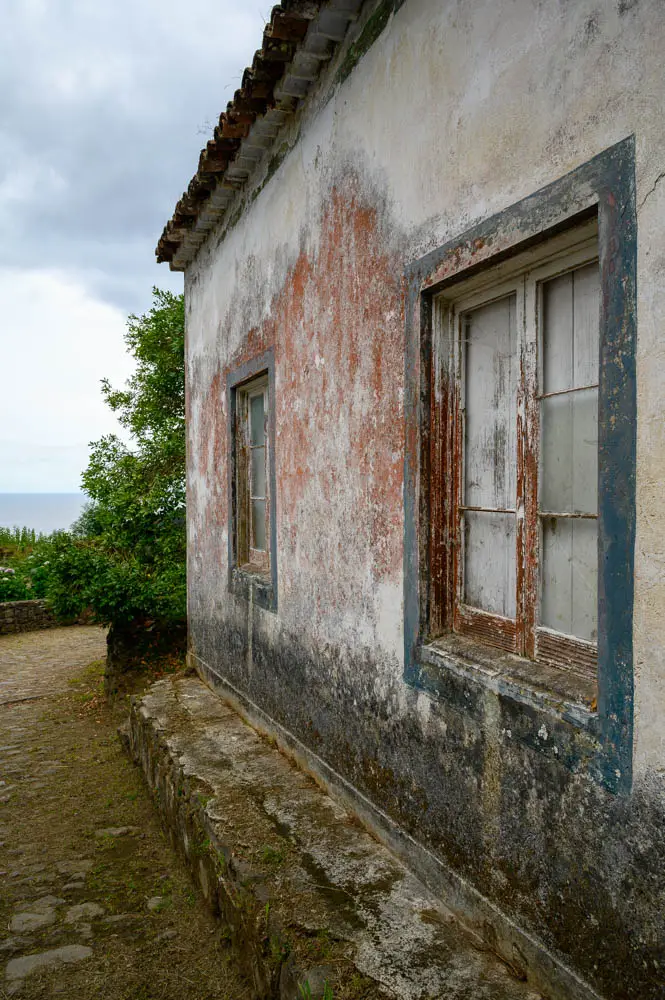
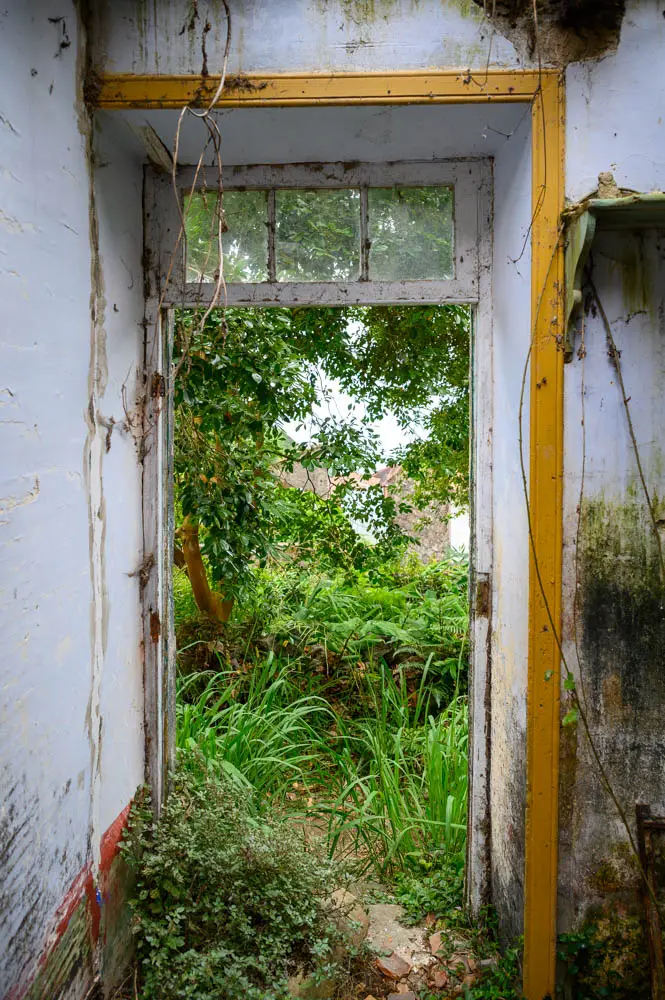
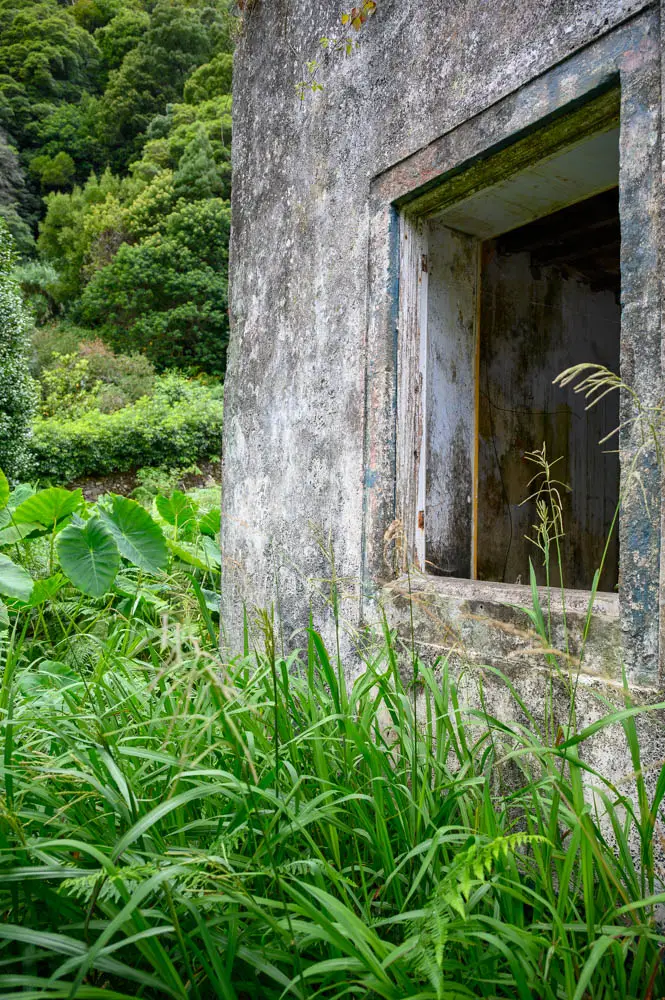
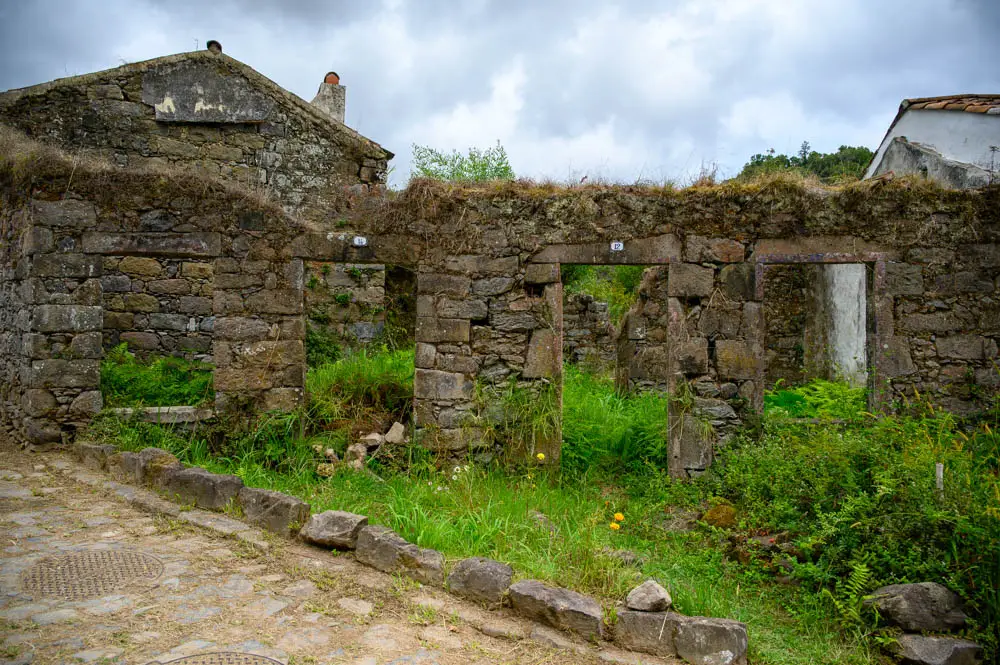
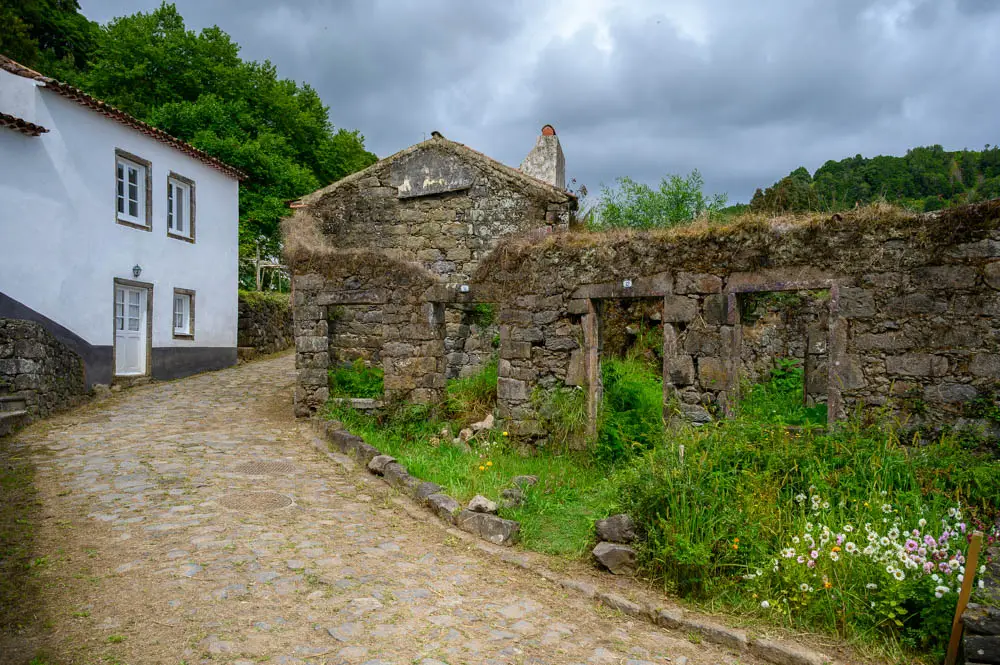
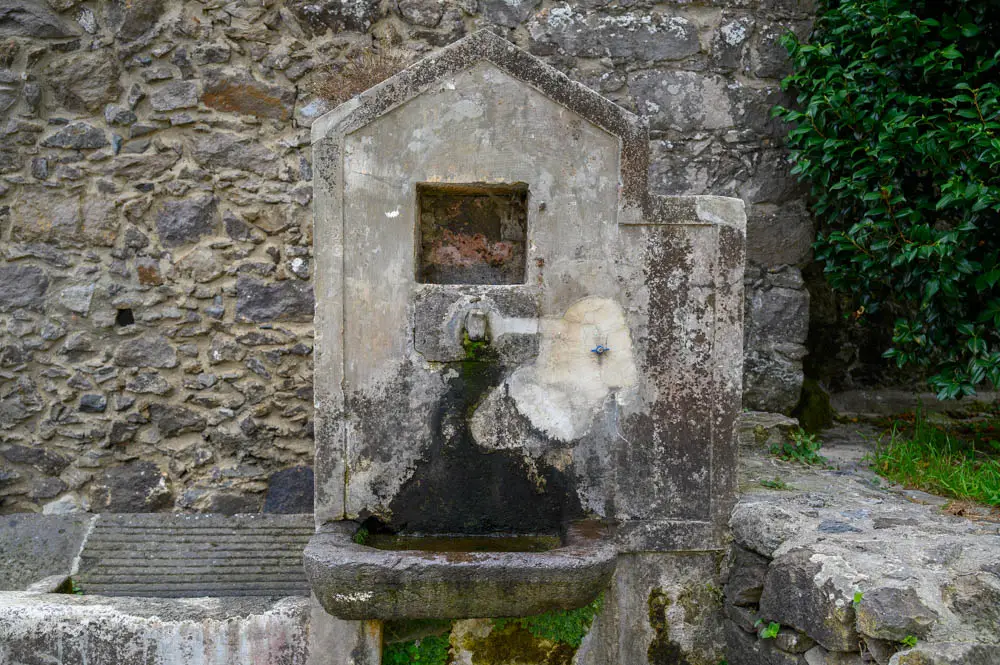
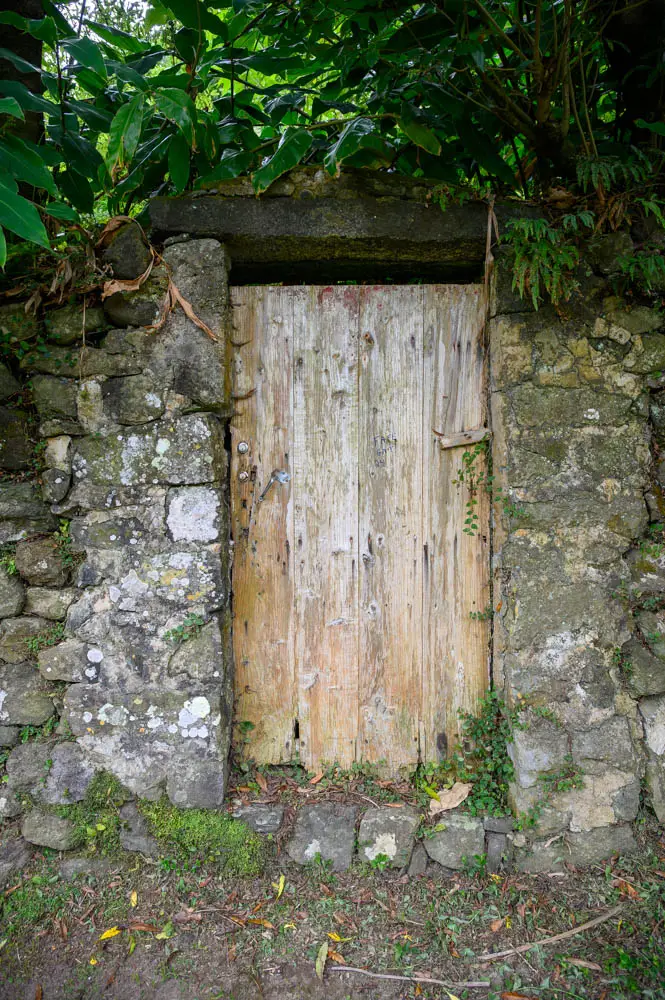
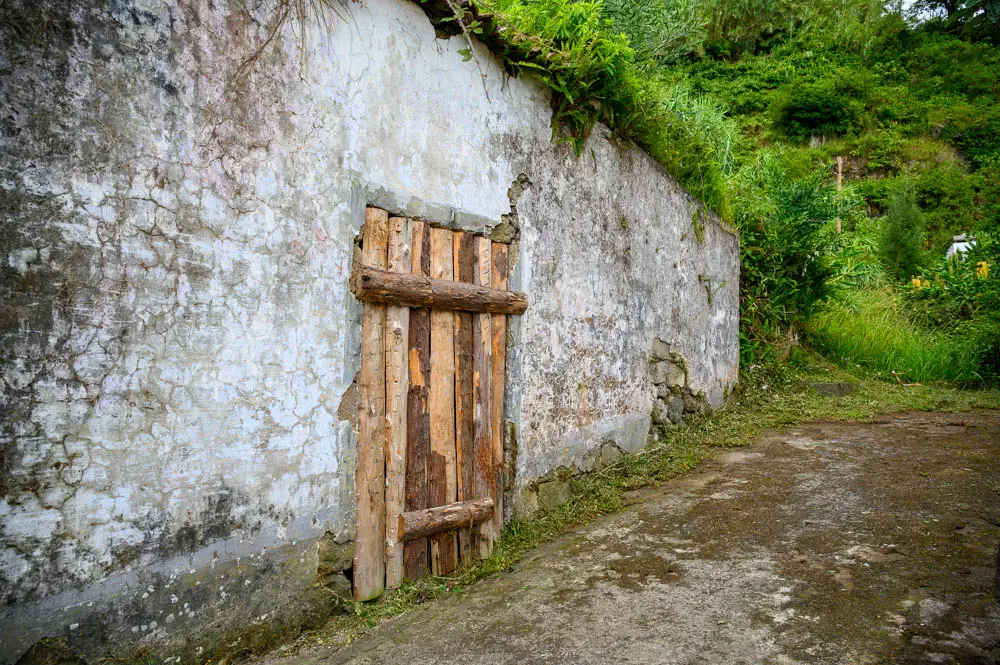
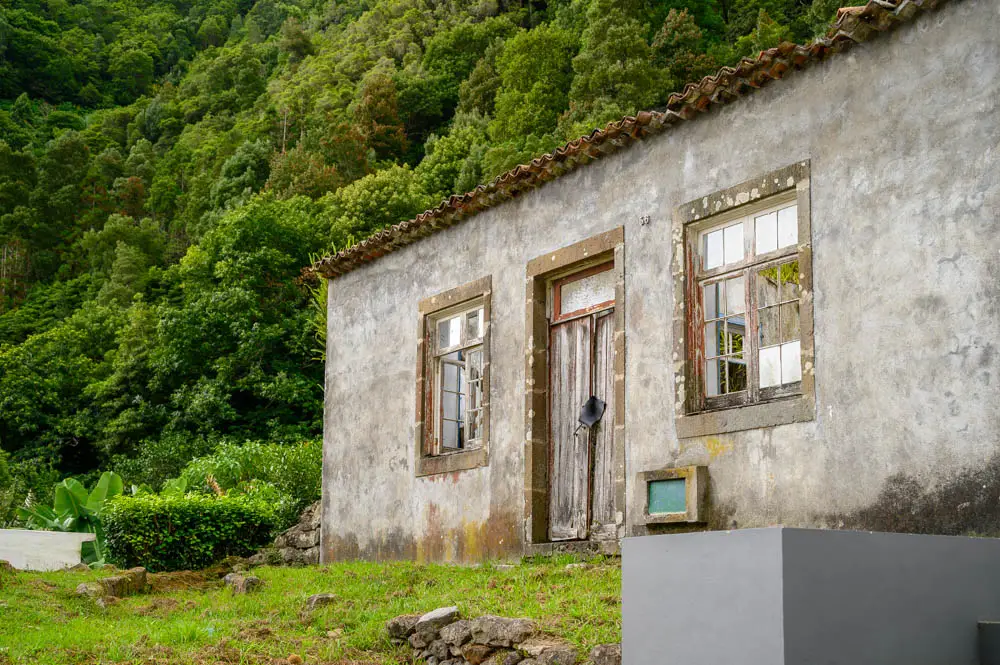
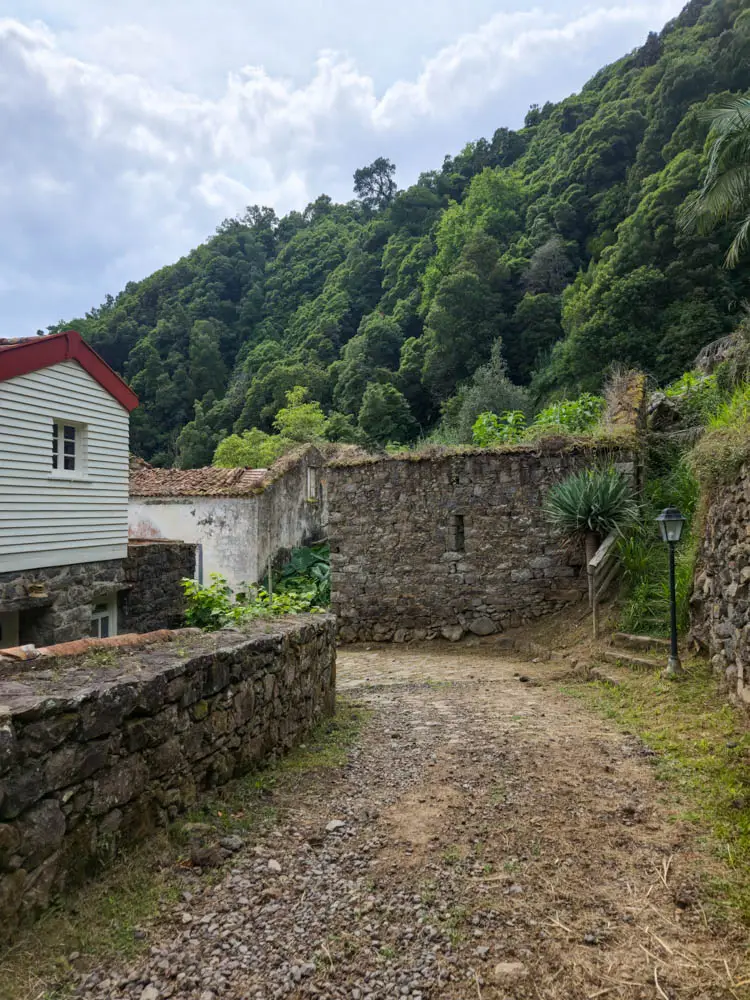
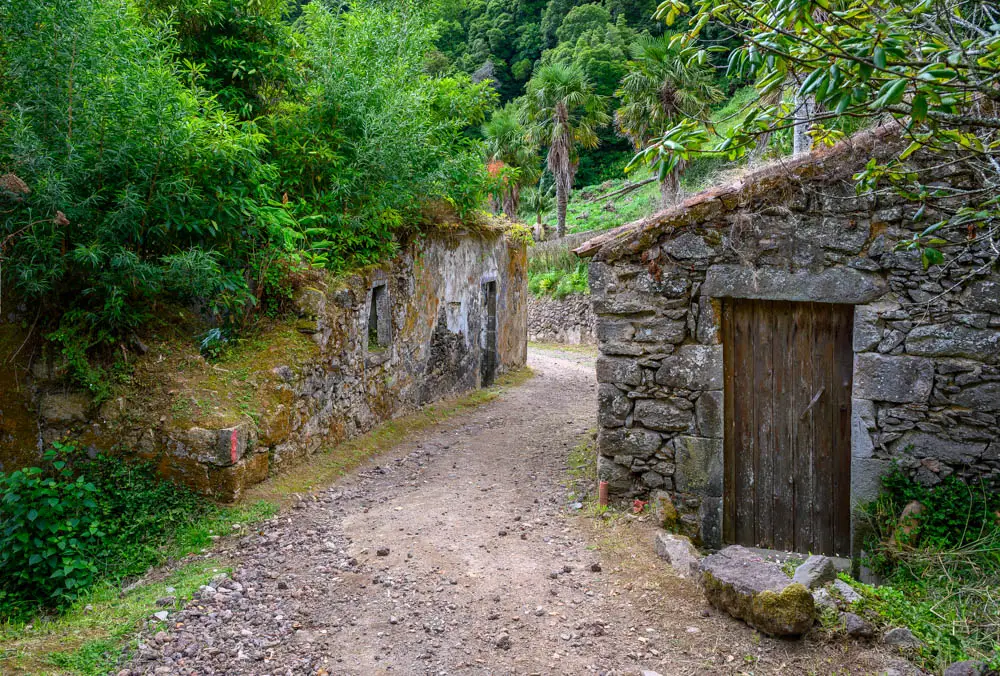
Sanguinho is often called the Lost Village, and once you arrive, you understand why. It is a small settlement tucked into the hillside above Faial da Terra, built around footpaths, water, and the practical needs of rural life. The village was never a traditional town. It was a working place, stone homes set where the land allowed, supported by small-scale farming and what the valley could provide.
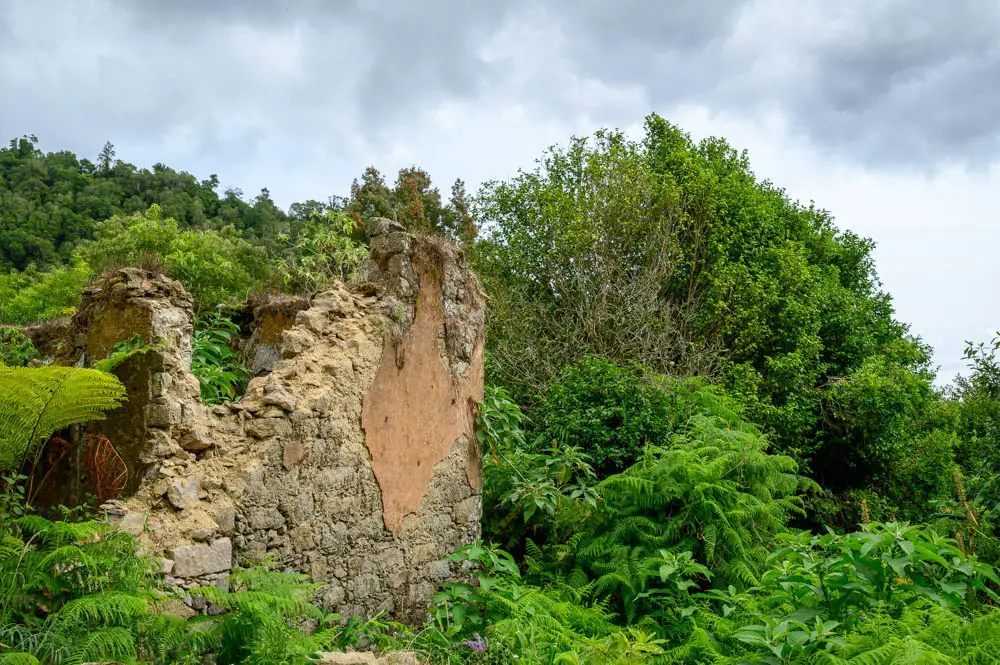
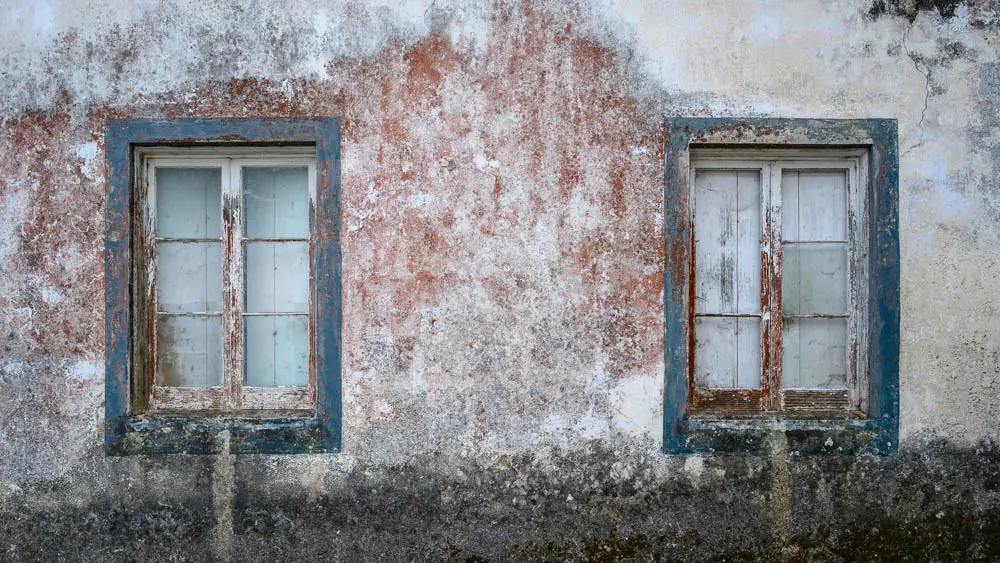
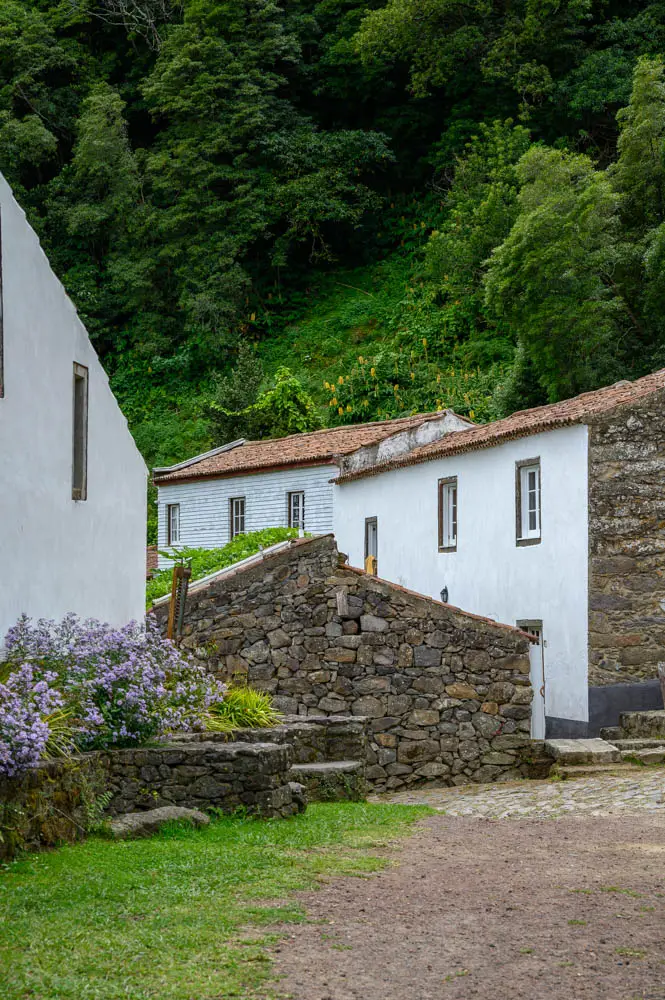
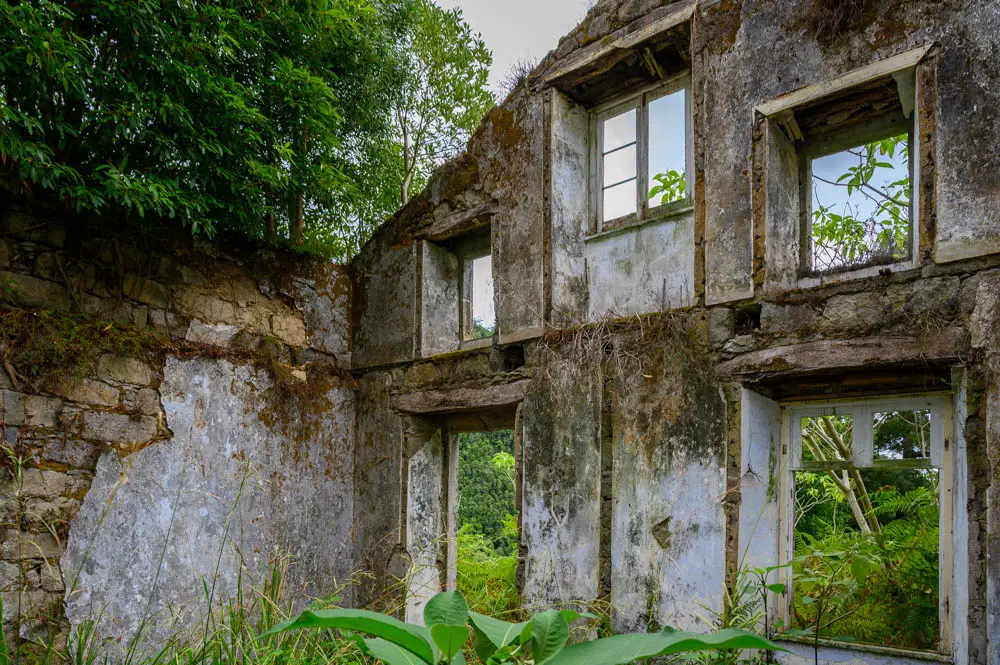
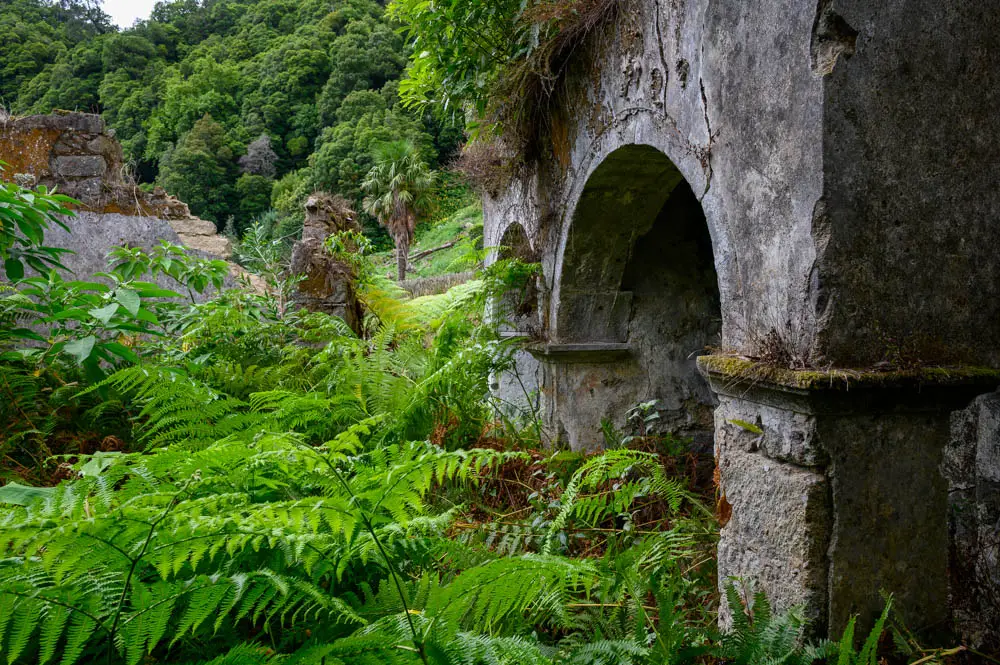
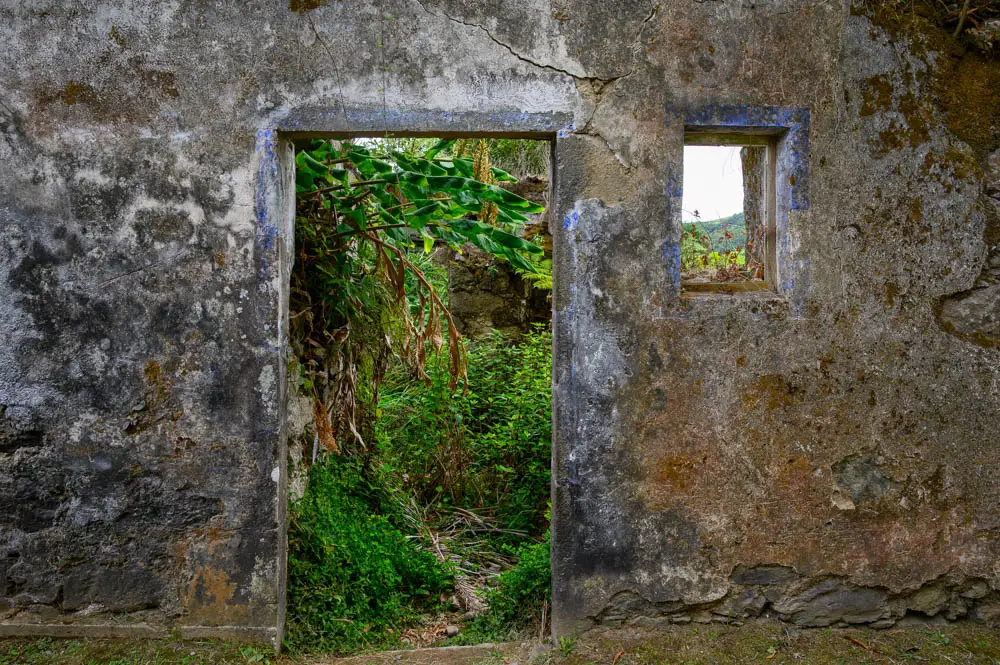
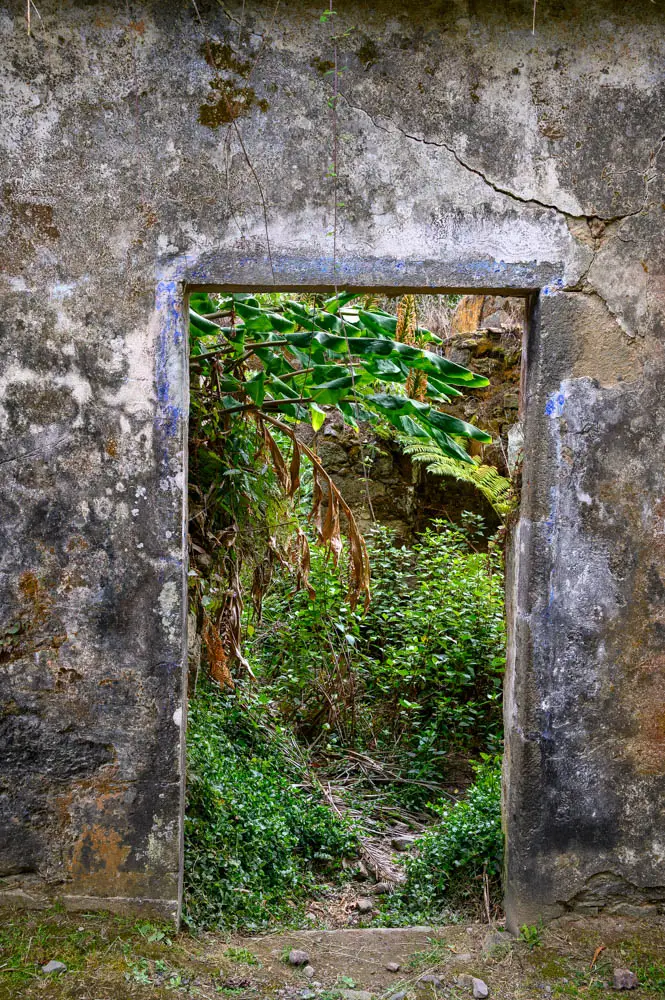
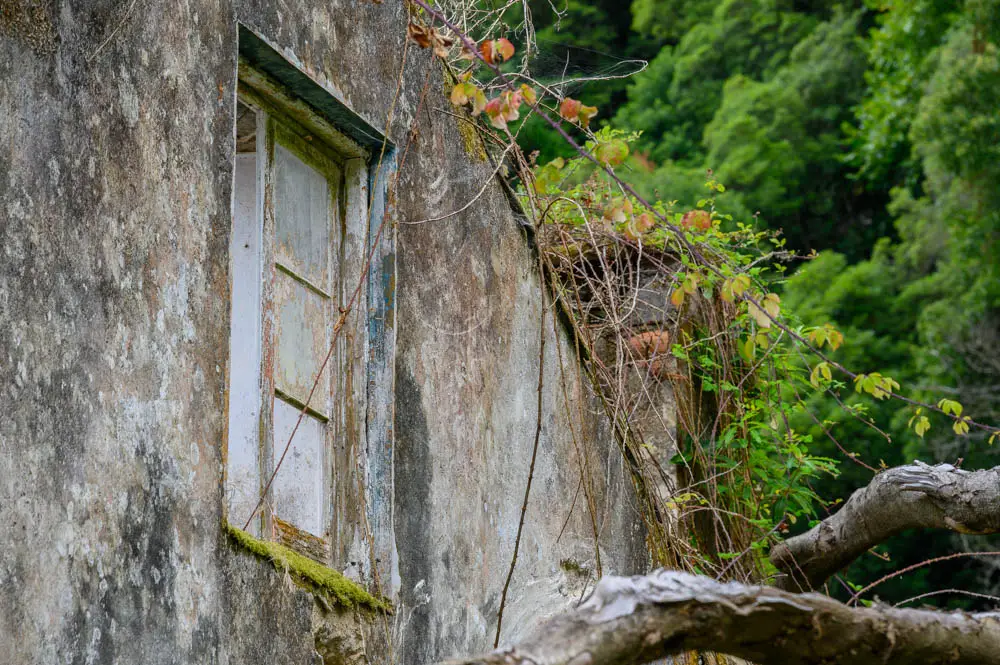
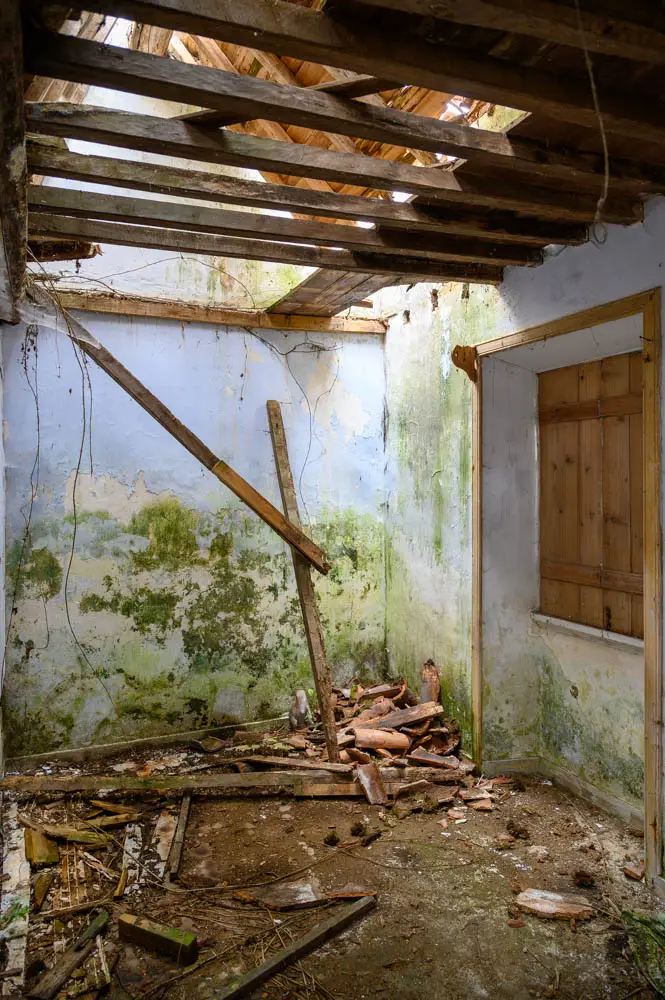
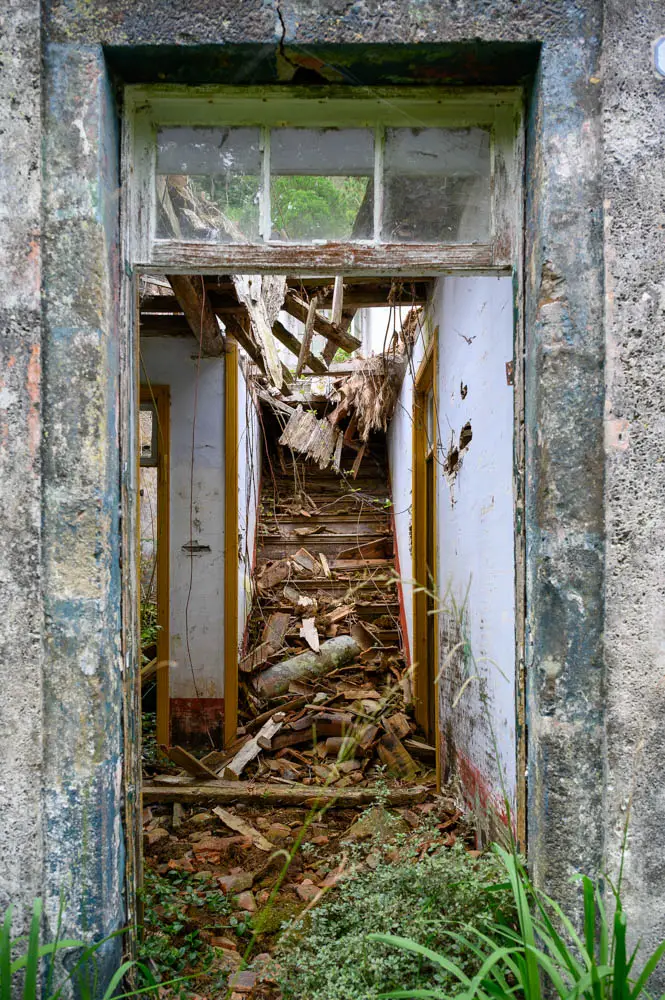
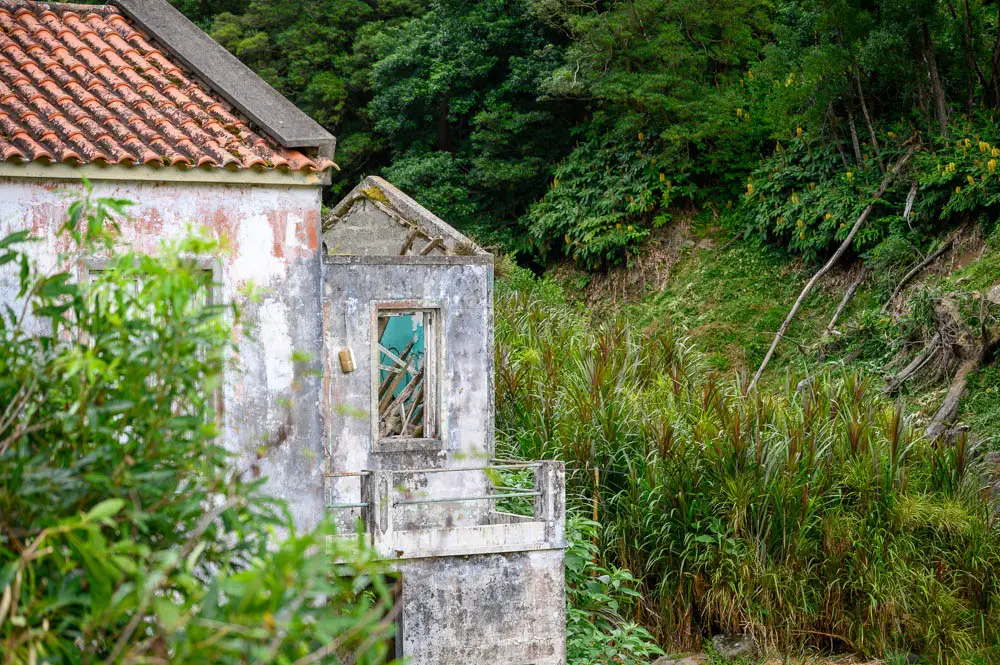
Over time, the isolation became harder to live with. As families left and modern life shifted toward road access, services, and easier transportation, places like this became difficult to sustain. What you see now is a village caught between abandonment and preservation. Some buildings are slowly collapsing back into the landscape. Others have been restored and cared for, keeping the original character and materials in place.
Today, Sanguinho is not completely forgotten. A small number of caretakers and residents have worked to preserve parts of the village, restoring select homes while respecting the original stone structures and layout. They grow food on a small scale, including grapes, fruit, and garden crops, using the same land that supported families generations ago. Some produce is shared or sold to hikers passing through, creating a quiet, simple rhythm that fits the place. While I explored the ruins and paths, my wife enjoyed the scenery with a glass of wine and fresh-picked grapes, which felt like the perfect contrast to the climb that brought us here.
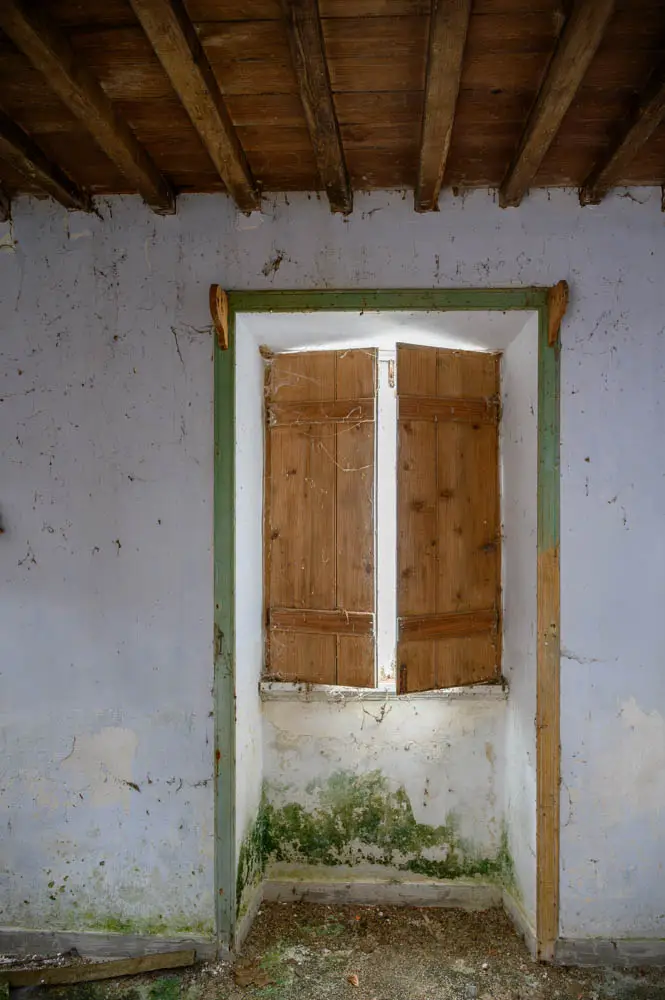
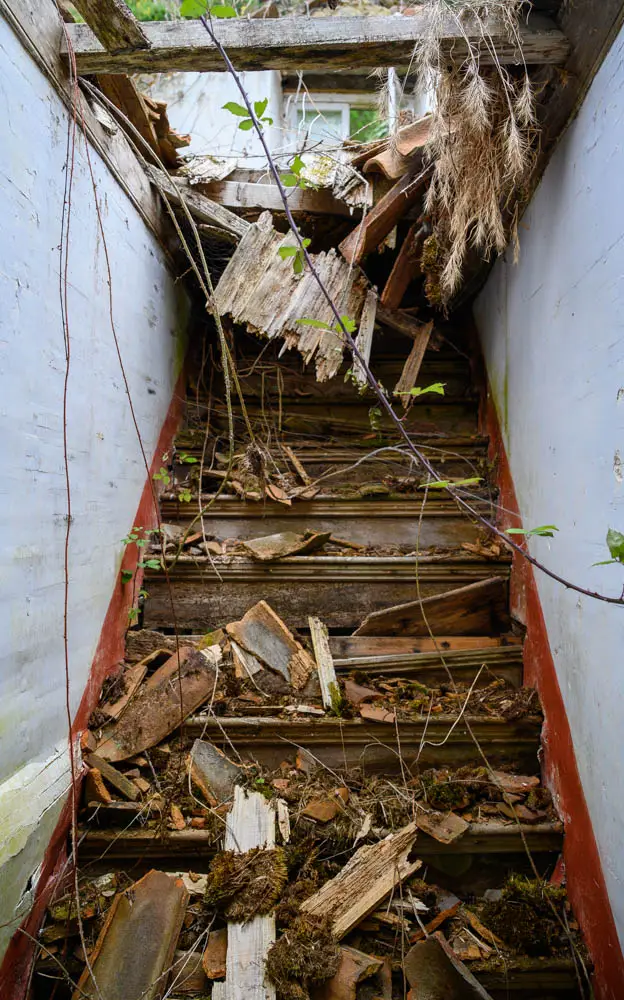
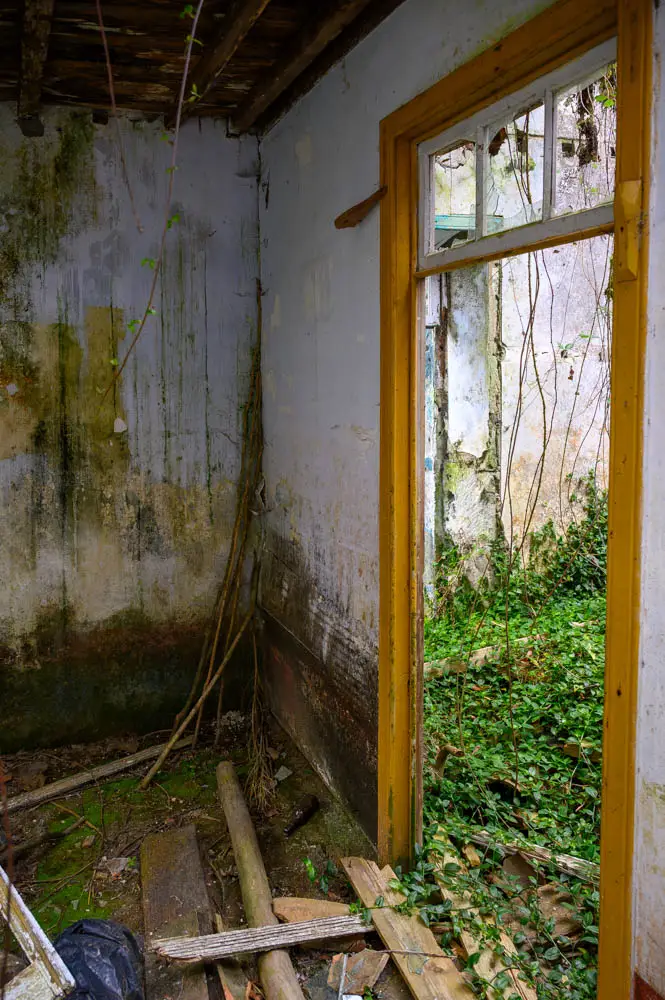
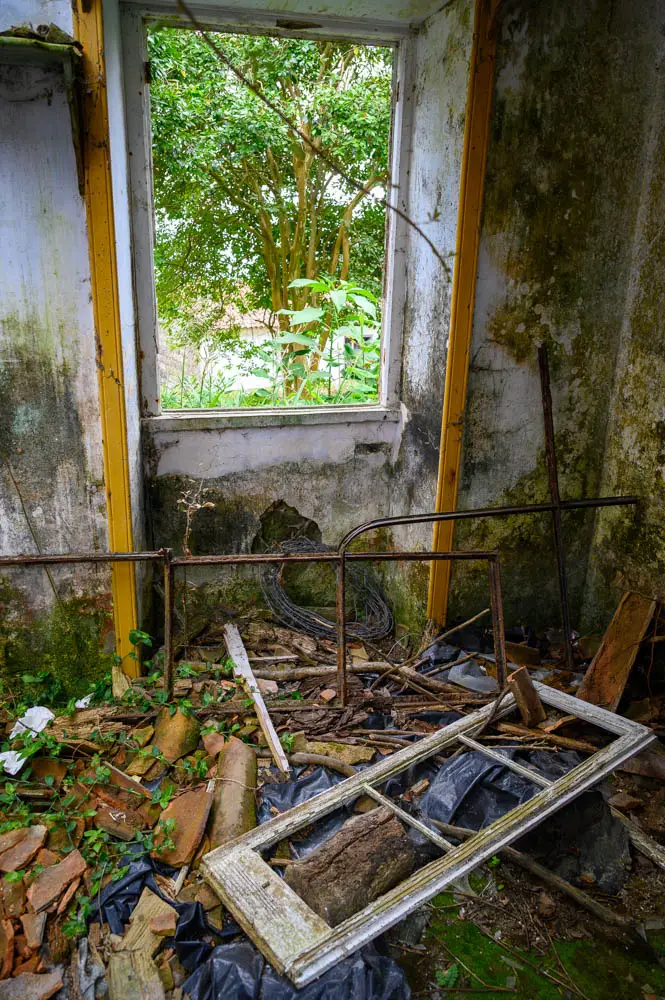
Bonus Stop, Furnas
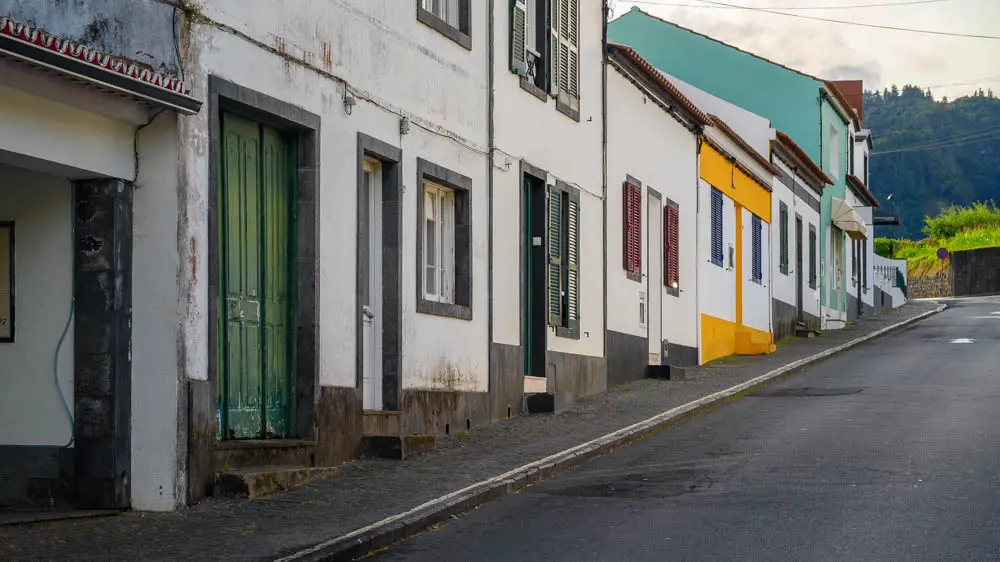
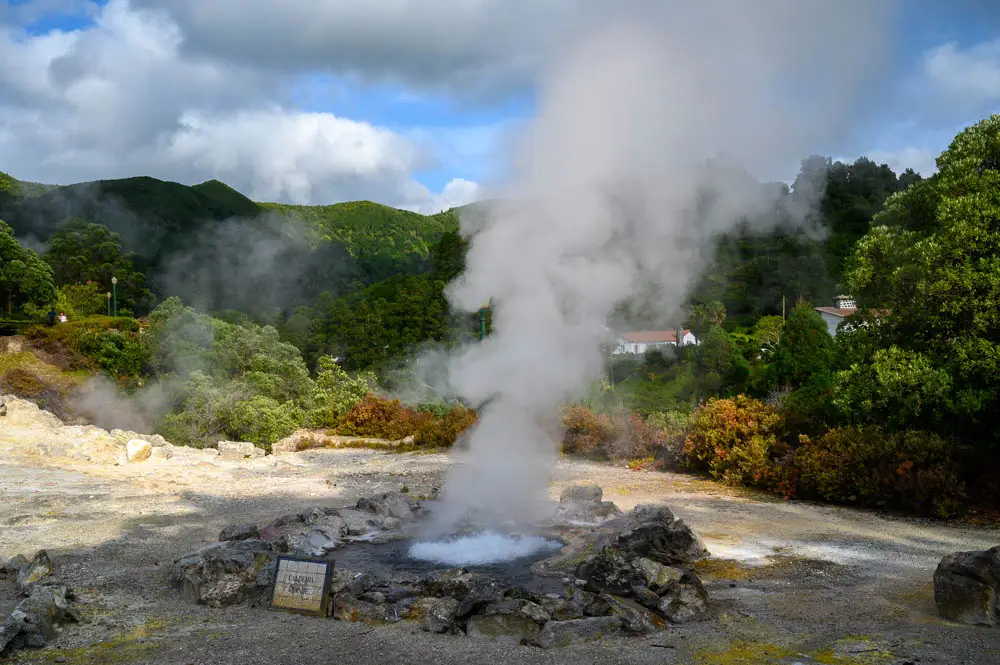
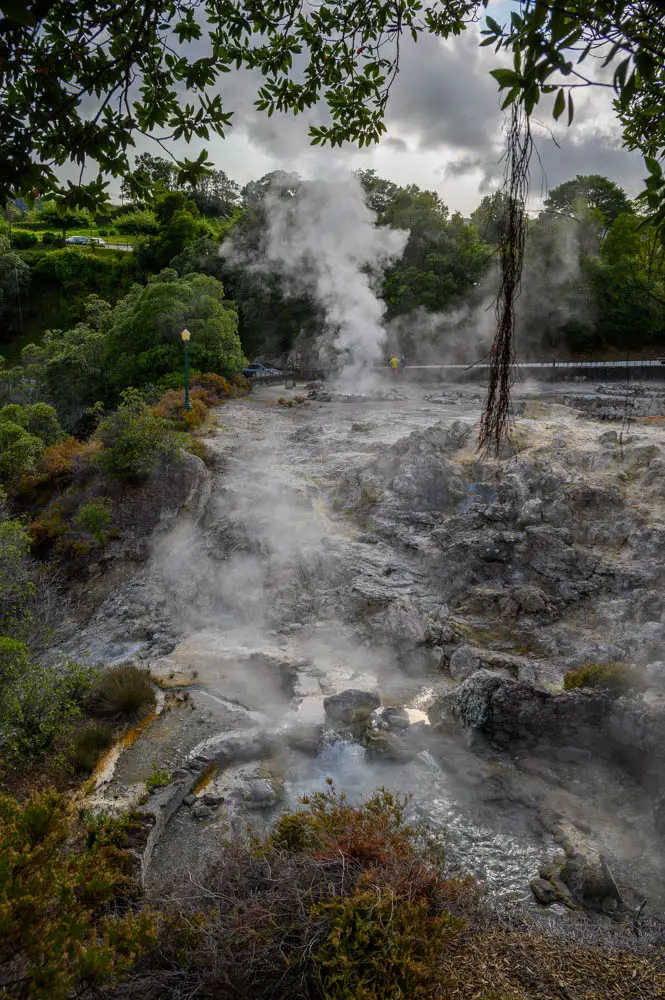
After leaving Faial da Terra, we had a scenic drive back toward Ponta Delgada, and we chose to route through Furnas. Furnas is built inside an ancient volcanic crater and is known for geothermal activity that you can see and feel. Steam rises from the ground, hot springs and fumaroles bubble, and mineral-rich waters shape daily life here. It is also famous for food cooked underground using volcanic heat, which makes it one of those rare places where the landscape is not just scenery, it is an active force you experience in real time.
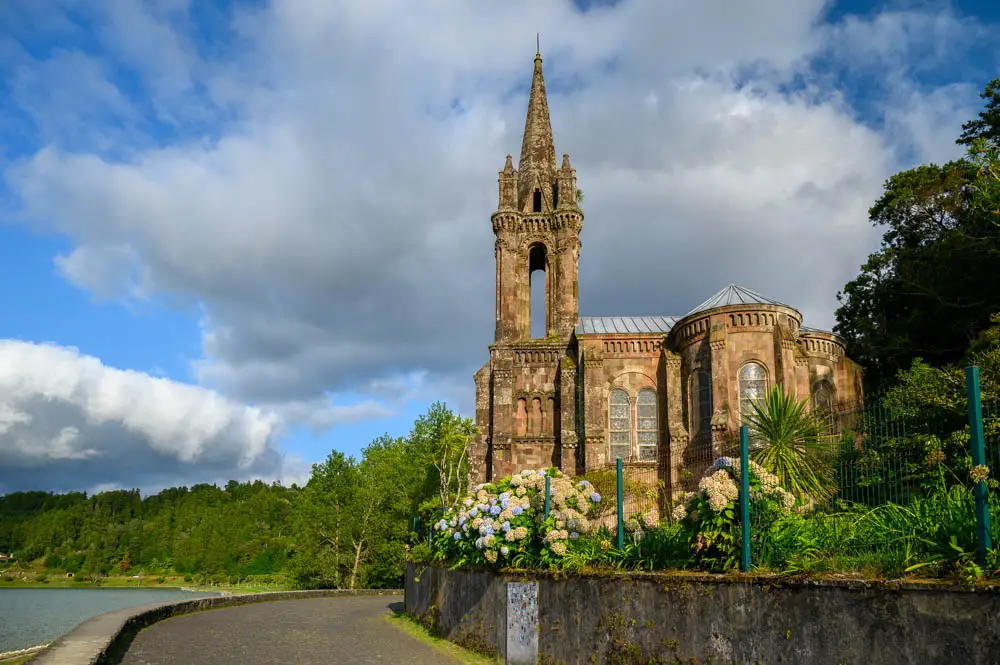
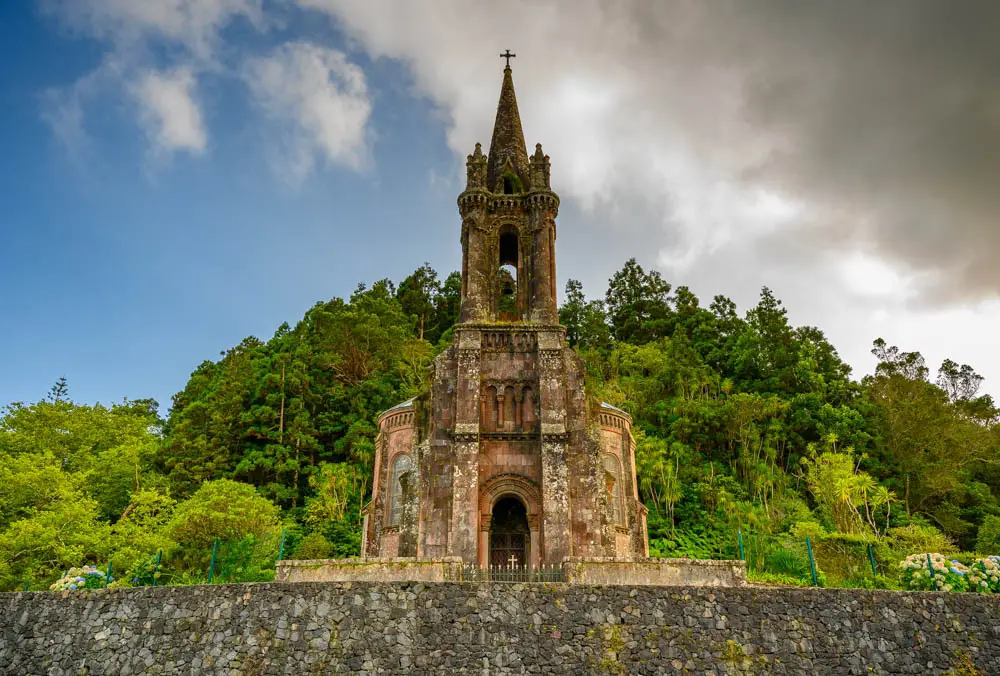
Capela de Nossa Senhora das Vitórias
At the edge of Lagoa das Furnas sits Capela de Nossa Senhora das Vitórias, a neo-Gothic chapel that looks abandoned at first glance, but it is not a forgotten parish church. It was built in the late 19th century by José do Canto, a wealthy Azorean landowner and botanist, as a personal tribute to his wife, who died young. Built from local stone in a romantic Gothic style, the chapel blends into the lakeside landscape. José do Canto and his wife are buried inside, giving the building a quiet, intimate weight that feels more like a preserved memory than a ruin.
Quick Facts
Location: Above Faial da Terra, São Miguel Island, Azores
Highlights: Rocky forest hike, roosters and chicks along the trail, Salto do Prego waterfall, Lost Village of Sanguinho, steep cobblestone descent, Furnas geothermal landscape, Capela de Nossa Senhora das Vitórias
Difficulty: Moderate to challenging, due to steep grades and uneven terrain
Best approach: Take your time, hydrate, and film the quiet moments between climbs