Most people imagine wildlife photography as a sequence of dramatic moments. Lions hunting, elephants charging, dust rising in golden light. That is what we tend to see, and it is what often gets shared.
But the reality is very different. Most of the time, nothing happens.
And over time, I have come to understand that this is where the real work begins.
I have spent hours, sometimes entire days, sitting in the same place, watching and waiting. There is no movement, no action, nothing that feels particularly exciting. Just the sound of wind moving through the grass, distant birds, and the slow shift of light across the landscape.
At first, that kind of stillness can feel frustrating. You start to question whether you are in the right place, whether you should move on, or whether something better is happening somewhere else. There is always that temptation to chase, to keep moving in search of a more dramatic scene.
But the more I did that, the more I realised I was missing something.
The moments that stayed with me, and often the images that meant the most, came when I stopped trying to force something to happen and instead allowed the scene to unfold in its own time.
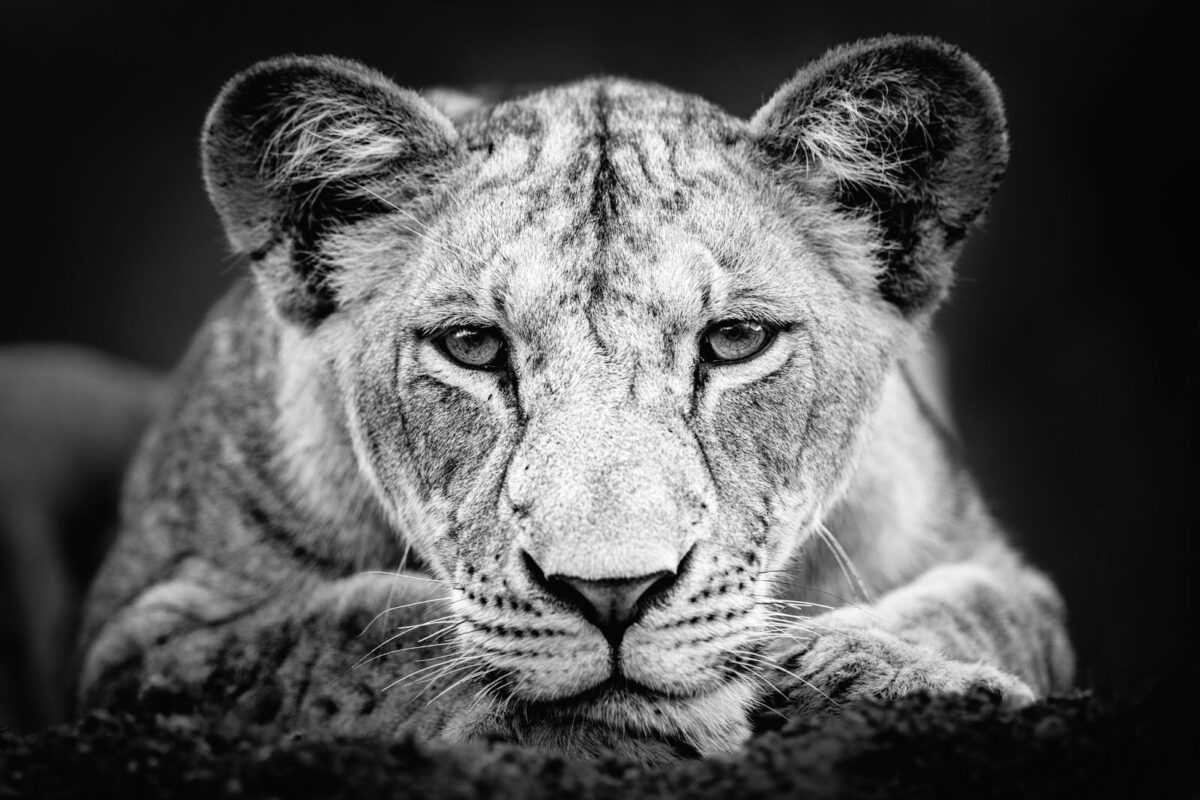
I remember one particular morning out in the field. I was in the Serengeti to produce some fine art lion prints and I had been following a pride of lions since before sunrise. By the time the light started to come through, the lions had settled. There was no hunt, no interaction, nothing that would normally be considered a strong photographic opportunity.
They were simply there, lying all around, completely at ease.
For a long time, I did not even lift the camera. I just watched. As the minutes passed, small things began to shift. The light softened, one of the lionesses slowly lifted her head, the pride male adjusted his position slightly. Nothing dramatic, but everything felt balanced.
That was the moment.
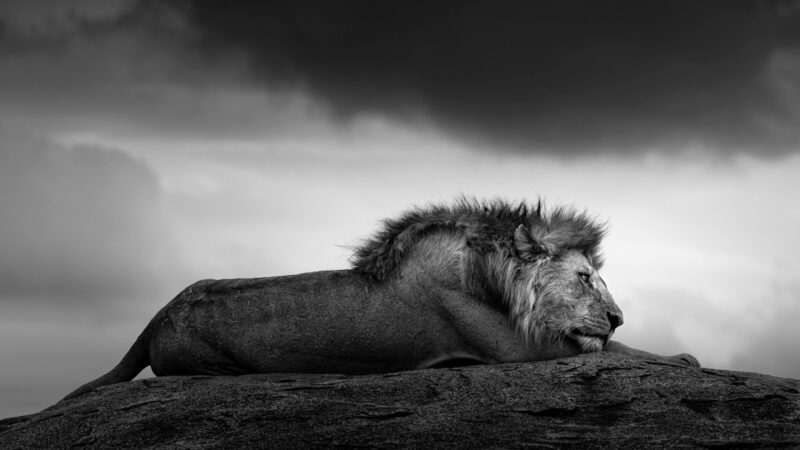
It was quiet, simple, and easy to miss if I had been looking for something more obvious.
That experience changed the way I think about fine art wildlife photography. I started to understand that it is not always about capturing behaviour. It is often about recognising presence.
There is a difference between the two. Behaviour is what we expect to see. Presence is something you feel when everything comes together in a more subtle way. It is in the way an animal holds itself, the space around it, and the relationship between subject and environment.
When you begin to notice that, your approach changes.
I became more patient and more willing to stay in one place for longer. Instead of constantly repositioning or searching for something better, I started trusting that if I was in the right place, something would eventually reveal itself.
Not necessarily something dramatic, but something real.
In many ways, this simplified my work. It became less about chasing moments and more about being present enough to recognise them when they appear.
I think this goes beyond photography.
We tend to associate value with action, movement, and intensity. But some of the most meaningful experiences are the quiet ones. The ones that do not feel extraordinary at the time, but stay with you long after.
In the wild, those moments are everywhere. You just have to slow down enough to notice them.